Lake Champlain runs for over 120 miles between New York, Vermont, and Quebec. Its deep, cold waters have inspired stories about a mysterious creature locals call Champ.
Some people believe Champ is a real, undiscovered animal. Others think the legend comes from mistaken sightings and local pride.
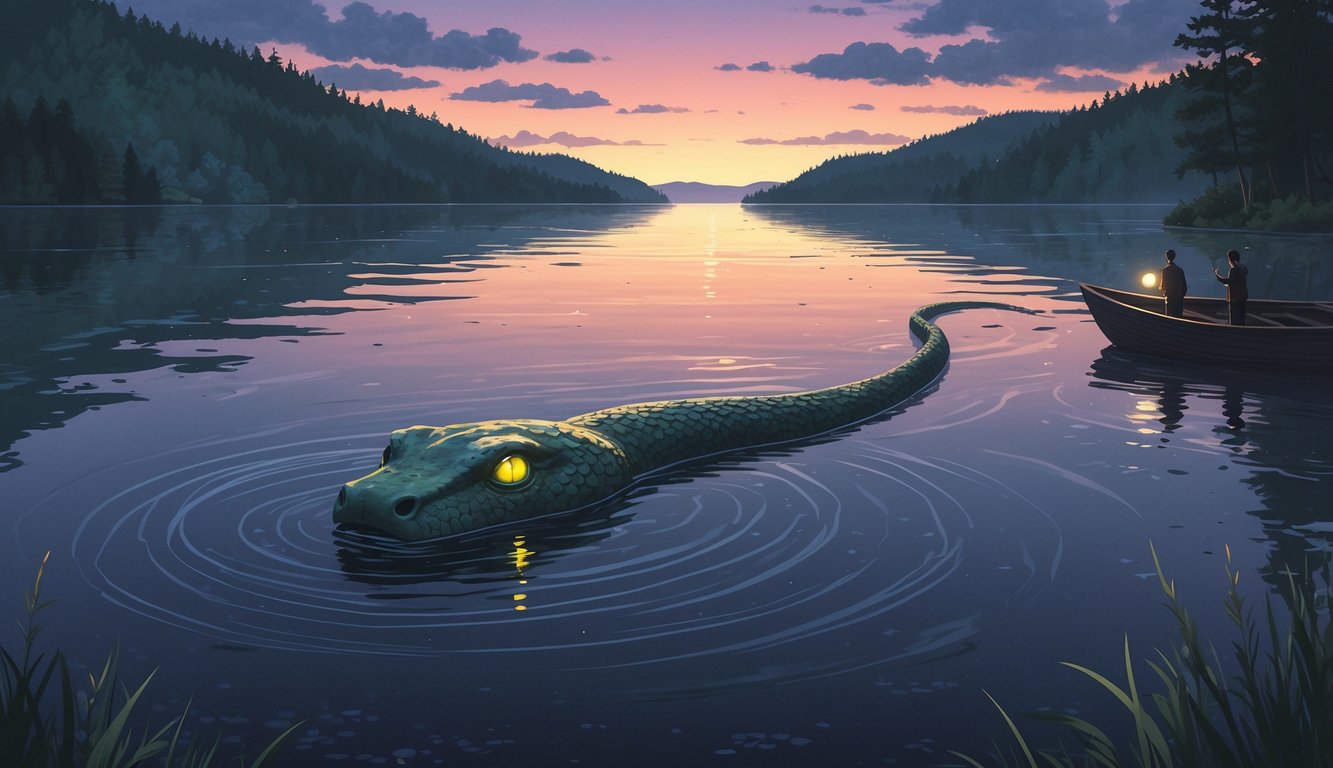
Indigenous stories described a large water creature in the lake long before European settlers arrived. Over the years, eyewitness accounts, photographs, and drone footage have fueled curiosity.
Some sightings mention a long, serpent-like body. Others report a humped back breaking the surface.
For many, searching for Champ means exploring history, science, and the human fascination with the unknown. From ancient legends to modern investigations, the story continues.
The Mystery of Lake Champlain’s Monster
Lake Champlain runs more than 120 miles between New York and Vermont, with part reaching into Quebec. Its deep, cold waters and long history of human settlement encourage reports of unusual sightings.
Stories of a large, unidentified water creature have lasted for centuries.
America’s Lake Monster Legend
People often call the creature Champ or America’s Loch Ness Monster. Early explorers and Indigenous peoples described a large, serpent-like animal in the water as far back as the 1600s.
Hundreds of sightings have occurred over the years. Many describe a dark, humped back moving through the lake, sometimes with a long neck above the surface.
Some people have taken photographs or filmed encounters, but none of the evidence is conclusive. These accounts keep the legend alive and attract visitors hoping to spot the Lake Champlain monster.
Skeptics suggest people may see sturgeon, otters, or logs. Others believe Champ could be an undiscovered species.
Lake Champlain as a Habitat
Lake Champlain is a large freshwater lake with conditions that could support big aquatic life. Over 80 fish species live there, including lake trout, bass, and the long-lived lake sturgeon.
The lake’s depth reaches about 400 feet in some areas. Cold, dark environments may help a large animal stay hidden.
Seasonal changes affect water clarity and temperature. These shifts influence visibility for both humans and wildlife.
Champ sightings can happen in New York, Vermont, or Quebec. This wide area makes tracking and verifying reports harder.
Researchers have used sonar and underwater cameras to explore the lake. They have not found confirmed evidence of a lake monster, but the habitat supports large fish and other aquatic species.
Champ’s Place in American Folklore
Champ has become a cultural icon in the Lake Champlain region. Towns along the shore use the legend to promote tourism with festivals, boat tours, and souvenirs.
Folklore experts say Champ stories blend fact, misidentification, and local pride. Like Scotland’s Loch Ness Monster, Champ is part of a tradition of mysterious water creatures in global storytelling.
The legend appears in documentaries, books, and news reports. Some families share stories of personal sightings, keeping the tradition alive for new generations.
In places like Burlington, Vermont, and Plattsburgh, New York, Champ is a symbol of the lake’s history and identity, as described in folklore accounts.
Origins and Indigenous Legends
Long before modern sightings, people living around Lake Champlain told stories of unusual creatures in its waters. Indigenous oral traditions described serpentine beings tied to the lake’s identity and the communities along its shores.
Abenaki Stories of Tatoskok
The Abenaki people, whose homeland included the Lake Champlain region, spoke of a great water serpent called Tatoskok (also spelled Gitaskog).
Abenaki tradition describes Tatoskok as living in deep waters and being a powerful presence in the lake. It often had horns and a long, snake-like body.
These stories taught lessons about respecting nature and the dangers of certain parts of the lake.
Some versions describe Tatoskok as a guardian of the water. Others see it as a threat to careless travelers.
This dual role reflected the Abenaki view of nature as both generous and dangerous.
Modern researchers note that these accounts may have influenced later reports of Champ. Descriptions share similarities in shape and behavior.
Iroquois Accounts of the Creature
The Iroquois Confederacy, including nations such as the Mohawk and Oneida, also told stories about a large serpent in Lake Champlain.
Their oral history often linked the creature to battles between supernatural beings. Some tales described it as a giant snake that could overturn canoes or scare away fish.
Like the Abenaki, the Iroquois saw this being as part of nature’s balance. It could bring harm if disrespected but would leave people alone if treated properly.
Communities passed down these accounts through generations. While details differed, the idea of a massive lake-dwelling serpent remained consistent.
Similarities across cultures suggest the legend’s roots run deep in the region’s history, long before Europeans arrived.
Early European Encounters
When French explorer Samuel de Champlain reached the lake in the early 1600s, he wrote about seeing large fish-like creatures. Historians debate what he actually saw.
European settlers heard Indigenous stories and sometimes blended them with their own ideas. This mix shaped the early written record of the lake’s mysteries.
Settlers in the 18th and 19th centuries described long, snake-like animals in the water. These descriptions often echoed Indigenous legends.
By the 1800s, newspapers sometimes published these stories. Public fascination with lake monsters in North America grew, including the one in Lake Champlain.
Champ Sightings and Eyewitness Accounts
People have reported seeing the lake creature for centuries. Many describe a large, serpent‑like animal in the waters of Lake Champlain.
Accounts range from early explorers’ notes to modern drone footage. Some reports include photos, sonar readings, or multiple witnesses.
Historic Sightings
The earliest written record often linked to the Lake Champlain monster dates to 1609. Explorer Samuel de Champlain reportedly described a large fish‑like creature, though historians question this claim.
In the 1800s, newspapers in Vermont and New York published stories of locals spotting a long‑necked creature in the lake. Some described it as 15 to 30 feet long, with dark skin and humps visible above the water.
The Abenaki people told stories of a large water animal in the lake before European settlement. These oral histories often described a creature that could disturb fishing boats or swim quickly across the surface.
By the late 19th century, Champ sightings had become part of local folklore. Travelers and writers grew curious about the stories.
Modern Reports
Since the 20th century, people have reported over 300 champ sightings. Witnesses include boaters, swimmers, and shoreline observers.
Many modern accounts describe a dark, snake‑like body moving just under the surface. Some report seeing three or more humps rise and fall in the water.
In 2005, two fishermen said they saw a large creature surface near their boat before diving again. In 2019, a family on vacation recorded video of a long object moving steadily across the lake.
More reports come in summer, likely because more people are on the water. Some researchers suggest certain sightings could be large fish, sturgeon, or floating logs, but others remain unexplained.
Famous Photographs and Videos
The 1977 Mansi photograph is one of the most well‑known images. It shows what looks like a dark, arched neck rising from the lake.
People still debate the photo. Some call it genuine, while others suggest it could show a floating object.
In 2024, drone footage reportedly captured a moving shape in Lake Champlain. Some believe it shows America’s “Loch Ness Monster”.
The video showed a long, light‑colored form gliding below the surface.
Other evidence includes sonar scans showing large, unidentifiable shapes. These images have not proven Champ’s existence but keep interest and investigation alive.
Notable Evidence and Scientific Investigations
Researchers and locals have gathered photographs, sonar readings, and eyewitness accounts over decades. Some evidence comes from accidental discoveries, while other data comes from planned expeditions using modern technology.
Sonar and Underwater Recordings
Expeditions have used sonar to scan Lake Champlain’s depths. In the 1980s and 1990s, teams reported large, moving shapes that did not match known fish species.
Some readings suggested objects between 15 and 30 feet long. On one day, researchers recorded multiple sonar contacts, each showing a long, solid form.
These shapes moved independently, which ruled out stationary debris.
Researchers have also deployed underwater microphones. Sometimes, they picked up unusual low-frequency sounds.
While large fish like sturgeon could make these noises, the patterns were not consistent with known species.
Drone Footage and Film Evidence
The 1977 Sandra Mansi photograph is the most famous visual record. It shows a dark shape with a long neck rising from the water.
Mansi said she saw the creature about 150 feet from shore.
Recently, drones have given researchers new ways to search the lake. Some videos show ripples and wakes in calm water without visible boats or animals.
These clips often spark debate because distance and lighting can make objects hard to identify.
Filmmakers sometimes use long-lens cameras from shore. Most footage is inconclusive, but a few sequences capture shapes that look like a plesiosaur.
Skeptics point out that floating logs can look similar in certain conditions.
Analysis of Physical Descriptions
Eyewitnesses often describe Champ as a creature 15–20 feet long with a dark, smooth body. Many mention a small head on a long neck and a humped back.
Some people report seeing flippers or fins, which leads to comparisons with ancient marine reptiles like plesiosaurs. Others think the creature could be a large sturgeon, a fish that can grow over 7 feet long and has a ridged back.
Researchers have reviewed hundreds of accounts and note patterns in shape, size, and movement. A table of common traits shows how these features overlap:
| Feature | Reported in >50% of sightings |
|---|---|
| Long neck | Yes |
| Humped back | Yes |
| Flippers/fins | Sometimes |
| Dark coloration | Yes |
Possible Explanations for the Lake Monster
Known animals or natural events explain many reported sightings in Lake Champlain. Some theories suggest people may see prehistoric creatures that survived in deep waters.
Each explanation explores what people might actually see when they report a lake monster.
Misidentified Animals
Large fish such as sturgeon and garfish live in Lake Champlain. These fish can grow over 6 feet long and have elongated bodies.
Sometimes, they surface in ways that look like a serpent-like creature.
Groups of otters swimming in a line can also look like a single, long body moving through the water. Their heads and backs rising and dipping can mimic the humps often described in sightings.
Sonar scans have detected shapes later identified as schools of fish or large carp. Floating logs, especially in certain light, can appear to move and trick the eye.
Many encounters may involve familiar animals acting in unusual ways.
Natural Phenomena
Lake Champlain stretches over 100 miles and has deep, cold waters. Waves, wakes, and light reflections can easily distort what people see on the surface.
Temperature changes can form thermoclines, where warm and cold water layers meet. These can cause debris or fish to rise suddenly, making ripples or shapes that people mistake for a creature.
When the lake is calm, the surface can reflect the sky, making objects seem larger or closer. Sudden wind shifts can create small standing waves that look like humps moving in a row.
These effects, combined with distance and low visibility, often make ordinary scenes look mysterious.
Plesiosaur Survival Theories
Some people believe the lake monster could be a surviving plesiosaur, a marine reptile from the Mesozoic era. The creature’s long neck and body shape in reports support this idea.
Plesiosaurs lived in saltwater, and scientists have not found evidence that they survived past the extinction event 66 million years ago.
Supporters of this theory point to the lake’s depth and size as possible hiding places. Skeptics say a breeding population would leave physical evidence, like bones or carcasses, but none have been found.
This explanation remains highly speculative.
Comparisons to Other Legendary Creatures
Folklore from around the world describes freshwater creatures with long bodies, unusual humps, and mysterious movements in deep lakes. These reports often come from regions with large, cold lakes where visibility is low.
Loch Ness Monster
The Loch Ness Monster, or Nessie, is one of the world’s most famous lake creatures. People say it lives in Scotland’s Loch Ness, a deep lake about 23 miles long.
Sightings date back to the 6th century, but modern interest grew in 1933 after a photograph showed a long-necked figure in the water. Many descriptions match Champ’s reported shape—serpentine, with humps breaking the surface.
Loch Ness has deep, dark waters that limit visibility, making it easier to mistake logs or waves for animals. Scientific studies, including sonar scans, have not found confirmed evidence of Nessie, though some scans show unexplained shapes.
For more on its history and sightings, the Loch Ness Monster remains a key comparison when studying other lake legends.
Ogopogo
Ogopogo is a legendary lake monster from Okanagan Lake in British Columbia, Canada. The lake is about 84 miles long and over 750 feet deep.
Local First Nations stories describe a water spirit called N’ha-a-itk. Modern reports describe Ogopogo as a long, dark creature, often with humps visible above the waterline.
Sightings became more widely known in the early 20th century. Photographs and videos have surfaced, but none are conclusive.
Much like Champ, Ogopogo is now part of local tourism and identity.
The similarities between Ogopogo and North America’s other famous lake monsters suggest these legends often grow in places with large, deep lakes and long histories of human settlement.
Global Water Monster Legends
Legends of water monsters appear on nearly every continent. Africa’s Mokele-Mbembe in the Congo River Basin and South America’s Nahuelito in Argentina’s Nahuel Huapi Lake are just two examples.
Many stories tell of large, serpent-like creatures that appear briefly before vanishing into deep water. Some cultures see these beings as protectors or spirits, while others fear them as predators.
These legends often come from remote waters with limited visibility and strong oral traditions. Such features link Champ to a wider tradition of mysterious aquatic creatures, as seen in global lake monster folklore.
Champ in Popular Culture
Champ has become a well-known figure in the Lake Champlain region. Locals and visitors see the creature’s image in tourism campaigns, sports branding, and community celebrations.
Books, documentaries, and television programs continue to share Champ’s story with new generations.
Tourism and Local Mascots
Many businesses near Lake Champlain use Champ’s image to attract visitors. Hotels, restaurants, and souvenir shops sell items featuring the creature, such as T-shirts and coffee mugs.
The Vermont Lake Monsters, a minor league baseball team, use Champ as their official mascot. The mascot appears at games, community events, and school visits.
Tourism boards highlight Champ in travel brochures and websites. Some sightseeing cruises even include “Champ-spotting” as part of the trip.
This playful approach blends local history with visitor entertainment.
Books, Documentaries, and TV
Writers and filmmakers have explored Champ’s story for decades. Non-fiction books collect eyewitness accounts, historical records, and photographs.
Some fiction titles reimagine the creature in adventure or mystery stories for younger readers.
Television programs about cryptids and unexplained phenomena often feature Champ. These shows compare it to Scotland’s Loch Ness Monster and focus on Lake Champlain’s unique setting.
Documentaries include interviews with local historians, scientists, and residents who claim to have seen the creature. Networks like the History Channel and Discovery have brought Champ to a wider audience.
Community Events and Festivals
Communities along Lake Champlain host events to celebrate the Champ legend. These events may include parades, themed boat races, and family-friendly activities.
Vendors sell Champ-themed food and merchandise during these gatherings.
Some towns hold annual “Champ Day” festivals with live music, games, and costume contests. These events encourage local pride and give visitors a reason to explore the area.
Festivals also provide a place to share stories. Residents and tourists swap sightings and theories, keeping the legend alive in the region’s culture.
Conservation and Protection Efforts
Efforts to protect Lake Champlain and its wildlife often include steps to safeguard Champ’s possible habitat. Legal measures and environmental care aim to keep the lake healthy for all species living there.
Legal Protections for Champ
In 1982, Vermont passed a resolution recognizing Champ as a unique part of the state’s natural and cultural heritage. The resolution encourages protection of the creature and its habitat, even though Champ’s existence has not been proven.
Local communities use these protections to support tourism and promote environmental responsibility. The intent is to prevent harm to any large, unidentified animals that may live in the lake.
Some towns along the shore run public education campaigns to remind boaters and fishers not to disturb wildlife. These include no-wake zones, fishing restrictions, and guidelines for safe wildlife observation.
While these policies are not as strict as federal wildlife laws, they help keep Lake Champlain safe for both known and unknown species.
Environmental Impact on Lake Champlain
Lake Champlain’s health affects all its large aquatic animals, including any that might be called Champ. Pollution from farms, stormwater runoff, and invasive species have changed the lake’s ecosystem in recent years.
Conservation groups monitor water quality and work to reduce phosphorus levels to prevent harmful algae blooms. These blooms lower oxygen in the water, making it harder for fish and other species to survive.
Projects often include shoreline restoration, removing invasive plants, and mapping habitats. These actions help restore balance to the lake’s food chain, which benefits all wildlife.
Researchers believe that protecting the lake’s biodiversity may also protect any rare or undiscovered species. Environmental care becomes a shared goal for both scientists and Champ enthusiasts.
Ongoing Research and the Future of the Search
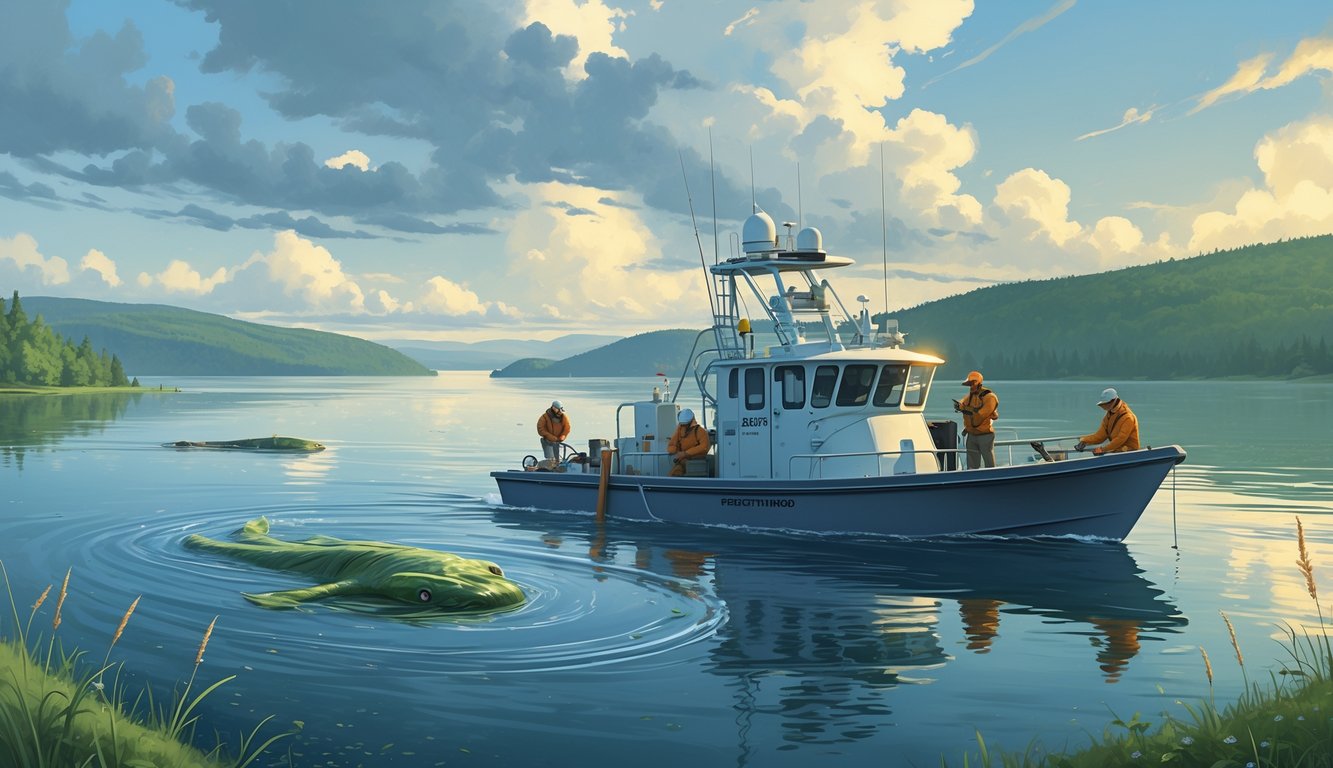
Researchers and enthusiasts continue to gather evidence about the Lake Champlain monster. They organize fieldwork and use new detection tools, including boat-based expeditions and underwater scanning.
Some teams focus on possible biological explanations for reports of Champ.
Current Expeditions
Several groups actively search for Champ each year. The non-profit Champ Search, led by Katy Elizabeth, conducts seasonal surveys using boats and sonar.
The team once captured a sonar image that showed two large, unidentified shapes near the lake bottom.
Filmmakers and authors have also joined the search. A recent project for the film Lucy and the Lake Monster combines documentary work with on-site investigations, aiming to capture video and acoustic evidence.
Some expeditions focus on interviewing witnesses of Champ sightings. These interviews help map where unusual activity occurs most often.
Researchers use this data to decide where to place cameras, hydrophones, and sonar units for future trips.
Technological Advances in Monster Hunting
Modern tools now help researchers study the deep waters of Lake Champlain. High-resolution side-scan sonar maps the lake floor and detects moving objects in real time.
Researchers have already identified large fish species, such as sturgeon, with this technology. People sometimes mistake these fish for the lake monster.
Underwater microphones, or hydrophones, record sounds in the lake. These devices have captured clicks that sound similar to those used by toothed whales.
These unusual sounds have led scientists to wonder about unknown aquatic animals in the lake. The recordings add to the mystery of Lake Champlain.
Drones and remotely operated vehicles (ROVs) help teams explore deep or dangerous parts of the lake. Researchers use these tools to collect video, water samples, and environmental data.
By using drones and ROVs, teams can gather information without disturbing the habitat.
The Enduring Appeal of America’s Lake Monster
Champ has been part of Lake Champlain’s story for centuries. Sightings, local traditions, and tourism keep the creature in public conversation.
Why Champ Captivates the Imagination
People have reported seeing Champ in Lake Champlain since the early 1800s. Some describe a long, snake-like body, while others say it looks like a prehistoric reptile.
Lake Champlain is large and deep, stretching about 125 miles. Its size and depth make it easy to imagine something could stay hidden.
Champ often gets compared to Scotland’s Loch Ness Monster. This link connects Champ to global cryptid stories, but the creature remains a local legend.
Many visitors come to the area hoping to spot Champ. Local businesses feature the monster in logos, souvenirs, and events.
The mystery and excitement surrounding Champ attract both locals and travelers.
The Role of Mystery in Local Identity
The legend of Champ began before Europeans settled in the region. Indigenous people described a large creature in Lake Champlain long before modern reports appeared.
Today, Champ is more than a story. He shapes the cultural identity of towns along the lake.
Communities in Vermont, New York, and Quebec highlight Champ in festivals. They also use him in tourism campaigns.
Signs, sculptures, and historic markers, such as those listed by the William G. Pomeroy Foundation, link the creature to local history. These reminders connect the legend to the region.
Residents celebrate their heritage by embracing the mystery of Champ. This story becomes a tradition that links generations.