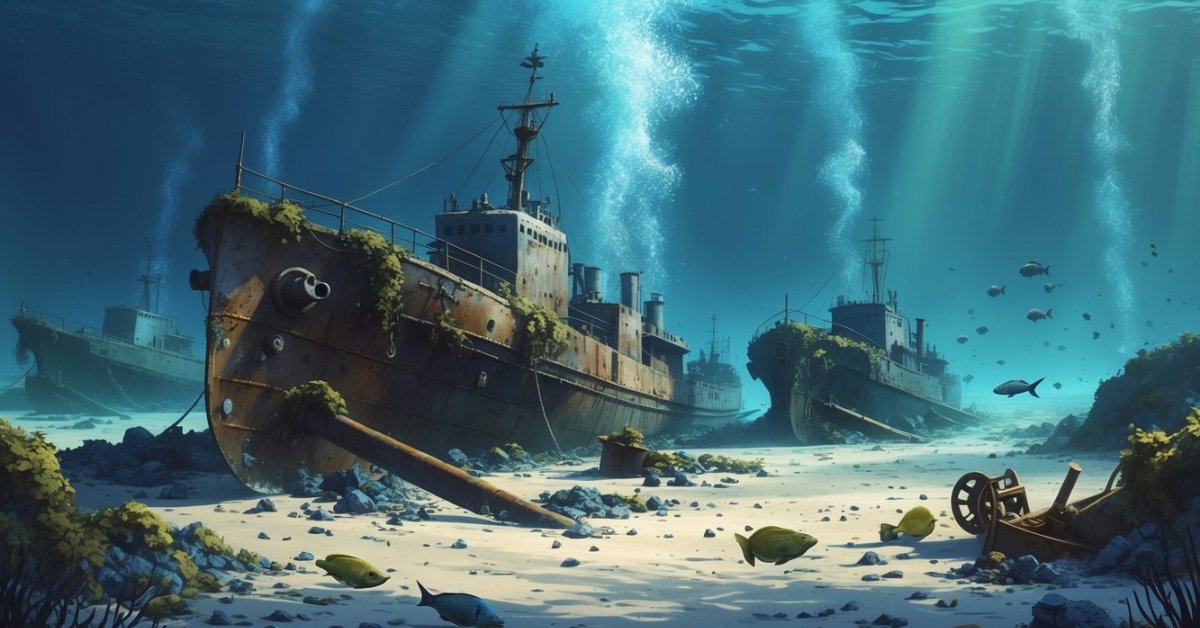
Beneath the cold waters of the North Sea, the remains of World War I minesweepers rest silently. Shipbuilders created these vessels to clear deadly naval mines, but many never returned from their missions.
Storms and enemy action claimed some of these ships, and many still lie where they sank over a century ago. These lost warships reveal the dangers faced by naval crews and the harsh realities of wartime at sea.
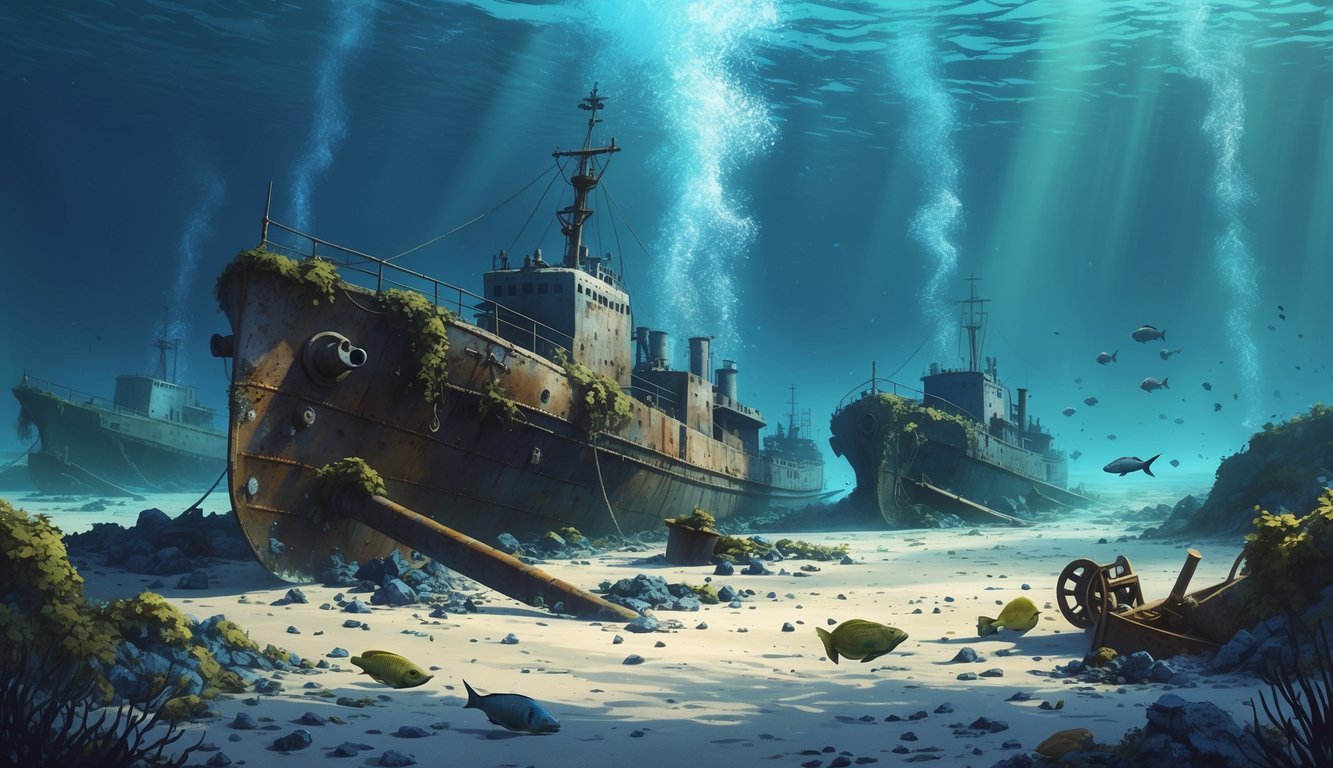
During the war, minesweepers kept shipping lanes open and safe. Crews often operated small, lightly armed vessels close to enemy waters, making them easy targets for German U-boats.
Wrecks like the recently identified HMS Hawke tell stories of sudden attacks and desperate battles beneath the waves.
Historians, archaeologists, and technology experts now search for these vessels. Modern expeditions have uncovered ships in remarkable condition, such as a WWI Royal Navy warship found in the North Sea.
Each discovery connects today’s world with the lives and sacrifices of those who served at sea.
The Mystery of the Lost Minesweepers
In late 1918, two French Navy minesweepers vanished during a delivery voyage across Lake Superior. Their disappearance left no confirmed wreck sites and no survivors.
Only scattered reports emerged at the time. The event remains one of the most puzzling maritime losses connected to World War I.
Disappearance of Inkerman and Cerisoles
Workers in Canada built the Inkerman and Cerisoles for the French Navy and launched them in November 1918. They designed these wooden-hulled minesweepers to clear naval mines in European waters after the war.
On November 23, the ships departed Fort William, Ontario, with a third vessel, the Sebastopol. That night, a fierce storm swept across the lake.
The Sebastopol reached Sault Ste. Marie, but the Inkerman and Cerisoles never arrived. Search teams found no debris or bodies in the days that followed.
Researchers still search for their wrecks using sonar and underwater vehicles. Expeditions described in recent search projects have yet to confirm their locations.
Impact on Maritime History
The loss of the Inkerman and Cerisoles highlights the dangers of inland naval transport during wartime. Although the French Navy intended them for service in the North Sea, these ships never left the Great Lakes.
Their disappearance shows the limits of early 20th-century communication and navigation. Storm warnings were less precise, and ships relied on visual signals and basic radio.
Maritime historians note that the case remains one of the last unresolved warship losses on the Great Lakes. The mystery has inspired books, documentaries, and search expeditions that have uncovered other shipwrecks as well.
Largest Loss of Life on Lake Superior
The disappearance claimed the lives of 76 French sailors and two Canadian captains. This event marks the single largest loss of life from any Lake Superior shipwreck.
The tragedy deeply affected both French and Canadian naval communities. Families received little information, as no wreckage was recovered to explain the cause.
A table of key details puts the scale in perspective:
| Ship Name | Crew Lost | Year | Location |
|---|---|---|---|
| Inkerman | 38 | 1918 | Lake Superior |
| Cerisoles | 40 | 1918 | Lake Superior |
The loss remains part of Lake Superior’s maritime record, standing out for both its scale and its enduring mystery.
Construction and Design of the Minesweepers
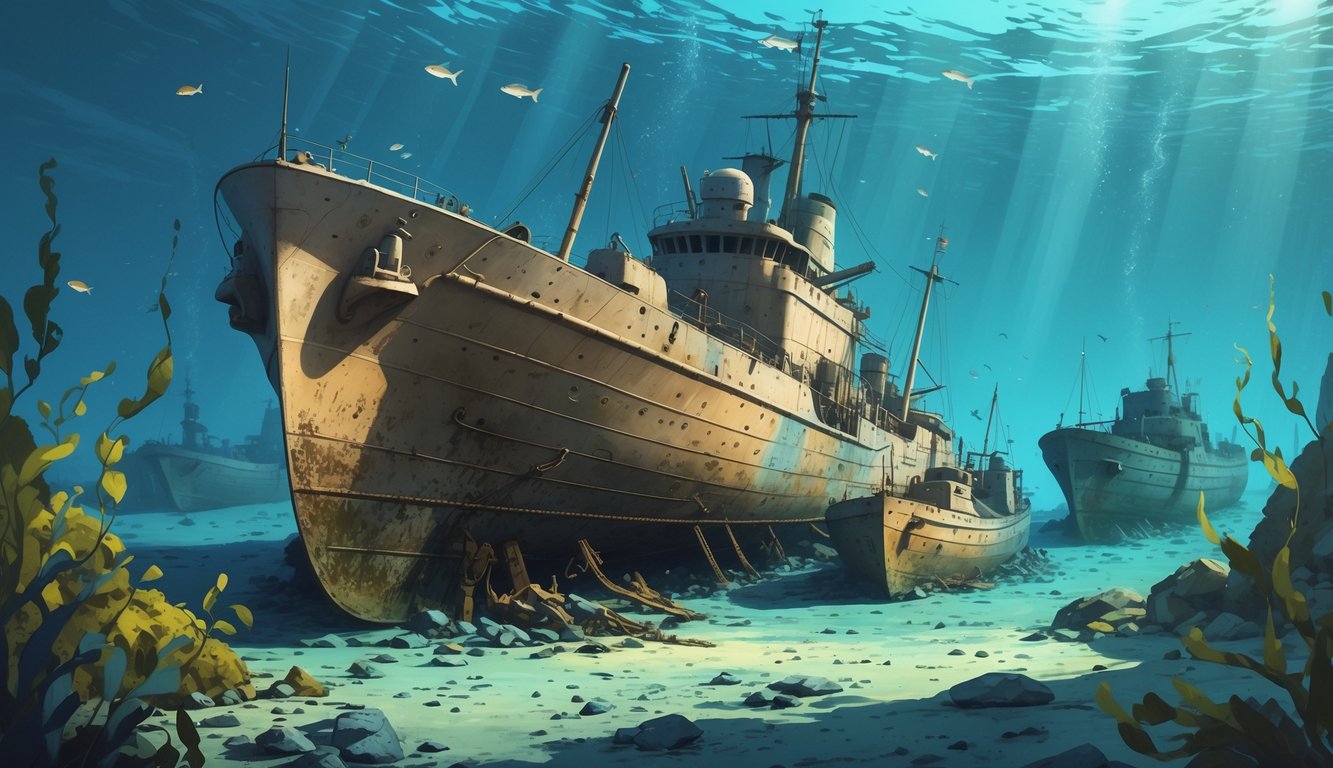
Canadian shipbuilders constructed the French minesweepers Inkerman and Cerisoles during the final months of World War I. Designers gave them a practical engineering approach for wartime needs and harsh North Atlantic conditions.
Role of Canadian Car and Foundry
The Canadian Car and Foundry (CC&F) in Fort William, Ontario, built both ships in 1918. This company usually produced railcars but shifted part of its production to naval vessels during the war.
CC&F completed the minesweepers quickly to meet wartime demands. Both ships launched in the fall of 1918.
The shipyard used local labor and materials whenever possible. Canadian mills supplied steel plating, and domestic manufacturers provided engines. This approach reduced reliance on overseas parts during wartime shipping shortages.
Technical Specifications
The Inkerman and Cerisoles shared nearly identical designs. Both were steel-hulled, single-screw vessels with a displacement of around 320 tons.
They measured approximately 135 feet in length and had a beam of about 23 feet.
| Feature | Specification |
|---|---|
| Length | ~135 ft |
| Beam | ~23 ft |
| Displacement | ~320 tons |
| Hull Material | Steel |
| Propulsion | Single-screw steam engine |
| Crew Capacity | ~39 each |
Coal-fired steam engines powered these ships, giving them a modest top speed for minesweeping operations. The design focused on durability and maneuverability over speed.
Each ship carried a small deck gun for self-defense. Their primary equipment included mechanical sweeps for cutting mine cables.
Purpose During World War I
Naval mines posed a major threat to warships and merchant vessels during World War I. Minesweepers like the Inkerman and Cerisoles removed these hazards.
Their mission was to clear safe passages for convoys and warships, especially in the North Sea, where minefields were dense.
The French Navy planned to use these Canadian-built ships in European waters. The route would take them from Lake Superior through the Soo Locks, down the St. Lawrence River, and across the Atlantic.
Even after the Armistice, thousands of naval mines remained active and dangerous, so the need for minesweeping continued.
The Fateful Voyage Across the Great Lakes
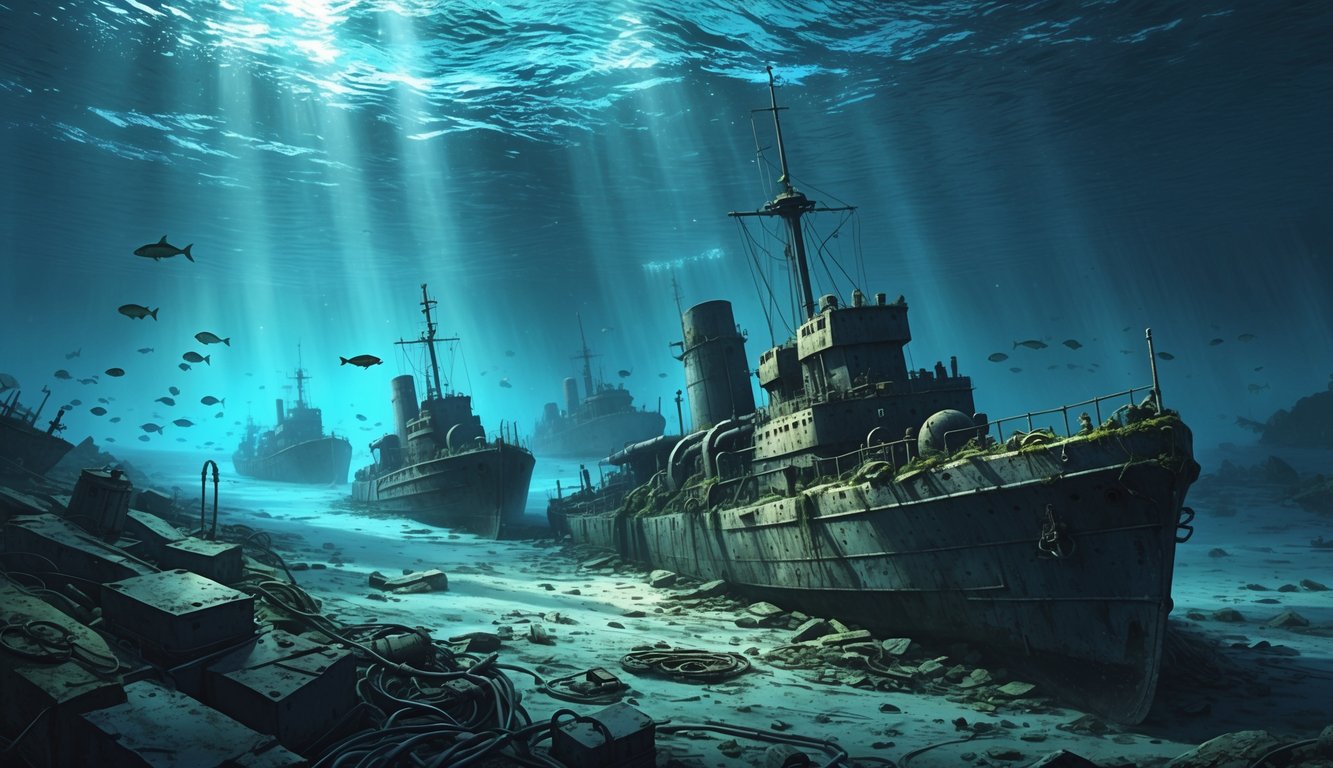
In late November 1918, the two new French Navy minesweepers, Inkerman and Cerisoles, began their delivery journey across Lake Superior. Built in Canada for post-war service, they carried 76 French sailors and two Canadian pilots.
The journey took them through some of the most challenging waters in North America.
Route and Navigation
The ships departed from Port Arthur, Ontario, now part of Thunder Bay. Their destination was the Atlantic Ocean, reached by traveling through all five Great Lakes and the St. Lawrence River.
The planned route included several key points:
| Leg of Journey | Notable Feature |
|---|---|
| Lake Superior | Deep, cold, unpredictable waters |
| Soo Locks | Passage between Superior & Huron |
| Lake Huron to Erie | Narrow channels, busy traffic |
Crews navigated using compass bearings, shoreline landmarks, and charts. In 1918, ships had no GPS, and radio communication was limited.
Captains depended on local pilots for safe passage through narrow or hazardous areas.
Weather Challenges
On November 24, 1918, a powerful storm swept across Lake Superior. Winds reached gale force, and snow reduced visibility to near zero.
The Inkerman and Cerisoles were small compared to many freighters on the lake. Their lighter build made them more vulnerable to heavy seas.
Lake Superior storms can create waves over 20 feet high. Cold water temperatures increased the danger, as survival time in the water was only minutes.
Many shipwrecks on the lake, including these two minesweepers, occurred during sudden winter storms.
The Role of Soo Locks
The Soo Locks in Sault Ste. Marie connect Lake Superior to Lake Huron. Ships use the locks to bypass the St. Marys River rapids, which drop about 21 feet.
For vessels like the Inkerman and Cerisoles, passing through the locks was a critical step in reaching the lower lakes. The locks also served as a checkpoint for navigation and scheduling.
If the ships had reached the Soo Locks, their passage would have been recorded. No such record exists, confirming they sank before arriving.
Today, the Soo Locks remain a vital part of Great Lakes shipping and a point of interest for those studying Lake Superior shipwrecks.
Search Efforts for the Sunken Warships
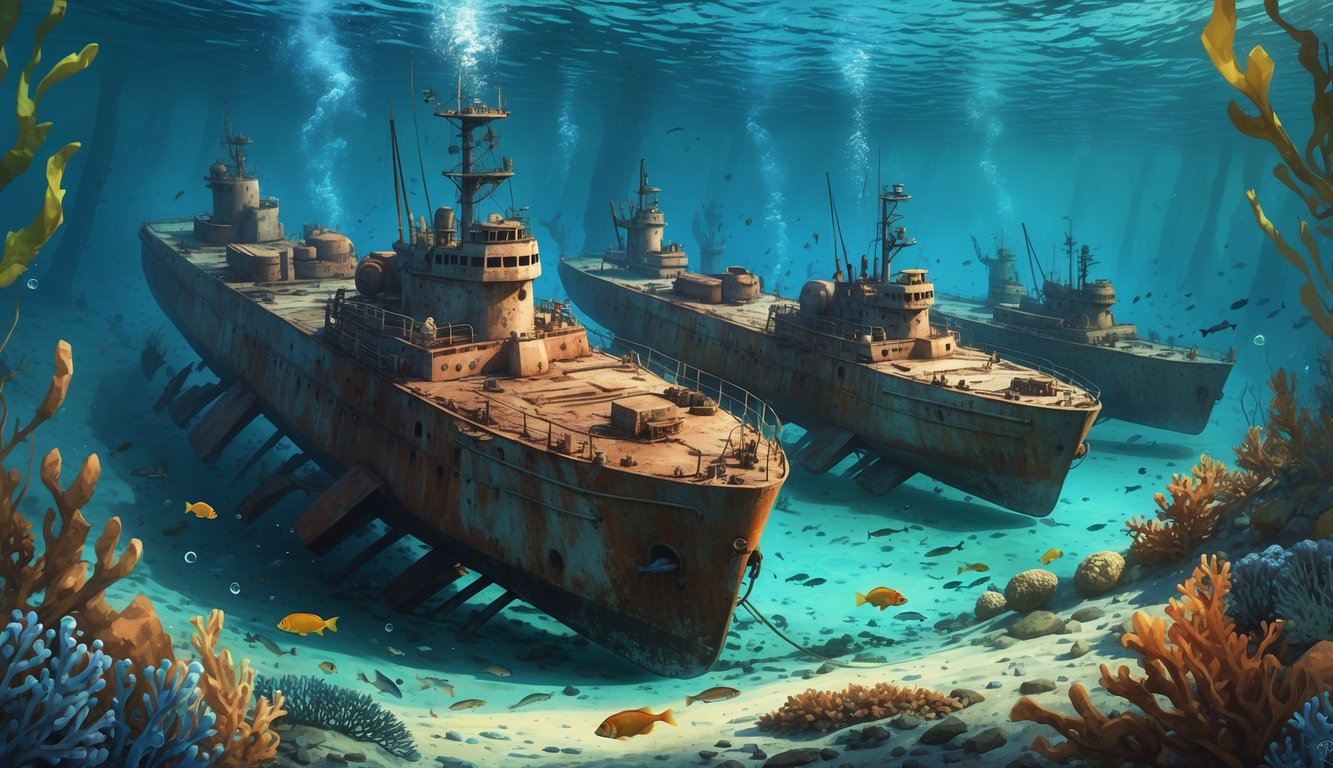
For more than a century, searchers have tried to find the lost World War I minesweepers. Investigators have used both traditional maritime search methods and advanced underwater technologies to look for the wrecks of the Inkerman and Cerisoles in dangerous, unpredictable waters.
Early 20th Century Expeditions
After the Inkerman and Cerisoles vanished, search crews used surface vessels and manual sounding equipment. These early expeditions faced major challenges, such as poor visibility, limited mapping tools, and the vast size of the search area.
Crews worked with paper charts and basic depth-measuring gear. They could only cover small areas at a time.
Weather on Lake Superior often delayed or halted search operations for weeks. Heavy storms made the search even more difficult.
Despite their efforts, maritime authorities recovered no confirmed wreckage during these early attempts. The ships remained missing, and interest in the search faded over time.
Modern Technology and Underwater Robotics
Recent searches have used advanced tools like side-scan sonar, autonomous underwater vehicles (AUVs), and remotely operated vehicles (ROVs). These devices map the seafloor in high detail and work in deep or hazardous areas.
Side-scan sonar sends sound waves across the seabed, producing images that can reveal shipwreck outlines. AUVs run pre-programmed search patterns without human pilots onboard.
Researchers use ROVs to capture video and photographs of possible wreck sites. This technology helped discover a long-missing 1879 shipwreck in Lake Superior.
These tools have increased the chances of finding the Inkerman and Cerisoles, even in deep or sediment-covered areas.
Involvement of Research Institutions
Universities and maritime history groups have contributed to renewed search efforts. Teams from schools like Michigan Technological University use their engineering skills to design search plans and operate specialized equipment.
The Great Lakes Historical Society has provided historical records and mapping data to narrow down possible wreck locations.
French and Canadian historians have shared naval archives to confirm the ships’ last known positions and crew lists. These partnerships combine historical research with modern science, keeping the search for the Inkerman and Cerisoles active more than a century after their disappearance.
Discoveries and False Leads
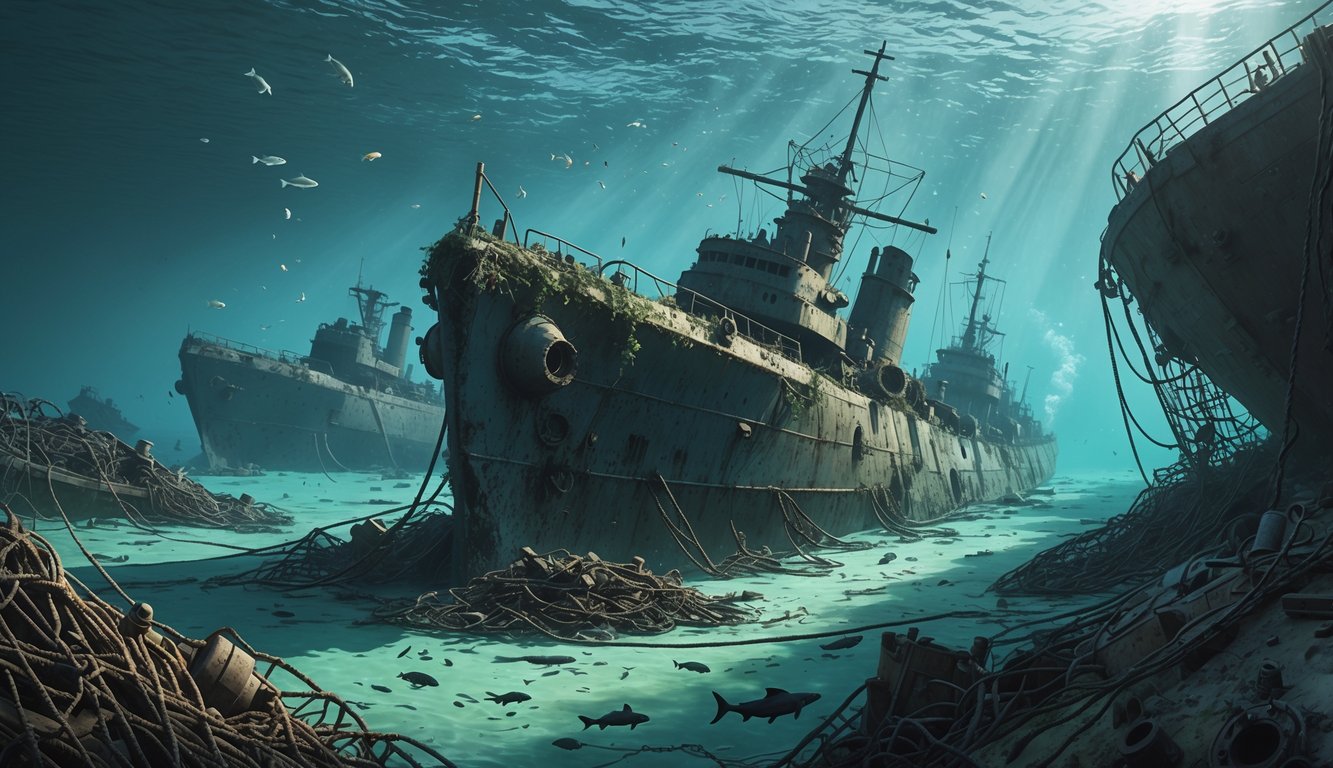
Search teams in the North Sea and Great Lakes often uncover unexpected wrecks while searching for specific lost ships.
Some finds solve mysteries, while others lead to dead ends and unanswered questions.
Notable Shipwreck Finds in the Region
Maritime historians have recorded many wrecks discovered during searches for other vessels.
In some cases, sonar scans reveal hulls buried under decades of sediment.
The French minesweepers Inkerman and Cerisoles disappeared in 1918 during their maiden voyage, taking 78 crew members with them.
Despite many surveys, researchers have not found their exact resting places.
While scanning large search grids, researchers often come across unrelated shipwrecks, such as cargo steamers, fishing vessels, and early naval craft.
Each discovery adds to the historical record and can delay the main search.
Key factors in these finds:
- Heavy use of side-scan sonar
- Archival research to narrow search zones
- Collaboration between divers, historians, and local authorities
The Case of the Satellite Tugboat
In 2023, a search team in Lake Superior looked for the missing minesweepers but instead found the 150-year-old tugboat Satellite.
This vessel had never appeared in official shipwreck registries.
The team discovered the tug during filming for a television program.
Divers documented the tug’s intact hull, wheelhouse, and machinery.
The Great Lakes Shipwreck Historical Society confirmed the find.
Although the team did not find their intended target, the Satellite added valuable information to regional maritime history.
The tug’s preservation in cold, fresh water provided a rare example of 19th-century shipbuilding still visible today.
Challenges of Deep Water Exploration
Teams face many difficulties when searching for wrecks like the Inkerman and Cerisoles.
Depth, sediment, and unpredictable weather make these searches difficult.
Low visibility in some areas reduces the effectiveness of sonar imaging.
Cold water can preserve wrecks but makes diving more dangerous.
Strong currents may shift debris fields, scattering remains over wide areas.
Expeditions often cost a lot due to vessel time, fuel, and specialized equipment.
Crews may spend weeks at sea without finding anything.
Common obstacles include:
- Depths exceeding safe dive limits
- Limited historical records
- Interference from modern shipping traffic
Sunken Warships in the North Sea
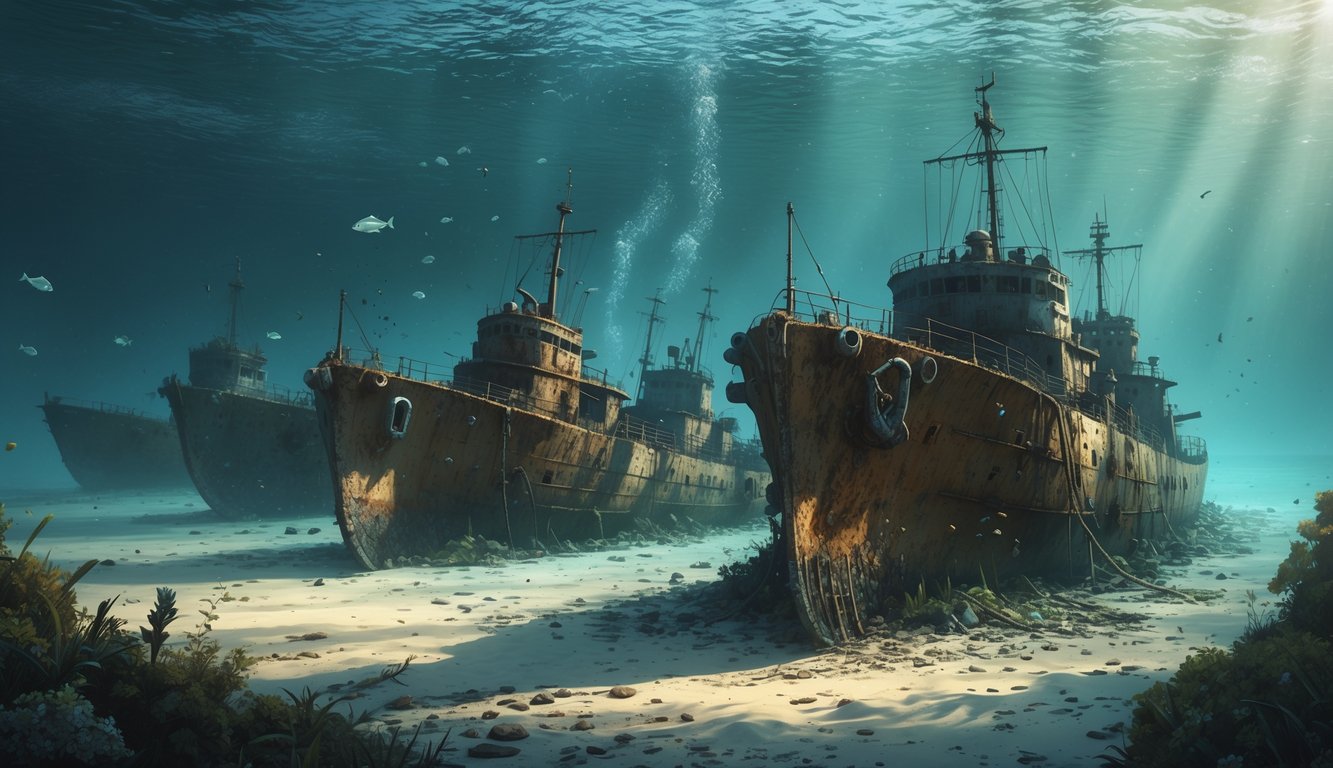
Many warships lost in the North Sea during World War I still rest on the seabed.
Some struck hidden mines, while others were sunk by German U-boats.
These wrecks show the risks of naval warfare and the dangers of underwater weapons.
Notable World War I Shipwrecks
The North Sea became a graveyard for both large warships and smaller minesweepers.
Over 350 minesweeping vessels and more than 1,200 crew members were lost.
These ships often worked in dangerous waters, clearing minefields to keep trade and military routes open.
Mines could explode without warning, destroying wooden or steel hulls.
Even when ships survived blasts, crews often suffered injuries from debris or cold water.
Some wrecks, such as those in Scapa Flow, attract divers today.
Others remain untouched because of depth, strong currents, or unexploded munitions.
These sites are also war graves, holding the remains of sailors who never made it home.
The Story of HMS Hawke
HMS Hawke was a British cruiser built in the late 19th century.
In October 1914, a German U-boat torpedoed the ship while it patrolled the North Sea.
The attack sank the ship quickly, killing most of its crew.
Explorers confirmed the location of HMS Hawke’s wreck in 2024, more than 100 years after it was lost.
Naval historians and families of the crew found the discovery significant.
Images from the site show the ship’s hull resting on its side, with much of its structure still intact.
This find adds to the growing list of torpedoed WWI warships documented in the North Sea.
German U-Boat Threats
German U-boats posed a serious danger to Allied ships in the North Sea.
These submarines could approach unseen and attack without warning, using torpedoes to sink military and merchant vessels.
U-boats targeted minesweepers to disrupt mine clearance operations.
By removing these ships, Germany could keep minefields in place and restrict Allied naval movement.
The Royal Navy responded by using convoys, armed escorts, and better detection methods.
Even with these changes, crews remained vulnerable to hidden submarines, as the sinking of HMS Hawke showed.
The Role of German U-Boats
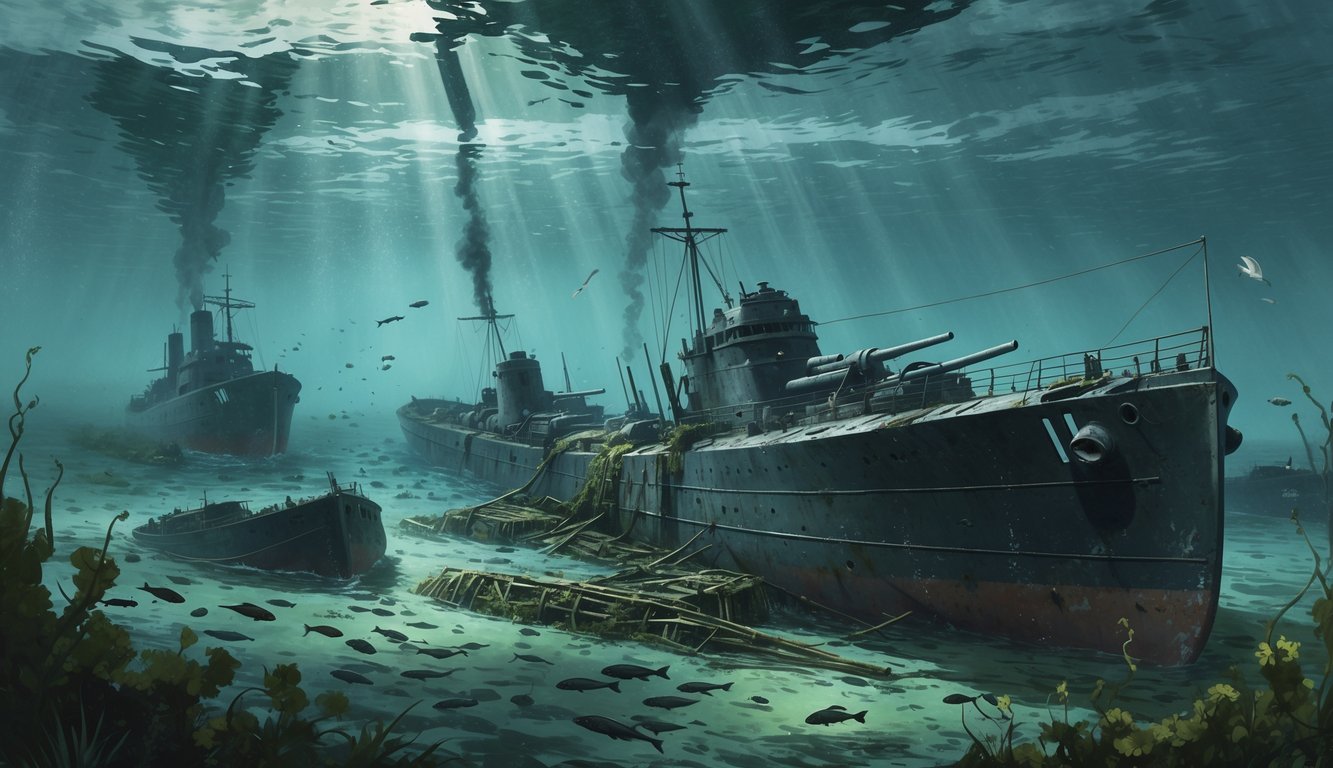
German U-boats in World War I hunted both military and merchant vessels in the North Sea.
Their actions disrupted shipping routes, endangered minesweeper crews, and forced the Allies to develop new naval defenses.
Tactics and Strategies
German U-boats, short for Unterseeboot, used stealth and surprise.
They often waited near key shipping lanes and minefields.
Submarine crews used periscopes to spot targets while staying hidden below the surface.
Once in position, they fired torpedoes or surfaced to use deck guns against smaller ships.
U-boats often targeted minesweepers after they cleared safe routes, knowing these vessels were lightly armed.
They also worked with minefields to funnel ships into predictable paths, increasing their chances of success.
These strategies forced the Allies to invest in patrol craft, depth charges, and convoy escorts.
Impact on Allied Naval Forces
U-boats in the North Sea created constant danger for Allied minesweepers.
Crews had to work while watching for periscopes or sudden torpedo attacks.
Losing minesweepers slowed the clearing of minefields and left merchant convoys at risk.
This disruption threatened the flow of supplies to Britain.
The Allies responded with convoy systems, anti-submarine nets, and more armed trawlers and destroyers.
These measures reduced U-boat attacks but did not eliminate the threat.
Allied forces also improved communication between ships and shore stations by using wireless signals to report submarine sightings in real time.
Famous Encounters and Sinkings
Several incidents in the North Sea showed the danger U-boats posed to minesweepers.
In 1916, U-boats sank multiple Royal Navy sweepers within days, forcing operations to stop until reinforcements arrived.
Some encounters, described in unrestricted U-boat warfare, showed that Germany targeted even neutral or non-combatant vessels if they helped the Allies.
One notable case involved a minesweeper escorting a damaged freighter.
A lurking U-boat struck first at the escort, leaving the freighter defenseless.
Such incidents revealed the precision of German submarine operations and their impact on naval warfare in the region.
Legacy of World War I Shipwrecks
Many World War I shipwrecks remain on the seabed, preserved by cold waters and protected under international law.
They offer clues about naval warfare, maritime technology, and the lives of those who served aboard.
Historical Significance
WWI shipwrecks are more than rusting hulls; they are time capsules of early 20th-century naval history.
British minesweepers like Inkerman and Cerisoles vanished during the war, leaving no survivors and little trace until modern surveys began.
The North Sea, heavily mined during the conflict, became a graveyard for hundreds of ships.
Over 4,200 British vessels were lost to enemy action, with more than 1,000 wrecks along England’s south coast.
These wrecks reveal details about construction, weapons, and naval strategies.
They also help historians understand the hazards of minesweeping, a dangerous job that claimed many ships and crews.
Cultural and Memorial Importance
Many of these wrecks are protected as war graves under agreements like the UNESCO Convention on the Protection of Underwater Cultural Heritage.
This means they cannot be disturbed without permission, preserving them as memorials to those who died.
For descendants of lost sailors, the wrecks are a direct connection to family history.
They serve as underwater cemeteries where ceremonies and commemorations still take place.
Some sites, such as those documented by the Maritime Archaeology Trust, are also used in educational programs.
These programs help the public learn about the cost of naval warfare and the importance of preserving these sites.
Influence on Modern Shipwreck Exploration
The search for lost WWI vessels has led to advances in underwater surveying.
Technologies like side-scan sonar, remotely operated vehicles (ROVs), and 3D mapping now make it possible to study wrecks in deep or dangerous waters.
Projects such as NOAA’s work on World War I shipwrecks combine archaeology, history, and marine science.
This approach helps researchers assess the environmental impact of decaying warships, including leaks from fuel and munitions.
Finding vessels like Inkerman and Cerisoles shows how exploration can confirm long-standing mysteries.
Each discovery adds to the historical record and fills gaps left by wartime loss and incomplete archives.
Comparing World War I and World War II Shipwrecks
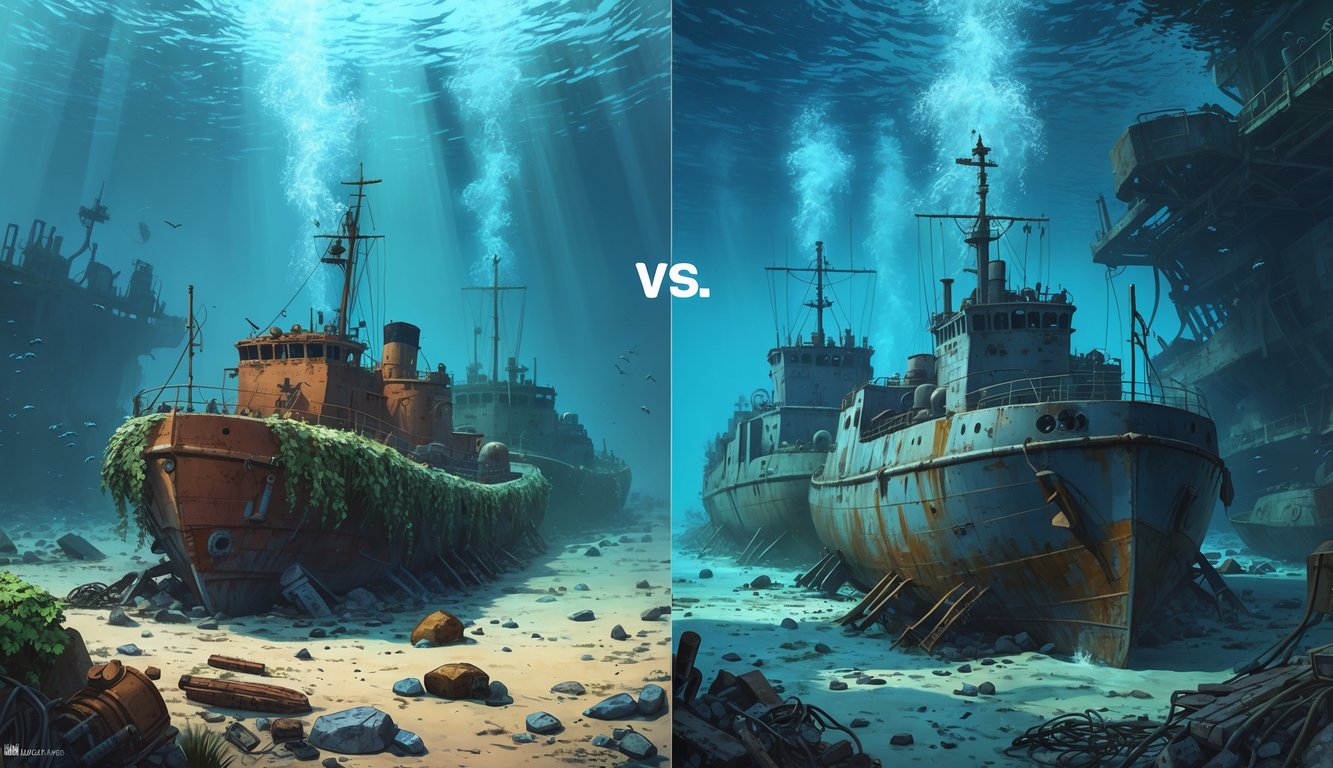
Many warship wrecks from both World Wars remain on the seabed, but their design, purpose, and locations differ.
Changes in shipbuilding, naval tactics, and global battle zones shaped how these vessels were built, used, and lost at sea.
Technological Advances
World War I warships were often built with riveted steel hulls, coal-fired boilers, and simple weapon systems.
Minesweepers of this era were small, lightly armed, and used manual equipment to clear naval mines.
By World War II, shipbuilders used welded steel hulls, oil-fired engines, and advanced propulsion systems.
Minesweepers carried sonar, radar, and improved sweeping gear, making them faster and more effective.
Armament also changed.
While WWI minesweepers often had only light guns, WWII designs carried anti-aircraft weapons, depth charges, and better mine-clearing devices.
This made ships more survivable but also more complex and expensive to build.
| Feature | WWI Minesweepers | WWII Minesweepers |
|---|---|---|
| Hull Construction | Riveted steel | Welded steel |
| Fuel | Coal | Oil |
| Detection Equipment | None | Sonar, radar |
| Armament | Light guns | AA guns, depth charges |
Differences in Naval Warfare
In World War I, navies in the North Sea focused on blockades, minefields, and large fleet battles like the Battle of Jutland.
Minesweeper crews worked close to shore and in contested channels, often facing threats from submarines and mines.
During World War II, navies faced a wider range of threats.
Air power became a major danger, so crews equipped minesweepers with stronger anti-air defenses.
Escort duties grew more common, as convoys needed protection from submarines and aircraft.
Losses increased dramatically. Navies lost an estimated 15,000 ships during WWII, showing the conflict’s global scale.
Minesweeper crews operated in more regions, from the Atlantic to the Pacific.
Shipwrecks Across Different Oceans
Most WWI minesweeper wrecks in the North Sea rest in relatively shallow waters, often near British or German coasts.
Many wrecks remain intact but continue to corrode, and some still pose environmental risks from fuel or munitions.
WWII shipwrecks appear in many more locations.
Naval battles and convoy routes left wrecks in the Atlantic, Pacific, Indian Ocean, and Mediterranean.
Some, like those in the Solomon Islands, lie in deep tropical waters.
Others rest in Arctic seas.
Geography affects preservation.
Cold, low-oxygen waters in the North Sea slow decay, while warm, salty tropical waters cause faster corrosion.
As a result, some WWII wrecks in the Pacific deteriorate faster than older WWI wrecks in northern waters.
International Collaboration and Ongoing Research
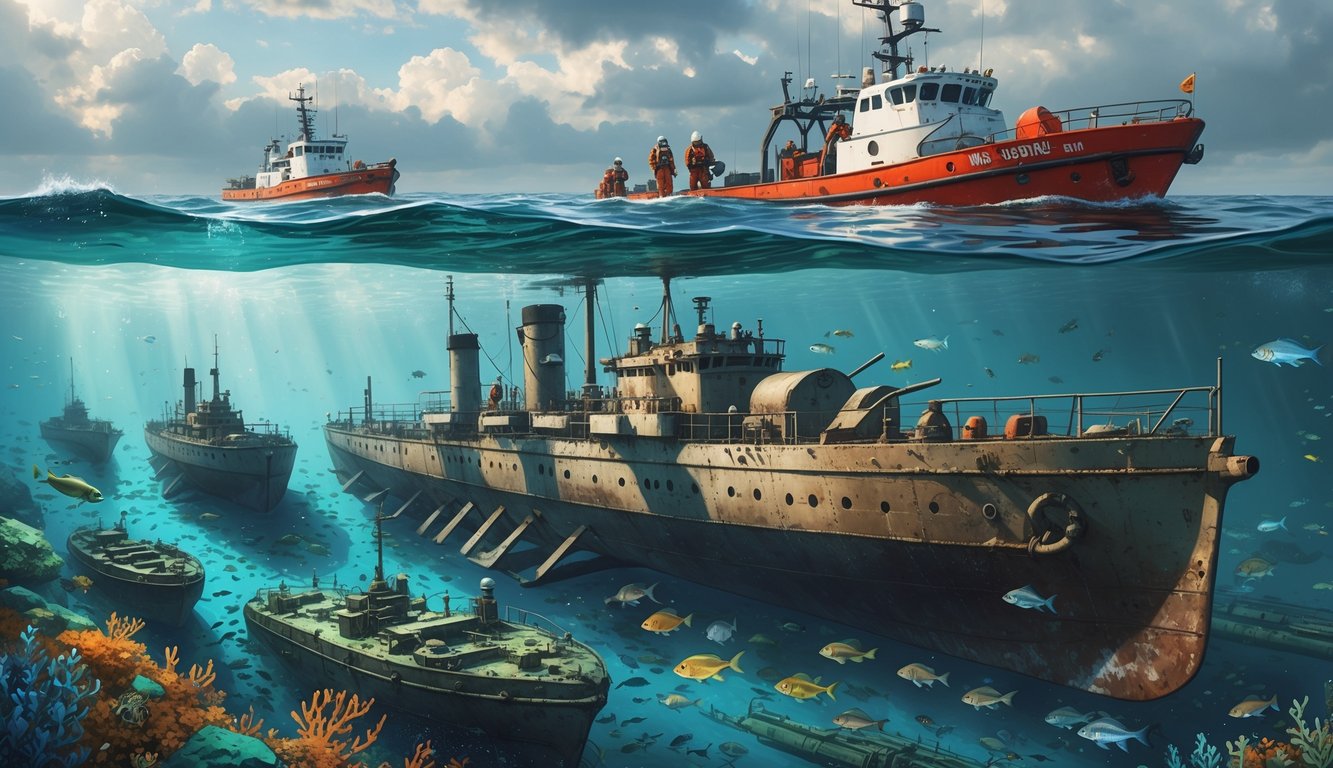
Several countries work together to locate and study WWI shipwrecks in the North Sea.
Teams share data, technology, and expertise.
Projects combine historical research with modern survey tools to find wreck locations and assess their condition.
Researchers also address environmental risks.
Cross-Border Search Initiatives
International teams map the seabed and search for lost warships.
They use side-scan sonar, remotely operated vehicles (ROVs), and old records to narrow search areas.
Shared databases let researchers compare findings and avoid repeating work.
This cooperation speeds up searches and lowers costs.
Joint expeditions often include marine archaeologists, naval historians, and environmental scientists.
By pooling resources, teams can cover larger areas of the North Sea more quickly.
Some projects receive funding from public donations and cultural heritage grants.
This support allows teams to conduct multi-year surveys in difficult offshore conditions.
The Role of Norway and Other Nations
Norway plays a key role in North Sea shipwreck research because of its long coastline and maritime experience.
Norwegian vessels support survey missions with advanced sonar and diving equipment.
Neighboring countries such as the United Kingdom, Denmark, and the Netherlands also contribute.
They provide historical archives, naval records, and technical crews familiar with local waters.
Norway sometimes coordinates with these nations to manage wreck sites that contain fuel or munitions.
This cooperation helps reduce environmental risks and preserves historical value.
International agreements set rules for handling war graves and protecting underwater cultural heritage.
These rules ensure that research respects both history and the environment.
Future Prospects for Discovery
Researchers expect that advances in underwater robotics will make locating North Sea shipwrecks faster and more accurate. Autonomous underwater vehicles (AUVs) can scan large areas without constant human control.
Survey teams will use data from these missions to identify wrecks like the lost WWI minesweepers. They will also assess the stability of these sites.
This information helps with historical documentation. It also supports environmental safety efforts.
Future missions may target wrecks that pose pollution risks. Experts have already conducted similar WWI shipwreck surveys in other regions.
As technology improves, researchers will document and study more wrecks hidden beneath the North Sea. This progress will help protect these sites.