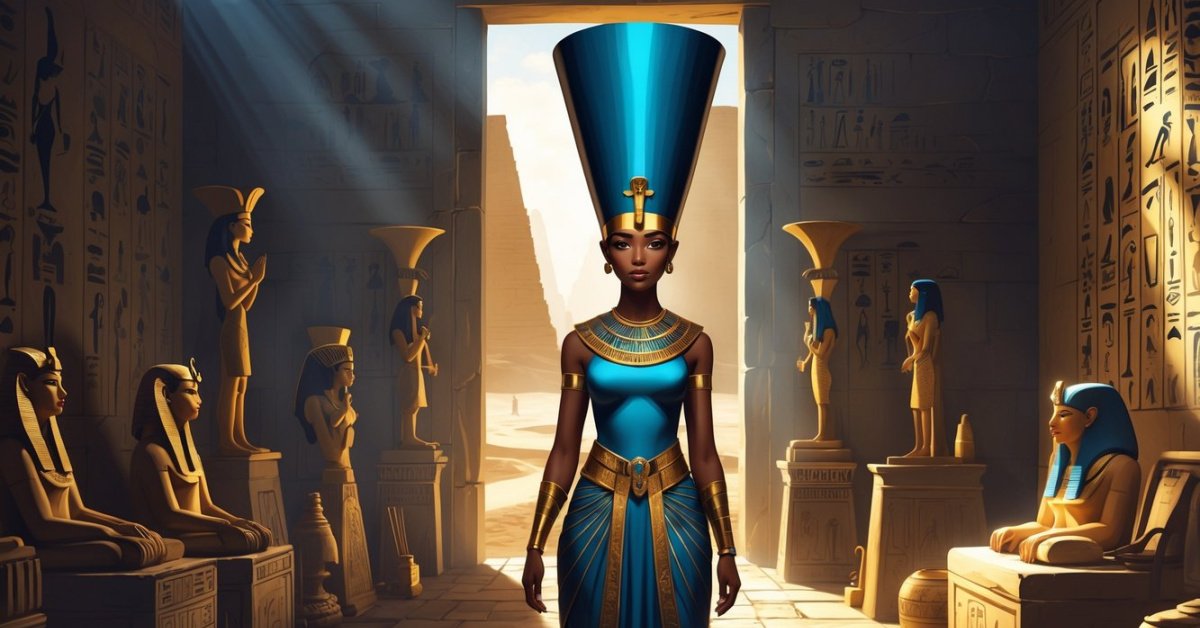
Nefertiti’s name still sparks curiosity more than 3,000 years after she vanished from history. She ruled alongside Pharaoh Akhenaten during one of Egypt’s most dramatic cultural shifts.
She left behind a legacy as striking as her famous bust. Historians note that she disappeared from the record at the height of her power, and no one knows for certain what happened to her.
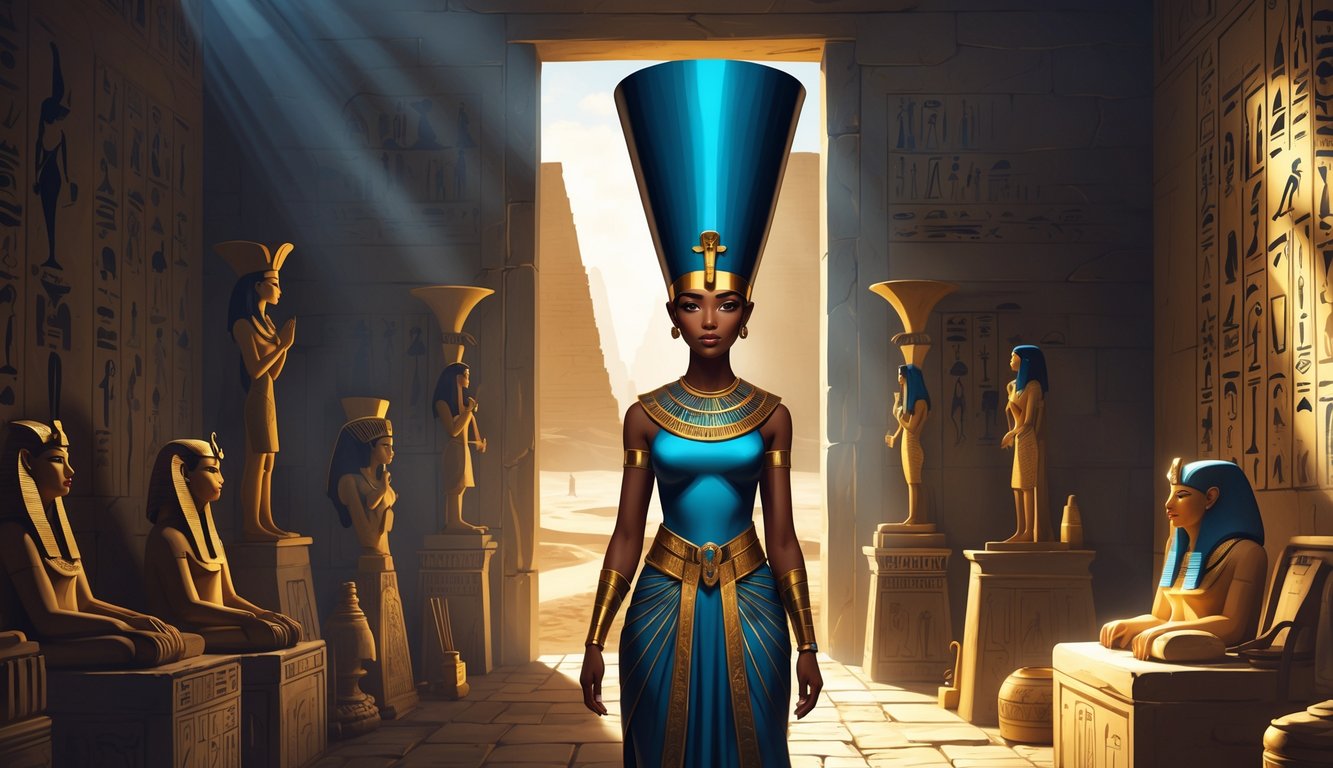
Her life story blends political power, religious change, and personal influence. As queen, she may have held equal authority to the pharaoh.
She guided Egypt through the radical changes of the Amarna Period. The sudden silence about her in official records has fueled debates, from theories of her secret rule as Pharaoh Neferneferuaten to the possibility of exile or death.
From her rise to prominence and her role in reshaping Egypt’s religion, each clue brings us closer to understanding her disappearance. The mystery remains unsolved, keeping Nefertiti’s story alive in both scholarly research and popular imagination.
The Mystery of Nefertiti’s Disappearance
Nefertiti held unusual political influence for a queen in ancient Egypt. Her name vanished from official records late in her husband Akhenaten’s reign.
Archaeologists and historians have pieced together fragments of evidence. No single explanation fits all the facts.
Timeline of Her Last Known Years
Nefertiti served as the chief consort of Pharaoh Akhenaten from about 1353 BCE. Together, they promoted the worship of Aten and reshaped Egypt’s religion and art.
Records place her in the 12th year of Akhenaten’s reign, around 1336 BCE. After that, her name disappears from public inscriptions.
Some artifacts from this period show her with royal regalia. This suggests she may have acted as co-regent.
Other artifacts omit her entirely, hinting at a sudden political or personal change.
The table below summarizes key events:
| Year of Akhenaten’s Reign | Event or Evidence |
|---|---|
| Year 1–12 | Nefertiti appears in art and inscriptions alongside Akhenaten |
| Year 12 | Last confirmed public record of Nefertiti |
| After Year 12 | Possible role as co-regent or complete absence from records |
Key Theories Surrounding Her Fate
One theory suggests she died suddenly, possibly from illness or childbirth. This could explain the abrupt end to her public role.
Another theory proposes she changed her name and ruled as pharaoh Neferneferuaten. Supporters point to inscriptions that may match her titles and style of rule, as discussed in research on her possible role as pharaoh.
Some historians think she fell from political favor, perhaps due to religious or court disputes. Officials may have removed her name from monuments in a form of erasure.
Evidence for each theory remains incomplete. The debate continues among Egyptologists.
Impact on Egyptian History
Nefertiti’s disappearance came during the Amarna Period, a time of major cultural and religious change. Her absence left a power gap at the royal court.
If she did rule as Neferneferuaten, she would have been one of the few women to hold pharaonic authority. She may have influenced policy and religion.
Her removal from records—whether by death, name change, or erasure—affected how later generations understood the Amarna Period. It also shaped how Egyptian society remembered female rulers, limiting their visibility in official history.
Nefertiti’s Role in Ancient Egypt
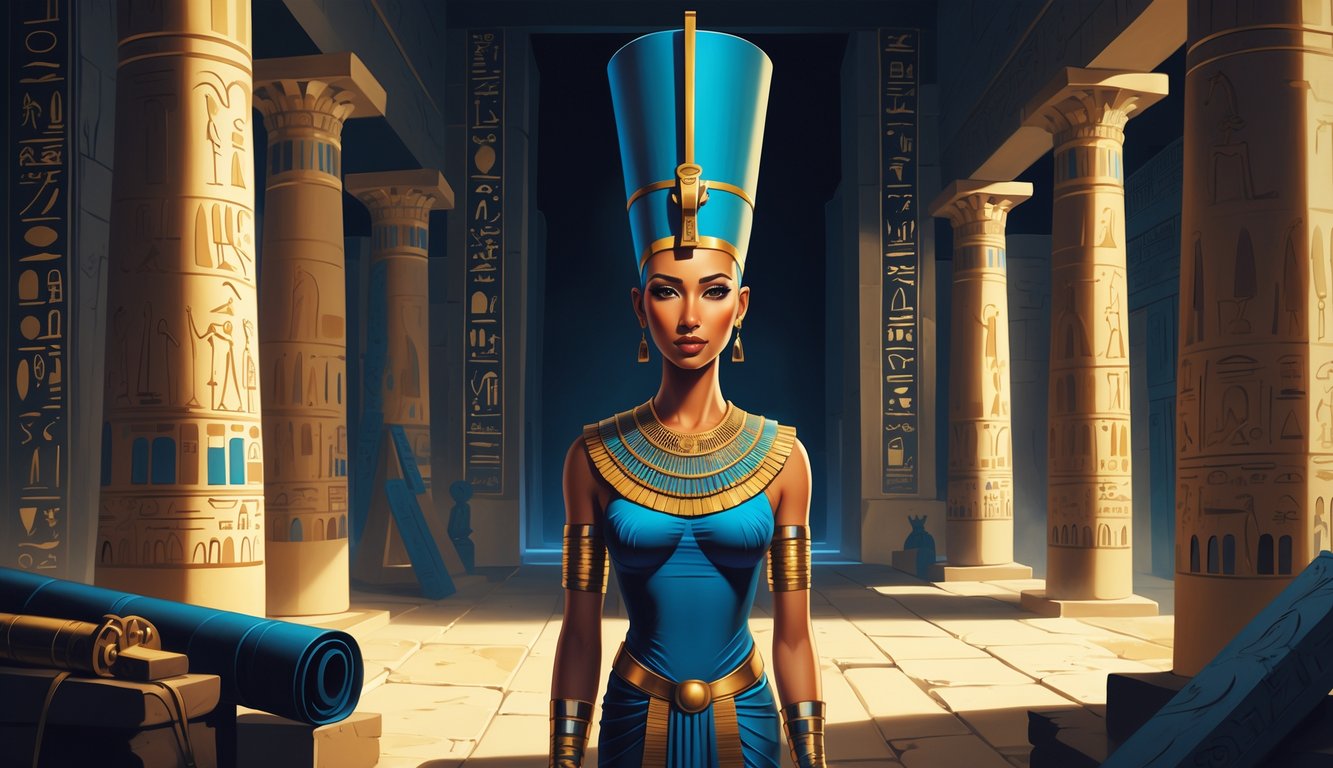
Nefertiti held a unique position in Egypt’s history as both a political partner to Pharaoh Akhenaten and a key figure in shaping religious life. Her image and influence reached into governance, religion, and the arts.
She left a lasting impression on Egyptian society.
Political Power and Influence
Nefertiti was more than a ceremonial queen. She actively participated in state affairs during the 18th Dynasty.
Historical evidence shows her appearing alongside Akhenaten in official scenes, sometimes in positions usually reserved for the pharaoh. She likely acted as co-regent in the later years of Akhenaten’s reign.
Some scholars suggest she may have even ruled briefly under the name Neferneferuaten. This would place her among the few women to hold near-pharaonic power in ancient Egypt.
Her political role also extended to diplomacy. Court art depicts her receiving foreign envoys and overseeing tribute, suggesting she influenced Egypt’s relationships with other states.
Such involvement shows she was deeply embedded in the political framework of the Amarna Period.
Religious Reforms with Akhenaten
Nefertiti played a central role in the religious transformation led by Akhenaten. Together, they promoted Atenism, a form of worship focused on the sun disc Aten, replacing the traditional pantheon of Egyptian gods.
This shift was radical for Egyptian society. Temples to other deities closed, and builders constructed new open-air temples dedicated to Aten.
Artists often depicted Nefertiti making offerings to Aten, sometimes without Akhenaten present. This highlights her religious authority.
Her prominence in these rituals suggests she was not just a supporter but a partner in shaping the new faith. According to Britannica, her visibility in religious imagery may have strengthened the royal family’s connection to Aten.
Representation in Art and Culture
Nefertiti’s image became one of the most recognizable symbols of ancient Egypt. The famous limestone bust discovered in 1912, now in Berlin, is considered a masterpiece of Amarna art.
It reflects the period’s distinctive style, with elongated features and realistic detail. She appears frequently in carvings and painted scenes, often shown at equal scale to Akhenaten.
This visual equality reinforced her status as a partner in rule. Art from this era also depicted her in family scenes with their daughters, a departure from earlier royal art.
This emphasis on domestic life reflected the cultural changes of the Amarna Period and helped shape how society viewed the royal family.
The Amarna Period: A Revolutionary Era
During the reign of Pharaoh Akhenaten and Queen Nefertiti, Egypt experienced a major shift in politics, religion, and daily life. The royal family introduced new traditions that changed how people worshipped, worked, and interacted with their leaders.
Founding of Akhetaten
Akhenaten ordered the construction of a new capital city called Akhetaten (modern-day Amarna) around 1346 BCE. He chose a site in Middle Egypt that had no previous religious ties, making it a fresh start for his new beliefs.
The city became the center of worship for the sun god Aten. Builders constructed temples with open roofs so sunlight could reach the altars.
This design reflected the focus on a direct connection with Aten. Akhetaten was planned with wide streets, royal palaces, and housing for officials and workers.
Art from this period often showed the royal family in relaxed poses, breaking from earlier formal styles. The move to Akhetaten also physically distanced the court from traditional religious centers like Thebes.
This reduced the power of the old priesthood and centralized authority under the king and queen. You can read more about this shift in the Amarna Period.
Changes in Social Structure
The new religion placed Aten above all other gods, which changed the role of priests in society. Many temple officials lost influence, while new Aten priests gained favor at court.
Artists and craftsmen found new opportunities as demand grew for Aten temples, statues, and murals. The style became more naturalistic, showing people with elongated heads and softer features.
Daily life also shifted for common citizens. Farmers supplied food for the growing city, while laborers worked on large-scale building projects.
Royal women, especially Nefertiti, appeared more prominently in public art and inscriptions. This visibility suggested they had greater influence in governance and religious ceremonies during the Amarna era.
Nefertiti’s Origins and Rise to Power
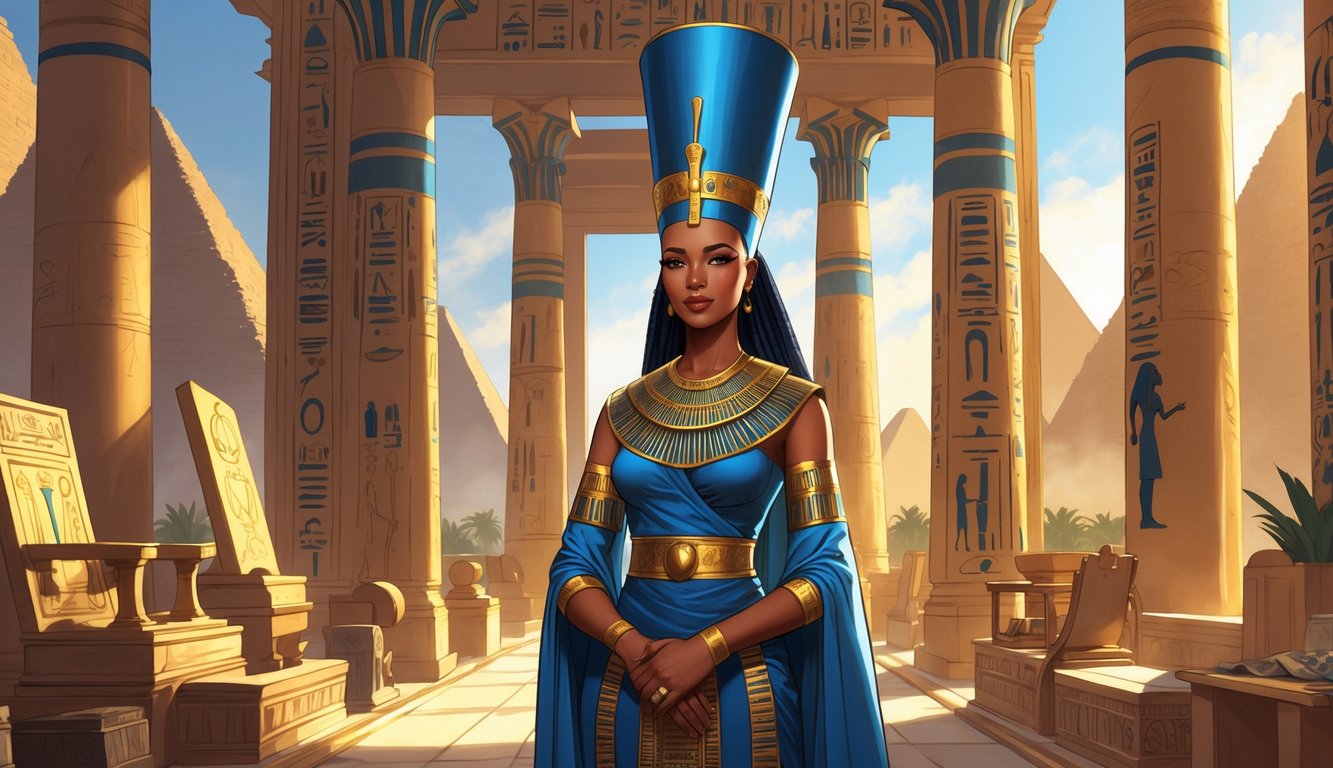
Nefertiti lived during Egypt’s 18th Dynasty, a time of political stability and major cultural change. She became one of the most influential women in ancient Egypt.
She is known for her political role, religious reforms, and striking artistic depictions.
Debates About Her Lineage
Historians do not agree on Nefertiti’s exact family background. Some evidence suggests she may have been the daughter of Ay, a high-ranking court official who later became pharaoh.
Others believe she could have been of foreign origin, possibly from Mitanni, a kingdom in present-day Syria. Her name, meaning “The Beautiful One Has Come,” adds to the idea she might have arrived from outside Egypt.
However, no written record confirms this theory. Archaeologists have found no definitive birth records or family inscriptions.
This lack of evidence has kept her origins a subject of debate for more than a century. Despite the uncertainty, her early life likely involved an elite upbringing, giving her the education and connections needed to enter the royal court.
Marriage to Akhenaten
Nefertiti married Pharaoh Akhenaten, who ruled from about 1353 to 1336 BCE. Their marriage was both a personal and political alliance, strengthening her position in the royal family.
She became Akhenaten’s Great Royal Wife, a title that gave her high status and ceremonial duties. Together, they promoted Atenism, a form of worship centered on the sun disc Aten.
Art from the period shows her participating in religious rituals alongside the pharaoh, an unusual role for a queen. In some carvings, she appears the same size as Akhenaten, suggesting equal importance in public and religious life.
Her influence during this time set the stage for her unprecedented power in the years that followed. You can read more about her reign in historical accounts from Britannica and Wikipedia.
Religious Upheaval and Society’s Response
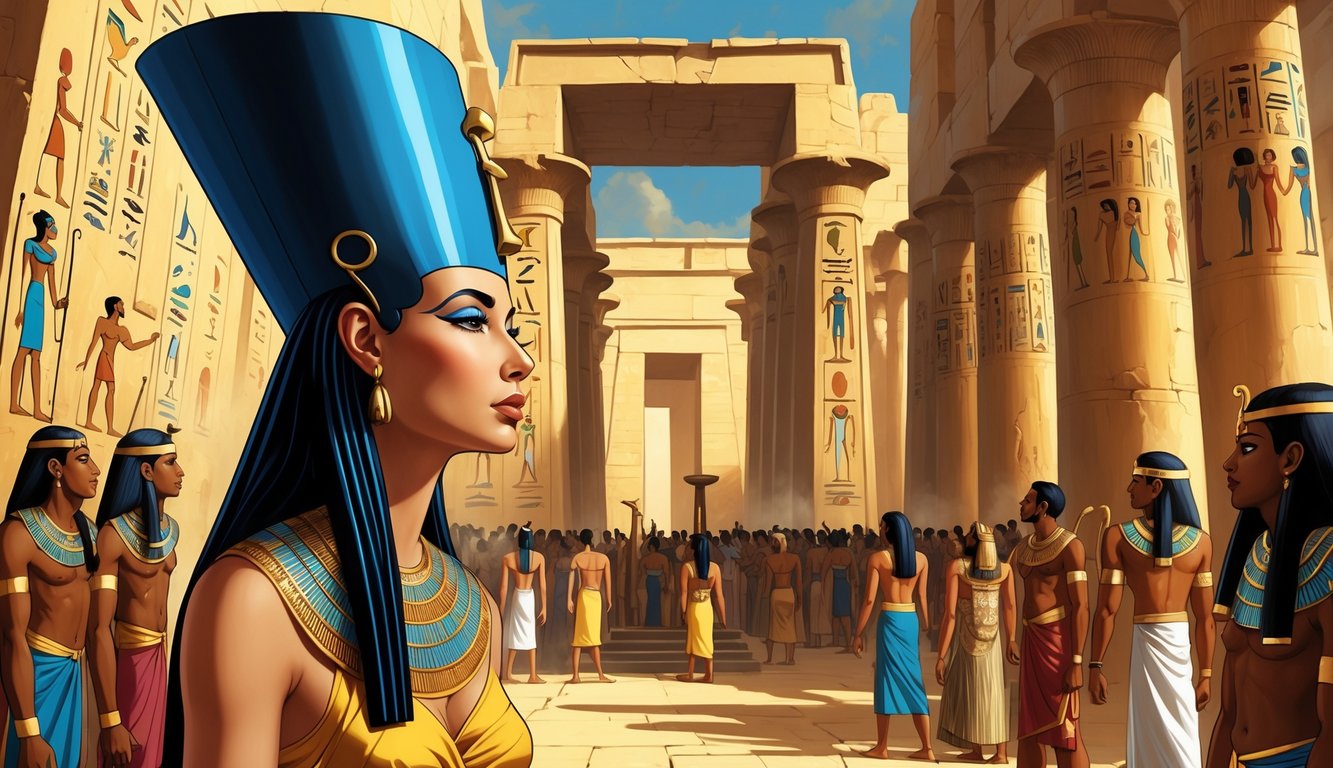
During the reign of Akhenaten and Nefertiti, Egypt shifted from worshipping many gods to honoring a single deity. This change altered daily life, religious practices, and the balance of political power in the kingdom.
Atenism and Monotheism
Akhenaten introduced Atenism, a belief system centered on the sun disk Aten. He and Nefertiti promoted Aten as the sole god, replacing the traditional pantheon.
Temples dedicated to other gods closed, and officials redirected their wealth to Aten’s worship. The royal family became the main link between Aten and the people, which increased their religious authority.
Art and inscriptions from this period show the king, queen, and their children offering gifts to Aten. Public rituals focused on sunlight and open-air temples, breaking from the enclosed sanctuaries used in earlier worship.
This change also influenced society’s daily routines. Farmers, craftsmen, and officials honored Aten in their work and prayers. The shift disrupted long-standing traditions that had shaped Egyptian identity for centuries.
Reaction of the Priesthood
Amun’s priesthood, especially those closely tied to the god, lost power and wealth when Atenism rose. Officials closed many temples and took their lands and treasures.
The royal court removed priests from high positions. This caused tension between the rulers and religious leaders.
Historical records show that resistance happened quietly and sometimes in an organized way. Some communities secretly continued honoring their traditional gods.
After Akhenaten died, rulers like Tutankhamun brought back the old religious system. They reopened temples and revived worship of many gods, removing most traces of the Amarna period from official records.
Theories on Nefertiti’s Disappearance
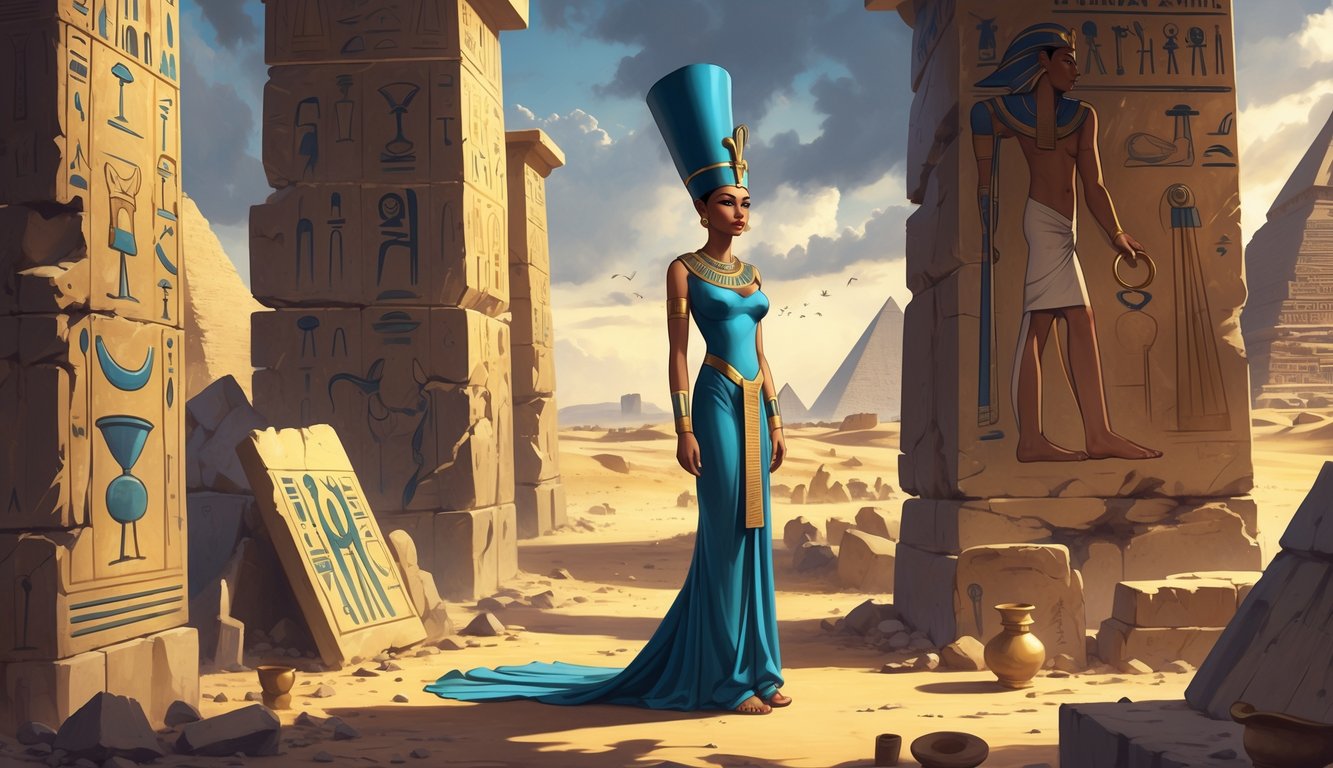
Historians still debate what happened to Nefertiti after she disappeared from records during Akhenaten’s later years. Inscriptions, tombs, and artifacts provide clues but no clear answer.
Death and Burial Hypotheses
One main idea is that Nefertiti died around the 12th year of Akhenaten’s reign. Her name stops appearing in official records at this time.
Some archaeologists think she was buried in Amarna, the city Akhenaten built. Others believe her tomb could be hidden in the Valley of the Kings.
Some theories link her burial to Tutankhamun’s tomb. Egyptologist Nicholas Reeves suggested that hidden chambers in Tutankhamun’s tomb might hold her burial, based on radar scans and wall studies.
Because no tomb or mummy has been confirmed, her fate remains uncertain. Searches continue as experts look for more evidence.
Possibility of Co-Regency
Another theory suggests Nefertiti did not vanish but became co-regent with Akhenaten. She may have taken on more political and religious duties, ruling with him during his final years.
Some inscriptions show a powerful female figure with pharaoh-like authority, possibly Nefertiti. She may have changed her titles, which could explain why her name appears less often.
If this theory is correct, changes in royal protocol, not her death, explain her disappearance from records.
Identity as Pharaoh Neferneferuaten
A related theory proposes that Nefertiti became the ruler known as Neferneferuaten after Akhenaten’s death. Records mention Neferneferuaten as a female pharaoh who ruled briefly before Tutankhamun.
The name Neferneferuaten is similar to Nefertiti’s full royal title. Some scholars think she took the throne to keep Egypt stable during the transition.
Inscriptions and artifacts show both feminine and royal titles. However, some experts suggest other candidates, like her daughter Meritaten, for the identity of Neferneferuaten.
Archaeological Investigations and Discoveries
Archaeologists have spent years searching burial sites, ancient records, and artifacts related to Nefertiti. Some focus on Egypt’s royal tombs, while others use technology to re-examine old discoveries.
These efforts have revealed new clues and raised more questions about her fate.
Searches in the Valley of the Kings
The Valley of the Kings has been the main site for searches for Nefertiti’s burial. This area holds tombs of pharaohs and royal family members from the New Kingdom.
Egyptologist Zahi Hawass led several digs in the valley. He believes Nefertiti’s remains may lie in a hidden chamber or unmarked tomb.
Some teams explored areas near Tutankhamun’s tomb after radar scans suggested possible hidden rooms. While no confirmed tomb was found, teams recovered pottery, tools, and wall painting fragments.
These discoveries help date chambers and suggest royal burials. The exact location of Nefertiti’s resting place is still unknown.
Theories About Tutankhamun’s Tomb
Some experts think Nefertiti may be buried inside or behind Tutankhamun’s tomb. Radar surveys found possible hidden spaces beyond the burial chamber.
Nicholas Reeves proposed that the tomb was first built for a queen, possibly Nefertiti, and later used for Tutankhamun. He pointed to wall paintings and design details as clues.
Follow-up scans gave mixed results. Some experts say the radar data shows natural rock, while others call for more study. No excavation has confirmed another burial.
Recent Scientific Analyses
Modern technology lets researchers study mummies and artifacts without damage. CT scans, DNA tests, and chemical analysis are used on remains from the Amarna period.
In 2022, Zahi Hawass said he may have identified Nefertiti’s mummy through DNA links to royal relatives. This claim is under review and must be checked by other teams.
Other studies use facial reconstruction and artifact analysis to compare remains with images of Nefertiti. Only a tomb with clear inscriptions will answer the question for certain.
The Iconic Bust and Artistic Legacy
Queen Nefertiti’s sculpted bust is one of ancient Egypt’s most famous works. It reveals the artistry of the Amarna Period and highlights her role in shaping the image of royal women.
Discovery by Thutmose
In 1912, Ludwig Borchardt’s German team found the bust in a sculptor’s workshop in Amarna. Evidence shows the workshop belonged to Thutmose, Akhenaten’s chief sculptor.
The bust was carved from limestone and covered with painted stucco. It stayed well-preserved, with vivid colors visible after more than 3,000 years.
Borchardt described it as a masterwork of balance. The bust is now at the Neues Museum in Berlin, where it has been since 1923. Its removal from Egypt remains a topic of debate between Germany and Egypt.
Symbolism and Craftsmanship
The bust shows Nefertiti wearing a tall, blue crown called the Nefertiti cap crown, along with a broad collar necklace. These marked her high rank and close link to the pharaoh.
A notable feature is the missing left eye inlay. Scholars think it was never finished, possibly because the bust served as a model for other artworks.
Artists used advanced techniques, applying fine stucco layers before painting. They used red ochre for the skin and blue tones for the crown, showing great skill.
Cultural Impact Worldwide
Since its display, the bust has become a symbol of Egyptian art and royal beauty. Museums, textbooks, and documentaries use it to represent the Amarna Period and Nefertiti’s lasting image.
Replicas appear in art collections, tourism sites, and exhibits worldwide. This has made it one of history’s most familiar artifacts.
The bust’s fame has sparked political and cultural debates. Egypt has asked for its return, calling it a key part of national heritage. Germany says it was legally excavated and exported at the time.
Nefertiti’s Enduring Influence on Modern Society
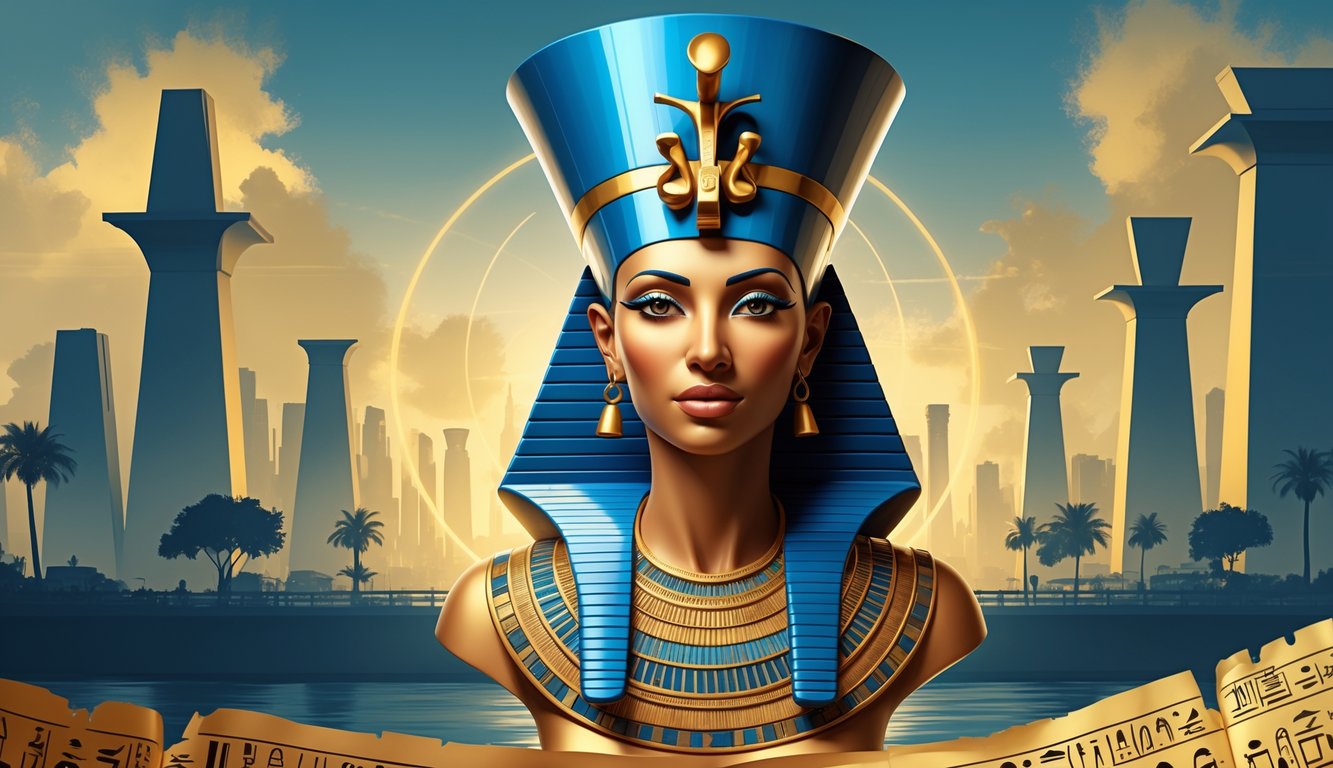
Nefertiti’s image, rediscovered in the 20th century, appears in art, fashion, and discussions today. Museums, ads, and campaigns use her likeness, showing her ongoing impact over 3,000 years after her reign.
Popular Culture and Media
The discovery of the limestone bust in 1912 brought Nefertiti’s face to the world. Since its display at Berlin’s Neues Museum in 1924, it has become one of the most reproduced artifacts.
Her image appears in films, documentaries, and TV shows about ancient Egypt. Fashion designers use her crown and profile in runway shows and jewelry.
Musicians and artists often reference her. Album covers, murals, and digital art feature her bust as a symbol of elegance and heritage. Some adapt her likeness into modern streetwear and pop art.
Tourism campaigns use Nefertiti to attract interest in archaeology and history. This keeps her name familiar even to those who know little about her life.
Symbol of Feminine Power
Nefertiti stands as a symbol of female leadership. As queen with Akhenaten, she played a visible part in religion and politics, helping to promote Atenism.
Today, activists and scholars use her example in discussions about women in power. Her leadership is compared to rulers like Hatshepsut and Cleopatra.
Feminist movements highlight her as proof of women’s political authority in history. This view appears in research, art exhibits, and public talks on gender and history.
Her image also supports campaigns for women’s education and leadership. By linking her story to today’s issues, these efforts keep her legacy alive.
Unanswered Questions and Future Research
Many facts about Nefertiti’s later life remain unknown, including her exact role in Egypt’s leadership and the reasons for her disappearance. Archaeologists keep searching tombs, artifacts, and records to find answers.
What Remains Unknown
Historians still debate whether Nefertiti became pharaoh as Neferneferuaten after Akhenaten’s death. Some inscriptions suggest she ruled alone, while others mention a male successor.
Her final resting place remains a mystery. Some theories connect her burial to possible hidden chambers near Tutankhamun’s tomb, but radar scans have given mixed results.
Key gaps in knowledge include:
- The exact date and reason for her disappearance from records
- Her political role in Akhenaten’s final years
- The location of her remains and burial artifacts
Without clear evidence, experts rely on fragments of art, damaged inscriptions, and incomplete records that leave much open to interpretation.
Potential for New Discoveries
New technology can help answer these questions. High-resolution radar, DNA testing, and chemical analysis may reveal hidden details about her life and death.
Archaeologists may uncover sealed chambers or inscriptions during future excavations in Amarna and the Valley of the Kings. Even a small find, like a seal or statue fragment, could link her to a specific tomb.
Researchers continue to re-examine artifacts in museum collections. Modern tools help them reinterpret old evidence and offer fresh insight into one of Egypt’s most mysterious queens.