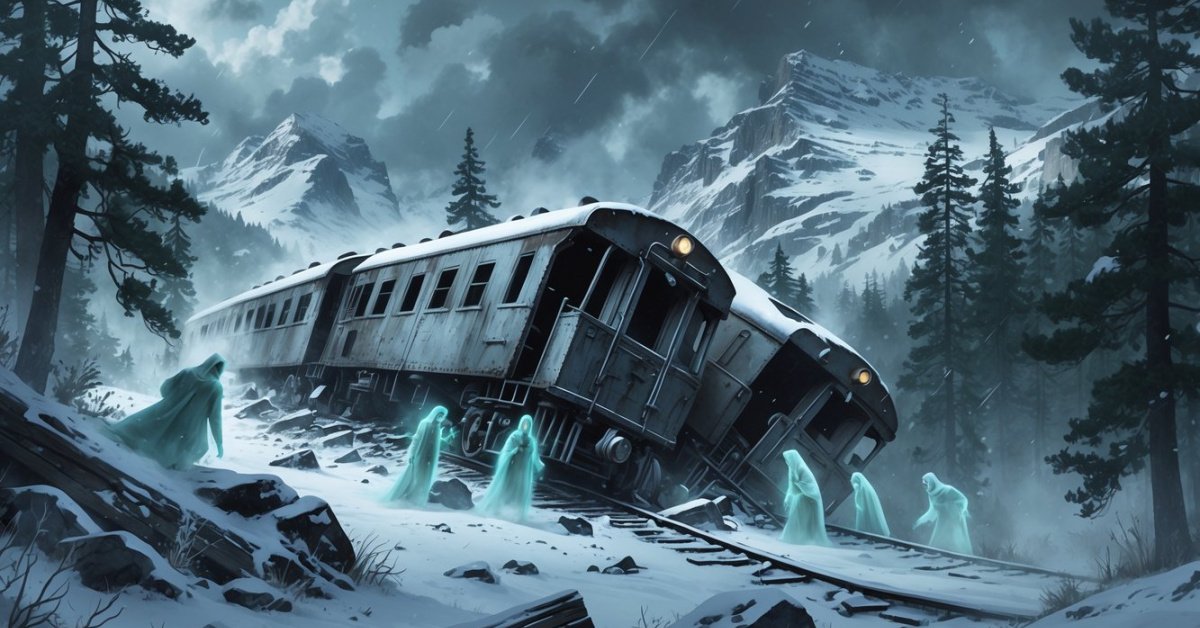
High in the snowy Alps, a tragic train wreck inspired one of the most chilling legends in railway history. Locals often see ghostly lights on the tracks and hear the faint sound of a steam whistle echoing through the mountains long after the disaster.
The Avalanche Ghost Train legend started after a real avalanche buried a passenger train. This event left behind both a historical tragedy and stories of hauntings.
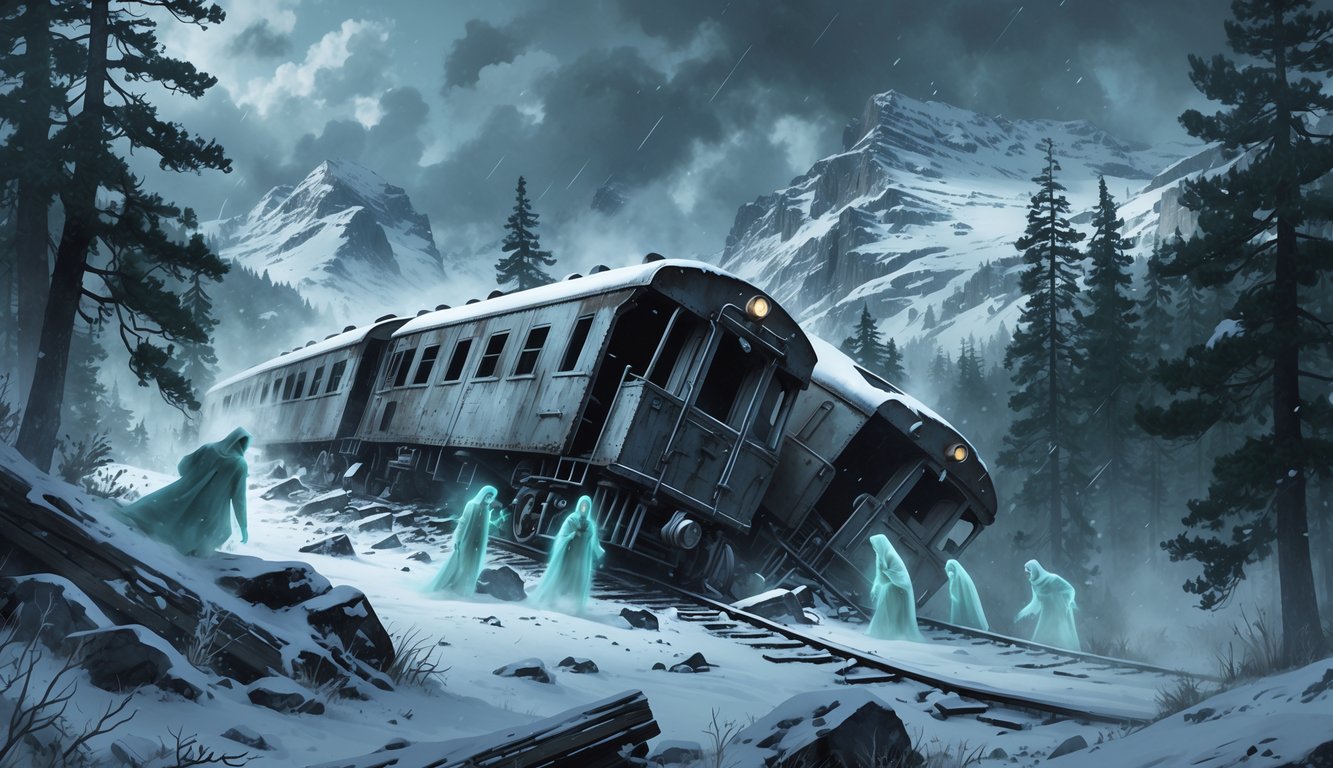
The story mixes documented history with unsettling reports of paranormal activity. The event in the Alps, similar to the Wellington avalanche in Washington’s Cascade Mountains, made a deep impact on the region and shaped its folklore.
Survivors, railway workers, and investigators shared accounts that reveal the disaster’s causes and aftermath.
Today, the site attracts both history lovers and those interested in the supernatural. Some visit to follow the old rail lines and learn about the challenges of mountain travel.
Others hope to witness the strange sights and sounds that keep the Avalanche Ghost Train legend alive.
The Avalanche Ghost Train Legend
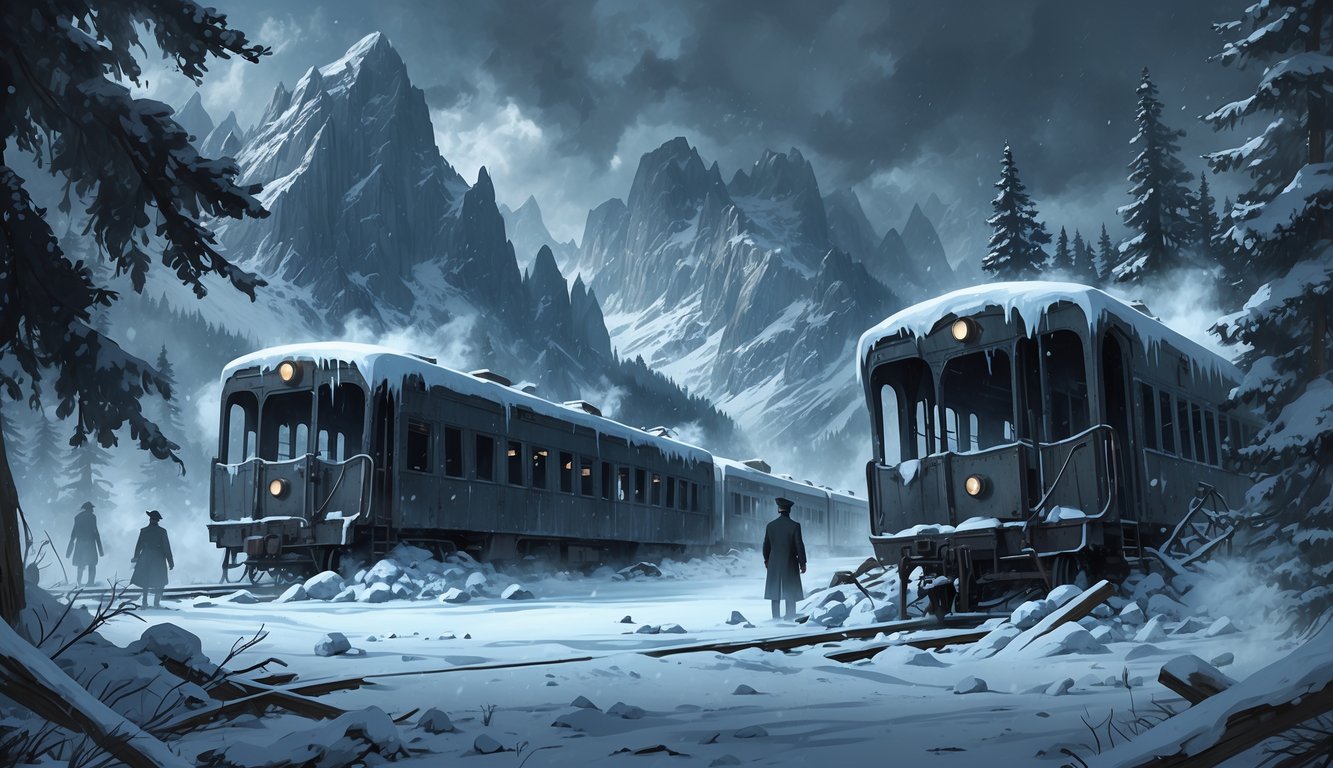
In 1910, a massive avalanche in Washington’s Cascade Mountains buried two passenger trains near Wellington. Ninety-six people died, and the site gained a reputation for strange sightings and eerie sounds.
Origins of the Haunted Train Story
The story begins with the Wellington avalanche on March 1, 1910. Heavy snow trapped two Great Northern Railway trains on the tracks for days.
When the avalanche hit, it swept the trains into a ravine. Survivors and rescuers described twisted metal, broken rail cars, and deep snow burying everything.
Over time, locals started telling stories of ghostly figures and phantom train noises. Some believe these tales grew from the emotional weight of the tragedy.
Others think the remote setting and harsh weather add to the eerie atmosphere. The name “Avalanche Ghost Train” describes both the disaster and the legends that followed.
Reported Apparitions and Paranormal Phenomena
Visitors to the former Wellington site, now part of the Iron Goat Trail, have unusual experiences. These include disembodied voices, the sound of train whistles, and footsteps on empty paths.
Hikers sometimes see faint lights moving along the old rail line at night. A few describe shadowy shapes near the avalanche path, especially during winter storms.
Paranormal investigators, such as those from Expedition X’s “Avalanche Ghost Train” episode, use audio recorders and thermal cameras to look for evidence. While no proof has been found, the stories continue to attract interest.
Cultural Impact on Local Communities
The Wellington disaster deeply affected nearby communities in the Cascade Mountains. Families lost loved ones, and railway workers faced dangerous recovery efforts in freezing conditions.
Today, the ghost train legend is part of local history tours and hiking guides. Signs along the Iron Goat Trail explain the avalanche and its aftermath, mixing fact with folklore.
Local businesses sometimes reference the ghost train in events or merchandise. For some, the legend reminds them of the area’s harsh winters and the risks of early rail travel.
For others, it is simply a unique part of their regional identity.
The 1910 Wellington Disaster: A Historical Overview
In early March 1910, heavy snow and fierce winds trapped two Great Northern Railway trains high in the Cascade Mountains. Days of storms weakened the slopes above Wellington until a massive avalanche struck, sending both trains into the valley below and killing 96 people.
The event remains the deadliest avalanche in U.S. history.
Timeline of the Tragedy
Snow began falling near Stevens Pass on February 23, 1910. By February 26, deep drifts blocked tracks and stranded trains.
The Spokane Local No. 25 passenger train and Fast Mail Train No. 27 waited in Wellington for the line to clear. Crews worked to dig out the tracks, but new snow kept falling.
Shortly after 1:00 a.m. on March 1, a lightning storm hit. The sudden weather shift loosened snow on Windy Mountain.
A massive slide roared down, striking the rail yard. Both trains were pushed about 150 feet into the Tye River Valley and buried under snow and debris.
| Date | Event |
|---|---|
| Feb 23 | Blizzard begins near Stevens Pass |
| Feb 26 | Trains stranded in Wellington |
| Mar 1, 1:00 a.m. | Avalanche strikes, burying two trains |
Key Figures and Eyewitness Accounts
James H. O’Neill, the station’s telegraph operator, later said he heard a “low rumble” just before the avalanche hit. Survivors recalled the ground shaking and the sound of splintering wood as train cars broke apart.
Some railroad workers tried to move passengers into safer buildings, but the storm made it impossible to relocate everyone.
Railroad foreman Billy L. Harrington died while still on duty. Brakeman Charles Andrews survived by sheer luck, having stepped away from the trains minutes before the slide.
Local residents in Wellington also witnessed the disaster. Many became trapped themselves and could not reach the wreckage until daylight.
Their accounts helped investigators confirm the sequence of events.
Immediate Aftermath and Rescue Efforts
Rescue crews faced extreme danger from more avalanches. They dug through deep snow using shovels and improvised tools.
It took several days to recover all the bodies. In total, 35 passengers and 61 railway employees died in the slide, according to HistoryLink.
The Great Northern Railway built snow sheds and improved avalanche defenses along the route to prevent another tragedy.
Wellington never recovered. By the 1920s, the town was abandoned and later renamed Tye.
The Setting: Cascade Mountains and Stevens Pass
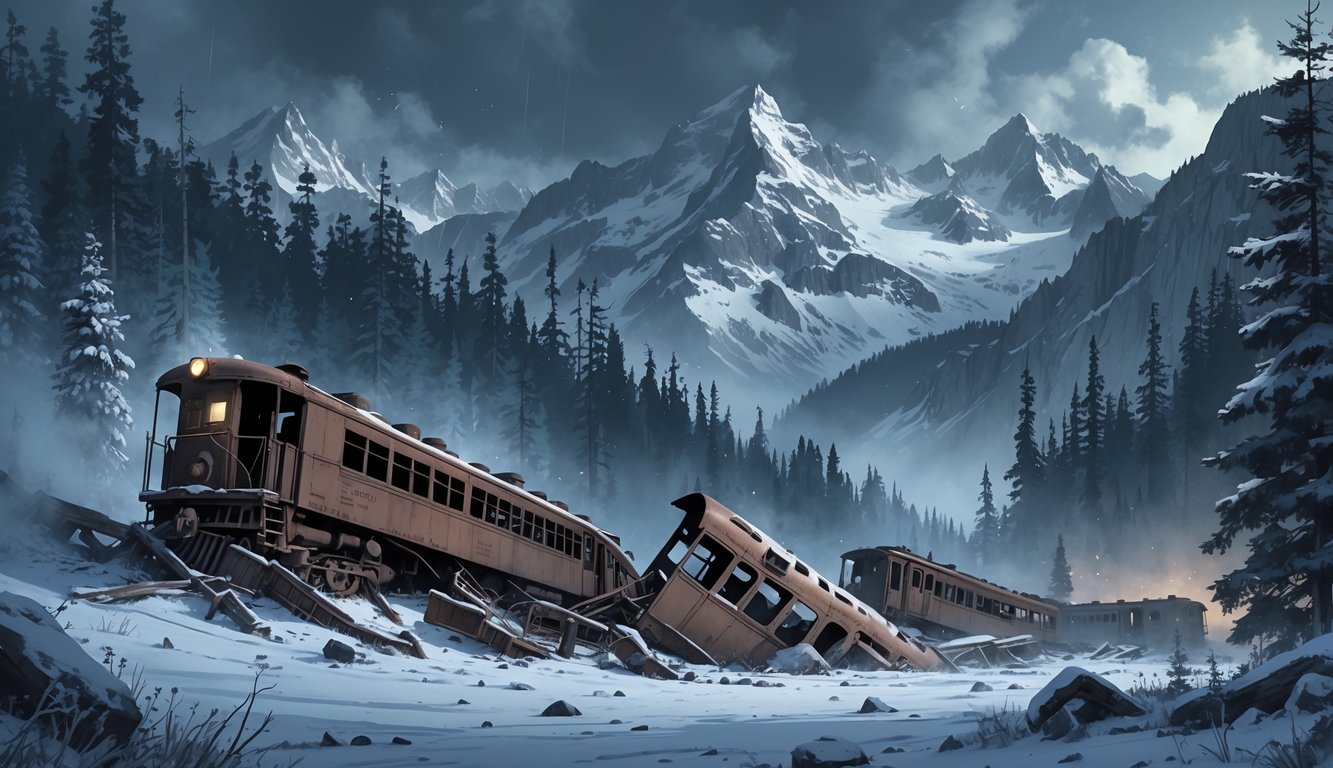
The Cascade Mountains in Washington State are known for their rugged beauty and harsh conditions. Stevens Pass, a key route through this range, has long tested the skill and endurance of travelers.
Its location, terrain, and weather patterns have shaped both its history and its dangers.
Geography and Climate Challenges
Stevens Pass sits high in the Cascade Mountains, where steep slopes and narrow valleys create natural choke points. The elevation and terrain make it prone to heavy snowfall during winter.
Snowstorms can last for days, often dropping several feet of snow at a time. Winds funnel through the pass, creating drifts that bury tracks and block movement.
Avalanches are a frequent hazard here. Deep snowpack, unstable layers, and steep inclines can release massive slides without warning.
In 1910, these conditions trapped two Great Northern Railway trains for days before disaster struck.
Travelers and railway workers faced not only snow but also freezing temperatures and limited shelter. These factors made the pass both vital and dangerous.
Importance of the Cascade Tunnel
Engineers completed the original Cascade Tunnel in 1900, running 2.6 miles under the mountains near Stevens Pass. The tunnel helped trains avoid eight steep switchbacks that slowed travel and increased accident risks.
By cutting through the mountain, the tunnel reduced travel time and allowed trains to bypass some avalanche-prone slopes. Its west portal, however, opened near Wellington (later renamed Tye), which was still exposed to snow slides.
The tunnel’s grade was set at 1.7% to ease strain on locomotives. But trains still had to navigate dangerous sections before and after entering.
In winter, crews used snow sheds and plows to keep the tracks open. Even so, storms sometimes overwhelmed these defenses, leaving trains stranded in exposed areas.
Role of Tye Creek in the Disaster
Tye Creek ran through the valley near Wellington, below the west portal of the Cascade Tunnel. The creek’s ravine was steep, with slopes rising sharply toward Windy Mountain.
When the 1910 avalanche broke loose, it swept down these slopes and into the valley. The trains, stopped on the tracks above the creek, stood directly in its path.
The slide carried both trains off the tracks and into the gorge carved by Tye Creek. The wreckage ended up twisted and buried in snow and debris.
The geography of Tye Creek made the avalanche more destructive. The narrow valley funneled the slide, increasing its speed and power before it struck the trains.
For more on the location and history of Wellington, see the detailed account of the train disaster at Stevens Pass.
The Great Northern Railway and Its Legacy
The Great Northern Railway connected remote mountain towns to larger cities. It carried passengers, freight, and mail through the rugged Cascade Range.
Its route through Stevens Pass became both a vital economic link and the site of one of the most tragic rail disasters in U.S. history.
Development of the Great Northern Line
The Great Northern Railway expanded westward in the late 19th century. By 1893, it reached the Cascade Mountains, where engineers built the original Cascade Tunnel to handle steep grades and heavy snow.
This line provided a direct rail connection between the Midwest and the Pacific Northwest. It allowed goods like lumber, coal, and agricultural products to move quickly across the country.
The route through Stevens Pass was challenging. Crews faced extreme winter weather, unstable slopes, and avalanche risks.
Despite these dangers, the line became a major transportation route for Washington State.
Railway Innovations and Safety Improvements
After the 1910 Wellington avalanche, the Great Northern Railway improved safety along the line. Workers built snowsheds—large structures over tracks to protect trains from snow slides.
The company also bought better avalanche monitoring and snow removal equipment, including rotary snowplows that could cut through deep drifts.
Later, the railway replaced the original Cascade Tunnel with a longer, lower-elevation tunnel. This change reduced steep grades and avoided some avalanche-prone slopes, making travel faster and safer.
Community of Wellington and Its Renaming
Wellington was a small mountain town made up mostly of Great Northern Railway employees. It sat near the west portal of the Cascade Tunnel, right below Windy Mountain.
In March 1910, a massive avalanche swept two trains off the tracks, killing 96 people. The disaster left a lasting mark on the town.
The railway later renamed Wellington to Tye to distance the area from the tragedy. Despite the new name, the community never recovered.
Today, the site is abandoned. Visitors can explore its history along the Iron Goat Trail, which follows the old railway grade.
Fast Mail Train No. 27 and the Trains Involved
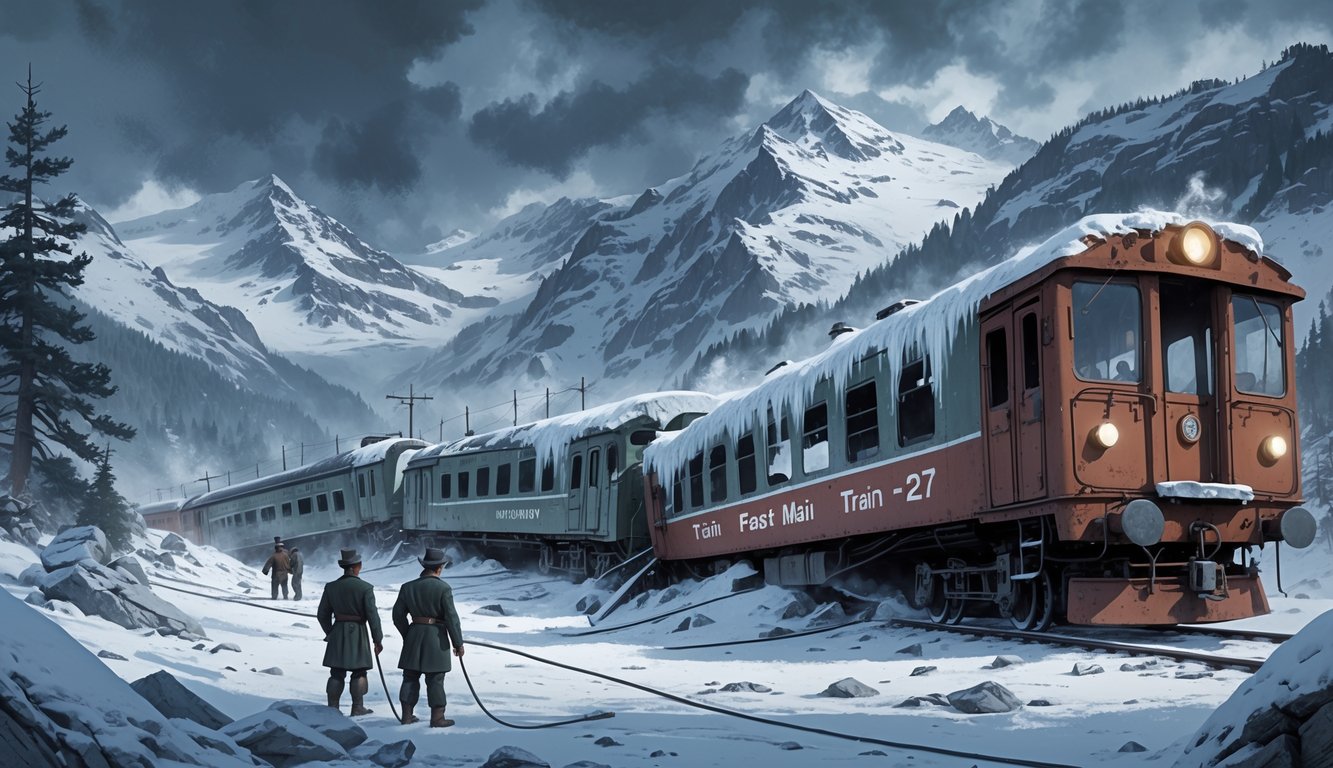
Two Great Northern Railway trains became trapped in the Cascade Mountains in late February 1910. One was a passenger service, and the other was a mail and freight carrier.
Both trains remained stranded for days due to heavy snow before a deadly avalanche struck near Wellington, Washington.
Passenger and Crew Details
Spokane Local passenger train No. 25 carried about 50 passengers and several crew members. Most passengers traveled west toward Seattle after boarding in Spokane.
Fast Mail Train No. 27 carried fewer passengers but more railway staff. Records show around 75 employees were on board, including clerks, engineers, and brakemen.
Both trains used multiple locomotives to handle the steep grades of the Cascades. Reports mention five or six steam and electric engines in total between the two trains.
Passenger cars included sleepers, coaches, and a baggage car. Many travelers slept when the avalanche hit in the early morning.
The crew worked long shifts during the snow delays. They often cleared tracks by hand or helped with stalled engines.
Cargo and Mail Operations
Fast Mail Train No. 27 ran as a priority service for the Great Northern Railway. It carried U.S. Mail, express packages, and time-sensitive freight.
Postal clerks staffed the train’s mail cars and sorted letters and parcels while traveling. This allowed mail to be ready for delivery at the next major stop.
The train also hauled boxcars with commercial goods, including food supplies, manufactured items, and seasonal shipments.
Mail cars had heavy construction to protect their contents from weather and theft. The avalanche destroyed much of the cargo despite these precautions.
No. 27’s route held great importance, so it often ran on tight schedules, even in poor weather. This contributed to the train being stranded alongside the passenger train near Wellington.
Avalanche Conditions and Contributing Factors
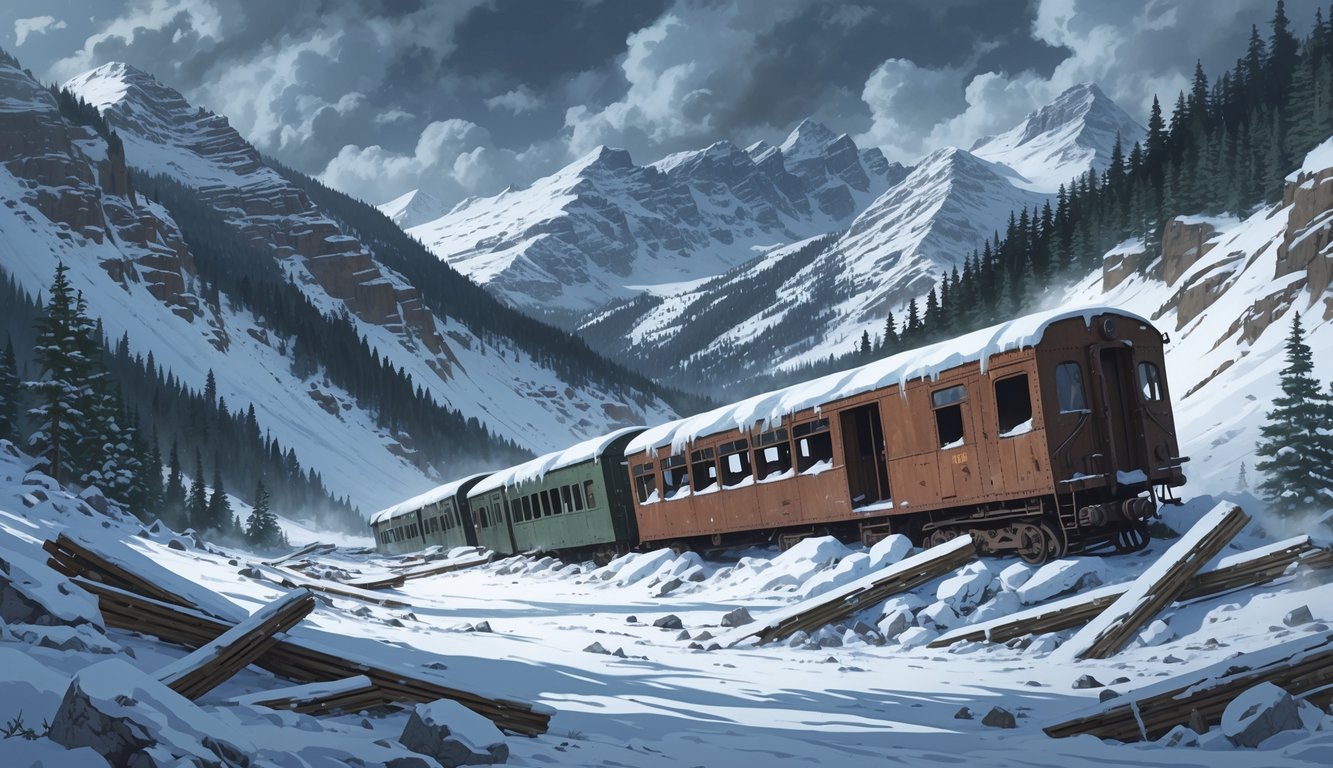
Heavy snowfall, unstable slopes, and damaged natural barriers set the stage for a deadly avalanche. Human activity in the area and the limits of early 20th-century rail technology also played a role.
Weather Patterns Leading Up to the Disaster
In the days before the avalanche, the Cascade Mountains endured an intense winter storm. Heavy, constant snowfall and strong winds piled snow unevenly on steep slopes.
Temperatures briefly rose, causing wet, heavy snow to settle over lighter, powdery layers. This created weak bonds between snow layers and made the mountainside unstable.
Rainfall added weight to the snowpack. Historical accounts of the 1910 Wellington avalanche mention thunder and lightning striking the area shortly before the slide, shaking loose unstable snow.
Blizzard conditions, warming, and rain primed the slopes for collapse. Train crews and passengers became stranded for days in deep snow, unable to move to safety.
Environmental Impact of Deforestation
Years before the avalanche, a forest fire—likely started by locomotive embers—burned much of the tree cover above the railway. The fire left the slope exposed to wind and snow without the stabilizing roots of mature trees.
Without these natural barriers, snow built up faster and slid more easily. The lack of vegetation meant nothing slowed or broke the avalanche once it started.
Historical reports note that fire damage played a key role in the disaster. Accounts of the White Death describe how the destroyed forest canopy removed a critical layer of protection for the tracks below.
The cleared slope became a direct chute for snow and debris rushing toward the trapped trains.
Technological Limitations of the Era
In 1910, snow removal equipment worked slowly and often could not keep up with extreme storms. Rotary snowplows cleared tracks, but constant snowfall and avalanches blocked progress.
The Great Northern Railway used telegraph lines for communication. When the lines fell during the storm, crews lost contact with the outside world.
Protective structures like concrete snowsheds were rare at the time. The section of track near Wellington lacked such protection.
These limitations left the trains with little chance of escape before the avalanche struck.
The Aftermath: Recovery, Memorials, and Lasting Effects
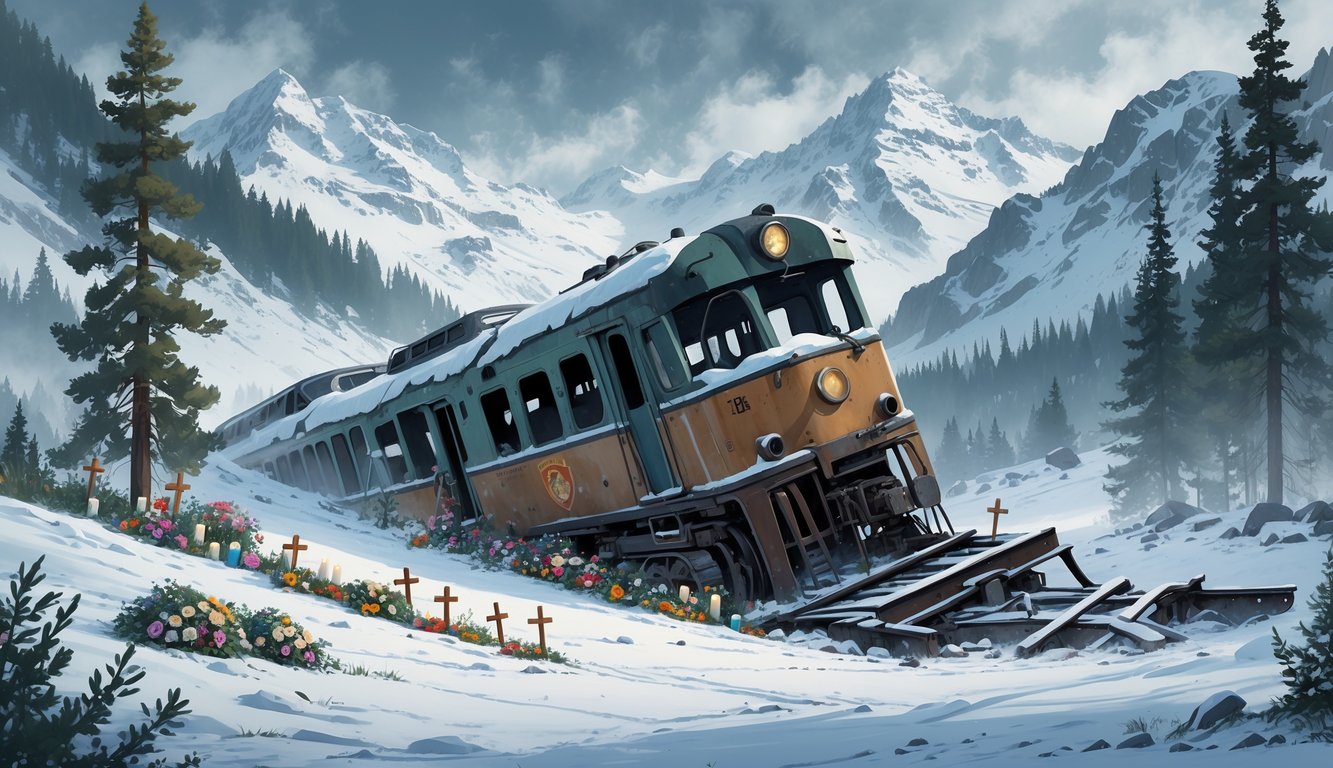
The avalanche left behind wreckage, loss, and a long cleanup process. Recovery involved dangerous work in deep snow, and later years brought memorials and safety improvements.
Rescue Operations and Survivor Stories
Rescue crews began work as soon as weather allowed. They dug through heavy snow and debris to reach the buried Great Northern Railway trains near Stevens Pass. The risk of more avalanches made the work slow and dangerous.
Survivors described being trapped in darkness and cold until help arrived. Some escaped by crawling through broken windows or gaps in the wreckage.
Rescuers used shovels, picks, and later steam-powered equipment to clear the site. The final recovery of all victims took days because of deep snow and the remote location.
Key challenges faced by rescuers:
- Unstable snowpack
- Freezing temperatures
- Limited access
- Ongoing storms
Memorials and Commemorations
Over time, the disaster site became a place of remembrance. Hikers on the Iron Goat Trail can visit interpretive signs and remnants of the old snow sheds that once protected the tracks.
Small memorial markers honor the 96 people who died in the deadliest avalanche in U.S. history. These include passengers, railway workers, and mail clerks.
Local historical groups and park services have preserved the story. Annual events and educational programs share the history with visitors and students.
Nearby museums display artifacts from the wreck, such as rail parts and personal items, to connect the public with the human side of the tragedy.
Changes in Railway Policy and Engineering
The Wellington disaster prompted the Great Northern Railway to make major safety changes. Within a few years, the company built reinforced concrete snow sheds along dangerous track sections near Stevens Pass.
The railway also invested in better avalanche monitoring and snow-clearing equipment. Train schedules changed during heavy snow periods to reduce the chance of trains being trapped.
In 1929, the railway completed the Cascade Tunnel, which rerouted trains away from avalanche-prone slopes. This project greatly reduced the risk of similar incidents in the region.
These changes set a model for mountain rail safety in other parts of the country.
The New Cascade Tunnel and Modern Rail Safety
The New Cascade Tunnel in Washington State replaced the original tunnel in 1929 to avoid avalanche-prone slopes. Its design improved year-round rail travel and reduced the dangers that once threatened trains in the Stevens Pass area.
Construction and Design of the New Tunnel
The New Cascade Tunnel stretches 7.8 miles, making it the longest railroad tunnel in the United States. Builders placed it at a lower elevation than the original Cascade Tunnel, which helped avoid heavy snow zones.
Great Northern Railway engineers designed the tunnel to eliminate steep switchbacks and reduce exposure to landslides and avalanches. This route bypassed Wellington, the site of the 1910 avalanche disaster.
Construction crews used drilling and blasting to cut through the mountain. Ventilation systems managed exhaust from steam locomotives and were later upgraded for diesel engines.
The tunnel’s concrete lining and drainage systems improved long-term stability. Its straight alignment allowed smoother and faster train movement compared to the winding mountain tracks it replaced.
Impact on Regional Rail Travel
The tunnel’s opening in 1929 shortened the route over Stevens Pass by more than eight miles. This cut travel time and reduced the number of dangerous mountain crossings.
Freight and passenger trains now operate more reliably, even in winter storms. The Empire Builder passenger service still uses the route, now operated by BNSF Railway.
By avoiding avalanche zones, the tunnel greatly increased safety for crews and passengers. It also supported economic growth by keeping goods moving between eastern and western Washington without seasonal shutdowns.
Modern safety measures, such as improved ventilation, fire detection, and communication systems, continue to make the New Cascade Tunnel a key part of the region’s rail network.
Exploring the Iron Goat Trail Today
The Iron Goat Trail in Washington’s Cascade Mountains follows the former Great Northern Railway route near Stevens Pass. Visitors can walk through forested paths, see old railroad structures, and stand near the site of the 1910 Wellington avalanche that claimed 96 lives.
Hiking the Historic Route
The trail stretches for about 9 miles, but many choose shorter loops. One popular option is the 5.7-mile section between Scenic and Wellington, which passes through old snowsheds and along the original rail grade.
It sits at an elevation of around 2,400 feet, making it accessible during much of the year. Snow can linger into early summer.
Hikers encounter gentle grades because trains once used this route. The path is well-marked, and junction signs help visitors choose between lower and upper trail segments.
Some sections pass through moss-covered forest, while others open to mountain views. The U.S. Forest Service manages the trail, and parking areas are available at both Scenic and Wellington trailheads.
Visible Remnants of the Disaster
Along the route, visitors see collapsed snowsheds, concrete foundations, and tunnel entrances. These structures once protected trains from heavy snow but now stand as weathered ruins.
Near Wellington, hikers find the remains of the old town site, including building outlines and rusted metal debris. Some wreckage from the avalanche, such as twisted steel, still lies hidden in the brush.
The Wellington avalanche site is a sobering stop. Here, two trains were swept off the tracks by a massive slide in March 1910. The scale of the destruction is still visible in the terrain.
In some places, the old rail bed is cut into steep slopes, showing the challenges early railroad engineers faced.
Interpretive Signage and Educational Efforts
The trail features many interpretive panels installed by the U.S. Forest Service and volunteers. These signs explain the history of the Great Northern Railway, the avalanche, and daily life in Wellington before the disaster.
Maps and diagrams help visitors see the original track layout and the location of key structures. Some signs include historic photographs taken just after the avalanche.
Educational efforts go beyond the trail. The Iron Goat Trail website offers historical background, safety tips, and seasonal updates.
School groups and history clubs sometimes visit for guided walks. The site serves as a living classroom for lessons in transportation history, engineering, and mountain weather hazards.
Paranormal Investigations and Popular Media
Television crews, independent filmmakers, and local guides have all explored the site of the so‑called avalanche ghost train. These projects often mix historical accounts of deadly disasters with modern claims of unexplained activity.
Expedition X and Other TV Features
The Discovery Channel series Expedition X featured an episode about the avalanche ghost train in Washington’s Cascade Mountains. The team visited the location of the 1910 Wellington avalanche, which remains the deadliest avalanche in U.S. history. Ninety‑six people died when two trains were trapped by snow and swept off the tracks.
In the episode, investigators used cameras, audio recorders, and environmental sensors to document the area at night. They reported unusual sounds and sudden drops in temperature. The show presented these as possible signs of paranormal activity and discussed how harsh weather and dangerous terrain could explain some events.
Other programs, including documentaries and streaming specials, have returned to the site. Some focus on ghost stories, while others emphasize historical accuracy. Many include interviews with hikers and rail historians who share both personal experiences and factual background.
Ghost Tours and Local Folklore
The old rail line through the Cascade Mountains now forms part of the Iron Goat Trail. Hikers can spot tunnel entrances, concrete snow sheds, and collapsed structures from the early 1900s.
Local guides sometimes lead ghost tours that share the history of the 1910 avalanche and stories about shadowy figures or distant train whistles. Most tours happen during daylight for safety, but some special events take place at dusk.
Folklore in the area blends fact with legend. Some stories describe passengers still “waiting” in the snow, though no one has verified these accounts.