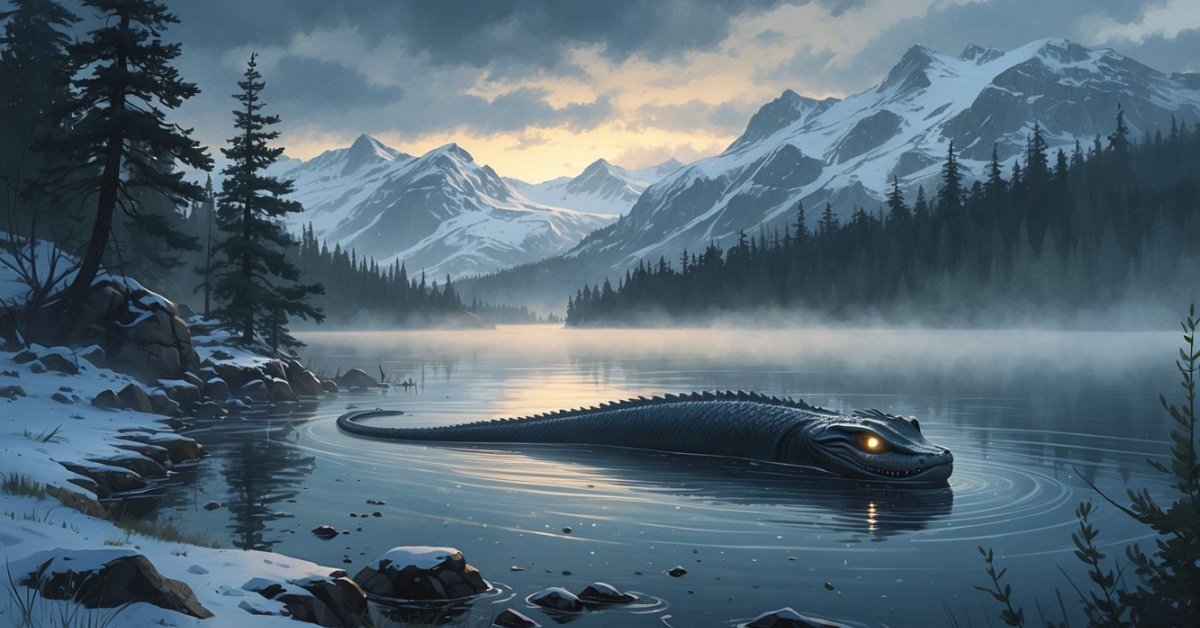
Alaska’s vast lakes hold more than cold, deep water—they hold stories passed down for generations. People in fishing villages and remote outposts have seen massive, mysterious shapes moving beneath the surface.
Some believe these sightings could point to a real, undiscovered creature living in Alaska’s waters.
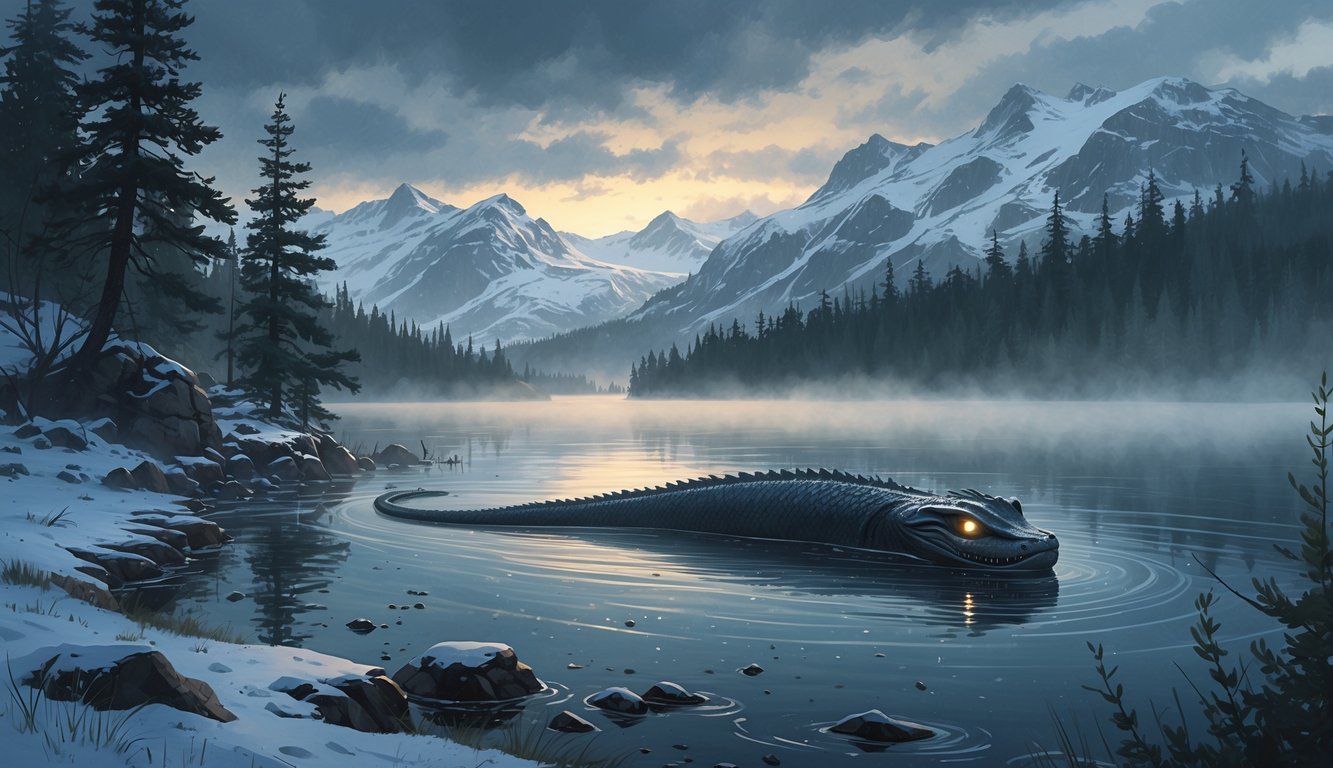
Lake Iliamna stands out as the state’s largest lake and the center of one of Alaska’s most enduring legends. Indigenous Tlingit lore tells of the Gonakadet, a powerful water creature, while modern accounts describe something large, fast, and unlike any known fish.
These stories connect cultural history with ongoing mystery.
Pilots, fishermen, and locals have all described long bodies, dark skin, and movements too fast for a sturgeon or seal. The Alaskan lake monster continues to spark curiosity and keeps people watching the waves for a glimpse of the unknown.
The Alaskan Lake Monster Phenomenon
For decades, people have reported seeing a large, unidentified aquatic creature in Alaska’s lakes. Witnesses often compare the shapes in the water to giant fish or shark-like animals.
These reports stir curiosity among locals, researchers, and visitors.
What Is the Alaskan Lake Monster?
The most famous example is the Iliamna Lake Monster, often called “Illie.” Locals say it lives in Lake Iliamna, Alaska’s largest freshwater lake, which stretches 77 miles long, 22 miles wide, and reaches depths over 1,000 feet.
Witnesses describe Illie as 10 to 30 feet long, with dark gray or metallic skin. Some say it moves with a smooth, powerful motion, unlike common fish.
Sightings go back to at least the 1940s, when bush pilots reported seeing enormous fish-like shapes from the air. Many accounts happen during calm weather, when the lake’s surface is clear.
Some scientists think the creature could be a giant sleeper shark or a large sturgeon. Others believe it might be an undiscovered species hiding in the lake’s deep, cold waters.
You can read more about the creature’s features and habitat in this detailed account of the Iliamna Lake Monster.
Comparison to Nessie and Other Cryptids
People often compare the Iliamna Lake Monster to Nessie, the Loch Ness Monster of Scotland. Both are freshwater mysteries with decades of reported sightings but no confirmed physical evidence.
However, there are key differences:
| Feature | Iliamna Lake Monster | Nessie |
|---|---|---|
| Location | Alaska, USA | Scotland |
| Common Description | Large fish-like or shark-like | Long neck, plesiosaur-like |
| Possible Explanations | Sleeper shark, sturgeon | Eel, wave patterns, sturgeon |
| First Popular Sightings | 1940s | 1930s |
Unlike Nessie, Illie’s descriptions rarely include a long neck or reptile-like body. People usually compare it to large fish species.
Other cryptids like Ogopogo in Canada share similarities with Illie. Lake monster legends appear in many cultures and places.
Significance in Alaskan Folklore
Native Alaskan communities have told stories of large water creatures long before modern sightings. Tlingit and Aleut traditions describe giant fish or serpentine animals living in deep lakes.
These legends often warn people to avoid certain waters or to respect the lake’s balance. Some see Illie as a curiosity, while others view it as part of a living tradition.
The lake supports millions of sockeye salmon and thousands of freshwater harbor seals each year. This rich ecosystem could support a large predator.
Local pride and tourism add to the legend. The Iliamna Lake Monster has become a regional mystery that connects folklore, science, and community identity, as shown in this overview of its cultural impact.
Lake Iliamna: Alaska’s Mysterious Waters
Lake Iliamna is Alaska’s largest freshwater lake and sits in a remote part of the state’s southwest. Its size, depth, and isolation attract both scientists and storytellers.
Reports of unusual wildlife add to the lake’s intrigue.
Geography and Ecology of Lake Iliamna
Lake Iliamna stretches about 77 miles long and 22 miles wide. In some areas, it is more than 1,000 feet deep.
Several rivers, including the Kvichak River, feed the lake. The Kvichak flows west into the Bering Sea.
The lake’s cold, clear water supports large populations of sockeye salmon, rainbow trout, and Arctic char. A rare group of freshwater harbor seals lives here year-round, which is unusual for this species.
Scientists think these seals adapted to the lake’s conditions long ago, possibly after becoming separated from marine populations.
The shoreline ranges from rocky bluffs to low wetlands, giving homes to bears, moose, and many bird species. Seasonal changes bring shifts in ice cover, water clarity, and fish migrations.
Access and Remoteness
Lake Iliamna lies about 100 miles west of Seldovia in a sparsely populated region. No major highways reach the lake, so most visitors arrive by small plane or boat.
Small communities like Iliamna and Newhalen sit along the shore. Residents depend on the lake for fishing, travel, and daily life.
Travel can be difficult because of limited infrastructure. Weather changes quickly, and strong winds can make crossing the lake dangerous.
The area’s remoteness helps preserve its natural state. Fewer scientific studies and wildlife surveys happen here compared to other parts of Alaska.
Unique Features of the Lake
Lake Iliamna’s resident seal population is one of its most distinctive features. Freshwater harbor seals are rare and draw both scientific and local interest.
The lake’s size and depth create unique water conditions. In summer, surface waters warm slightly, but deep layers stay cold all year.
Residents and visitors have reported seeing large, unidentified aquatic animals, sometimes over 15 feet long. These stories are part of the lake’s identity and draw researchers and adventurers.
The mix of rich fisheries, unusual wildlife, and remote wilderness makes Lake Iliamna one of Alaska’s most intriguing natural landmarks.
Legendary Origins and Indigenous Lore

Stories of mysterious creatures in Alaska’s lakes go back centuries. Native traditions describe beings tied to both natural and spiritual worlds, often blending animal traits with symbolic meaning.
These accounts offer clues about how communities made sense of unusual sightings in remote waters.
Tlingit Legend and the Gonakadet
In Tlingit legend, the Gonakadet is a powerful sea creature, part whale and part wolf. People say it lives in deep coastal waters and sometimes appears near shore.
The Gonakadet is linked to wealth and good fortune. Some stories say that seeing it brings prosperity, while others warn of challenges.
Tlingit oral history often places the Gonakadet in bays and inlets, but some accounts suggest it could travel inland through waterways. Researchers sometimes compare it to freshwater monster stories in large Alaskan lakes.
The Gonakadet appears in Tlingit art. Carvings and clan crests show it with a large dorsal fin, sharp teeth, and a body built for speed.
Aleut Stories and Early Accounts
The Aleut people tell tales of large, dark animals in Lake Iliamna. They call these creatures Jik-ik-nak and say they travel in groups and can attack canoes.
Oral history describes them as strong enough to overturn small boats and dangerous to hunters. Reports often mention lengths of 20 to 30 feet, similar to some modern sightings.
In the 20th century, local fishermen claimed to see massive shapes moving just under the surface. These sightings fueled interest in a lake-dwelling monster.
Today, some compare Aleut stories to the Loch Ness Monster legend, though the details are unique to Alaska.
Spiritual and Cultural Significance
For Indigenous communities, these creatures are more than just animals in stories. They hold spiritual meaning and teach respect for nature.
Encounters—real or told—can serve as warnings about dangerous waters or seasons. They also reinforce values about humility and balance with the environment.
In clan traditions, a sighting might be seen as a sign or omen. This could affect decisions about fishing, travel, or gatherings.
These beliefs continue in oral storytelling, keeping the connection between people, place, and the mysterious waters alive.
Historical Sightings and Early Reports
The Iliamna Lake Monster, often called Illie, has been part of Alaska’s cultural history for generations. People have described a large aquatic creature in Lake Iliamna, with features ranging from fish-like to serpent-like.
Accounts come from Native oral traditions, eyewitnesses, and pilots who spotted unusual shapes from above.
Pre-1940s Indigenous Accounts
Long before written records, Native Alaskan communities told stories about a giant creature in Lake Iliamna. The Tlingit and Aleut peoples described it as a massive fish or serpent that could grow over 20 feet long.
These stories often served as warnings. Elders told fishermen to avoid certain deep areas, especially near Pedro Bay, where the animal was said to appear.
Some oral histories mention smooth, dark skin and a broad head. Others describe a metallic sheen, like a large salmon but much bigger.
Details vary, but all stories suggest something large and unusual lives in the lake’s depths. Generations have passed down these accounts, mixing belief with possible real encounters.
Notable 20th Century Sightings
By the 1940s, reports of the Iliamna Lake Monster appeared in newspapers and local records. Residents and visitors described a creature between 10 and 30 feet long.
In one well-known case, fishermen saw a massive shape break the surface before diving quickly underwater. The sighting caused local excitement and drew outside interest.
Some witnesses saw visible fins and a large head. Others compared its skin to dull aluminum.
These details match many modern descriptions found in historical accounts.
Impact of Aviation on Reports
Bush plane travel rose in the mid-20th century and changed how people saw Lake Iliamna. Pilots flying over its 80-mile length began to report large, dark shapes moving beneath the surface.
Some pilots said they could see pods of two or three creatures swimming together from the air. These sightings happened most often in clear, calm weather.
One aviation-related report told of a shape so large it was visible from hundreds of feet above. The pilot believed it was much bigger than any known fish in the lake.
Aerial views gave a new perspective but made it harder to judge size and species. This led to many sightings being open to interpretation and debate.
Modern Encounters and Eyewitness Testimonies
People who know the lake’s waters often report seeing the Iliamna Lake Monster. Many describe a large, fish-like creature with a dark or metallic sheen moving just below the surface.
Some sightings share similarities in size, shape, and movement. Details vary, but the reports often mention the same key features.
Fishermen and Pilot Reports
Local fishermen have told stories of hooking something massive that pulled hard before breaking free. These encounters usually happen in deeper parts of the lake, where visibility is low.
Pilots flying over Iliamna have reported seeing long, dark shapes beneath the water. Some estimated lengths of 20–30 feet.
Fish Alaska Magazine shared an account where both locals and scientists considered the possibility of giant fish. This idea comes from the creature’s slow, steady movement without splashing.
Village Sightings in Kakhonak and Pedro Bay
Residents of Kakhonak and Pedro Bay have seen the creature close to shore. These sightings usually occur during calm weather when the water is clear.
In Kakhonak, some villagers saw a dark shape surface briefly before diving again. They compared its head to a large seal, but much bigger.
Pedro Bay residents have spotted what they call Illie, sometimes in pairs. A 2017 report described children seeing something the size of a whale offshore, which renewed interest in the legend.
Group Observations and Consistency
Groups have provided some of the most compelling accounts by seeing the creature together. Multiple witnesses reduce the chance of mistakes, especially when they describe similar details.
Aleut oral traditions mention “Jik-ik-nak,” creatures that traveled in groups and sometimes approached canoes. Modern group sightings often match these old stories in size and swimming style.
Several witnesses have agreed on features like visible fins, smooth skin, and a large head. The Alaska Frontier notes that these consistent traits appear in reports spanning decades.
Physical Descriptions of the Creature
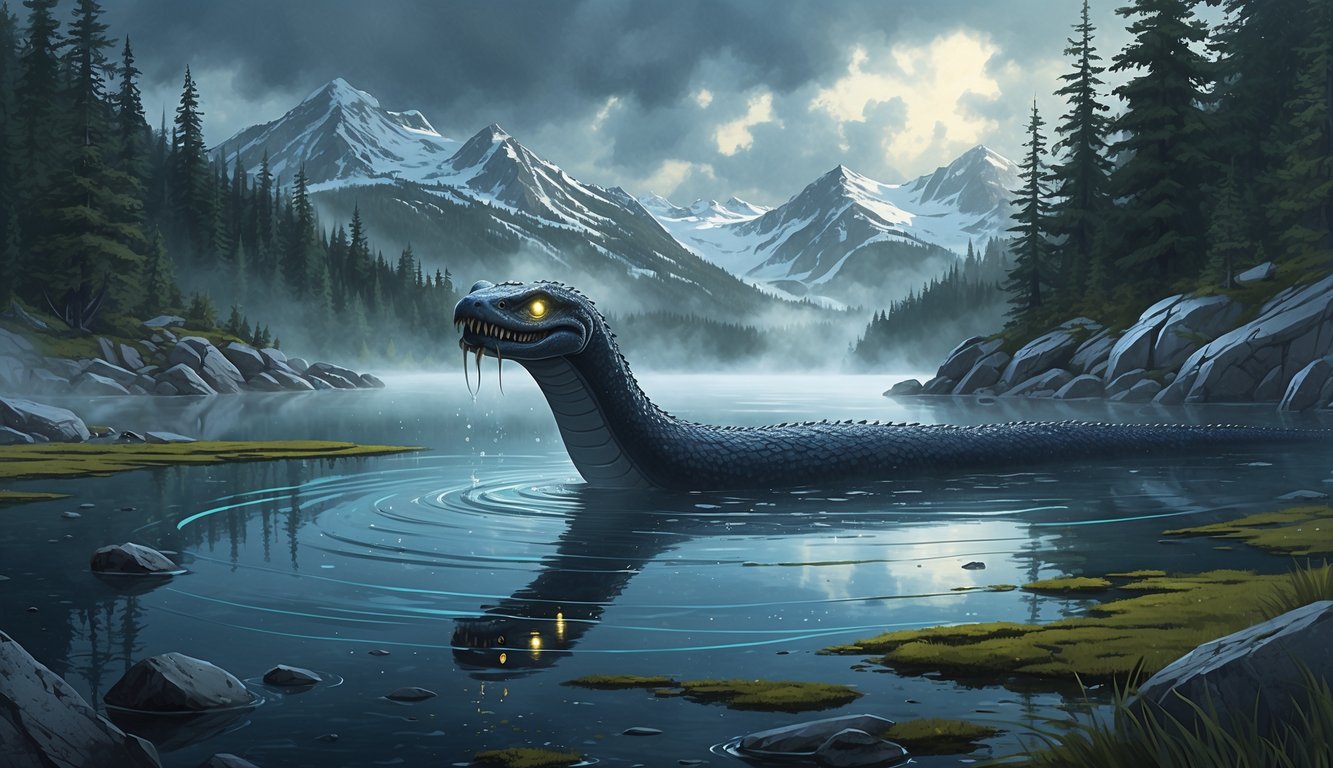
People describe a large aquatic animal living in Alaska’s Lake Iliamna and nearby waters. Witnesses often mention its unusual size, fish-like body, and movement patterns that differ from local species.
Size and Appearance
Sightings often estimate the creature’s length between 20 and 30 feet. Some claims mention even larger individuals.
Many describe it as a fish-like creature with a broad head, long body, and a visible dorsal fin.
Skin color is often dark gray or metallic silver. On clear days, the skin can reflect sunlight.
Some accounts mention a smooth surface, while others note a rougher texture.
Shape comparisons vary. Some liken it to a giant sleeper shark, while others compare it to a serpent-like animal with a tapering tail.
The head is sometimes said to be blunt, resembling a large fish more than a reptile.
Behavioral Traits
Locals and visitors say the creature tends to stay in deeper parts of the lake. People often see it briefly surface before it dives again, creating a noticeable wake.
Some pilots have spotted it from the air, moving in straight lines. Fishermen have noticed that it avoids boats, keeping a distance when approached.
In many reports, the creature does not act aggressively. It seems cautious, surfacing only for short periods.
This behavior makes observation and photography difficult, even in calm weather.
Alleged Attacks and Interactions
Most reports describe distant sightings. A few stories claim closer encounters.
Some Native Alaskan traditions speak of the animal overturning small boats or pulling people into the water.
Modern accounts of harm are rare. Some stories mention fishing gear being damaged by something large and powerful under the surface.
In the past, these incidents made people afraid to swim or fish in certain areas. Today, many think such events could be due to large sturgeon or sleeper sharks.
Others still suspect the mysterious Iliamna Lake Monster may be responsible.
Scientific Theories and Explanations
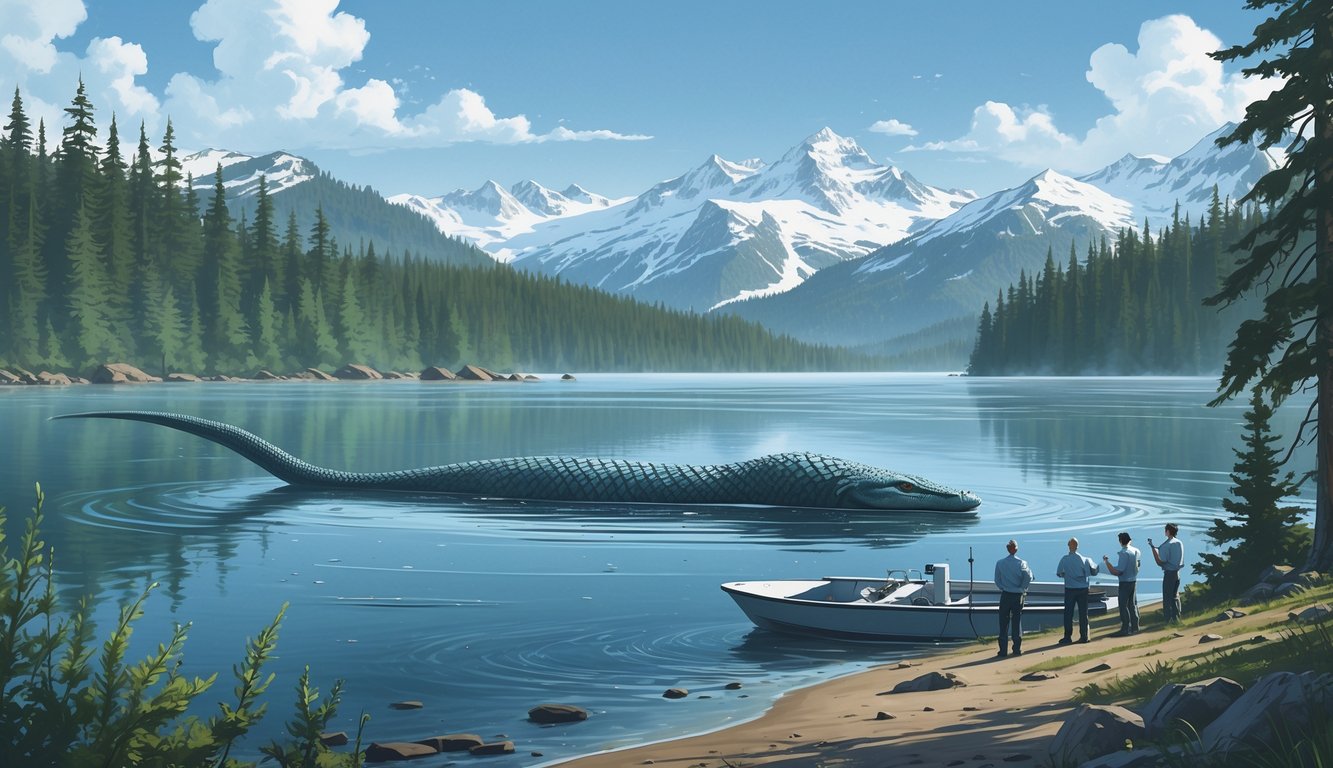
Some researchers think that large creature sightings in Alaska’s lakes can be explained by known animals. Observations often match the size, shape, or movement of certain fish and marine mammals that could enter these waters.
Sturgeon and White Sturgeon Hypothesis
Sturgeon are some of the largest freshwater fish in North America. White sturgeon can grow over 15 feet long and weigh hundreds of pounds.
Their long bodies, armored scales, and slow swimming style could match reported lake creatures.
In Alaska, sturgeon are rare but possible. Some scientists think a few may live in large, deep lakes like Iliamna.
The murky water can make them look even larger. White sturgeon sometimes surface briefly, which could explain short sightings.
Their pale underbellies might reflect light, creating the illusion of something strange under the water.
| Feature | White Sturgeon | Reported Lake Creature |
|---|---|---|
| Length | Up to 15+ ft | 10–30 ft |
| Body | Long, torpedo-shaped | Long, fish-like |
| Skin | Gray, bony plates | Smooth or scaly |
Sleeper Sharks in Freshwater
Pacific sleeper sharks are deep-water predators that can grow over 20 feet long. These sharks usually live in the ocean.
Some researchers suggest they might enter freshwater through river systems connected to the sea.
Lake Iliamna connects to Bristol Bay via the Kvichak River, which makes this movement possible. Sleeper sharks swim slowly and often stay near the bottom, making them hard to spot.
Their dark color and large size could match reports of massive, shadowy figures under the surface. There is no confirmed evidence that sleeper sharks live long-term in freshwater.
Beluga Whale and Harbor Seal Theories
Beluga whales sometimes travel far up rivers in Alaska. In rare cases, they may enter large lakes connected to the ocean.
Their white bodies and smooth movement could be mistaken for something mysterious from a distance.
Freshwater harbor seals are another possibility. Some seal populations live year-round in freshwater lakes, such as those in Quebec.
If a small group entered a large Alaskan lake, they could survive if food was available.
Both belugas and seals surface for air, which could lead to repeated sightings in the same area. In choppy water, their heads or backs might look like humps or strange shapes.
For more on these animal explanations, see the discussion of the Iliamna Lake Monster and related sightings.
Cryptozoological Speculation and Popular Culture
Some researchers and locals compare the Iliamna Lake Monster to prehistoric animals or large modern fish. Television, books, and tourism have helped keep the mystery alive and shape how people imagine the creature.
Plesiosaur and Prehistoric Survivors
Some believe the creature could be a plesiosaur, a marine reptile that went extinct about 66 million years ago. This idea comes from its reported long body and possible flippers.
Other lake legends, like Scotland’s Loch Ness Monster, have also been linked to plesiosaurs. Scientists say there is no fossil evidence for plesiosaurs living in freshwater lakes today.
Some speculate it could be a surviving prehistoric fish. Large sturgeon, for example, can grow over 20 feet, and their armored bodies might match some eyewitness descriptions.
The lake’s connection to the ocean has also led to theories about unknown marine species entering and staying in Iliamna.
River Monsters and TV Investigations
Television crews have investigated the mystery. Shows like River Monsters have visited Alaska to investigate reports of giant fish in Lake Iliamna.
These teams use sonar, underwater cameras, and interviews with locals to gather clues. In one investigation, sonar detected large moving shapes under the water, but no clear images showed what they were.
Some anglers believe these could be oversized lake trout or salmon, while others think the shapes look like sturgeon.
TV coverage often focuses on dramatic encounters, but it also draws attention to the lake’s real wildlife. This mix of science and storytelling keeps the legend in public conversation.
The Monster in Media and Tourism
The Iliamna Lake Monster appears in books, documentaries, and online articles, including detailed histories on The Alaska Frontier. These stories often blend Native Alaskan oral traditions with modern sightings.
Local tourism sometimes uses the legend to attract visitors. People can take boat tours, fish in the lake, and hear stories from residents.
Small businesses sell themed merchandise, like T-shirts and mugs, featuring the creature’s likeness.
The monster is more than a cryptid—it is part of the region’s identity. Even without proof, it inspires curiosity and travel to the area.
Ongoing Investigations and Scientific Expeditions
Researchers and adventurers keep visiting Alaska’s largest lake to look for answers about the reported sightings of a large aquatic creature. They use modern tools, scientific testing, and local knowledge to gather evidence while working in a remote and harsh environment.
Search Efforts and Underwater Technology
Teams use underwater cameras, sonar mapping, and remotely operated vehicles (ROVs) to scan the depths of Lake Iliamna. Some expeditions also collect environmental DNA (eDNA) samples to test for unusual species.
In one investigation, scientists sent advanced robotics to explore whitewater rapids and the lake’s deep, cold waters. This allowed them to reach areas too dangerous for divers.
Lake Iliamna is about 77 miles long and over 1,000 feet deep, making full coverage difficult. Search teams focus on areas where people have reported seeing the Iliamna Lake Monster most often.
Challenges in Proving Existence
The remoteness of the region forces expeditions to require significant planning, funding, and equipment. Weather can shift quickly.
Strong winds and low visibility often make operations unsafe. Modern tools help, but the lake’s depth and murky water limit visibility for cameras and divers.
Large fish species, such as white sturgeon, sometimes confuse observers who mistake them for something unknown. Eyewitness accounts vary in detail.
These differences make it hard to form a consistent description. Without clear video, photographs, or biological samples, scientists struggle to confirm if the creature is a new species or a known animal.
Role of Local Communities
Residents near Lake Iliamna have shared stories of large, dark shapes moving through the water for generations. Some view the creature as part of local heritage, while others believe it is simply a big fish.
Local fishermen often give valuable leads and point researchers to areas with unusual activity. Their knowledge of seasonal fish movements and lake conditions helps guide search patterns.
Community members sometimes join expeditions. They assist with boat operations or monitor equipment.
This collaboration builds trust. It ensures that scientific work respects cultural perspectives tied to the Iliamna Lake Monster legend.
The Alaskan Lake Monster’s Place in Modern Mythology
In Alaska, stories of strange creatures in remote waters mix local history with ongoing eyewitness accounts. The Iliamna Lake Monster, sometimes called “Illie,” stands out as one of the most talked-about examples.
Both residents and visitors show interest in the legend.
Cultural Impact and Community Identity
For many Native Alaskan communities, the monster’s story links to older legends passed down for generations. The Tlingit and Aleut peoples shared tales of giant fish-like beings, sometimes called Jig-ik-nak, that could overturn canoes and threaten hunters.
In towns near Lake Iliamna, the legend shapes local identity. Festivals, fishing guides, and small businesses use the creature in logos or merchandise.
This keeps the story alive in everyday life. Tourism benefits as well.
Visitors often ask about the lake’s mysteries. Guides share both historical accounts and modern sightings.
This blend of folklore and tourism helps preserve the tale and supports the local economy.
The Enduring Mystery
Sightings of large, dark shapes in the water date back to at least the 1940s. Reports often describe creatures between 10 and 30 feet long with metallic or dark gray skin.
Some people claim to have seen several at once. Others report seeing only one.
The lake’s size and depth encourage speculation. Lake Iliamna stretches about 77 miles long and reaches over 1,000 feet deep.
Many remote, hard-to-access areas make thorough investigation difficult. Scientists have suggested possible explanations, such as large sturgeon or seals.
No one has found definitive proof, and the lack of clear evidence only adds to the intrigue.
Why the Legend Persists
Several factors keep the Iliamna Lake Monster legend alive. The region’s isolation means fewer people can verify or disprove sightings.
Eyewitness accounts from respected community members carry weight in small towns. These stories often spread quickly among locals.
Media coverage also spreads the legend. Articles, documentaries, and online discussions share stories far beyond Alaska.
Websites like American Urban Legends describe both historical and modern reports. This exposure introduces new audiences to the legend.
People remain fascinated by the unknown. The mystery of the creature sparks curiosity and wonder.