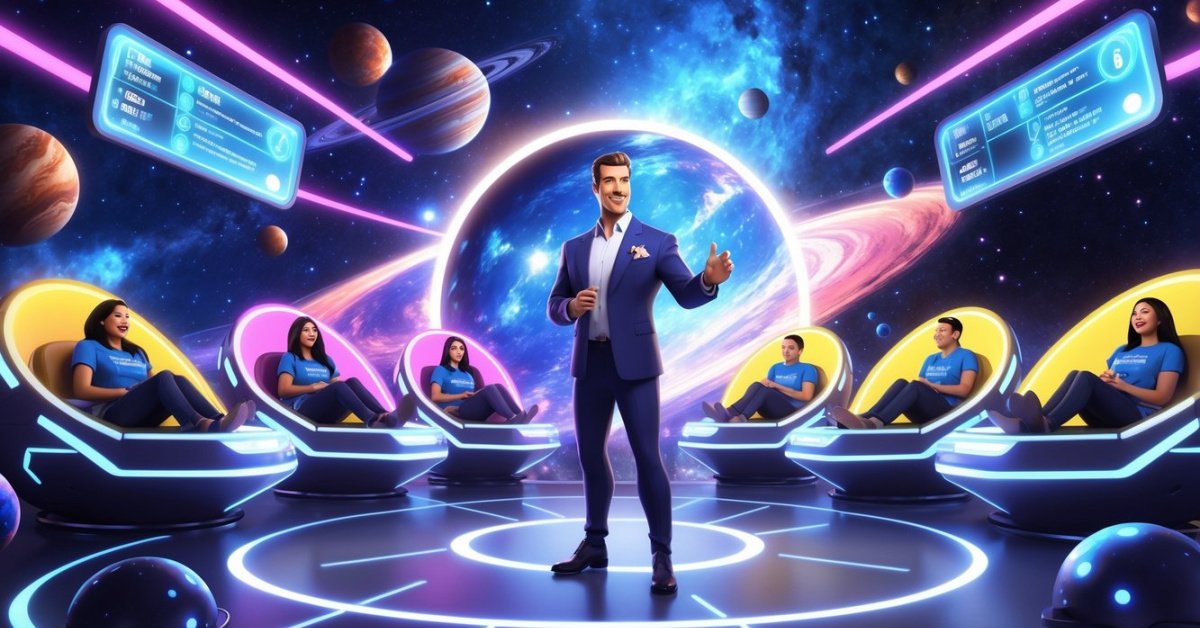
Josh Gates brings his adventurous spirit to a new stage in Global Game Show: Out of This World, a trivia competition that blends travel, history, and the mystery of extraterrestrials.
He challenges contestants with questions inspired by his journeys and discoveries. The format mixes on-location segments with quiz rounds, creating a unique blend of exploration and competition.

In this special, contestants from different places answer questions tied to real-world adventures and cultural landmarks.
Viewers at home also see exclusive, never-before-aired footage from past expeditions, adding discovery to the experience.
Whether he quizzes travelers in far-off destinations or shares behind-the-scenes stories, Gates keeps the pace lively and engaging.
The episode’s mix of international settings, trivia challenges, and authentic exploration offers a fresh way to experience the world from home.
You can learn more about the episode details on the Expedition Unknown Wiki.
Overview of Global Game Show: Out of This World
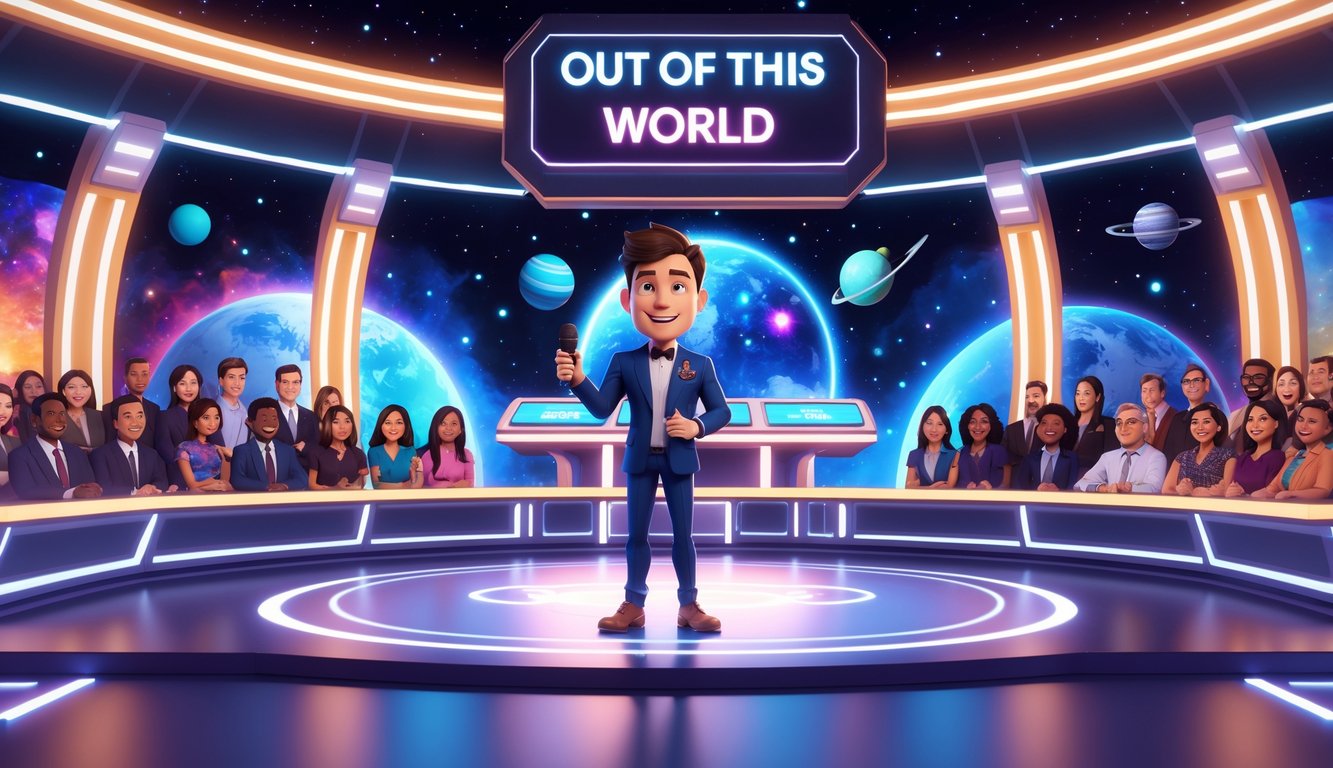
Josh Gates brings his signature mix of travel, history, and humor into a competitive trivia format.
This special blends on-location challenges, interactive play for viewers at home, and themed content centered on science and mystery.
Concept and Unique Features
Global Game Show: Out of This World is part quiz show, part travel program.
Josh Gates hosts from various locations, often tied to the questions and challenges.
Contestants answer trivia questions and take part in physical or location-based tasks.
The format keeps the pace quick and engaging.
A standout feature is the interactive element.
Viewers at home can participate for a chance to win prizes.
The production includes short field segments, light comedy bits, and behind-the-scenes moments.
This approach keeps the tone approachable while delivering interesting facts and visuals.
The mix of studio and on-location filming adds variety.
It also allows the host to connect trivia directly to real-world settings.
Connection to Expedition Unknown
The show spins off from the popular travel-adventure series Expedition Unknown.
Josh Gates uses his experience from that series to bring depth to the topics.
Many challenges and trivia questions reference past Expedition Unknown episodes.
These include archaeological finds, historical mysteries, and scientific topics.
The tone stays consistent with the original series—curious, informative, and accessible.
Fans of Expedition Unknown will recognize familiar production styles and Gates’ hosting approach.
This format allows for more audience interaction compared to the main series.
By blending the adventure style with game show elements, it appeals to both trivia fans and travel enthusiasts.
Special Focus on Extraterrestrials
This episode’s theme centers on extraterrestrials.
Questions and challenges explore UFO sightings, space exploration, and historical accounts of alien encounters.
Contestants compete for cash prizes by showing knowledge of both pop culture and documented cases related to life beyond Earth.
The production also includes a bonus look at never-before-aired footage from Expedition Unknown episodes about UFOs and alien lore.
This focus gives the show a science-meets-mystery angle while keeping the tone light and entertaining.
It blends factual content with playful competition, making the topic approachable for a wide audience.
Josh Gates: The Adventurous Host

Josh Gates blends curiosity, humor, and a hands-on approach to exploring history and culture.
His work includes television hosting, producing, and traveling to remote locations in search of real-world mysteries.
Background and Career Highlights
Josh Gates grew up in Massachusetts and developed a love for travel and storytelling early in life.
He studied archaeology and drama, which helped shape his unique career.
He became widely recognized as the host and executive producer of the Discovery Channel series Expedition Unknown.
The show follows him across continents as he investigates archaeological finds, historic legends, and scientific breakthroughs.
Gates has also hosted Legendary Locations and appeared on Ghost Hunters and Ghost Hunters International.
His on-camera presence and production experience have made him a trusted figure in adventure television.
Role in Global Game Show
In Global Game Show: Out of This World, Gates takes on a trivia-based format while keeping his explorer’s mindset.
The show challenges contestants with questions about extraterrestrials and space-related topics.
He interacts with both in-studio players and viewers at home, giving the program a broad, interactive appeal.
Contestants compete for prizes, and audiences see behind-the-scenes clips from Expedition Unknown that never aired.
This role lets Gates combine his knowledge of unusual subjects with his ability to keep participants engaged.
His background in exploration adds credibility to the show’s adventurous theme, even in a game setting.
Hosting Style and Appeal
Gates’ hosting style is approachable and lighthearted, making complex topics easy to follow.
He often uses humor to keep the mood upbeat while still delivering accurate information.
He engages directly with contestants, using quick banter and encouraging remarks to keep the pace lively.
His ability to shift between fun commentary and factual discussion keeps viewers interested.
Key traits that define his on-screen appeal:
- Curiosity: Genuine interest in the topic at hand.
- Clarity: Explains ideas in simple, direct language.
- Energy: Maintains enthusiasm throughout the episode.
This combination of traits helps Gates connect with a wide audience, from casual viewers to fans of his more adventurous work.
Contestants and International Diversity
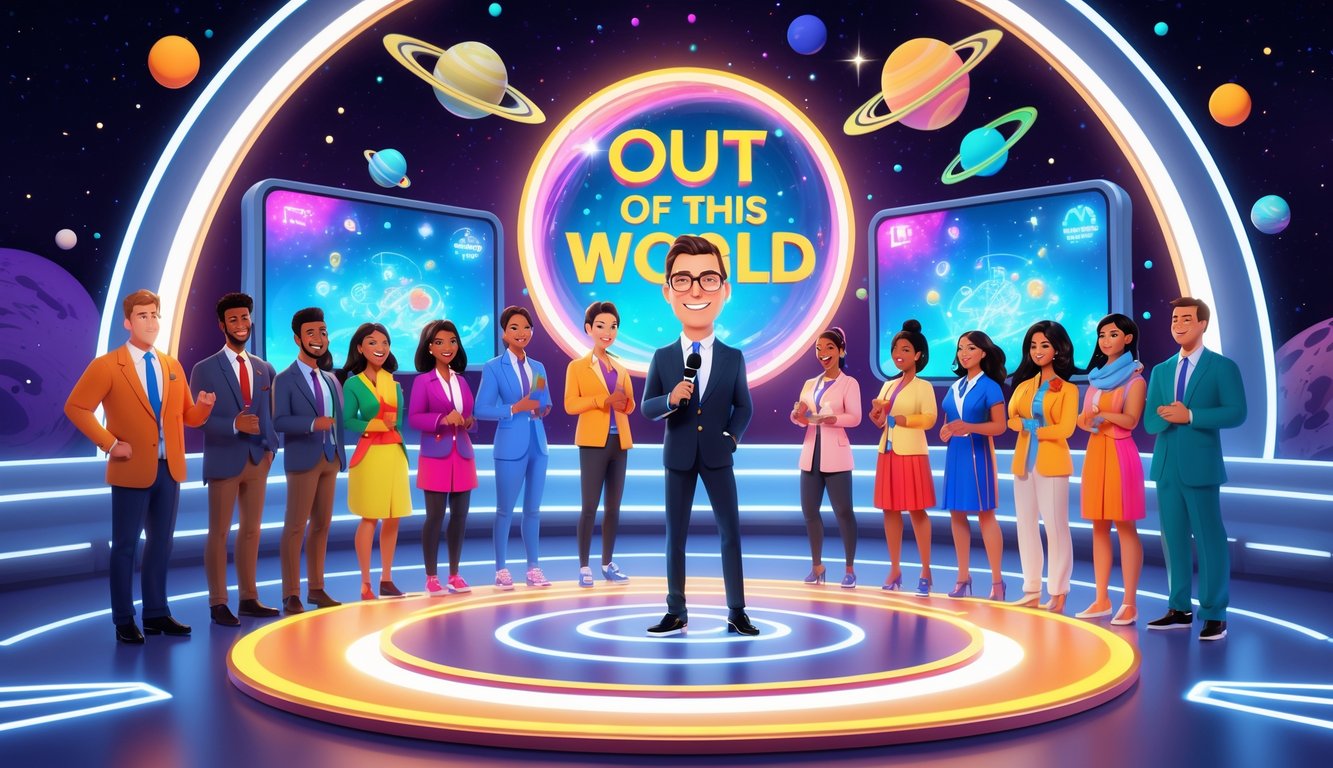
The episode features people from many different backgrounds, each adding their own knowledge and personality.
The mix of cultures, accents, and life experiences creates a lively and unpredictable competition.
Notable Participants
Several contestants stood out for their quick thinking and strong subject knowledge.
One player from Australia answered space history questions accurately.
A contestant from Turkey identified rare astronomical terms with skill.
From the United States, a science teacher used her classroom experience to handle complex questions.
An England-based participant brought a calm, methodical approach and often double-checked facts before answering.
Contestants from Sudan, Brazil, and South Africa also made memorable contributions.
Their perspectives highlighted how different regions approach topics like extraterrestrial life and space exploration.
Countries Represented
The show featured a broad geographic spread, giving it a truly global feel.
Participants came from:
| Country | Notable Strengths |
|---|---|
| United States | Strong science and history knowledge |
| Australia | Quick recall of space-related facts |
| England | Careful reasoning and fact-checking |
| Turkey | Knowledge of rare astronomical terms |
| Sudan | Insight into cultural interpretations of space |
| Brazil | Enthusiasm and creative problem-solving |
| South Africa | Broad general knowledge and confident delivery |
This range of countries gave the competition a richer variety of answers.
It encouraged friendly comparisons of how people in different places learn about space and science.
Selection Process
Producers chose contestants through an application and interview process.
They looked for people with diverse backgrounds, strong general knowledge, and clear communication skills.
They also aimed to include participants from different continents to reflect the show’s international scope.
Applicants completed a short quiz to test their trivia ability.
Some joined a video call where producers assessed how they handled on-the-spot questions.
This process ensured the final group was both knowledgeable and engaging on camera.
It helped balance the mix of science experts, casual trivia fans, and people with unique cultural perspectives.
Plot and Structure of the Trivia Adventure
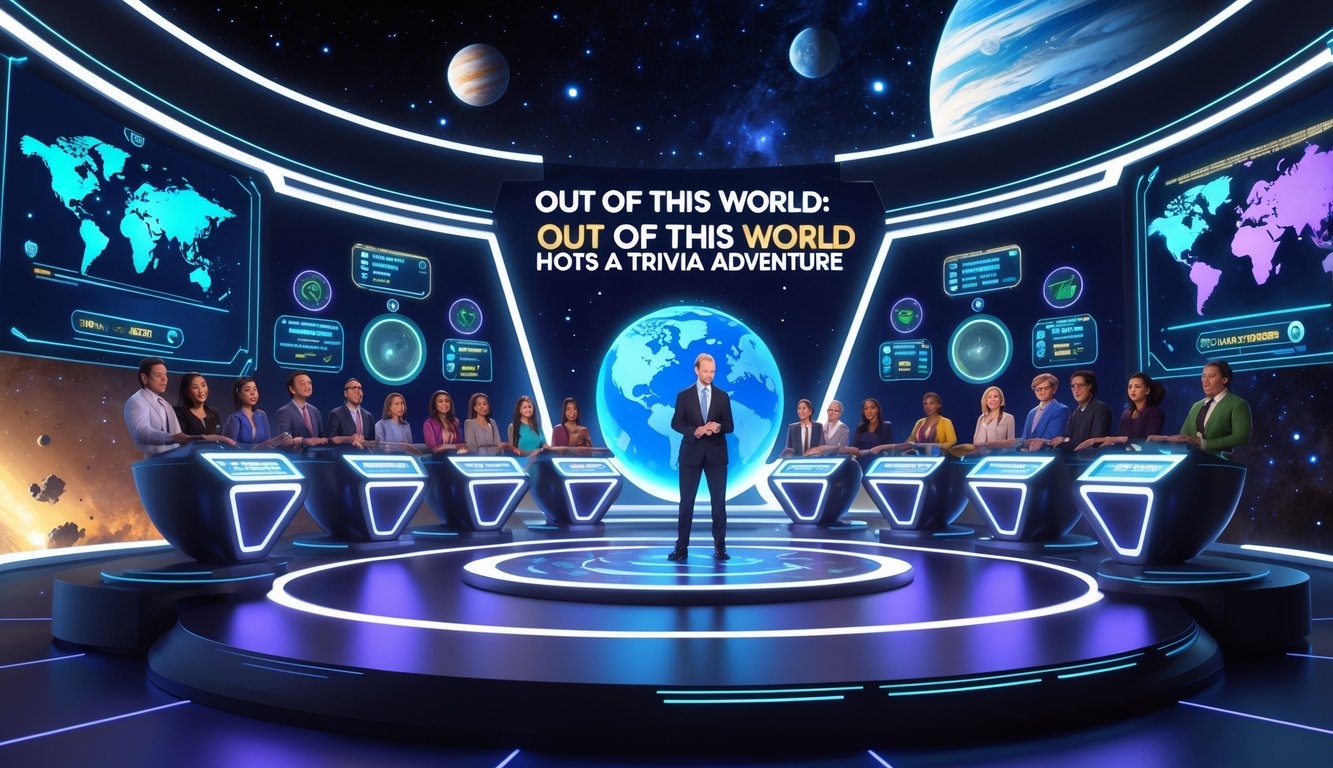
Josh Gates leads viewers on a fast-paced trivia journey that blends competitive gameplay with themed exploration.
Contestants face challenges that test both knowledge and quick thinking while traveling through settings inspired by locations on Earth and imagined alien worlds.
Episode Format
Each episode follows a consistent structure to keep the pace engaging.
It begins with an introduction from Josh Gates, who sets the stage for the day’s challenge and outlines the stakes.
Players compete in multiple timed rounds.
Early rounds focus on individual performance, while later rounds may shift to team-based play.
Between trivia segments, short travel sequences show Gates and contestants exploring themed environments.
These sequences often include on-location clues that connect directly to upcoming questions.
The final round features the highest-scoring contestants in a head-to-head challenge.
The winner earns a prize and the title of episode champion.
Key elements of the format:
- Opening briefing by the host
- Multiple trivia rounds with increasing difficulty
- On-location segments that offer visual hints
- Final showdown to decide the winner
Types of Trivia Questions
Questions vary in difficulty and cover a wide range of knowledge areas.
Many are multiple choice, but some require short written or spoken answers.
Categories include history, geography, science, and pop culture.
Some rounds include puzzle-based questions where contestants must arrange clues in the correct order.
Special “lightning rounds” test speed, rewarding quick recall.
Other segments focus on problem-solving, such as interpreting visual cues from artifacts or images.
A unique feature is the integration of clues hidden in earlier segments of the episode.
Contestants who pay attention during travel scenes often gain an advantage.
Common formats include:
- Multiple choice with four options
- True or false for rapid scoring
- Visual identification from photos or props
- Sequence arrangement based on historical or scientific order
Global and Extraterrestrial Themes
The show blends real-world locations with fictional alien settings to create variety.
Episodes may feature trivia tied to actual landmarks, such as the Great Wall of China, alongside questions about hypothetical alien civilizations.
Some segments explore cultural traditions from around the globe.
Others dive into speculative science, such as the possibility of life on Mars or the physics of interstellar travel.
Visual design plays a major role.
Sets combine authentic props from Earth cultures with stylized, science fiction-inspired elements.
This mix reinforces the “out of this world” feel without losing the connection to real knowledge.
In certain episodes, the extraterrestrial theme drives the plot.
Contestants might “travel” to alien outposts or decode messages from fictional civilizations as part of the challenge.
For more on the show’s premise and production, see the Expedition Unknown: Global Game Show – Out of This World overview.
Featured Locations and Cultural Highlights

Josh Gates explores historic cities, remote mountain regions, and vibrant urban centers while testing contestants’ knowledge.
Each stop offers a mix of local culture, unique geography, and notable landmarks that shape the trivia challenges.
Istanbul and Turkey
In Istanbul, Josh visits the meeting point of Europe and Asia.
The city’s skyline features the Hagia Sophia, Blue Mosque, and the bustling Grand Bazaar.
These landmarks provide rich material for quiz questions on history, architecture, and trade.
Turkey’s cultural blend is clear in its food, language, and traditions.
Contestants learn about Ottoman history, Byzantine art, and the role of the Bosporus Strait in global commerce.
Markets and street scenes give the show a colorful backdrop.
From spice stalls to ferry rides, Istanbul’s daily life becomes part of the challenge experience.
Himalayas and Kathmandu
The journey to the Himalayas brought the show to Nepal’s capital, Kathmandu.
Towering peaks surround the city, making it a gateway to Mount Everest and other famous climbs.
Josh highlighted Durbar Square, a UNESCO World Heritage site filled with palaces, courtyards, and temples.
Trivia here explored Nepal’s monarchy, religious festivals, and mountaineering history.
Local guides explained Sherpa culture and Buddhist traditions.
Thin mountain air and winding streets gave the filming a sense of adventure.
Philippines and Manila
In the Philippines, the capital city Manila showed a lively mix of Spanish colonial heritage and modern energy.
The Intramuros district, with its stone walls and churches, inspired questions about the country’s colonial past.
Contestants learned about the Philippines’ role in maritime trade and its many islands.
Street scenes included jeepneys, bustling markets, and local street food.
Josh’s team explored Manila Bay and discussed its historical battles and economic importance.
Music, dance, and colorful festivals in the city brought extra life to the trivia challenges.
For more on Josh Gates’ global trivia travels, including this extraterrestrial-themed adventure, visit the Global Game Show: Out of This World page.
Memorable Moments and Trivia Challenges

Josh Gates kept the pace lively with lighthearted banter and creative trivia.
Contestants answered a range of topics, from classic science facts to unusual space history, making each round feel fresh.
The energy stayed high with quick transitions and playful competition.
Standout Questions
Some questions tested both knowledge and memory.
For example, one round asked contestants to identify real NASA mission names versus fictional ones from movies.
Another challenge had contestants match famous UFO sightings with the correct year, leading to surprising guesses.
A few questions used visual clues on-screen, like satellite images or historical photos.
This gave players who were less confident in recall a chance to shine.
Sample question types included:
- Multiple choice with tricky distractors
- True or false space myths
- Rapid-fire lightning rounds on astronomy terms
These formats kept contestants alert and encouraged quick thinking.
Unforgettable Contestant Reactions
Contestants brought personality to every round.
Some celebrated correct answers with high-fives, while others laughed off mistakes.
One memorable moment happened when a player confidently answered, only to realize seconds later they had confused Mars with Jupiter.
The audience laughed, and the contestant grinned.
A tie-breaker question had two players buzzing in within milliseconds.
The brief tension ended with loud applause for the correct answer.
Facial expressions, quick comebacks, and friendly rivalries made the competition engaging for viewers.
Behind-the-Scenes Insights
The crew carefully coordinated the trivia segments.
They adjusted lighting between rounds to make visuals pop on screen.
Josh Gates helped contestants relax off-camera with casual conversation and light jokes.
This made them feel comfortable before high-pressure moments.
Some challenges were rehearsed for timing, especially those with visual cues or props.
This ensured smooth delivery and prevented technical delays.
The production team balanced difficulty levels so that questions stayed challenging but fair.
This planning helped maintain the upbeat, competitive atmosphere throughout the show.
Global Impact and Audience Engagement
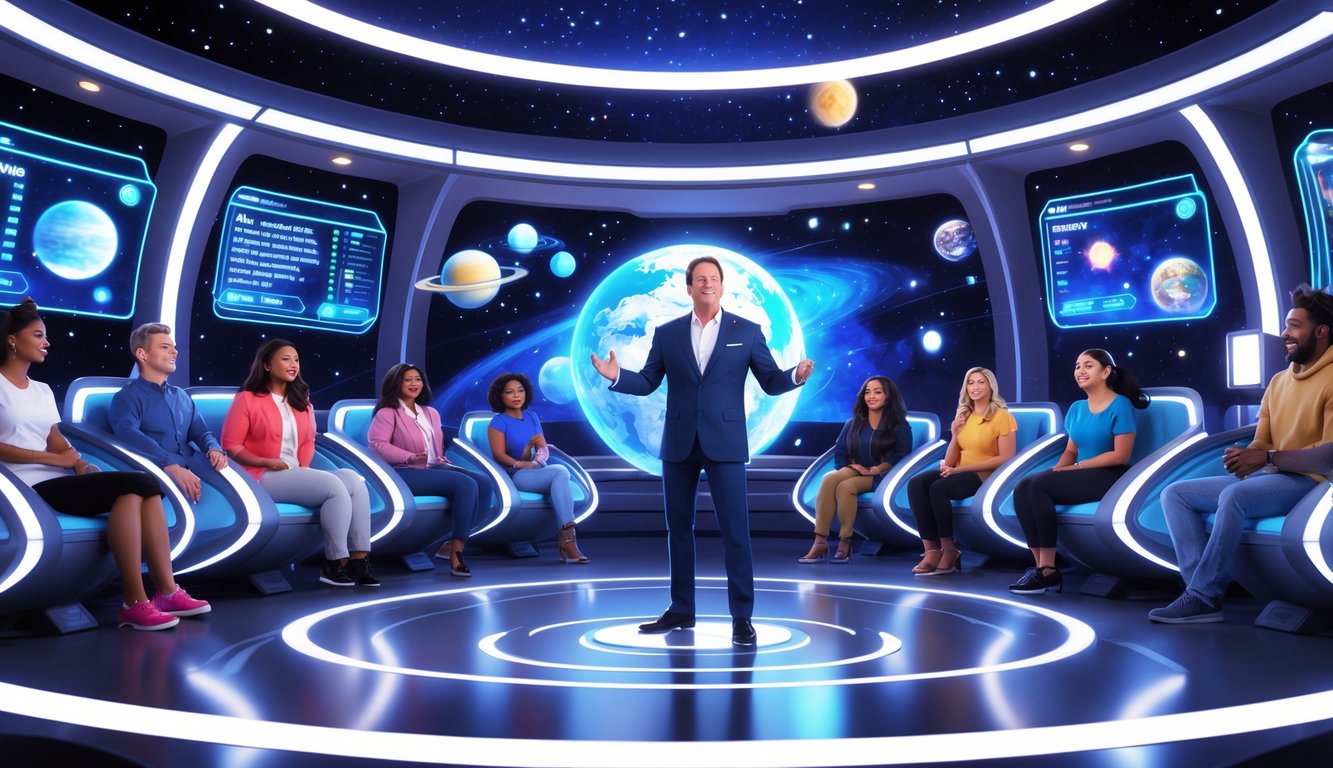
The Global Game Show: Out of This World combines trivia, travel, and unique challenges to reach audiences worldwide.
It blends entertainment with learning and lets viewers take part from their own homes.
International Appeal
The show’s setting and topics cover multiple countries and cultures.
Contestants answer questions about history, science, and geography linked to real locations.
By featuring themes like extraterrestrials and unexplored mysteries, the show attracts viewers interested in discovery.
Host Josh Gates is known internationally for his work on Expedition Unknown.
His travel experience gives the game show a credible and adventurous feel.
International audiences watch through streaming platforms and TV networks in several regions.
This wide availability builds a diverse fan base.
Viewer Participation
The format lets people at home join the fun.
Viewers can answer trivia questions in real time during broadcasts or through companion apps.
Interactive segments encourage players to test their knowledge alongside on-screen contestants.
This keeps the audience engaged even if they are not competing on set.
Some episodes include polls or mini-games that let fans influence certain outcomes.
For example, viewers might vote on bonus challenges or choose the next round’s category.
This interactive approach makes the audience feel like active participants.
It also helps the show maintain a loyal following across countries.
Prize Opportunities
The show offers rewards to both in-studio contestants and at-home participants.
Studio players compete for a main cash prize, while viewers can win smaller prizes through online or live challenges.
At-home prizes may include gift cards, merchandise, or exclusive behind-the-scenes content.
Some episodes feature special giveaways tied to the theme.
By offering multiple ways to win, the show appeals to both casual viewers and dedicated trivia fans.
Details on specific prize opportunities are shared during the broadcast or on the official Global Game Show: Out of This World page.
These incentives add excitement and encourage repeat viewing.
Connection to Expedition Unknown Episodes
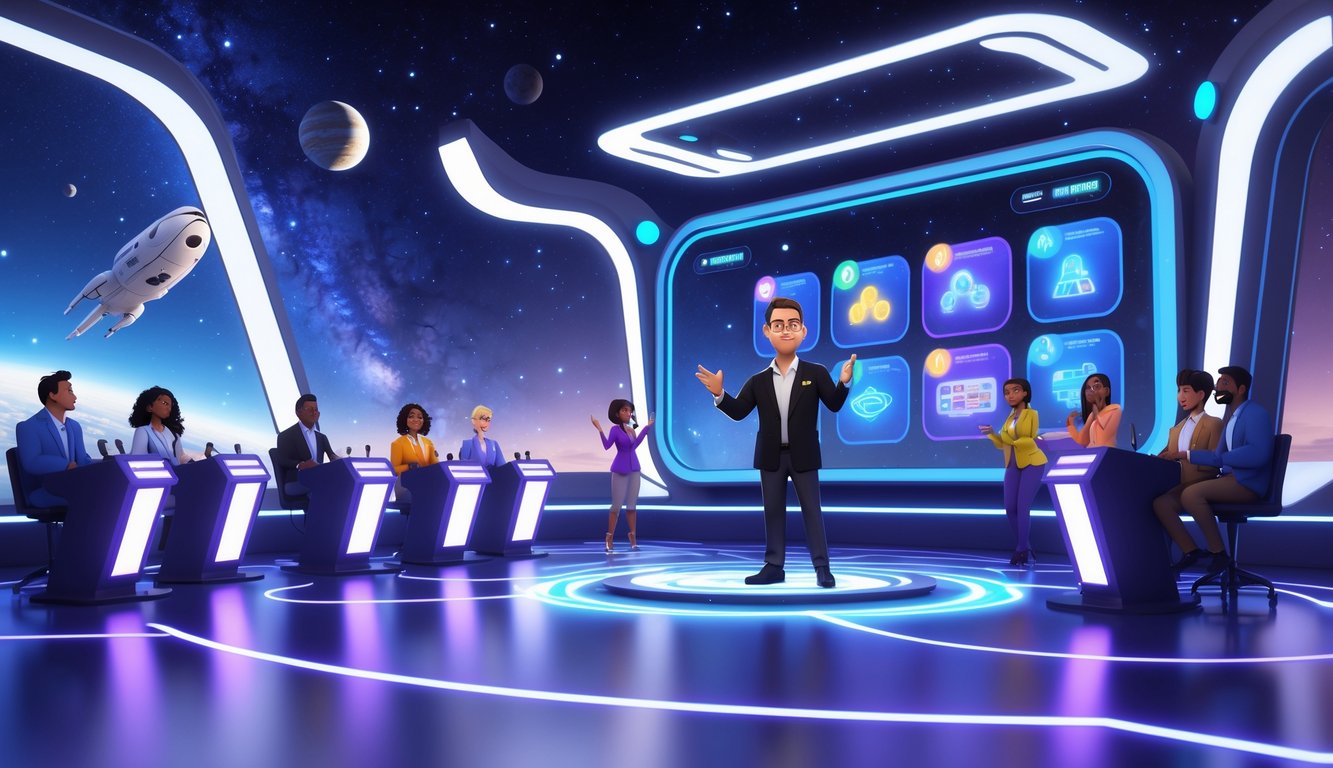
Josh Gates uses the Global Game Show format to connect with fans while revisiting moments from his travels.
These episodes mix trivia with real-world exploration clips, giving viewers entertainment and insight into past expeditions.
The format also brings back notable scenes and adds new content not seen in the original airings.
Season 2 Highlights
In Season 2 of Expedition Unknown, the Global Game Show appeared as a special episode.
Gates quizzed contestants from different locations with questions related to his past expeditions, such as lost treasures and ancient mysteries.
The episode blended clips from adventures across multiple countries with live trivia segments.
Fans could test their knowledge while revisiting memorable investigations.
Notable expeditions included archaeological digs, underwater searches, and historical site explorations.
According to the Expedition Unknown Wiki, it served as the 24th episode of the season and bridged exploration with interactive television.
Season 4 Special Features
In Season 4, the Global Game Show: Out of This World focused on extraterrestrial-themed trivia.
Contestants answered questions about UFO sightings, alien legends, and space exploration history.
This special included more elaborate challenges than in previous seasons.
Gates sometimes competed alongside contestants, adding a playful element.
The TVmaze episode guide notes that the special blended in-studio segments with field footage from past alien-related investigations.
This included visits to reported UFO hotspots and interviews with experts in astronomy and folklore.
Bonus Footage and Easter Eggs
The show included never-before-seen clips from Expedition Unknown.
Gates offered exclusive access to moments that did not air during the original episodes.
This bonus content showed behind-the-scenes interactions, extended interviews, and additional location shots.
It gave a fuller picture of the expeditions and sometimes clarified details from the televised versions.
The Expedition Unknown Wiki page for Out of This World mentions that these extras acted as “Easter eggs” for dedicated viewers.
They rewarded fans who followed both the main show and the game show specials, making the experience more interactive and personal.
Filming Locations Around the World

The production team chose real-world destinations to match the show’s adventurous tone.
These locations offered a mix of urban landmarks, remote landscapes, and culturally significant sites that added variety to each trivia segment.
United States
The team filmed in cities known for cultural and historical importance.
Locations included coastal areas, desert landscapes, and iconic landmarks.
In California, the crew shot in both urban centers and natural parks.
This variety allowed for quick shifts between trivia rounds and behind-the-scenes clips.
Episodes also featured historic sites in the Northeast.
These spots connected directly to the topics discussed, giving the audience a stronger sense of place.
England and Europe
In England, the crew filmed on well-known city streets and at historic landmarks.
London’s architecture provided a lively setting for contestant interactions.
Across Europe, the team visited multiple countries for distinct cultural scenes.
Cobblestone squares and medieval buildings in central Europe contrasted with modern cityscapes.
They also filmed near rivers, castles, and public markets.
These locations gave the trivia challenges an immersive atmosphere and showed authentic local life.
Brazil and South America
Brazil’s vibrant cities and natural wonders served as a colorful backdrop.
Filming included scenes in bustling urban areas and quieter coastal spots.
In Rio de Janeiro, the crew captured footage near famous beaches and cultural landmarks.
The city’s energy matched the game show’s fast pace.
Other South American locations featured rural landscapes and historic towns.
These settings allowed for a wider range of visual styles and trivia topics.
South Africa and Sudan
In South Africa, filming covered both urban and natural environments.
Cape Town’s harbor and mountain views provided striking visuals for the show’s transitions.
The crew explored wildlife areas, capturing scenes that reflected the region’s natural diversity.
These spots added a sense of exploration to the trivia format.
In Sudan, the team focused on archaeological and historical sites.
Ancient ruins and desert scenery gave the episodes a distinctive look.
These locations fit the show’s theme of discovery and global knowledge.
Legacy and Influence on Game Shows

Josh Gates’ work on Global Game Show: Out of This World changed how trivia can be presented.
His hosting style mixed factual storytelling with interactive challenges, encouraging other productions to rethink pacing, question design, and audience interaction.
The show’s blend of education and entertainment set an example for future creators.
Innovations in Trivia Format
The show introduced multi-layered trivia rounds where each correct answer unlocked a related visual clue or short video.
This kept viewers engaged by adding context.
Producers used on-location filming to connect questions to real-world landmarks.
For example, they asked a question about space exploration in front of an actual rocket display.
They also used tiered scoring so contestants earned more points for answering quickly.
This added strategy without making the game too complex.
These elements drew from earlier classics like Jeopardy! but updated them for modern audiences, as seen in classic game shows shaped modern entertainment.
The result was a trivia format that felt fresh yet familiar.
Influence on Future Productions
After its release, new quiz-based programs started using location-based filming and integrated storytelling in their question rounds.
This gave trivia shows a more cinematic feel, appealing to viewers who enjoy travel or history content.
Some international versions of existing shows began experimenting with hybrid formats, blending trivia with light adventure.
This reflected Gates’ balance between competition and exploration.
Production teams noticed the show’s pacing.
By alternating fast-paced rounds with slower, story-driven segments, they kept audiences interested longer.
This structure has since appeared in other formats, including streaming-exclusive quiz shows.
The program’s success encouraged networks to try more niche-topic game shows, proving that audiences enjoy specialized themes if presented in an engaging way.
Connections to Films and Pop Culture
The show often referenced science fiction and adventure films when it framed questions. This approach created a bridge between trivia and popular cinema.
For example, a round on planetary science might mention The Martian or Interstellar. These references provided cultural touchpoints that helped viewers connect with the material.
Contestants could relate to complex topics through familiar movie scenes. The visual style also borrowed from film techniques.
Wide establishing shots and dramatic lighting made the show feel closer to a travel documentary or adventure movie. Cinematic transitions enhanced this effect.
This blend of film-inspired visuals with game show mechanics showed how entertainment formats can evolve by borrowing from other media. The show kept its core identity while drawing on these influences.