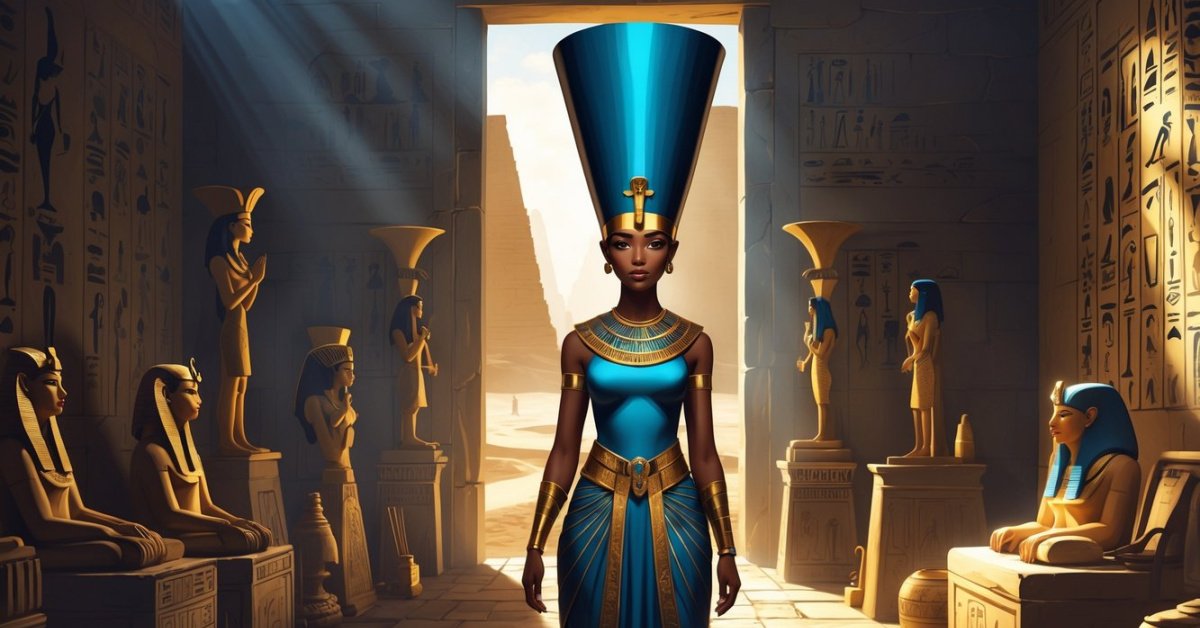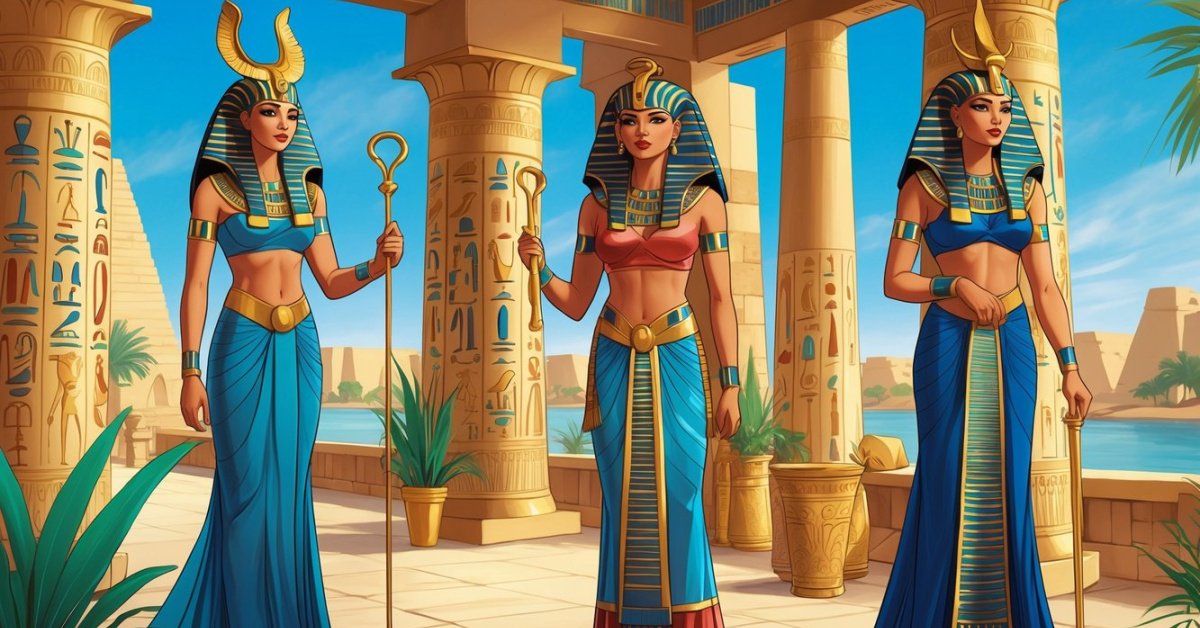
Ancient Egypt produced women who shaped politics, religion, and culture in lasting ways. While most pharaohs were men, a few women rose to the throne and ruled with equal authority.
These female rulers showed that women could lead Egypt and command respect, stability, and influence.
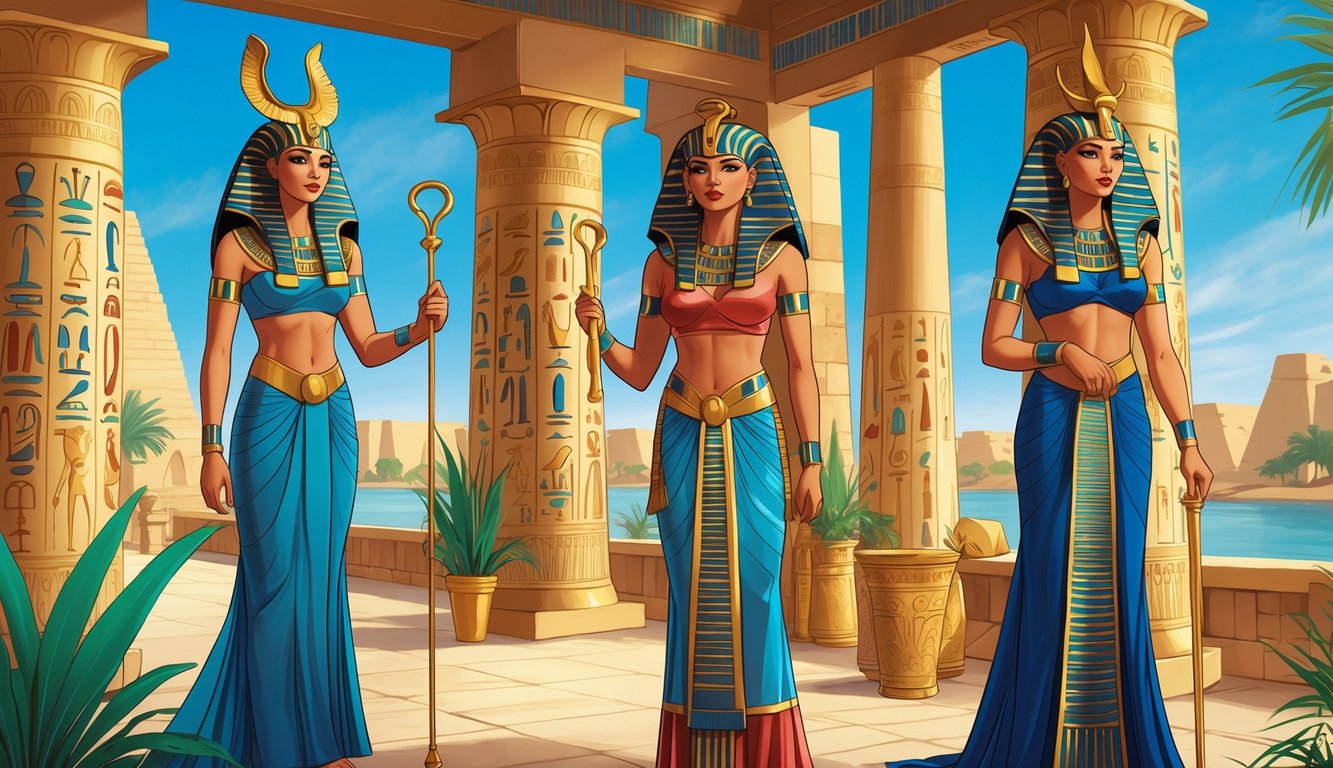
From early queens like Merneith to the last pharaoh, Cleopatra VII, each leader took a unique path to power. Some inherited the throne, while others seized it during political uncertainty.
Figures such as Hatshepsut and Sobekneferu built monuments, created policies, and left legacies that tell their stories thousands of years later.
Their reigns involved more than politics. They also claimed divine authority and often presented themselves as chosen by the gods.
In temples, art, and inscriptions, these women appear as symbols of earthly and spiritual power. Their images secure their place in Egypt’s long history.
The Role of Women in Ancient Egyptian Society
Women in ancient Egypt could own property and run businesses. They also participated in legal contracts.
Many women served as religious leaders. Queens and noblewomen influenced politics, diplomacy, and succession.
Law, tradition, and religion shaped their roles, giving them rights and visibility uncommon in many ancient cultures.
Legal Rights and Social Status
Ancient Egyptian women enjoyed legal equality with men in many areas. They could own, buy, and sell property, including land and houses.
Women could inherit wealth and manage estates without a male guardian. Greek women, in contrast, needed a kyrios for legal matters.
Marriage contracts listed property rights and divorce terms. A woman could divorce her husband and keep her belongings.
She could also sue in court and act as a legal witness.
Social status depended on class. Elite women had more opportunities for education and influence.
Lower-class women often worked in farming, weaving, or market trade. Even working-class women had personal property rights in Egyptian society.
For more on these laws and customs, see how ancient Egyptian women held legal rights.
Women in Religion and Mythology
Women played important roles in Egyptian religion as priestesses, musicians, and temple administrators. Some served as the “God’s Wife of Amun,” a powerful religious office that controlled wealth and land.
Egyptian mythology featured many prominent goddesses. Isis was revered as a protector and mother figure.
Hathor was linked to love, music, and fertility. Bastet guarded homes and families.
Nephthys was associated with protection of the dead. Neith symbolized creation and warfare.
These deities shaped how society viewed women. Female roles in rituals often reflected the powers of these goddesses, reinforcing respect for women’s spiritual authority.
Learn more about the powerful women and goddesses of ancient Egypt.
Royal and Noble Women
Royal women shaped politics and dynastic stability. Queens like Hatshepsut ruled as pharaoh, led military campaigns, and built monuments.
Others, such as Nefertiti, influenced religious reforms and diplomatic relations.
Noblewomen managed estates and acted as regents for young heirs. They took part in court ceremonies and served as high priestesses.
Their marriages helped secure alliances and succession.
Some royal women appeared in official art wearing the uraeus (cobra crown) or false beard, symbols of kingship. This visual language reinforced their authority in ancient Egyptian society.
To explore more about Egypt’s influential queens and noblewomen, see examples from different dynasties.
Pathways to Power: How Women Became Rulers
Women in ancient Egypt reached the throne through political and religious channels. Their authority often relied on family ties, divine symbolism, and strategic relationships within the royal court.
Regency and Succession
Women often gained power by serving as regents for young heirs. When a pharaoh died and left a child too young to rule, the Great Royal Wife or mother governed in his name.
Some regents, like Hatshepsut, moved from temporary authority to full kingship. She adopted royal titles and appeared in inscriptions wearing the uraeus and false beard.
Regency helped maintain dynastic stability. By keeping power within the royal family, these women protected the throne from rivals.
They directed state projects, managed the treasury, and oversaw military decisions.
Divine Kingship and Legitimacy
Egyptians viewed their rulers as living gods. For a woman to become pharaoh, she had to connect her rule to divine will.
She often presented herself as chosen by gods like Amun or Ra.
Some female rulers used religious imagery to strengthen their legitimacy. They appeared in temple reliefs with male gods, receiving symbols of kingship.
The serekh, a royal name frame, sometimes included their titles.
Creation myths credited goddesses like Neith with forming the world. This belief made female leadership more acceptable.
Rulers such as Sobekneferu emphasized these divine connections to justify their reign.
Political Alliances and Marriages
Marriage provided another path to power. Royal women often married within the family to keep the throne secure.
A queen could rule alongside her husband as co-regent or step into full authority after his death.
Alliances through marriage linked Egypt to foreign powers. Diplomatic unions strengthened trade ties and military support.
A politically skilled queen could use these alliances to increase her influence at court.
Some women became pharaohs after marrying into the royal line and outliving their husbands. By combining marital status with religious and political authority, they secured the right to rule Egypt.
Several female pharaohs of ancient Egypt used both marriage and divine claims to consolidate their rule.
Early Female Rulers: Foundations of Leadership
In the earliest centuries of ancient Egypt, a few women held remarkable authority. Their leadership shaped royal traditions and the role of women in governance.
They navigated challenges of succession and legitimacy in a society that often favored male rulers.
Neithhotep and the First Dynasty
Neithhotep lived during Egypt’s First Dynasty, around 3100 BCE. She may have been the wife of King Narmer or King Aha and likely acted as regent for a young heir.
Archaeologists found her name in large inscriptions on tombs and seal impressions. These records show she had authority over state matters.
Her tomb at Naqada is one of the largest from the period. Its scale and complexity show her high status and possible role as the first woman to govern Egypt in her own right.
This early example shows that women could hold real political power even at the dawn of the pharaonic state.
Queen Merneith’s Reign
Queen Merneith ruled during the First Dynasty, around 2950 BCE. She likely served as regent for her son, King Den, until he came of age.
Her name appears in royal lists and on artifacts from her tomb at Abydos. The tomb’s size and royal symbols suggest she was recognized as a ruler.
According to historical accounts, Merneith held full pharaonic titles in some records. Scholars still debate whether she was officially a pharaoh.
She managed the kingdom during a critical time, maintaining stability and continuing state projects.
Nitocris and the Old Kingdom
Nitocris remains a mysterious figure, linked to the end of the Old Kingdom or the 6th Dynasty. Ancient writers like Herodotus wrote that she became pharaoh after her brother or husband died.
Some accounts describe her as avenging his death, though legend and history often mix in these stories. Egyptian king lists from later periods include her name, suggesting people remembered her as a ruler.
While archaeological evidence for her reign is limited, Nitocris stands out in ancient Egyptian history as one of the earliest women with the full powers of kingship. Her story shows both the possibilities and uncertainties of female rule in early dynasties.
Sobekneferu: The First Confirmed Female Pharaoh
Sobekneferu ruled Egypt at the end of the Middle Kingdom. She became the first woman to take the full royal title of pharaoh.
Her reign marked the close of the 12th Dynasty and occurred during a time of political transition.
Rise to Power in the 12th Dynasty
Sobekneferu took the throne after Amenemhat IV died. He may have been her brother or husband, but their exact relationship is unclear.
With no male heir, she assumed the kingship. She ruled from about 1760 to 1756 BCE.
Her name means “the beauty of Sobek,” linking her to the crocodile god Sobek. This connection may have strengthened her claim to rule.
Sobekneferu wore both male and female regalia. She used traditional pharaonic titles but did not hide her identity as a woman.
This balance helped her fit within Egypt’s political traditions while breaking new ground for women.
More about her rise appears in this historical account of Sobekneferu.
Achievements and Legacy
Records of Sobekneferu’s reign are limited. Evidence shows she continued building projects started by her predecessors.
She is linked to the Qasr el-Sagha temple, possibly dedicated to Sobek, and to improvements at Hawara.
She ruled for nearly four years. Her leadership showed that women could hold the highest office in Egypt.
Sobekneferu’s death ended the 12th Dynasty and led to the 13th Dynasty. Her reign remains a milestone for female pharaohs in ancient Egypt.
Her example influenced later rulers such as Hatshepsut, who also balanced female identity with the traditional image of a king.
Hatshepsut: Egypt’s Foremost Female Pharaoh
Hatshepsut rose to power during Egypt’s Eighteenth Dynasty. She held authority equal to any male ruler of her time.
She strengthened Egypt through ambitious building projects. She expanded foreign trade and left a political legacy that lasted long after her death.
Claiming the Throne
Hatshepsut was the daughter of Pharaoh Thutmose I. She became queen when she married her half-brother, Thutmose II.
After Thutmose II died, his young son Thutmose III inherited the throne. Because he was a child, Hatshepsut served as regent.
By the seventh year of his reign, she declared herself pharaoh. She adopted full royal titles, wore the traditional regalia, and appeared in statues with a false beard.
This presentation connected her to Egypt’s long tradition of male kingship. Her religious role as God’s Wife of Amun gave her both political and spiritual authority.
She used this position to link her rule to divine will and strengthen her legitimacy. Hatshepsut rose to power gradually and strategically, not by force.
She kept Thutmose III as co-ruler. This move ensured stability while she held main control.
Monumental Building Projects
Hatshepsut invested heavily in architecture. She left behind some of Egypt’s most famous monuments.
Her greatest achievement was the mortuary temple at Deir el-Bahari. Builders constructed it against the cliffs on the west bank of the Nile.
The three-terraced temple features colonnades, ramps, and detailed reliefs showing her reign. It served as a place for worship and as a statement of her power.
She ordered the construction of obelisks at Karnak Temple. Some of these still stand today.
These works honored Amun and celebrated her role as his chosen ruler. Her building projects provided jobs and stimulated the economy.
They also reinforced her image as a capable and prosperous leader.
Trade Expeditions and Prosperity
Hatshepsut revived long-distance trade. Previous reigns had seen this decline.
One of her most famous ventures was the expedition to the Land of Punt. Artists recorded this journey in vivid reliefs at Deir el-Bahari.
Goods brought back included gold, myrrh trees, ivory, ebony, and exotic animals. These imports enriched Egypt’s economy and expanded its cultural connections.
The trade mission also had religious meaning. Myrrh was used in temple rituals, and planting myrrh trees in Egypt showed divine favor.
By securing stable trade routes, Hatshepsut brought prosperity to Egypt. You can read more about her achievements on Britannica’s biography of Hatshepsut.
Nefertiti: Power, Beauty, and Religious Revolution
Nefertiti was queen of Egypt in the 14th century BCE. She was the wife of Pharaoh Akhenaten.
She played a central role in political leadership, religious change, and artistic innovation during a unique period in Egypt’s history. Her reign is known for the shift to Aten worship and the cultural transformation of the Amarna Period.
Co-Rule with Akhenaten
Queen Nefertiti served as the Great Royal Wife of Akhenaten from about 1353 to 1336 BCE. Temple carvings and inscriptions show she was more than a ceremonial figure.
She appeared in official scenes performing religious rites and giving offerings. Sometimes artists showed her at the same scale as the pharaoh, suggesting shared authority.
Some historians believe she acted as co-regent. In this role, she may have signed decrees, influenced court decisions, and represented Egypt in diplomatic matters, including exchanges in the Amarna Letters.
Her public visibility was unusual for a queen of the 18th Dynasty. It reflected Akhenaten’s trust and a strong political partnership.
The Amarna Period and Aten Worship
During the Amarna Period, Akhenaten and Nefertiti moved the capital to Akhetaten (modern Amarna). This move was part of a major religious reform.
They replaced Egypt’s traditional gods with the worship of Aten, the sun disk. Nefertiti took an active part in promoting Atenism.
In temple reliefs, she appears making offerings directly to Aten with Akhenaten. This role was usually reserved for male rulers.
Aten became the sole god, and art from this period changed. Figures appeared more naturalistic, showing the royal family in intimate scenes.
These changes are visible in monuments and artifacts found at Amarna. You can read more about her role in the World History Edu account.
Nefertiti’s Enduring Influence
Nefertiti’s image, especially the famous painted bust in Berlin, remains one of the most recognized symbols of ancient Egypt. This bust shows the refined artistic style developed under her patronage.
Her influence may have continued after Akhenaten’s death. Some scholars suggest she ruled briefly as pharaoh under a different name.
Her legacy in art, diplomacy, and religious thought continued even after the restoration of Egypt’s old gods. Historical studies, such as History.com’s profile of Nefertiti, show her as a figure who shaped one of Egypt’s most distinctive eras.
Influential Queens and Royal Women of the New Kingdom
Royal women of Egypt’s New Kingdom often held political influence and commanded military respect. They played key roles in religion.
Some negotiated with foreign rulers. Others acted as regents or defended Egypt during times of war.
Their authority came from both royal lineage and personal abilities.
Queen Tiye and Political Diplomacy
Queen Tiye, wife of Pharaoh Amenhotep III, was one of the most politically active queens of the 18th Dynasty. She came from a non-royal family but rose to become Great Royal Wife.
Tiye advised her husband on state matters. She maintained correspondence with foreign leaders.
Surviving letters show her direct involvement in diplomacy, including exchanges with the kings of Mitanni and Babylon. She held the title God’s Wife of Amun, which increased her influence in religious affairs.
Tiye appeared alongside Amenhotep III in statues and temple reliefs. This signaled her unusually high status for a queen at the time.
Her political skill helped strengthen Egypt’s foreign alliances. She helped maintain stability during her husband’s long reign.
Learn more about her role in ancient Egyptian politics.
Nefertari: The Great Royal Wife
Nefertari, the chief wife of Pharaoh Ramesses II, lived during the 19th Dynasty. She is remembered for her beauty, intelligence, and cultural importance.
Her tomb in the Valley of the Queens is one of the most elaborate ever built. The vivid wall paintings reflect her high status.
Nefertari often appeared at the same scale as Ramesses II in art. This showed her equal presence in royal imagery.
She played a role in diplomacy, possibly helping maintain peace with the Hittites after Egypt’s treaty with them. Inscriptions describe her as “Mistress of Upper and Lower Egypt” and “Beloved of Mut,” linking her to divine favor.
Nefertari’s public visibility reinforced the image of the royal family’s unity and strength. More can be read about her life in Egypt’s royal history.
Ahhotep I: Warrior Queen
Queen Ahhotep I, mother of Ahmose I, played a decisive role during the wars against the Hyksos in the late 17th Dynasty. She acted as regent after the death of her husband, Seqenenre Tao, and possibly during her son’s early reign.
Ancient records credit her with rallying troops and quelling rebellions while Ahmose I campaigned in Nubia. She received military honors, including golden flies awarded for bravery.
Ahhotep’s leadership helped secure Egypt’s reunification. Her burial goods, including weapons and ceremonial items, show her status as both a political and military figure.
Her story is detailed in accounts of great female rulers of Ancient Egypt.
Cleopatra VII: The Last Pharaoh of Egypt
Cleopatra VII ruled during the final years of Ptolemaic Egypt. This kingdom descended from the Greek Macedonian generals of Alexander the Great.
Her leadership combined political skill and strategic alliances. She worked to keep Egypt independent despite growing Roman power.
Rise and Reign of Cleopatra VII
Cleopatra VII Philopator was born in 69 BCE to Ptolemy XII Auletes, the ruler of Egypt. She became co-regent with her younger brother Ptolemy XIII at about 18 years old.
Unlike many rulers of her dynasty, Cleopatra learned the Egyptian language and embraced local customs. This helped her gain support from both the Greek elite and native Egyptians.
Her early reign faced political instability. A power struggle with Ptolemy XIII forced her into exile in Syria.
She later returned with military support to reclaim the throne. Cleopatra positioned herself as both a traditional Egyptian pharaoh and a skilled Hellenistic monarch.
This dual approach helped her navigate the cultural mix of Ptolemaic Egypt.
Alliances with Julius Caesar and Mark Antony
Cleopatra formed a political and personal alliance with Julius Caesar after meeting him in Alexandria in 48 BCE. She sought his help to secure her position against Ptolemy XIII.
With Caesar’s support, she regained the throne and became sole ruler. She later shared power with her young son Caesarion, whom she claimed was Caesar’s child.
After Caesar’s assassination in 44 BCE, Cleopatra aligned with Mark Antony, one of Rome’s most powerful generals. Their relationship produced three children and strengthened Egypt’s position against rival Roman factions.
Cleopatra and Antony presented themselves as rulers of an eastern empire, blending Egyptian and Hellenistic traditions. This alliance increased tensions with Rome’s future leader, Octavian.
The Fall of the Ptolemaic Dynasty
Conflict with Octavian reached its peak at the Battle of Actium in 31 BCE. Cleopatra and Antony’s fleet lost, and they retreated to Egypt.
In 30 BCE, as Octavian’s forces closed in on Alexandria, Antony took his own life. Cleopatra followed soon after, with most accounts saying she died by suicide.
Her death ended the Ptolemaic dynasty and started Roman rule in Egypt. Octavian executed Caesarion, removing the last heir to the throne.
Cleopatra’s reign stands out for her political skill, cultural adaptability, and the dramatic events that ended Egypt’s independence. You can read more about her life at Cleopatra VII: The Last Pharaoh of Ancient Egypt.
Symbols of Power and Divine Authority
In ancient Egypt, female rulers used special objects, titles, and images to show their right to govern. These symbols connected them to the gods and reminded people of their authority in both political and religious life.
Royal Regalia and Iconography
Queens and female pharaohs often wore royal regalia that matched or adapted the symbols male rulers used. The uraeus, a rearing cobra on the forehead, showed divine protection and the ruler’s readiness to strike at enemies.
They carried scepters such as the heka (crook) and was (staff of power). Crowns varied, with some wearing the Nemes headdress or the double crown to show rule over Upper and Lower Egypt.
A table of common regalia:
| Symbol | Meaning | Common Wearers |
|---|---|---|
| Uraeus | Divine protection | Pharaohs, queens |
| Crook (heka) | Guidance of people | Pharaohs |
| Flail | Authority over land | Pharaohs |
| Double Crown | Unity of Egypt | Pharaohs, female rulers |
These visual cues played a key role in public ceremonies and official portraits.
Religious Titles and Roles
Many royal women held sacred titles that strengthened their power. The most influential was God’s Wife of Amun, a position that combined political influence with high religious authority.
Holders of this title managed temple wealth and performed important rituals for the god Amun. Some female rulers served as high priestesses or patrons of major temples.
These roles let them direct religious policy and build alliances with the priesthood. By linking themselves to deities, they showed their rule had divine approval.
This connection mattered most during times of political change or when their claim to the throne faced challenges, as seen in Hatshepsut’s reign.
Depictions in Art and Monumental Reliefs
Art and relief carvings showed female rulers balancing tradition with their unique status. Some artists depicted them in full male pharaonic dress, including the false beard, to highlight their authority.
Others combined feminine features with royal symbols, creating a distinct image of female kingship. Temples, tombs, and statues often showed them making offerings to gods or receiving blessings, emphasizing their sacred role.
In monuments, artists used large, central images to signal dominance. Inscriptions recorded their titles, achievements, and divine connections, as seen in works honoring great female rulers of ancient Egypt.
Legacy and Impact of Egypt’s Female Rulers
Women who rose to Egypt’s throne left records of political skill, religious influence, and cultural change. Their reigns shaped laws, art, and diplomacy in ways that still interest historians and inspire modern audiences.
Influence on Egyptian History
Female rulers such as Hatshepsut and Cleopatra VII played active roles in shaping Egyptian history. Hatshepsut expanded trade networks and sent expeditions to Punt that brought back gold, incense, and exotic goods.
Cleopatra formed strategic alliances with Rome and influenced the balance of power in the Mediterranean. These rulers commanded armies, oversaw temple construction, and set economic policies.
Their leadership often stabilized Egypt during uncertain times. Records show that women could hold the same titles and responsibilities as male pharaohs.
This system allowed women, under certain conditions, to reach the highest position in the state. The greatest female rulers of ancient Egypt remain central to understanding ancient Egyptian civilization.
Representation in Modern Culture
Modern portrayals of Egypt’s female pharaohs appear in films, novels, museum exhibits, and documentaries. Cleopatra often appears as a symbol of intelligence and political strategy, though many depictions focus on her relationships.
Hatshepsut’s story now features in major museum exhibitions. Artifacts and inscriptions from her reign challenge outdated views of women’s roles in ancient societies.
Educational programs and tourism in Egypt also highlight these rulers. Visitors to sites like Deir el-Bahri can see the monumental architecture Hatshepsut commissioned, which still stands as a testament to her reign.
The legacy of queens in ancient Egypt continues to shape how ancient history is taught and remembered.
Lessons on Female Leadership
Egypt’s female rulers led with diplomacy, economic development, and cultural investment, not just military strength. Hatshepsut promoted peaceful trade policies and started building projects that strengthened Egypt without major wars.
Cleopatra navigated complex political alliances and valued negotiation and adaptability. Their leadership depended on understanding both domestic needs and foreign relations.
The female pharaohs of ancient Egypt show that political skill and vision are not limited by gender, even in ancient times.