Many people have searched for the Ark of the Covenant, the sacred chest described in the Hebrew Bible as holding the stone tablets of the Ten Commandments. Its trail runs through ancient Israel and into the highlands of Ethiopia, where some claim it still rests in the city of Aksum.
The most widely known claim says the Ark is kept at the Church of St. Mary of Zion. A single monk, who never leaves the grounds, guards it (Britannica).
This mystery connects archaeology, history, and faith. Archaeologists have excavated Tel Shiloh in Israel, revealing where the Ark may have once stood in a central place of worship.
In Ethiopia, centuries-old tradition claims the relic traveled from Jerusalem to its current resting place. This belief shapes Ethiopia’s Christian heritage and draws spiritual pilgrims.
By exploring Israel’s ancient sanctuaries and Ethiopia’s guarded churches, researchers uncover possible locations and the cultural and spiritual importance the Ark still holds.
The Ark of the Covenant: Sacred Relic and Biblical Significance
The Ark of the Covenant was a gold-covered wooden chest described in the Hebrew Bible as a container for sacred objects. It also served as a visible sign of God’s covenant with the Israelites.
It played a central role in their worship and understanding of the divine presence.
Biblical Description and Contents
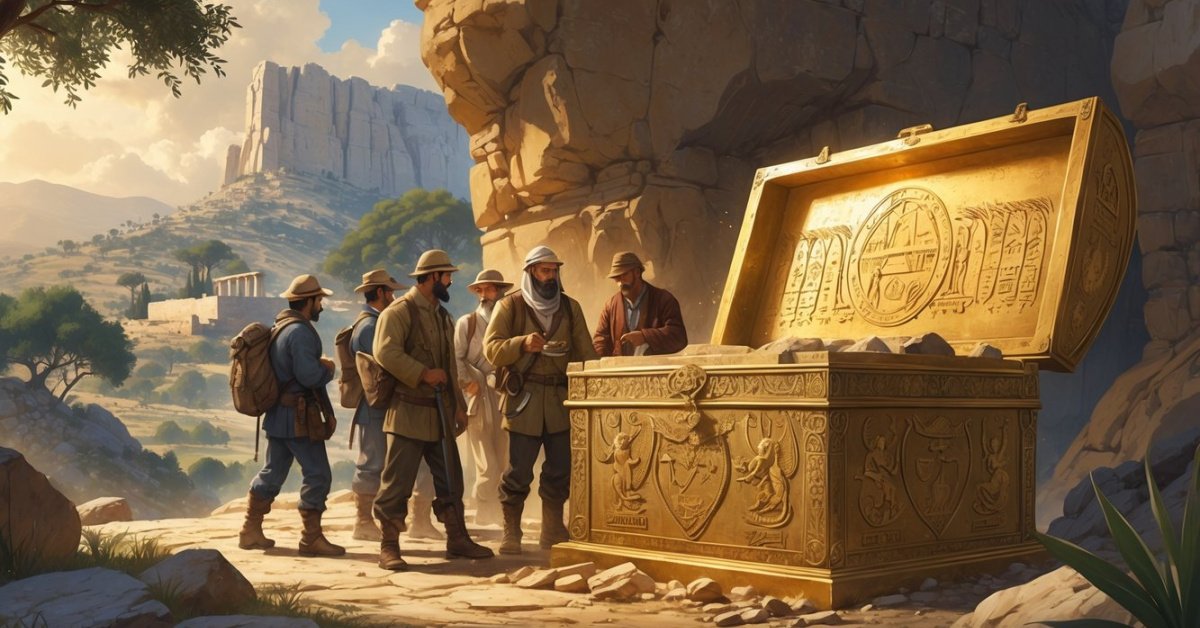
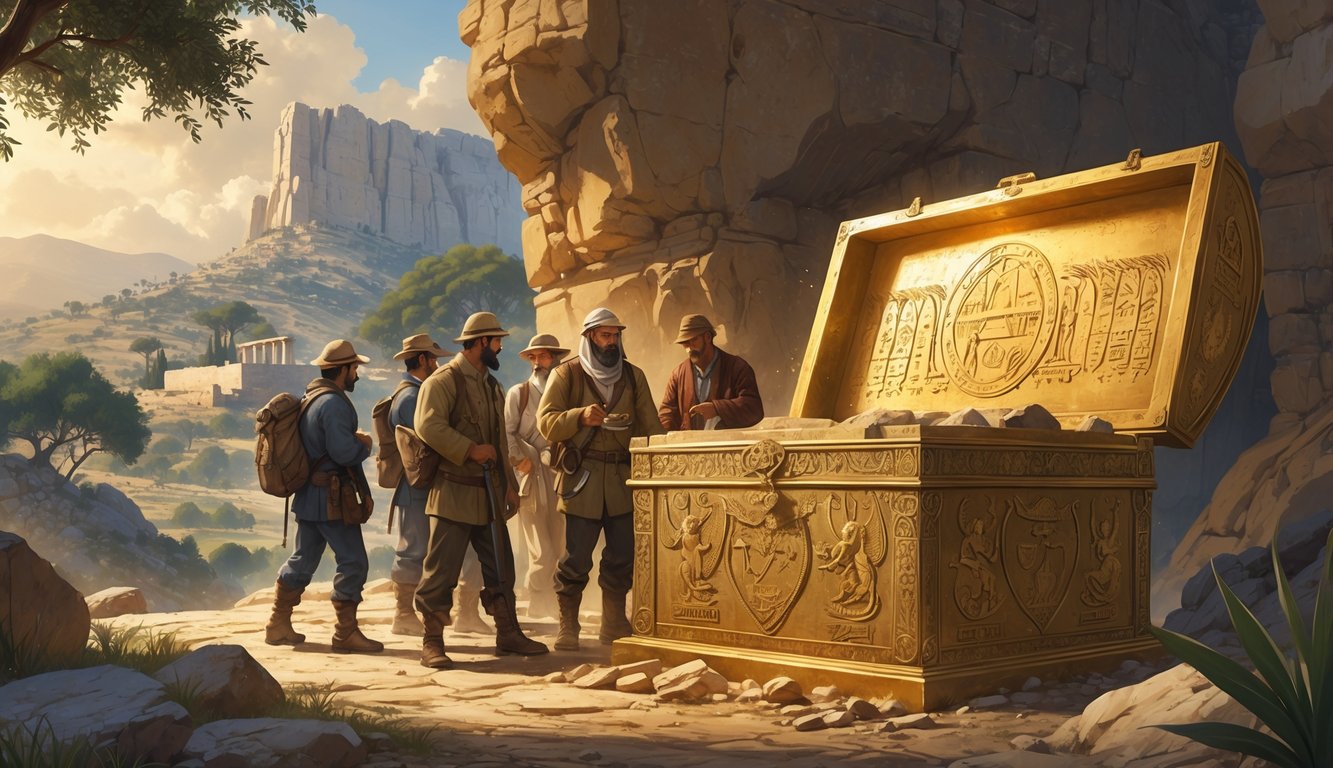
According to the Bible, craftsmen made the Ark from acacia wood and overlaid it with pure gold inside and out. It measured about 2.5 cubits long, 1.5 cubits wide, and 1.5 cubits high.
A cubit measured roughly 18 inches. The lid, called the Mercy Seat, was solid gold and featured two cherubim facing each other.
Their wings stretched over the space where God’s presence was believed to appear. Inside the Ark were the stone tablets of the Ten Commandments, given to Moses at Mount Sinai.
Later, it also held Aaron’s rod that budded and a jar of manna, though the Bible notes these may not have remained there permanently. Bezalel, a skilled craftsman, built the Ark during the Israelites’ time in the wilderness.
Priests kept the Ark in the Most Holy Place of the Tabernacle.
Symbolism and Religious Importance
The Ark symbolized the covenant between God and the people of Israel. It represented His law, His promises, and His presence among them.
The Mercy Seat was seen as God’s earthly throne, where He would “meet” with Moses to give instructions. This made the Ark a sacred meeting point between the divine and humanity.
Its gold covering and cherubim imagery reflected holiness and separation from ordinary life. Only the high priest could approach it, and only once a year on the Day of Atonement.
For the Israelites, the Ark reminded them that their relationship with God was based on His revealed law and guidance.
Role in Ancient Israelite Worship
The Ark stood at the center of Israel’s worship practices. When the Tabernacle was set up, priests placed it in the innermost chamber, hidden behind a curtain.
During travel, priests carried it on poles, since touching it directly was forbidden. Its presence often went before the Israelites into battle, such as when they crossed the Jordan River and during the fall of Jericho.
In the time of King David, people brought the Ark to Jerusalem with great celebration. Later, Solomon placed it in the Holy of Holies within the Temple.
The Ark’s movements marked key moments in Israel’s history, reinforcing the belief that God’s guidance and power remained with them wherever they went.
The Disappearance of the Ark: Historical Events and Theories
The Ark of the Covenant vanished from historical records after a period of political turmoil and foreign invasions. Events, religious figures, and later traditions offer clues about how it may have left Jerusalem and where it could be today.
Babylonian Siege of Jerusalem
In 587 BCE, King Nebuchadnezzar led the Babylonians in the conquest that destroyed Solomon’s Temple. The Babylonian siege of Jerusalem lasted months, cutting off supplies and weakening the city’s defenses.
When Babylonian forces entered, they looted sacred objects. The Bible lists items taken but does not mention the Ark.
Some believe the Babylonians destroyed the Ark during the attack. Others think people hid it before the city walls were breached.
The lack of explicit records leaves this as one of the most critical gaps in the Ark’s history.
Prophet Jeremiah and the Ark’s Fate
The prophet Jeremiah lived during the final years before Jerusalem’s fall. Some traditions claim Jeremiah, aware of the Babylonian threat, took the Ark from the Temple.
Certain Jewish and Christian writings say Jeremiah hid the Ark in a cave or secret chamber to protect it from capture or destruction.
These writings are not part of the Hebrew Bible, but they influence Ark research today. The idea that Jeremiah safeguarded the Ark continues to inspire religious and historical investigations.
Lost Ark Legends and Mysteries
After it disappeared, the Ark became the subject of many legends. Some traditions place it beneath the Temple Mount in hidden chambers.
Others suggest it was taken to Egypt or later brought to Ethiopia, where it may rest in the Church of Our Lady Mary of Zion in Axum (various location theories). These stories often mix history with religious tradition.
While archaeological evidence is lacking, the persistence of these accounts shows the Ark’s lasting cultural impact.
Solomon’s Temple and the Ark’s Original Sanctuary
The Ark of the Covenant rested in a specific location built to house it permanently. This sacred space stood at the heart of ancient Jerusalem and became central to Israel’s worship and identity.
Construction and Purpose of Solomon’s Temple
King Solomon built the temple in Jerusalem in the 10th century BCE as a permanent home for the Ark of the Covenant. Biblical accounts say its design followed instructions given to his father, King David, by God.
The temple replaced the portable Tabernacle, which had housed the Ark since the time of Moses. Inside, the Most Holy Place (Holy of Holies) held the Ark and the stone tablets of the Ten Commandments.
Builders used cedar from Lebanon, costly stones, and gold overlays. The building measured about 90 feet long, 30 feet wide, and 45 feet high.
Skilled craftsmen from Israel and Tyre worked on the project for seven years. The temple served as the center of Israel’s religious life.
Priests offered sacrifices in the outer courts. Only the high priest could enter the Holy of Holies once a year during Yom Kippur.
The Temple Mount and Its Significance
The Temple stood on the Temple Mount in Jerusalem, a raised platform still considered one of the world’s most sacred sites. Today, the Dome of the Rock occupies part of this area.
The Temple Mount’s location connected religious, political, and cultural life. It overlooked the City of David, where King David had reigned, and served as a visible symbol of Israel’s covenant with God.
Archaeologists and historians debate the exact placement of Solomon’s Temple on the mount. Some believe the Holy of Holies stood where the Dome of the Rock now sits, while others suggest nearby locations.
The site remains central to Jewish, Christian, and Islamic traditions.
The Ethiopian Claim: Aksum and the Church of Our Lady Mary of Zion
In northern Ethiopia, the city of Aksum is home to one of the country’s most important religious sites. The Church of Our Lady Mary of Zion is believed by many Ethiopian Christians to house the Ark of the Covenant.
The Kebra Nagast and Ethiopian Tradition
The belief that the Ark rests in Aksum comes from the Kebra Nagast, a 14th-century Ethiopian text. It tells the story of Menelik I, the son of King Solomon and the Queen of Sheba, who is said to have brought the Ark from Jerusalem to Ethiopia.
This tradition is central to Ethiopian identity and faith. It shapes how many view their country’s connection to biblical history.
The Kebra Nagast is both a religious and historical text. It reinforces the idea that Ethiopia has a divine heritage.
Pilgrims travel to Aksum to be near the site described in the Kebra Nagast, even though the Ark itself is not shown to the public.
Role of the Ethiopian Orthodox Tewahedo Church
The Ethiopian Orthodox Tewahedo Church preserves and protects the Ark tradition. The Church of Our Lady Mary of Zion is its most sacred site, and only one person may enter the chapel where the Ark is believed to rest.
The church complex includes an older building and a modern cathedral built under Emperor Haile Selassie in the 1950s. The newer chapel, called the Chapel of the Tablet, is where the Ark is said to be kept.
Church leaders maintain that the Ark has been in Ethiopia for centuries. While historians debate the claim, Ethiopian Christians see it as a matter of faith.
Aksum is also a major pilgrimage site, attracting visitors from across Ethiopia during religious festivals.
The Guardian of the Ark
Only one person, known as the Guardian of the Ark, can see the sacred relic. He lives within the chapel grounds and never leaves until his death.
The Guardian prays before the Ark, protects it, and ensures no one else enters the chapel. This role is a lifelong spiritual calling.
When a Guardian dies, church leaders choose another monk to take his place. The process remains private.
People in the local community know the Guardian’s identity, but he rarely speaks to outsiders. This secrecy adds to the mystery surrounding the Ark in Aksum.
For more about the church and its traditions, see the Church of Our Lady Mary of Zion.
The Ark’s Journey: Theories of Its Route to Ethiopia
Some historians and religious traditions describe a path that may have taken the Ark from Jerusalem into Egypt, then south along the Nile, before reaching Ethiopia.
Key locations along this route include Elephantine Island, Lake Tana, and the ancient city of Aksum, each linked to specific traditions and historical claims.
The Nile Route and Elephantine Island
One theory says the Ark left Jerusalem during political unrest, possibly before or during the Babylonian conquest.
The Ark may have traveled into Egypt, following the Nile River south.
A Jewish community lived on Elephantine Island, near Aswan, between the 6th and 5th centuries BCE.
Archaeologists found evidence that they built a temple similar to the one in Jerusalem.
Some think the Ark stayed here before moving on.
The island’s location made it a natural stop for trade and travel between Egypt and Nubia.
Its position also offered protection from invading forces, making it a possible temporary resting place.
No physical evidence directly links the Ark to Elephantine.
Tana Kirkos Island and Levitical Traditions
From the Nile, the suggested route enters Ethiopia through the Blue Nile and into Lake Tana.
Tana Kirkos Island stands at the center of this tradition.
The Ethiopian Orthodox Church teaches that Levite priests brought the Ark here, where it stayed for centuries.
Monks on the island maintain rituals they say date back to that period.
These include dietary rules and ceremonial practices similar to those of ancient Israel.
Visitors report seeing ancient stone altars and hearing oral histories passed down for generations.
Historians debate these claims, but the continuity of religious customs stands out.
Lake Tana’s setting also made the island defensible and isolated.
Arrival in Aksum
The tradition’s final stage places the Ark in Aksum, the former capital of an ancient Ethiopian kingdom.
According to tradition, the Ark resides in the Church of Our Lady Mary of Zion.
Only one guardian monk can view it, and he never leaves the church grounds.
This secrecy fuels both faith and skepticism.
Aksum served as a major center of trade and religion, making it a symbolic home for such a relic.
The city’s role in Ethiopian Christianity strengthens the belief that the Ark remains there.
Researchers have visited the church, but no one has publicly displayed the Ark, leaving the claim unverified.
Archaeological and Scientific Investigations
Teams in the Middle East and Africa have used field excavations, historical records, and modern technology to study locations tied to the Ark of the Covenant.
Their work focuses on ancient religious sites, possible storage chambers, and artifacts matching biblical descriptions.
Excavations in Israel and Ethiopia
Archaeologists in Israel focus on the ancient city of Shiloh, where the Ark reportedly rested inside the Tabernacle before being moved.
Dr. Scott Stripling’s team uncovered stone foundations that match descriptions of the biblical sanctuary.
Some researchers think this could be the Ark’s earliest known resting place.
In Ethiopia, investigations often focus on the Church of Our Lady Mary of Zion in Aksum.
Local tradition claims the Ark has stayed there for centuries under a single guardian.
Access is restricted, and no independent team has examined the object said to be inside.
Other studies examine Mount Nebo in Jordan, where some traditions place the Ark’s hiding spot.
Researchers have not found direct evidence, but the location remains part of historical mapping efforts.
Recent Discoveries and Artifacts
At Shiloh, researchers found pottery, animal bones, and storage pits from the Iron Age.
These finds suggest large religious gatherings consistent with biblical accounts.
The discovery of a monumental building matching scriptural dimensions of the Tabernacle has drawn attention from scholars and the public.
In Ethiopia, claims of relics linked to the Ark often include ceremonial objects such as replica arks used in Orthodox Christian rituals.
These objects are not ancient but show the lasting cultural connection to the Ark’s story.
Some investigations use satellite imagery and ground-penetrating radar to search for hidden chambers.
These methods have revealed underground anomalies, but none have been confirmed as Ark-related structures.
Challenges in Verifying the Ark’s Location
Restricted access remains a main obstacle.
In Ethiopia, the guardian of the Aksum church does not allow outside inspection, which limits scientific verification.
In Israel and the wider Middle East, political sensitivities and site preservation laws can delay or stop excavations.
The Ark’s disappearance around 586 BCE means researchers have found no confirmed artifacts directly linked to it.
Dating materials is difficult.
Organic remains degrade over time, and stone structures are hard to connect to specific events without inscriptions or records.
Researchers rely on indirect evidence and cautious interpretation.
Remote Viewing, ESP, and Modern Mysteries
In the late 20th century, intelligence agencies tried unusual methods to gather information.
Some efforts used psychic techniques and untested theories, sparking debate among historians, scientists, and the public.
CIA and Declassified Documents
In 2025, newly released files showed the CIA once investigated the Ark of the Covenant through a program involving extrasensory perception (ESP).
These records came from a Cold War-era project where psychics tried to describe distant locations without visiting them.
One declassified document from 1988 described a session in which a participant, identified by a number, reported details matching biblical accounts of the Ark.
The description included a gold-covered chest in a guarded chamber.
The files did not confirm physical evidence.
Instead, they recorded what the agency learned from these psychic sessions.
The location described was thought to be somewhere in the Middle East, but no follow-up discovery happened.
Remote Viewing Experiments
Remote viewing is the practice of trying to gather information about a target using only the mind.
The CIA tested this method in projects, including one called Project Sun Streak.
In one session, a remote viewer received coordinates without being told the target.
According to reports, the viewer described an ornate box, metallic in appearance, and located in a dark, secure space.
The process usually involved:
- Assigning random coordinates.
- The viewer describing impressions, shapes, and textures.
- Analysts comparing the descriptions to known data.
Supporters found the results intriguing, while critics pointed to the lack of verifiable proof.
Public Fascination and Controversies
The idea that the CIA tried to locate the Ark of the Covenant using psychic methods has fueled both interest and skepticism.
Some see it as a sign of government openness to unconventional research.
Others view it as a costly experiment with no measurable outcome.
Media coverage, such as in The New York Post, has highlighted the unusual nature of these programs.
The mix of biblical history, Middle East politics, and Cold War intelligence work makes the story compelling to many.
Discussions continue online and in academic circles, balancing historical curiosity with the demand for physical evidence.
Ethiopia’s Christian Heritage and the Ark’s Cultural Impact
Ethiopia has one of the oldest continuous Christian traditions in the world.
Its history links faith, culture, and national identity, with the Ark of the Covenant often at the center of religious life and heritage.
Early Christianity in Ethiopia
Christianity reached Ethiopia in the 4th century during the reign of King Ezana of Aksum.
Historical records show that he made Christianity the official religion after being influenced by Frumentius, a Syrian Christian missionary.
The Ethiopian Orthodox Tewahedo Church has preserved many ancient practices.
Services often use Ge’ez, a classical language no longer spoken in daily life.
Aksum became a major center for faith and governance.
Churches in the city, such as the Church of Our Lady Mary of Zion, are tied to traditions about the Ark’s presence in Ethiopia.
According to Ethiopian tradition, the Ark has stayed there for centuries.
This link between early Christian adoption and the Ark’s story helped shape Ethiopia’s religious identity.
The belief is not universally accepted by historians, but it remains deeply important within the church.
Religious Festivals and Pilgrimages
Religious festivals in Ethiopia often reflect the Ark’s symbolic role.
Timkat, the Ethiopian Orthodox celebration of Epiphany, is one of the most important.
During Timkat, priests carry replicas of the Ark, called tabots, in processions.
These events draw thousands of pilgrims to cities like Aksum, Lalibela, and Gondar.
In Aksum, the Church of Our Lady Mary of Zion becomes a focal point for worshippers.
Festivals combine prayer, chanting, and traditional dress.
The celebrations last several days, with public baptisms and communal meals.
Many believers travel to Aksum year-round to pray near the chapel where the Ark is said to be kept, as described in accounts of Ethiopian sacred sites.
The Ark’s Role in Ethiopian Identity
The Ark is more than a religious relic in Ethiopian tradition—it is a national symbol.
Its story appears in the Kebra Nagast, a 14th-century text that describes how Menelik I, son of King Solomon and the Queen of Sheba, brought the Ark to Ethiopia.
This belief supports a sense of divine favor and historical continuity.
The claim links Ethiopia to biblical Israel and supports the church’s position in national life.
For many, the Ark represents God’s covenant with Ethiopia.
Even without archaeological proof, the tradition shapes law, culture, and political symbolism.
The Ethiopian Orthodox Tewahedo Church guards the Ark’s alleged resting place with strict rules.
Only one appointed guardian may see it, and he stays in the chapel for life.
This secrecy adds to its cultural weight and religious significance.
The Ark in Popular Culture and Media
The Ark of the Covenant has appeared in many forms of entertainment, from blockbuster films to historical research.
Its religious importance and mystery have made it a favorite topic for filmmakers, authors, and documentary producers.
Indiana Jones and Raiders of the Lost Ark
The 1981 film Raiders of the Lost Ark introduced the Ark to millions who may not have known its biblical origins.
In the movie, archaeologist Indiana Jones races against Nazis to recover the sacred chest.
The film showed the Ark as a powerful and dangerous object capable of supernatural destruction.
While fictional, it drew on biblical descriptions and archaeological speculation.
Its success helped cement the Ark’s image in modern pop culture.
The movie still influences adventure films and games that feature ancient relics as central plot devices.
Documentaries and Books
Many researchers and writers have explored the Ark’s history in detail.
British author Graham Hancock gained attention with his book The Sign and the Seal, which suggests the Ark rests in Ethiopia.
His work combines historical records, religious tradition, and travel research.
Television documentaries have also examined the Ark from historical, religious, and archaeological angles.
Programs often include interviews with historians, theologians, and local clergy.
Some productions focus on Ethiopia’s claim that the Ark is kept in the Church of Our Lady Mary of Zion in Aksum, as discussed in Ethiopia’s role in the Ark of the Covenant’s legacy.
Others investigate possible sites in Israel and surrounding regions.
Influence on Modern Storytelling
The Ark blends faith, history, and mystery. Many modern stories use it as a symbol of ultimate power or divine authority.
Adventure novels and films draw from the Ark’s legendary status. They create high-stakes treasure hunts inspired by its myth.
Video games adapt the concept by placing players in search of a lost relic. These relics often have both historical and mystical value.
The Ark’s narrative structure—an ancient object tied to human destiny—influences how creators build suspense. This structure connects myth with action in many stories.
Contemporary Debates and Ethical Considerations
The search for the Ark of the Covenant raises sensitive questions about religion, politics, and science. People debate who should control the relic, how to study it, and whether its discovery could cause unrest.
Religious and Geopolitical Implications
Religious groups in Israel, Ethiopia, and the Middle East attach deep meaning to the Ark. In Ethiopia, the Church of Our Lady Mary in Aksum claims to guard the Ark constantly.
This belief shapes local traditions and attracts tourists. In Israel, some believe the Ark may rest beneath the Temple Mount.
Political and religious sensitivities limit excavations in this area. Any attempt to dig could provoke tension between Jewish, Muslim, and Christian communities.
Key challenges include:
- Competing claims of ownership
- Restrictions on archaeological access
- Balancing religious respect with public interest
Scientific Skepticism and Faith
Archaeologists and historians approach Ark-related claims with caution. Many supposed sightings or discoveries lack verifiable evidence.
For example, reports of its presence in Ethiopia rely mainly on tradition, not physical proof. Some researchers call for peer-reviewed studies before accepting any claim.
Others point out that religious artifacts often hold symbolic value, even without scientific validation. This tension between faith and evidence shapes public opinion.
Common points of skepticism:
- Lack of confirmed physical evidence
- Reliance on oral histories
- Limited or restricted site access
For many believers, the Ark’s spiritual significance outweighs the need for scientific confirmation.
Future Prospects for Discovery
Researchers in Israel and Ethiopia continue to explore possible locations. They use modern technologies like ground-penetrating radar to examine areas without disturbing sensitive sites.
Political limitations still create major obstacles. If someone confirms the Ark’s existence, legal and ethical issues will arise quickly.
Questions about ownership, display rights, and preservation will need answers. Governments, religious authorities, and international organizations may debate these topics.