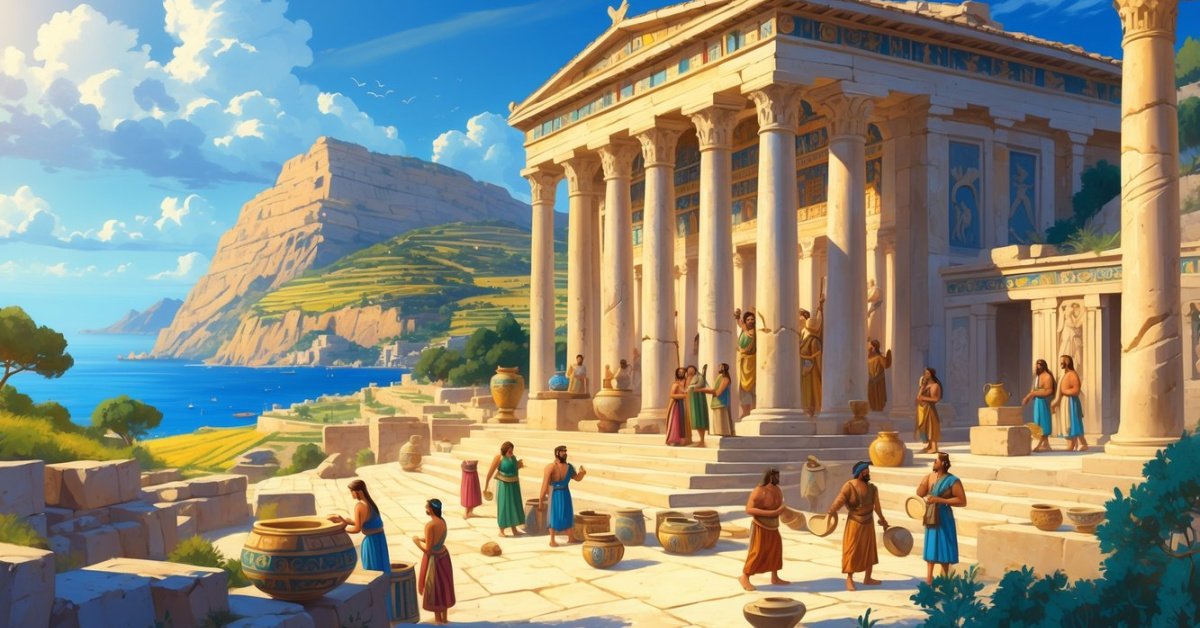
On the Mediterranean island of Crete, the Minoans built a thriving society that shaped European history. They became known for advanced architecture, vibrant art, and complex trade networks.
The Minoans rose to power centuries before classical Greece. They became Europe’s first superpower, only to vanish without a clear explanation.
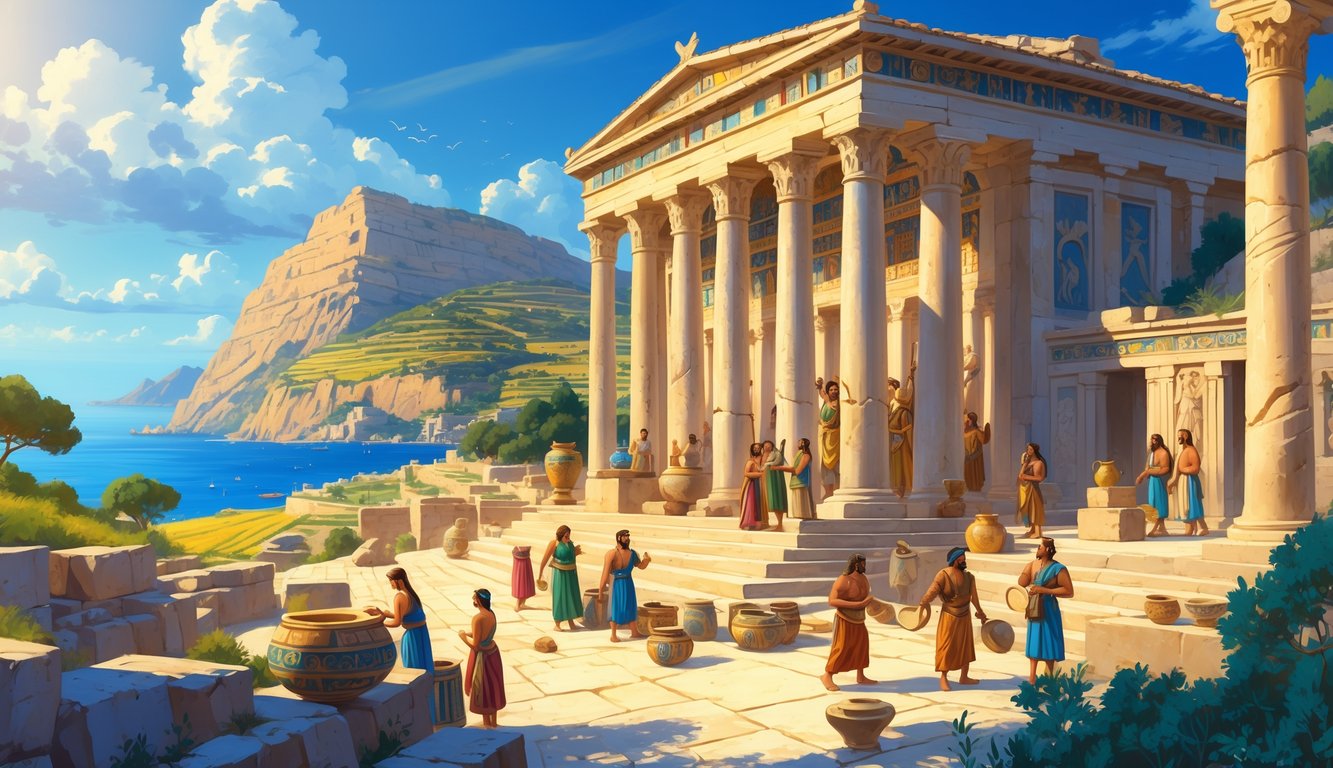
This mystery fascinates historians, archaeologists, and adventurers. In The Vanished Empire episode of Expedition Unknown, Josh Gates travels to Crete to investigate how such a powerful civilization could disappear.
He blends historical research with exploration, giving a closer look at Minoan achievements and unanswered questions. Ancient ports and the ruins of the Palace of Knossos hold clues that may unlock the Minoans’ story.
Crete’s landscapes and archaeological sites continue to draw those seeking a connection to this lost chapter of history. The island remains a destination where adventure meets discovery.
Europe’s First Superpower: The Rise of the Minoans
The Minoans shaped the ancient world through architecture, art, and trade. Their influence spread across the Aegean, leaving a legacy that later Greek cultures absorbed.
Origins of Minoan Civilization
The Minoan civilization began around 3000 BCE on Crete. They developed during the Bronze Age, using the island’s fertile land and central Mediterranean location.
Archaeologists identify the culture through artifacts, pottery, and early writing systems like Linear A, which remains undeciphered. Major settlements such as Knossos, Phaistos, and Malia featured large palace complexes.
These palaces served as royal residences and centers for administration, storage, and craft production. The Minoans interacted with Egypt, the Near East, and other Aegean islands.
This contact brought new technologies and ideas. Their society grew into what many historians call Europe’s first advanced civilization.
Cultural and Political Influence
Minoan artists created frescoes showing nature, festivals, and daily life with bright colors and fluid lines. These works suggest strong ties to nature and the sea.
Religious life centered on goddess worship and symbols like the double axe (labrys) and the bull. Bull-leaping scenes may have been part of ceremonial events.
The Minoans organized a centralized system based around palace administrations. Clay tablet records show organized taxation, trade oversight, and resource management.
Their culture influenced Greek myths, such as the story of King Minos and the Minotaur. This blend of fact and legend helped preserve the Minoans’ place in ancient history.
Trade and Expansion
The Minoans relied on maritime trade. Their ships carried pottery, olive oil, wine, and textiles to Egypt, Cyprus, and the Levant.
They imported metals, ivory, and luxury goods in return. This trade enriched Crete and supported its growth as a major power.
The Minoans established outposts on nearby islands, including the Cyclades. This network extended their influence and secured trade routes.
Archaeological finds show Minoan goods appearing far from Crete. Their reach declined around 1450 BCE, possibly due to natural disasters or foreign invasion, as noted in accounts of their collapse.
Crete: The Mediterranean Island at the Center of History
Crete’s position in the eastern Mediterranean placed it along major sea routes linking Europe, Asia, and Africa. This location shaped its role in trade, warfare, and cultural exchange.
The island’s fertile plains, mountain ranges, and long coastline supported both agriculture and maritime activity.
Geographical Significance
Crete is the largest Greek island and the fifth largest in the Mediterranean. It lies about 160 km south of mainland Greece and stretches roughly 260 km from east to west.
Its location made it a natural stop between the Aegean Sea and the wider Mediterranean. Ships traveling from Egypt or the Levant to mainland Greece often passed its shores.
Mountains such as the White Mountains, Mount Ida, and Mount Dikti divide the island into regions. These ranges create fertile valleys and protect inland areas from harsh weather.
The coastline, with natural harbors like Souda Bay, supported fishing and trade. This geography helped Crete become a center of maritime activity during the Minoan period and later times.
Connections to Greece and the Mediterranean
Crete has been tied to the history of Greece since ancient times. The Minoans at Knossos traded with Egypt, Cyprus, and the Near East.
Pottery, textiles, and metal goods moved across the sea in exchange for raw materials. During the Classical period, Crete’s role shifted as mainland Greek city-states gained power.
It remained important for strategic harbors and agricultural exports. Under Roman rule, Crete became a province with Cyrenaica in North Africa.
This link strengthened its role as a supply point for grain and other goods. Later, Venetian and Ottoman rule further tied the island to Mediterranean politics and trade.
These connections left lasting marks on architecture, cuisine, and language.
Natural Resources and Landscape
Crete’s varied landscape supports many crops. The fertile plains produce olives, grapes, citrus fruits, and grains.
Olive oil from the island has been a major export since ancient times. Natural springs and rivers sustain agriculture even in dry summers.
Mountain slopes provide pasture for goats and sheep, supporting dairy production. Mineral resources, including copper and stone, played a role in early periods.
The Minoans used local stone for building and traded metals for luxury goods. Today, Crete’s mix of mountains, valleys, and coastline offers both agricultural productivity and natural beauty.
Minoan Achievements and Daily Life
The Minoans built advanced urban centers and organized trade networks. Their art reflected both skill and cultural identity.
Their religious practices, social systems, and technology reveal a society connected to the sea, agriculture, and craftsmanship.
Art and Architecture
Minoan artists created colorful frescoes showing nature, festivals, and daily activities. These paintings decorated palace walls, such as those in Knossos.
They used bright pigments and flowing lines for a lively, realistic style. Their architecture featured multi-story palaces with storage rooms, workshops, and open courtyards.
The Palace of Knossos is the most famous example, with complex layouts and features like light wells and ventilation shafts. Stone roads linked settlements to ports.
Builders used cut stone blocks and wooden reinforcements to help structures withstand earthquakes. Decorative columns, painted walls, and mosaics added both function and beauty.
Religion and Rituals
Minoan religion centered on nature and fertility. Many artifacts show a goddess figure linked to animals like snakes or birds.
Shrines appeared in homes, caves, and mountain peaks, suggesting worship took place in many spaces. Ceremonies likely included music, dance, and offerings of food or crafted goods.
Evidence from archaeological finds in Crete shows that bull imagery played an important role, possibly tied to rituals such as bull-leaping.
Priests and priestesses may have guided seasonal festivals tied to planting and harvest cycles. Religious symbols, like the double axe and horns of consecration, appeared on pottery, jewelry, and palace decorations.
Society and Technology
The Minoans built a well-organized society supported by farming, fishing, and trade. Farmers grew wheat, barley, olives, and grapes.
Traders exchanged pottery, textiles, and metalwork across the Mediterranean. They developed early writing systems, including Linear A, for record-keeping.
Systems of weights and measures helped manage resources, as seen in studies of Minoan administrative tools. Urban centers had paved streets and drainage systems, showing advanced planning.
Metal tools, pottery wheels, and shipbuilding techniques reflected their technological skill. These innovations supported daily life and the growth of their influence.
The Mystery of the Vanished Empire
The Minoan civilization thrived on Crete for centuries before it disappeared. Archaeologists and historians study ruins, artifacts, and records to understand why this advanced society collapsed.
Evidence points to a mix of environmental and human factors that may have ended Europe’s first superpower.
Theories of Disappearance
Researchers have proposed several explanations for the fall of the Minoans. Some believe political instability weakened the empire from within.
Others suggest economic decline caused by disrupted trade routes. Some theories focus on cultural shifts.
The rise of rival powers, such as the Mycenaeans, may have led to military conflict or takeover. Historical records from other regions hint at invasions or forced assimilation.
Key theories include:
- Internal conflict – civil unrest or leadership struggles
- Economic collapse – loss of trade dominance
- Foreign invasion – possible Mycenaean conquest
These ideas remain debated, as no single explanation fully accounts for the sudden decline.
Natural Disasters and External Threats
Geological evidence shows that Crete experienced major earthquakes during the Minoan period. These events could have destroyed cities and infrastructure.
A massive volcanic eruption on nearby Thera (Santorini) around 1600 BCE is another key factor. The eruption likely caused tsunamis and ash fallout, damaging crops and harbors.
External threats also played a role. Maritime raiders or military forces may have attacked after natural disasters.
This combination of disaster and invasion could have accelerated the collapse.
Possible disaster impacts:
| Event | Likely Effect on Minoans |
|---|---|
| Earthquakes | City destruction, population displacement |
| Thera eruption | Tsunamis, crop failure, trade disruption |
| Raids/invasions | Loss of territory, cultural changes |
Archaeological Discoveries
Excavations at Knossos, Phaistos, and other sites have revealed frescoes, plumbing, and palace complexes. These finds show the Minoans’ skill in art, architecture, and engineering.
Archaeologists have uncovered storage rooms filled with jars, suggesting a strong agricultural economy. Linear A script tablets remain undeciphered, leaving parts of their history a mystery.
Some discoveries match disaster theories. Collapsed walls, burned layers, and sudden abandonment of sites point to abrupt events.
Visitors can explore these ruins today, as seen in Expedition Unknown’s episode on the vanished empire, which follows investigations on Crete.
Expedition Unknown: Josh Gates’ Journey to Crete
In 2016, Josh Gates traveled to the island of Crete to film an episode of Expedition Unknown about the disappearance of the Minoan civilization. He explored archaeological sites, interviewed experts, and visited places tied to Europe’s first superpower.
Investigating the Minoans
Gates started his journey in Crete by visiting ancient ruins like the Palace of Knossos. This site connects to the legend of the Minotaur and stands out as a major Minoan archaeological location.
He met historians and archaeologists to discuss why the Minoans declined. They talked about natural disasters such as the volcanic eruption on Santorini and possible invasions.
Gates visited smaller excavation sites where researchers uncovered pottery, tools, and frescoes. These finds showed details about Minoan trade, religion, and daily life.
He explained how the Minoans influenced Greek culture through architecture and art.
Key Findings and Insights
The episode highlighted leading theories about the Minoan collapse. Evidence showed that the Santorini eruption around 1600 BCE may have caused huge tsunamis, which damaged Minoan ports and trade routes.
Archaeologists found layers of destruction followed by rebuilding, showing the civilization tried to recover. Later layers pointed to a drop in population and resources.
Gates explored Minoan maritime trade across the Mediterranean. Finds like Egyptian artifacts in Crete supported the idea of a vast trading network.
The collapse of this network would have greatly affected their economy and stability.
Behind the Scenes of Filming
Filming in Crete meant navigating busy tourist spots and restricted archaeological zones. Gates and the crew worked with local authorities to access sensitive sites.
They used aerial drones and ground cameras to capture the scale of ancient ruins. This showed both the layout of large complexes and details of artifacts.
Travel between locations involved ferries, narrow mountain roads, and coastal paths. The crew faced weather challenges like sudden winds and heat, which changed filming plans.
You can watch the episode, “The Vanished Empire”, to see Josh Gates’ full journey.
Modern Exploration and Media Coverage
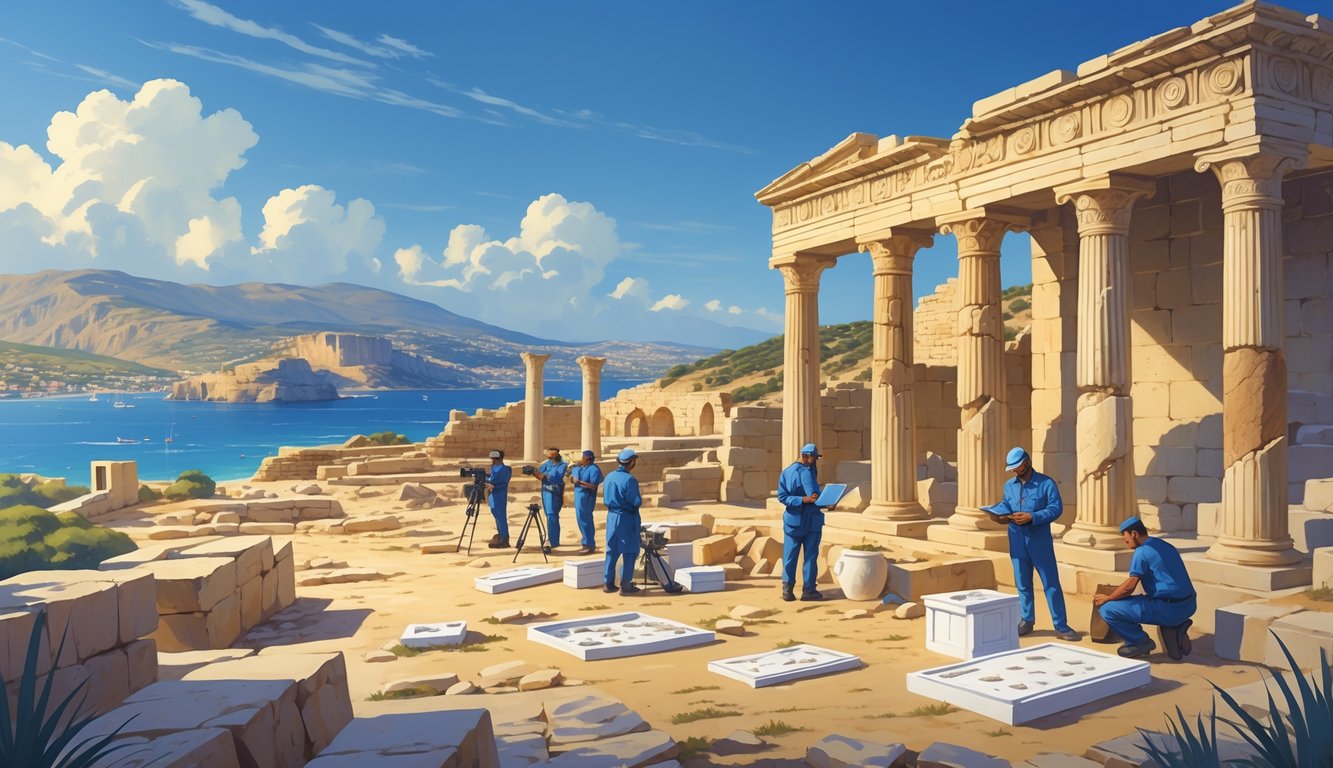
Modern audiences can learn about the Minoans through streaming platforms, documentaries, and travel shows. These outlets make historical research easier to access and spark interest in Crete’s ancient past.
Prime Video and discovery+ Availability
Viewers can watch The Vanished Empire episode of Expedition Unknown on Prime Video and discovery+.
These services let people stream the program on-demand at their own pace. Many episodes are in HD, showing clear visuals of Crete’s archaeological sites.
Some platforms, like Philo, also offer live TV streaming of the Travel Channel, which first aired the episode. This gives viewers more ways to watch without waiting for scheduled broadcasts.
Role of Documentaries and Travel Shows
Documentaries like Expedition Unknown bring archaeological research to life with expert interviews, on-site exploration, and historical context. Josh Gates visits Crete and meets archaeologists and historians to discuss theories about the Minoan collapse.
Travel shows mix historical storytelling with tourism. They show how visitors can walk through ruins like Knossos and see artifacts in Heraklion’s museums.
By filming on location, these programs help viewers imagine the island’s geography, architecture, and culture. This makes it easier to see how the Minoans lived and what remains today.
Impact on Popular Culture
Media coverage has brought the Minoans more recognition beyond academic circles. Television, streaming, and online discussions have introduced the civilization to new audiences.
The mix of history, archaeology, and mystery attracts fans of travel and ancient stories. This has inspired more people to visit Crete and explore other sites in Greece.
Such exposure also supports local tourism by highlighting archaeological sites, museums, and cultural festivals.
Comparing Lost Civilizations
History shows many societies that thrived and then disappeared, leaving mysteries behind. Some vanished after disasters, while others faded from conflict or environmental change.
The Lost Colony of Roanoke
The Lost Colony of Roanoke was an English settlement started in 1587 on Roanoke Island, near present-day North Carolina. When supply ships returned in 1590, the settlers were gone, with only the word “CROATOAN” carved into a post.
Historians have debated the cause for centuries. Theories include joining local tribes, moving elsewhere, or dying from disease or starvation.
Unlike the Minoans, Roanoke disappeared in just a few years. Both left material clues but no clear answers.
Archaeological digs have found European artifacts inland, suggesting some colonists may have joined Indigenous communities.
Key differences between Roanoke and the Minoans include:
- Timeframe: Roanoke vanished quickly; Minoans declined over generations.
- Scale: Roanoke was a small colony; Minoans ruled Crete for centuries.
- Documentation: Roanoke had written records; Minoan writing remains mostly undeciphered.
Parallels with Other Ancient Mysteries
Other ancient societies share traits with the Minoans’ decline. The Sanxingdui civilization in China left advanced artifacts but no clear record of their fate.
Like the Minoans, Sanxingdui thrived in a strategic spot and made sophisticated art. Both cultures disappeared suddenly, possibly from environmental change or political upheaval.
The Indus Valley Civilization had advanced cities and trade but declined around 1900 BCE. Climate change and shifting rivers may have contributed.
These cases show common patterns:
- Environmental stress such as droughts or eruptions.
- Economic disruption from lost trade routes.
- Cultural shifts that led to migration or assimilation.
By comparing these examples, researchers can better understand how complex societies collapse despite their achievements.
Legacy of the Minoans in the Ancient World
The Minoans shaped the culture and economy of the eastern Mediterranean. Their art, trade, and stories influenced later societies and left a mark seen in Greek archaeology and myths.
Influence on Greek Civilization
The Minoans built advanced architecture, including multi-story palaces with storage, workshops, and courtyards. The palace at Knossos is the best example, showing early plumbing, paved roads, and complex designs.
Their writing systems, Cretan Hieroglyphs and Linear A, inspired the Mycenaean Linear B script. The Mycenaeans adapted Minoan record-keeping for their own use.
Minoans exported pottery, olive oil, and metal goods across the Aegean, spreading their art and religious symbols into Greece.
Religious practices, like worship of a mother goddess and bull rituals, also influenced Mycenaean culture. These shared traditions show how Minoan beliefs blended into early Greek society.
Enduring Myths and Legends
Many Greek myths trace back to Minoan Crete. The story of King Minos and the Minotaur mixes history and legend. Ancient Greeks named the civilization after this mythical ruler long after it disappeared.
The labyrinth in the Theseus myth may have come from the maze-like design of Knossos. Bull-leaping frescoes could have inspired the Minotaur’s bull features.
Other tales, such as Daedalus and Icarus, also connect to Crete. These myths kept Minoan culture alive in Greek stories, even when real history faded.
Through these legends, the Minoans stayed part of Greece’s cultural memory after their cities fell to the Mycenaeans.
Traveling to Crete: A Guide for Adventurers
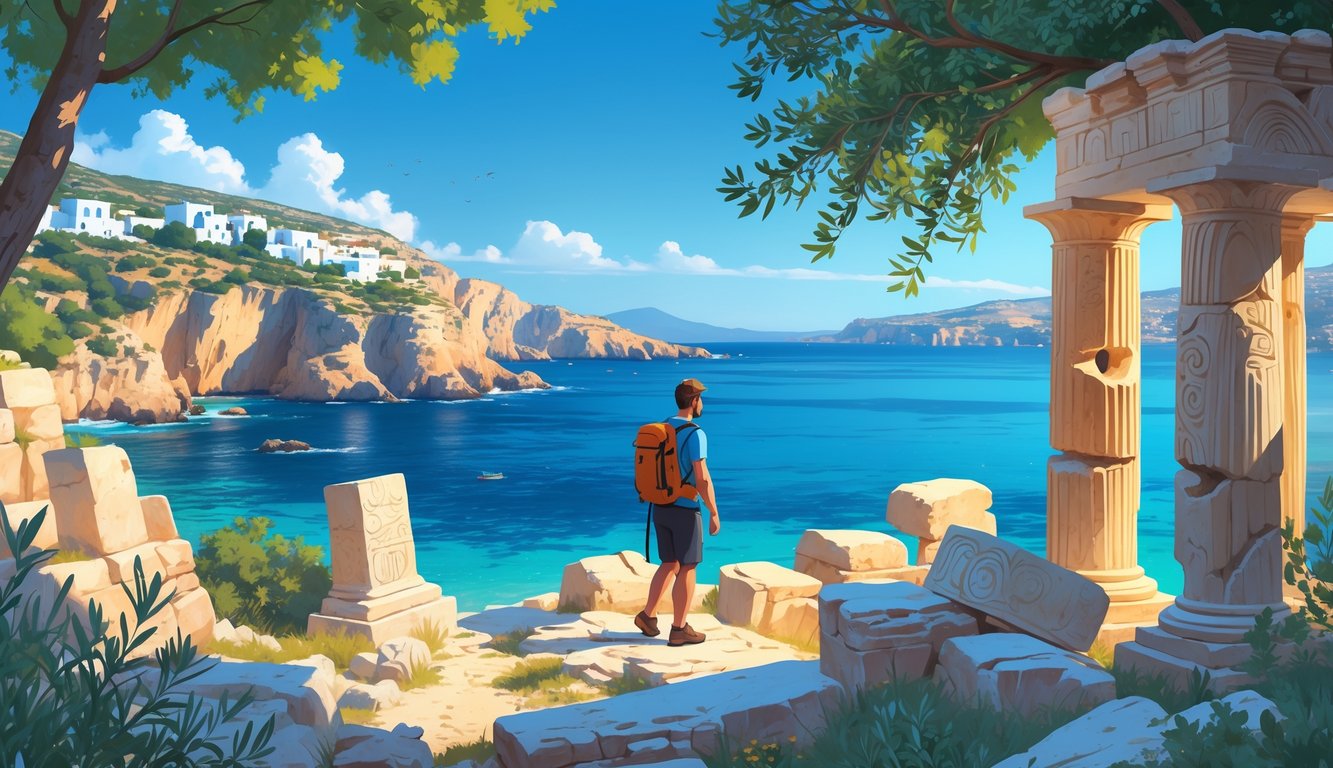
Crete offers ancient ruins, traditional villages, and coastal scenery. Visitors can explore Bronze Age palaces, try local recipes, and hike trails to quiet beaches.
Top Historical Sites to Visit
Crete holds remains of the Minoan civilization, considered Europe’s first advanced culture. The Palace of Knossos, near Heraklion, is the most famous site, known for its frescoes and complex layout.
Travelers can also visit Phaistos, where the mysterious Phaistos Disc was found, and Malia Palace, which is less crowded. In Chania, the Venetian harbor and Ottoman-era buildings show later history.
For archaeology fans, the Heraklion Archaeological Museum displays artifacts from across the island, including pottery and ceremonial items. Many visitors combine these sites for a full historical route, as suggested in the Crete Travel Guide by Greece Insiders.
Experiencing Minoan Culture Today
Modern Crete still reflects its Minoan roots through local crafts and traditions. In small villages, visitors can watch potters shape clay with ancient techniques.
Food connects to the past as well. Dishes like barley rusks, honey, and olive oil have been staples for thousands of years. Cooking classes often feature these ingredients for hands-on learning.
Cultural festivals, especially in summer, include music and dance with roots in ancient rituals. Museums like the one in Heraklion explain these traditions and their evolution from Minoan times. The Practical Travel Guide to Visit Crete lists villages where these experiences feel most authentic.
Planning Your Mediterranean Adventure
You can reach Crete by ferry from Athens or nearby islands. You can also fly directly to Heraklion or Chania.
Renting a car makes it easy to explore rural areas and archaeological sites.
The island’s climate is mild. Summer is hot and busy.
Spring and early autumn have warm weather and fewer crowds.
Many travelers stay in Chania for west Crete’s beaches and mountains. Others choose Heraklion for central and eastern sites.
Guides like Go Ask A Local’s Crete Travel Guide offer route suggestions and local tips for your trip.
Conclusion: Lessons from Europe’s Vanished Empire
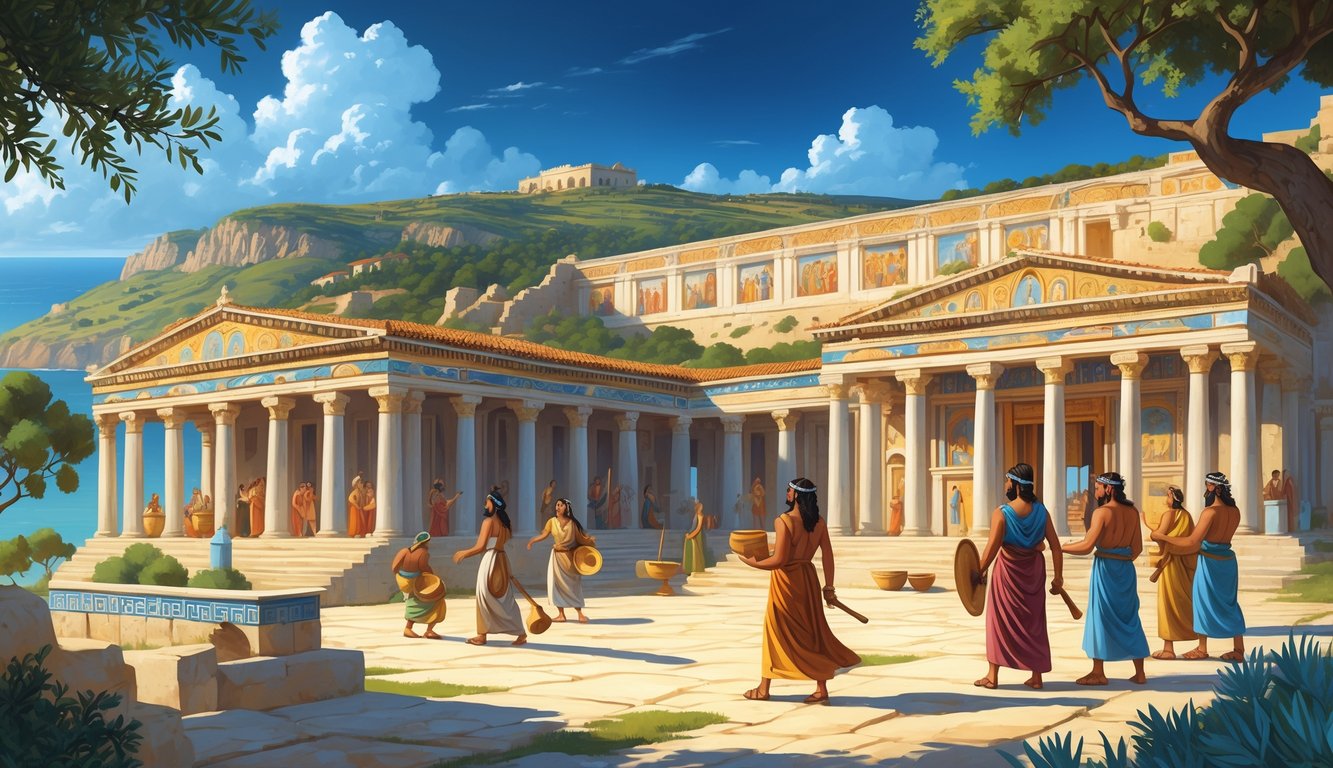
Crete’s first superpower thrived through trade, skilled craftsmanship, and strong maritime connections. Geography and resources shaped the rise of this civilization.
They built advanced cities with organized streets and storage systems. Their vibrant art highlights how technology and culture often grow together.
Key takeaways from the vanished empire:
- Adaptability kept them successful for centuries.
- Trade networks linked them to distant lands.
- Cultural identity stayed strong through art and tradition.
Natural disasters and shifting power weakened their influence. Even strong societies can face challenges beyond their control.
Historians who explore Europe’s lost realms point out that political and economic strength can fade quickly when conditions change.
| Strengths | Vulnerabilities |
|---|---|
| Maritime trade power | Earthquakes and tsunamis |
| Skilled artisans | Dependence on sea routes |
| Cultural influence | Rival powers emerging |
People can learn how cooperation, innovation, and resilience support growth. Overreliance on certain strengths can also become a weakness.
Their story is not just about loss. Knowledge and traditions often survive long after a kingdom disappears from the map.