For centuries, Attila the Hun’s final resting place has remained one of history’s greatest mysteries. Legends tell of a secret burial, hidden so well that no one could disturb it.
Archaeologists in Hungary continue the search for this lost tomb. They use ancient texts, local folklore, and new technology to guide them.
Teams have explored locations from the depths of the Danube River to remote mountain forests near Budapest. Expeditions like the one featured in Expedition Unknown: The Lost Tomb of Attila the Hun follow clues that could lead to a major archaeological find.
The story blends history, archaeology, and legend. It invites curious minds to follow the trail of a ruler whose death was as dramatic and secretive as his life.
Each new discovery brings the world closer to uncovering a secret hidden for over 1,500 years.
The Mystery of the Lost Tomb of Attila the Hun
Attila the Hun died in 453 AD, but no one knows where he was buried. Archaeologists, historians, and treasure hunters have searched in Hungary and nearby regions for clues.
No one has confirmed the tomb’s discovery. The mystery comes from gaps in historical records, conflicting accounts, and centuries of folklore.
Why the Tomb Remains Unfound
Writers from the 5th century gave only vague descriptions of Attila’s burial. Some say he was placed in a triple coffin—iron, silver, and gold—then buried in a secret location.
Many historians believe his tomb was hidden to prevent looting. Some records claim those who buried him were killed afterward to keep the site secret.
Modern searches face many challenges. The landscape has changed over 1,500 years, with rivers shifting and new settlements growing.
Searchers have found no confirmed evidence in areas once thought promising. Even advanced technology like ground-penetrating radar has not revealed the tomb’s location.
Legends and Folklore
Hungarian history and Central European folklore are full of stories about the lost tomb. One legend says Attila was buried beneath the Danube River, after workers temporarily diverted the water.
Another tale claims his tomb lies under the Tisza River, hidden beneath layers of silt. These stories inspire ongoing searches, though there is no direct archaeological proof.
Some local traditions point to mountains or remote plains as possible sites. Expeditions, like those documented in searches across Hungary, often follow these folk clues.
The mix of myth and partial history keeps interest in the search alive.
Historical Significance
Attila the Hun was one of the most influential leaders of the 5th century. He united the Huns and led campaigns against both the Eastern and Western Roman Empires.
Finding his tomb could reveal Hun burial customs, political power, and wealth. Artifacts might show details about trade, craftsmanship, and the Huns’ cultural reach.
The lost tomb is also important for Hungarian history. The Huns were not the same as the later Magyar settlers, but their presence shaped the region’s early story and identity.
Attila the Hun: Life, Legacy, and Death
Attila the Hun ruled a vast nomadic empire in the 5th century. He led campaigns that challenged both Eastern and Western Rome.
His leadership and sudden death left a lasting mark on European and Hungarian history.
Rise to Power
Attila was born around 406 CE in Pannonia, a Roman province in what is now western Hungary. He and his brother Bleda inherited joint rule of the Huns in 434 CE after their uncle Rua died.
The brothers negotiated treaties with the Eastern Roman Empire, gaining gold in exchange for peace. This wealth made their forces stronger.
In 445 CE, Bleda died under unclear circumstances. Attila became the sole ruler of the Hun Empire.
He expanded his control through warfare and diplomacy. Attila led with strict discipline and rewarded loyalty.
He united diverse tribes under one command, making the Huns a powerful force in Central and Eastern Europe.
The Scourge of God
Attila earned the title Scourge of God from his enemies, especially the Romans, who saw him as a divine punishment. His campaigns into the Balkans, Gaul, and Italy were swift and used effective siege tactics.
In 447 CE, he invaded the Eastern Roman Empire and forced Emperor Theodosius II to pay large annual tributes. His forces destroyed cities and disrupted trade.
By 451 CE, Attila turned to Gaul. At the Battle of the Catalaunian Plains, his army fought Romans and Visigoths.
The battle ended without a clear victory, but it stopped his advance into Western Europe. Attila’s strategy of intimidation often led cities to surrender without a fight.
Attila’s Death and Ildico
In 453 CE, Attila married a young woman named Ildico. He died suddenly on the night of the wedding.
Historical accounts say he suffered a severe nosebleed or internal bleeding after heavy drinking. Some later stories suggest Ildico played a role, but there is no direct evidence.
Attila’s sudden death shocked the Hun Empire. His body was reportedly buried in a triple coffin—iron, silver, and gold—along with weapons and treasures.
According to legend, those who buried him were killed to keep the tomb’s location secret. His death triggered conflict among his sons, leading to the rapid decline of the Hun Empire.
Legacy in Hungarian History
Although the Huns disappeared as a political force, Attila’s name remained tied to the Hungarian landscape and identity. Medieval chronicles often linked the Magyars, early Hungarians, to the Huns.
In Hungarian folklore, he is remembered as both a fierce warrior and a ruler of the Carpathian Basin. Place names and legends reflect his lasting presence.
Modern historians debate the link between Huns and Hungarians, but Attila’s impact on the region’s history is clear. His story remains part of Hungary’s cultural heritage.
Ancient Texts and Historical Accounts
Writings from late antiquity and the early medieval period give clues about Attila’s life and death. These accounts differ but provide key references to events, locations, and burial traditions.
Jordanes and Getica
Jordanes, a 6th-century historian, wrote Getica, a history of the Goths. He described Attila’s funeral in detail.
According to Getica, Attila was buried in secrecy after dying in 453 AD. The account describes a triple coffin—gold, silver, and iron—showing wealth, prestige, and military power.
Jordanes also wrote that those who buried Attila were killed to keep the location hidden. This detail reflects the belief in protecting a ruler’s grave from looters.
Historians note that Getica mixes history with legend. Still, it remains a key written record for the search for the lost tomb of Attila the Hun.
Roman Empire Chronicles
Writers from the late Roman Empire recorded Attila’s campaigns and death. They focused on political events, battles, and diplomatic exchanges between Rome and the Huns.
Priscus, a Roman diplomat and historian, met Attila in person in 449 AD. He described Attila’s court, customs, and appearance in detail.
Priscus did not witness Attila’s burial, but his writings help place the Hun leader’s death in context. Roman sources confirm that Attila died shortly after marrying Ildico, as Getica also notes.
These chronicles are more restrained than later medieval accounts. They help separate fact from legend.
Medieval Manuscripts
Centuries after Attila’s death, medieval manuscripts expanded on earlier stories. Monastic scribes often mixed historical notes with folklore.
Some manuscripts place Attila’s burial near rivers, repeating the idea from Getica that the grave was hidden beneath diverted waters. Others move the location to mountains or remote plains.
These texts were copied and changed over time, so details vary. Yet they preserve local traditions that may point to real clues in Hungary.
Researchers compare medieval accounts with Roman and Gothic sources to find patterns that could narrow the search for the tomb.
Theories and Locations of the Lost Tomb
Historians and archaeologists have suggested several possible burial sites for Attila the Hun. They base their ideas on ancient accounts, geography, and recent digs.
These theories focus on areas in Hungary and nearby regions once controlled by the Huns.
Danube and Riverbed Hypotheses
Some legends say Attila was buried beneath the Danube River. Ancient stories describe a secret funeral where workers diverted the river, buried the tomb in the dry bed, and let the water flow back.
This method would have hidden the grave from looters and enemies. Supporters of this theory point to the river’s importance as a transportation and trade route for the Huns.
Modern searches have included sonar scans and diving expeditions. Teams have explored the Danube in Hungary, but no one has found confirmed evidence.
Shows like Expedition Unknown have documented these efforts and the challenges of searching in deep, fast-moving water (Discovery).
Great Hungarian Plain and Puszta
The Great Hungarian Plain, or Puszta, was a center of Hun activity. Its wide, open grasslands made it ideal for moving armies and herds.
Some researchers believe Attila’s tomb could lie beneath these flatlands. An unmarked burial in such a vast area would be hard to find, especially after centuries of farming and settlement.
Archaeological teams have surveyed parts of the plain for burial mounds and ancient artifacts. Some Hun-era graves have been found, but none match the descriptions of Attila’s funeral (History Chronicles).
Mountain Forests and Transylvania
Another theory places the tomb in mountain forests near the Carpathians or in Transylvania. These remote areas would have offered natural protection and concealment.
Legends tell of hidden valleys and caves where treasures and remains could be stored safely. The thick forests and rough terrain make any search slow and difficult.
In recent years, digs in Romania have uncovered rich Hun warrior graves, including one with a gold-plated sword set with stones. Some speculate about a link to Attila, but experts caution that no direct proof exists (Daily News Hungary).
The Legend of the Triple Coffin and Lost Treasure
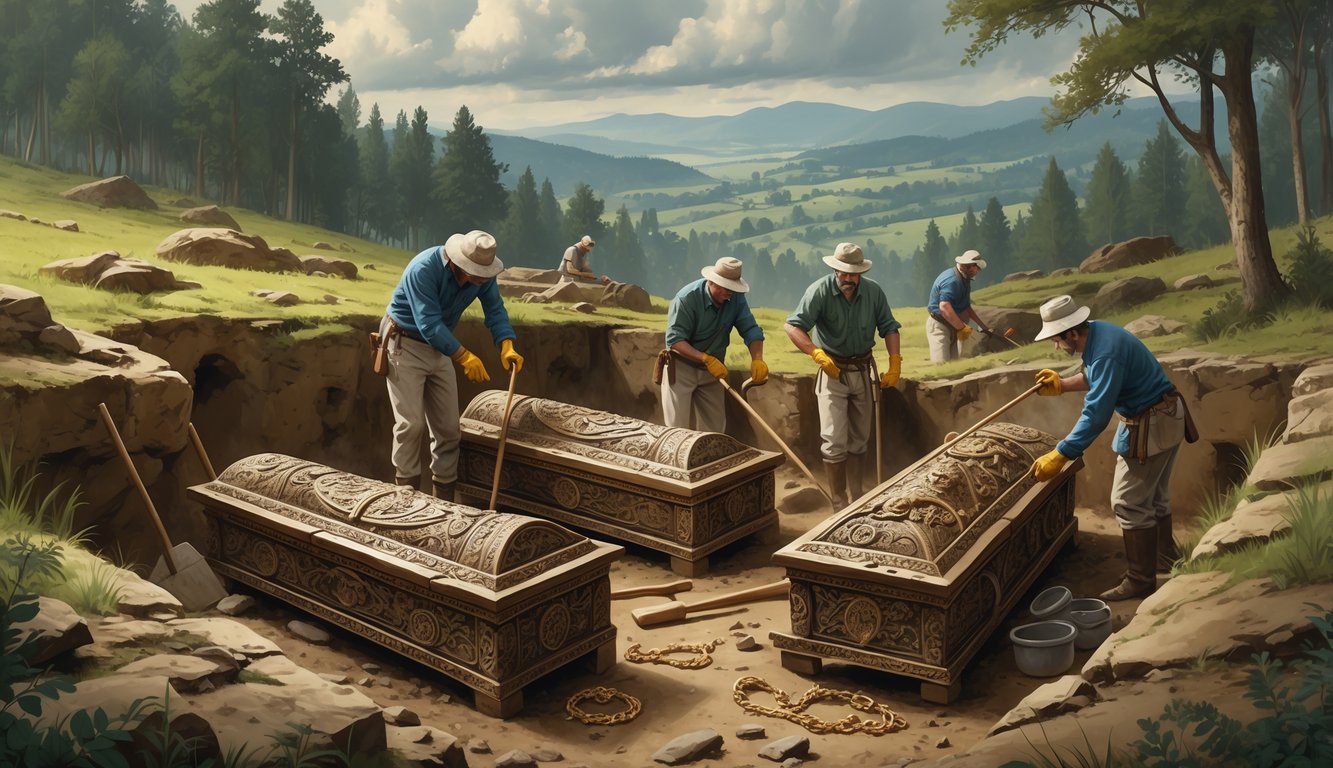
Attila the Hun died in 453 AD, sparking one of history’s most enduring burial mysteries. Later chronicles describe a complex funeral, valuable grave goods, and a hidden tomb, blending recorded history with legend.
Gold, Silver, and Iron Coffins
Some historical writings say Attila’s body rested inside three nested coffins — gold for wealth, silver for honor, and iron for strength in battle.
This triple coffin design symbolized his power as ruler of the Huns. Gold stood for the riches he gained from campaigns across Europe.
Silver may have meant diplomacy and alliances. Iron reflected the military might that made him feared by Rome.
The idea of such coffins has fueled speculation about the immense value buried with him. If true, the gold alone would be worth millions today.
No one has found physical evidence to confirm the coffins’ existence. Some historians think the account may be more legend than fact.
Burial Rituals and Secrecy
According to tradition, Attila’s warriors held his funeral at night to avoid attention. They reportedly killed those who built the tomb to keep its location secret.
Some stories claim the Huns diverted a river, buried the triple coffin in the riverbed, and then redirected the water to hide it. This method would have made recovery almost impossible without modern technology.
The Huns wanted to protect their leader’s remains from enemies and grave robbers. This secrecy helps explain why Attila’s tomb has never been found, despite centuries of searching in Hungary, Romania, and Serbia.
The Allure of Lost Treasure
The possibility of a hidden hoard has kept the story alive for over 1,500 years. If the triple coffin existed, it may have been surrounded by weapons, armor, and tribute collected during Attila’s campaigns.
Treasure hunters, archaeologists, and historians all pursue the mystery. Expeditions in Hungary often follow clues from ancient texts and oral traditions.
Modern interest is not only about gold or silver. Finding the tomb would give insight into Hun culture, burial practices, and the final chapter of Attila’s life.
The mix of history and legend keeps the search active, as seen in ongoing efforts to locate Attila’s lost burial site.
Modern Archaeological Expeditions in Hungary
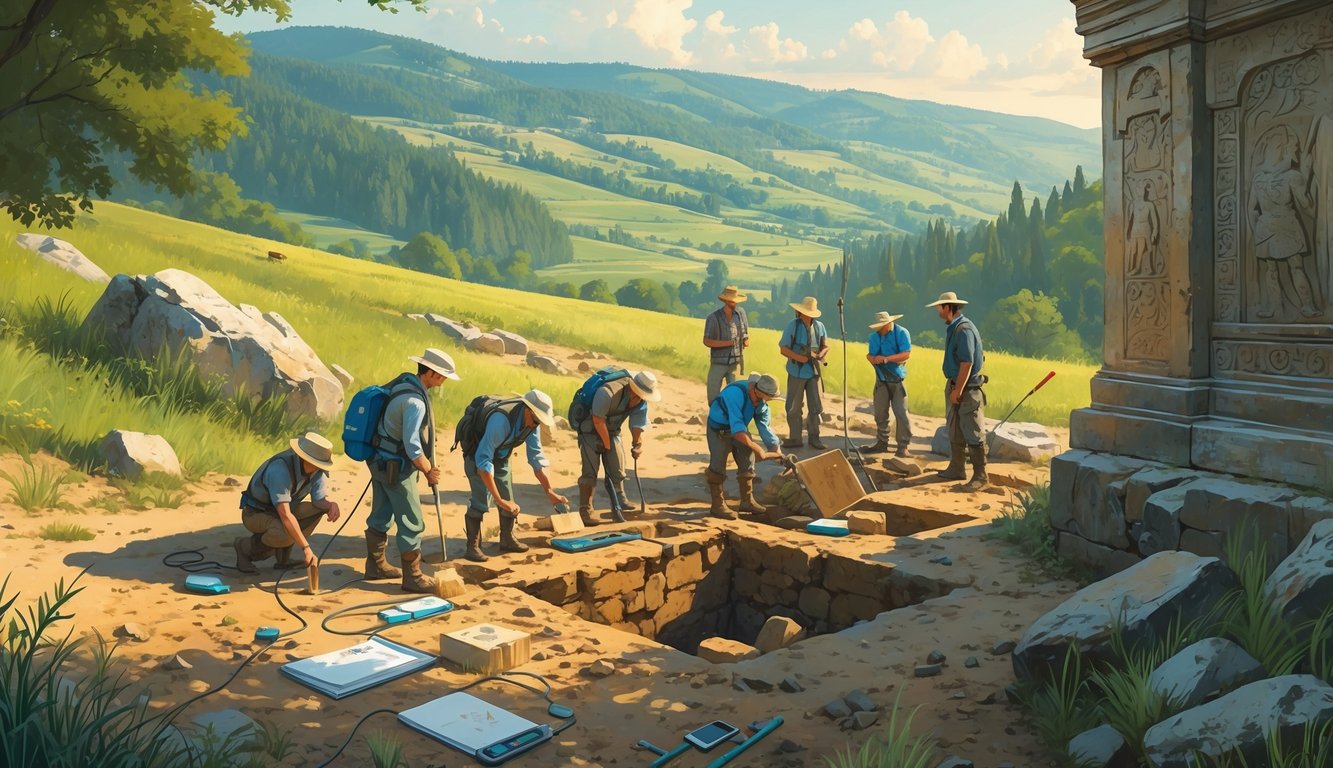
Archaeologists in Hungary have worked with local and international experts to investigate sites linked to Attila the Hun. They combine historical research, advanced technology, and fieldwork in areas from the Danube River to forests near Budapest.
Key Archaeological Teams
Several groups have played a role in the search. Hungarian national heritage organizations coordinate many digs and often partner with university research departments.
International teams, such as those featured in Expedition Unknown, bring extra expertise and equipment. These collaborations mix local knowledge with global archaeological methods.
Each team often focuses on a specific area. Some search riverbeds, while others explore mountain terrain or ancient settlements.
Many team members specialize in osteology, ancient metallurgy, or historical cartography. These skills help interpret any artifacts or remains found during excavations.
Cutting-Edge Search Techniques
Modern expeditions use a range of tools to locate potential burial sites. Ground-penetrating radar (GPR) helps detect underground structures without disturbing the soil.
Teams use sonar scanning in the Danube River to identify anomalies on the riverbed. This method helps test legends that claim Attila’s tomb may be underwater.
Drones with high-resolution cameras capture aerial images of remote forests near Budapest. These images can reveal changes in vegetation or terrain that may indicate buried structures.
Researchers use Geographic Information Systems (GIS) to combine old maps with satellite data. This narrows search zones and avoids unnecessary digging.
Recent Excavations and Discoveries
Recent digs have focused on both land and underwater sites. Teams have uncovered burial mounds and artifacts from the 5th century, though none have proven to be Attila’s tomb.
For example, archaeologists explored forested hills outside Budapest and found weapon fragments and horse gear consistent with Hun craftsmanship.
Riverbed surveys of the Danube revealed wooden structures and ancient debris. These finds are important for understanding regional history, but they have not provided direct evidence of the tomb.
Some reported discoveries, such as a supposed tomb found during bridge construction, turned out to be hoaxes. This highlights the difficulty of separating fact from rumor in such a high-profile search.
Expedition Unknown: Josh Gates and the Search
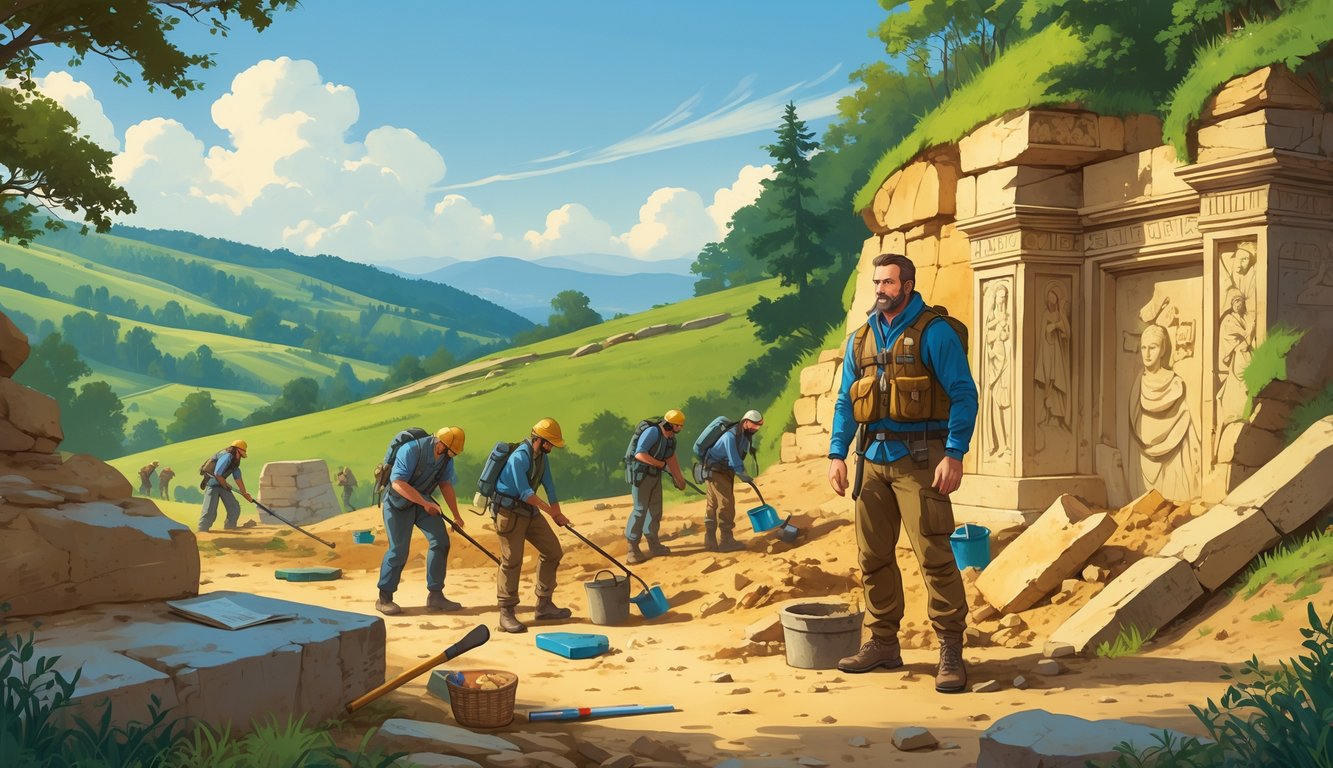
Josh Gates traveled to Hungary and joined archaeological teams in their hunt for the lost tomb of Attila the Hun. They combined on-site exploration, historical research, and advanced technology to investigate locations from the Danube River to forests near Budapest.
Josh Gates’ Role
Josh Gates acted as both investigator and storyteller during the search. He worked alongside archaeologists in the field to locate and examine possible sites.
He reviewed ancient texts and maps that could point to the tomb’s location. His role involved moving between research environments and active dig sites.
In Expedition Unknown, Gates balanced scientific work with presenting the story to viewers. He documented each stage of the search, showing the challenges of exploring underwater areas of the Danube and remote mountain terrain.
By participating in the fieldwork, he gained direct insight into the methods and limitations of the archaeological teams. This approach helped him explain the process clearly to the audience.
Collaboration with Local Experts
The project relied on cooperation between Gates and Hungarian archaeologists. These experts contributed knowledge of local history, geography, and prior excavation efforts.
They examined leads from historical accounts and oral traditions. Some clues pointed to burial sites hidden beneath riverbeds or in forested hills.
Local teams provided specialized tools such as sonar for underwater scanning and ground-penetrating radar for land surveys. Gates joined them in using and interpreting these tools in the field.
This collaboration combined international media attention with the precision of local archaeological practice. It also made sure any discoveries met Hungary’s cultural heritage guidelines.
Media and Public Interest
The episode titled “The Lost Tomb of Attila the Hun” attracted history enthusiasts and casual viewers. It aired as part of Expedition Unknown, a series known for investigating unsolved historical mysteries.
Television coverage brought the search to a global audience and showed the process behind the results.
Media exposure increased public curiosity about Attila the Hun and Hungary’s archaeological sites. This interest can lead to more tourism and support for historical research.
By presenting the work in an accessible format, the program helped connect complex archaeological methods with viewers who might not otherwise engage with this type of investigation.
Challenges Facing Treasure Hunters and Archaeologists
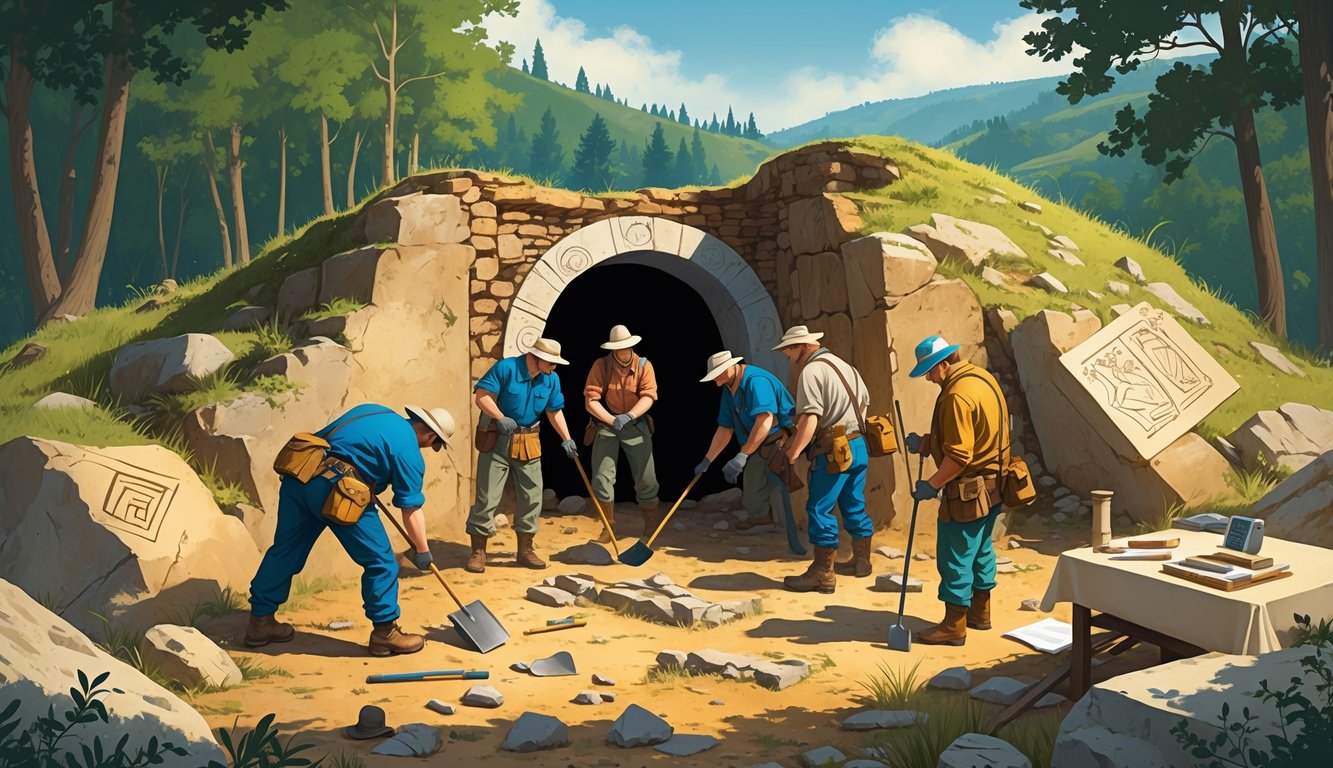
Treasure hunters and archaeological teams searching for Attila the Hun’s tomb face physical, legal, and historical barriers. These include difficult terrain, shifting rivers, complex laws, and the challenge of separating myths from proven facts.
Geographic and Environmental Obstacles
Much of the land linked to Attila lies along rivers, floodplains, and forested hills. In Hungary, the Danube and Tisza rivers have changed course over centuries, possibly burying evidence under layers of silt.
Seasonal flooding can make excavation sites inaccessible for months. Thick vegetation in remote areas slows surveys and increases the risk of missing important clues.
Archaeological teams rely on ground-penetrating radar and aerial drones to scan terrain. Soil composition, water saturation, and modern development can interfere with results.
Some suspected burial areas are now farmland or urban zones. Excavation in these locations requires careful planning to avoid damaging property or disrupting communities.
Legal and Ethical Considerations
Hungary enforces strict cultural heritage laws. Anyone who discovers historical artifacts must report them to the government, and removing them without permission is illegal.
Treasure hunters without official permits risk fines or criminal charges. Archaeological teams must secure permission from several agencies before digging.
There are also ethical concerns. Many historians say that human remains, even those of figures like Attila, deserve respect and should not be exploited for profit.
International agreements, such as the UNESCO Convention, protect cultural sites from looting. This means private expeditions often face restrictions when searching for high-profile finds like Attila’s burial site.
Dealing with Legends Versus Evidence
Stories about Attila’s burial vary widely. Some say he was buried under a riverbed, while others place the tomb in remote mountain areas outside Budapest.
These legends can inspire searches but also mislead teams. Archaeologists compare oral histories with physical evidence, such as ancient maps or soil analysis.
Excavations based only on folklore risk wasting resources. Modern teams combine historical texts with satellite imagery and geophysical surveys to narrow search areas.
Even when clues seem promising, they may lead to unrelated sites. Balancing legend with science remains one of the most persistent challenges in the hunt for the lost tomb of Attila the Hun.
Cultural Impact and Significance of the Lost Tomb
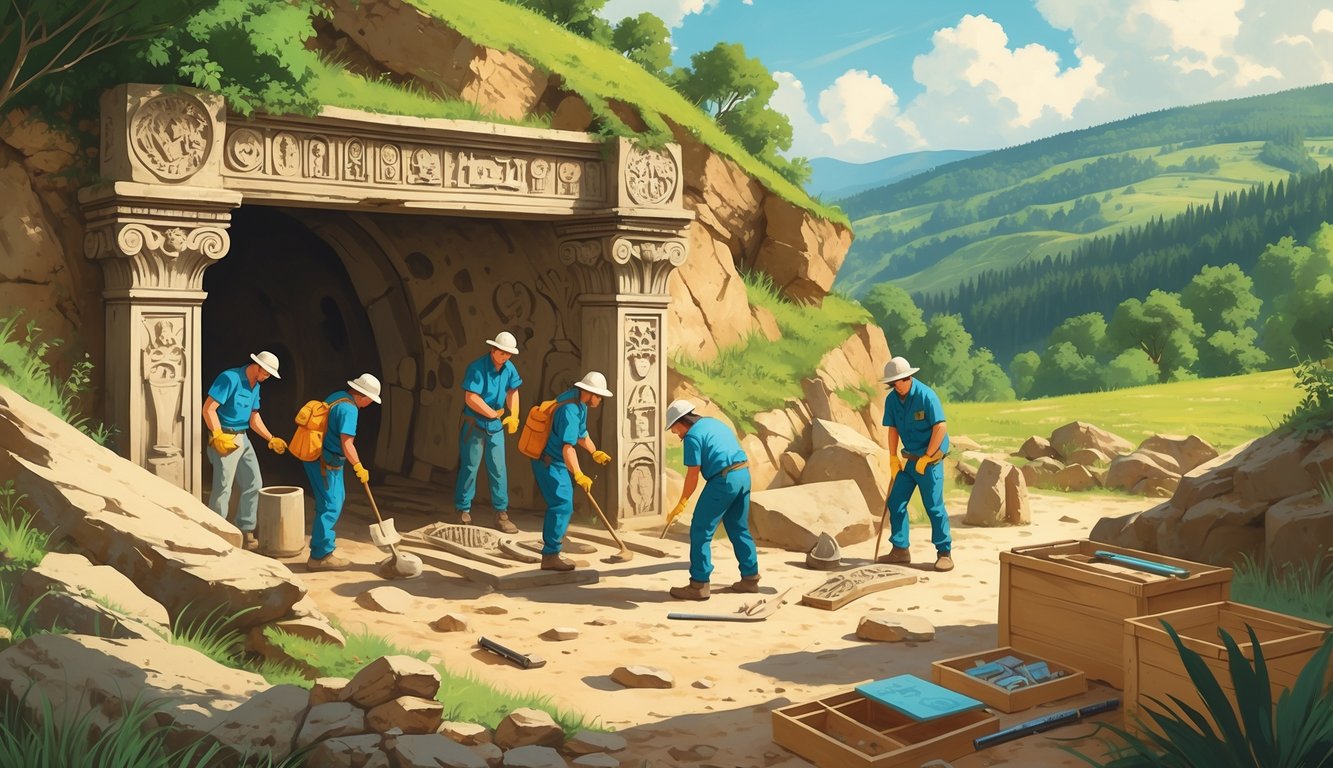
The mystery of Attila the Hun’s burial site connects history, archaeology, and national heritage. It shapes how people view Hungary’s past, inspires modern media, and creates opportunities for learning and cultural tourism.
Influence on Hungarian Identity
Attila the Hun holds a complex place in Hungarian history. While the Huns lived before the Magyars arrived, some traditions link the two peoples through legend and oral history.
His name appears in place names, literature, and even family names in Hungary. This keeps his memory alive in everyday life.
The search for the tomb stirs national interest because many believe it could be hidden near Budapest or along the Danube River. Discovering it could add a tangible link to early historical narratives.
Key cultural connections include:
- Folklore linking Huns and Magyars
- Historic pride in ancient warrior heritage
- Use of Attila’s name in Hungarian culture
Role in Modern Storytelling
The lost tomb has become a recurring theme in TV shows, documentaries, and books. Programs like Expedition Unknown have followed archaeological teams in Hungary searching riverbeds and forested hills for clues.
Writers and filmmakers use the mystery to build suspense, often blending fact with legend. This keeps the story engaging for a global audience and encourages public interest in real archaeology.
Legends describe elaborate burial rituals, sometimes claiming the tomb lies beneath a diverted river. While unproven, these details give storytellers vivid material to use.
Popular media often draws on:
- Ancient chronicles and oral traditions
- Archaeological fieldwork in Hungarian landscapes
- Theories about secret burial methods
Educational and Tourism Opportunities
The ongoing search can boost both education and tourism in Hungary. Museums in Budapest already feature exhibits on Attila and the Huns, giving visitors historical context.
If someone found the tomb, it could become a major archaeological site, attracting researchers and tourists alike. Even without a discovery, guided tours and exhibitions about the search provide cultural and economic benefits.
Educational programs use the mystery to teach students about early European history, archaeology, and critical thinking. This makes the legend more than a story—it becomes a tool for learning.
Tourism benefits could include:
- Increased visits to historical sites along the Danube
- Specialized museum exhibits and lectures
- Cultural festivals celebrating Hungary’s early history
What the Discovery Could Mean for History
If researchers find Attila the Hun’s tomb, they could gain rare physical evidence from a time with few written records. This discovery may reveal details about political power, cultural traditions, and how the Hun Empire interacted with its neighbors, including the Roman Empire.
Insights into Hun Society
Archaeologists can study burial goods, weaponry, and clothing to learn about Hun craftsmanship and trade. Gold ornaments or decorated swords might show the wealth and skill of the Hun Empire.
Grave goods could also reveal social hierarchy. Imported Roman items might suggest trade or tribute arrangements.
By examining human remains, scientists can analyze DNA and find clues about the Huns’ origins. This research could confirm or challenge current ideas about their ancestry.
Understanding the Roman-Hun Relationship
The Huns and the Roman Empire had a complex history involving warfare, alliances, and diplomacy. If researchers find Roman-made artifacts in Attila’s tomb, this could confirm the exchange of gifts or tribute payments.
Weapons or armor from Roman workshops might show that the Huns adopted Roman military technology. This would suggest both sides influenced each other.
Material evidence from the tomb could help verify which historical events actually happened and which stories were exaggerated.
Filling Historical Gaps
Roman writers often portrayed Attila as a ruthless enemy. Archaeological evidence from a tomb discovery could add a more balanced view to the written record.
Dating methods can place the burial in a precise historical context. This helps historians understand the timeline of the Hun Empire’s decline after Attila’s death.
Inscriptions or symbolic carvings in the tomb might show how the Huns viewed their leader. These details could reveal their beliefs about death and the afterlife.