Chad sits in the heart of Central Africa and has a long, mysterious history. The land holds secrets from the days of ancient empires and cultures, with some puzzles still unsolved today.
Some of the biggest historical mysteries in Chad include ancient ruins, lost civilizations like the Sao, and even the discovery of one of the oldest hominid skulls in the world, Sahelanthropus tchadensis. This discovery raises new questions about early human life from millions of years ago.

Many stories from Chad’s past are shaped by trade, kingdoms, and powerful empires like Kanem-Bornu. Researchers and explorers continue to search for clues about these ancient societies and their rise and fall.
Ancient Lake Chad Mysteries
Ancient Lake Chad was once one of the world’s largest lakes. It was home to diverse communities.
Its dramatic changes over thousands of years shaped the landscape and left behind rock art. These changes influenced both people and wildlife.
Rise and Decline of Lake Chad
During the Neolithic era, around 7,000 years ago, Lake Chad covered about 400,000 square kilometers. This made it bigger than most lakes on Earth at that time.
Scientists call this ancient body of water “Mega-Chad.” It once filled much of north-central Africa, spreading into what are now several countries.
Over time, the climate changed, and rainfall in the region dropped. The massive lake began to shrink.
By about 5,000 years ago, the area experienced an abrupt end to its humid period. Desertification increased, turning fertile lake shores into sandy plains.
Mega-Chad reduced to the much smaller Lake Chad seen today. The shrinking of the lake drastically affected local populations and wildlife.
Modern Lake Chad now supports only a fraction of the life it once did. For more details, visit the NASA Earth Observatory’s page on ancient Lake Mega-Chad.
Neolithic Cave Dwellers
In Neolithic times, people lived along the shores of the vast ancient lake. These early settlers hunted animals, gathered plants, and fished its waters.
Archaeologists have found tools made from stone and bone that show how people adapted to their changing environment. These communities built shelters in caves and on higher ground to avoid floods when the water was high.
As the climate became drier and Lake Chad receded, people moved to follow its shrinking shoreline. They always searched for water and food.
Remnants of ancient villages, pottery, and burial grounds give us a glimpse into their daily lives. Some groups, like the Sao civilization, developed walled cities and traded goods across the region.
Read more about these ancient mysteries of Africa and the Sao civilization.
Rock Art of the Tibesti Region
The Tibesti region sits on the edge of the Sahara Desert. It is famous for its rock art.
On cave walls and rocky outcrops, people made paintings and carvings thousands of years ago. These art pieces show animals like giraffes, cattle, and antelopes, which are clues that the desert was once much greener.
Some scenes in the rock art show hunting, dancing, and ceremonies. The drawings also tell us about the tools, weapons, and daily life of people who lived near ancient Lake Chad.
Many of these artworks are painted with natural pigments made from minerals. Researchers study this rock art to learn about climate change, ancient beliefs, and the movement of early peoples across Africa.
The rock art in the Tibesti region remains an important record of human history in the area.
The Enigmatic Sao Civilization
The Sao civilization once thrived around Lake Chad in Central Africa. They are remembered for their advanced bronze work, mysterious origins, and lasting influence on later cultures in the region.
Origins and Ethnographic Controversies
The Sao civilization flourished from around the 6th century BCE up to the 16th century AD. Their homeland was the Chari River basin, an area now part of Cameroon and Chad.
Historians and archaeologists still debate exactly where the Sao came from. Some think they were indigenous to the Lake Chad region, while others believe they migrated from the Nile Valley or North Africa.
Oral traditions link the Sao with local groups like the Kotoko. Some of their descendants still live nearby.
Because the Sao left no written records, most information comes from later Arab historians and local legends. These sources sometimes contradict each other, making it hard to settle facts about the Sao’s true origins and ethnic links.
Unique Artifacts and Bronze Technology
The Sao are best known for their remarkable artifacts, especially those made from bronze and clay. Archaeologists have uncovered bronze statues, tools, jewelry, and elaborate pottery around sites in Chad and Cameroon.
Many of these objects display a high level of detail and craftsmanship. Some bronze pieces take the shape of animals, humans, or symbols, showing the Sao’s skill with metal and art.
Their pottery often included geometric designs and practical containers. The Sao used their creations for both artistic and everyday purposes.
Below is a table showing notable Sao artifacts:
| Artifact Type | Material | Features |
|---|---|---|
| Statues | Bronze | Animals, human figures |
| Jewelry | Bronze | Detailed patterns, bracelets |
| Pottery | Clay | Geometric designs, containers |
Their metalworking skills set them apart from many other ancient African societies. The use of bronze shows social organization and technological know-how among the Sao.
Interaction with Neighboring Cultures
The Sao traded and interacted with many groups, including the Kanem-Bornu Empire and local peoples such as the Kotoko. Trade goods included salt, metals, and possibly horses.
Such exchanges allowed the Sao to adopt new ideas and technologies. They also shared their own skills, like bronze working and pottery-making.
As Kanem-Bornu grew in power, it absorbed or conquered many Sao settlements. Even after their civilization ended, the Sao influenced the language, art, and traditions of local groups.
Traces of Sao heritage can still be seen among the modern Kotoko people, who claim descent from the Sao. This ongoing cultural legacy makes the Sao an important example of ancient cultural interaction in the Lake Chad region.
For more details on the Sao civilization and its history, see this overview of the Sao civilisation and the story of the lost Sao civilization.
Lost Kingdoms: Kanem and Bornu
From the mid-9th century until the 19th century, the Kanem and Bornu kingdoms shaped much of the history in the Lake Chad region. Powerful rulers, fierce rivals, and dramatic invasions left many mysteries that still intrigue historians today.
Rise to Hegemony and Decline
The Kanem Empire began around Lake Chad in the 9th century. The Kanuri people formed the backbone of the empire.
Over time, Kanem expanded its influence north toward the Sahara and west into the Sahel. Trade routes connecting North Africa to the south passed through Kanem.
These routes brought wealth, salt, and ideas, helping the empire dominate regional politics for centuries. Diplomacy and warfare shaped its growth.
Leadership disputes, rival clans, and external threats weakened the empire. By the 14th century, much of its control shifted from Kanem west to the Bornu region.
This change marked the start of what became known as the Kanem-Bornu Empire. Read more about these transitions and their impact on regional influence at Britannica’s page on Kanem-Bornu.
Mai Dunama Dabbalemi and Mai Idris Aluma
Two rulers stand out in Kanem-Bornu’s history: Mai Dunama Dabbalemi and Mai Idris Aluma.
Mai Dunama Dabbalemi ruled in the 13th century. He made Islam the official religion in Kanem, linking the empire closer to North African Islamic states.
Dunama Dabbalemi also expanded territory through campaigns and alliances. Mai Idris Aluma, who ruled in the late 16th and early 17th centuries, reformed the military and government.
He built roads, improved trade, and defended his kingdom against invading tribes. Under Idris Aluma, Kanem-Bornu reached its peak of stability and power.
More details about these rulers can be found on the Wikipedia page for Kanem-Bornu Empire.
Bulala Invaders and the Fall of Ngazargamu
In the 14th century, the Bulala invaders from the east became a major threat. They often raided Kanem territory and challenged the authority of its rulers.
After many battles, the Bulala captured the ancient Kanem capital and forced the royal Kanuri clan to flee west. The move led to Bornu becoming the new center of power.
By the early 19th century, continued conflicts, weakening trade routes, and outside invasions drove Kanem-Bornu into sharp decline. The once-mighty capital of Ngazargamu fell.
For more about the fall and legacy of Kanem-Bornu, you can visit the Lost Empire of Kanem-Bornu article.
Bagirmi and Ouaddaï: Forgotten Dynasties
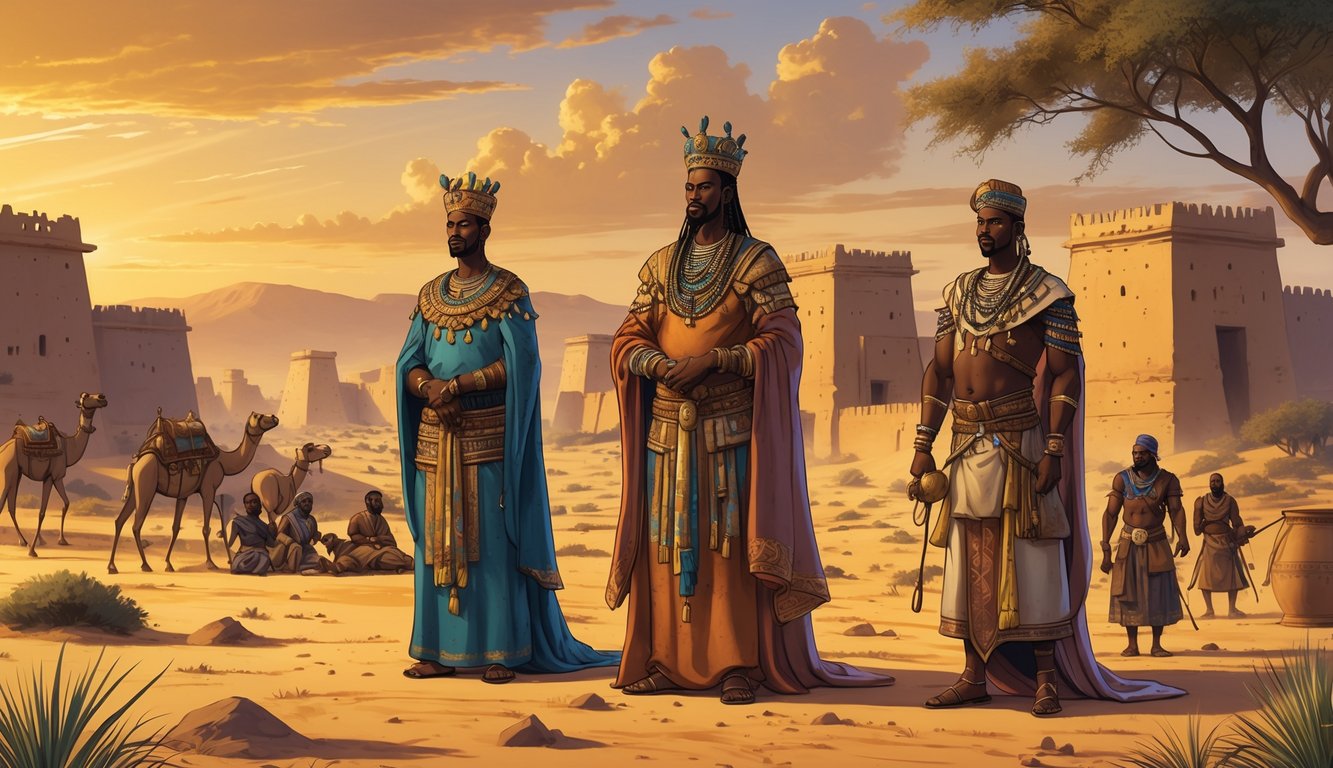
Bagirmi and Ouaddaï were powerful medieval states in what is now Chad. They shaped the region’s culture and history for centuries.
Their rise, military struggles, and long-lasting traditions still draw curiosity from historians.
Rise and Military Conquest
Bagirmi, also spelled Baguirmi, emerged southeast of Lake Chad around the early 16th century. Its capital, Massenya, became the heart of a growing Islamic kingdom that gathered influence from its neighbors.
The rulers were known as Mbang, and they built a state based on alliances and trade. Nearby, the Ouaddaï Empire started to expand in the 16th century.
Ouaddaï developed into a major force east of Bagirmi. Both empires controlled important trade routes, linking North and Central Africa.
Military campaigns were common as each dynasty tried to gain more land and resources. Bagirmi was often a tributary to the powerful Bornu Empire, but it managed to keep its own royal family and traditions for centuries.
Kingdom borders shifted as armies clashed and new leaders took power. Learn more about the rise and fall of Bagirmi at the Britannica page on the Kingdom of Bagirmi.
Key facts on early expansion:
| State | Founded | Capital | Key Feature |
|---|---|---|---|
| Bagirmi | 16th century | Massenya | Islamic learning |
| Ouaddaï | 16th century | Abéché | Trade control |
Conflicts with Fulani Warriors
As Bagirmi and Ouaddaï grew, they faced constant threats from outside groups. One of the biggest challenges came from the Fulani warriors.
These groups moved in waves across West and Central Africa, often seeking new land or influence. Fulani raids and invasions shaped how these kingdoms defended themselves.
Sometimes, Fulani fighters acted as allies, but more often they became rivals. Battles happened along trade routes, and villages could change hands overnight.
Armies stayed alert, and leaders built fortifications around major towns. The Fulani brought their religion and customs, which sometimes clashed with local Muslim practices.
These encounters changed politics, trade, and even the royal families of Bagirmi and Ouaddaï.
Enduring Cultural Legacies
Bagirmi and Ouaddaï are remembered today for unique contributions to Chad’s history. After their decline, traces of their traditions remain along the Chari River and in local languages, customs, and family names.
Bagirmi became known as a center for Islamic education and law. Scholars from across the region visited Massenya to learn.
Ouaddaï, with its capital at Abéché, influenced art, music, and clothing styles still seen in the region. Medieval culture from both dynasties left behind architecture such as mosques, palaces, and fortifications.
Lists of kings and royal lineages are still shared by local families. The story of these dynasties continues to be studied, as seen in articles on the Kingdom of Bagirmi’s history.
Mysterious Trans-Saharan Trade Routes
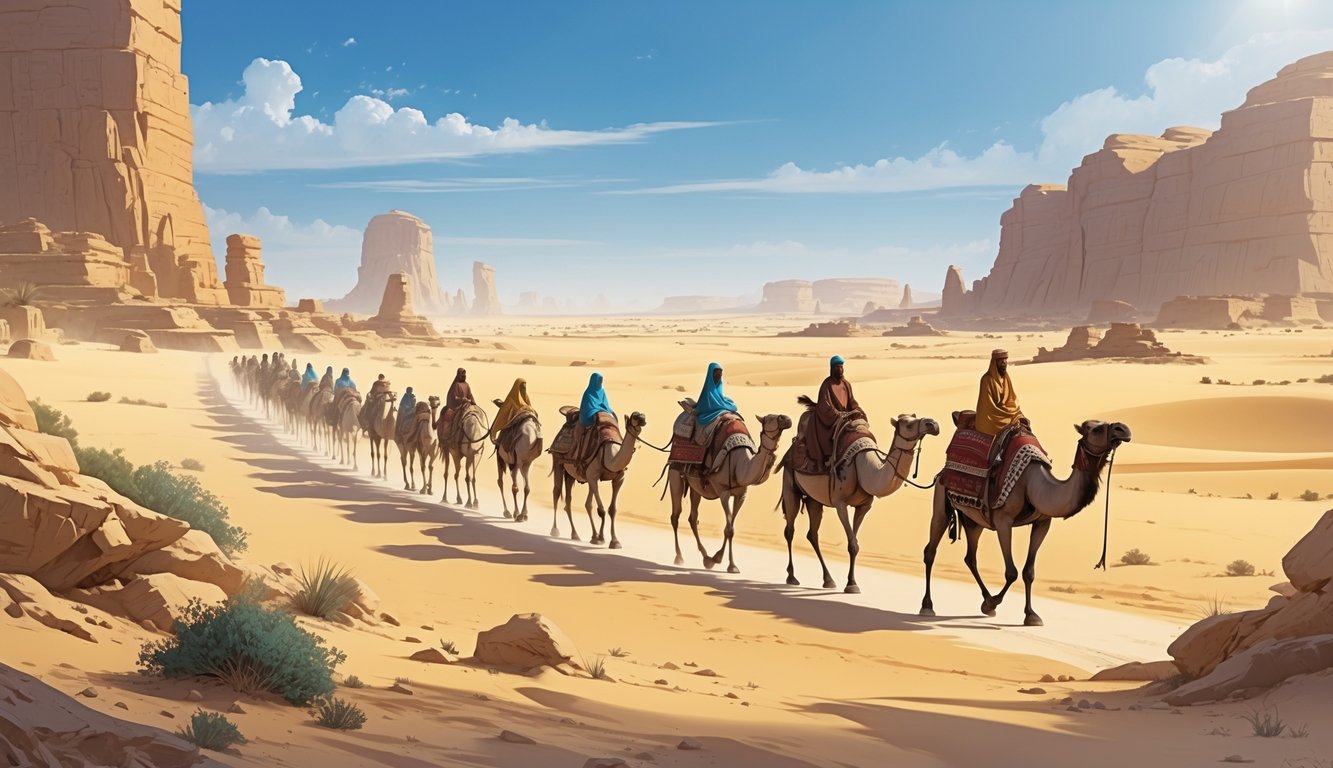
The trans-Saharan trade routes through Chad connected North Africa to sub-Saharan kingdoms using camel caravans. Ancient paths passed through regions like Fezzan and Chari, moving gold, salt, and more across harsh desert terrain.
Route Mapping and Lost Paths
Many ancient trade routes across the Sahara remain unmapped today. Historians know merchants moved goods thousands of miles between places like Tripoli, Fezzan, and the Chari region in Chad.
Several routes have been lost to time, buried under shifting sands and forgotten by modern explorers. Some archaeologists use old records and satellite images to locate possible caravan paths.
Exact routes and resting stops are still uncertain. Trade on these paths reached its height from the 8th to the 17th centuries, with empires like the Ghana Empire making use of them as described in the World History Encyclopedia.
Key goods traded:
- Salt from northern mines
- Gold from West Africa
- Slaves, ivory, and textiles
The paths changed over time due to climate, politics, and tribal conflicts. Many stretches remain unaccounted for today.
Influence of Saharan Imazighen
The Saharan Imazighen, or Berbers, played key roles as traders and guides on the trans-Saharan routes. They specialized in surviving desert conditions and led caravans safely between northern cities and the south.
Their knowledge of oases and hidden wells was vital for any group crossing the Sahara. Imazighen groups often controlled stretches of road around Fezzan and into Chad, demanding tolls or providing protection.
Their influence made trade possible but also added mystery to these routes, as they did not keep written records. Oral traditions told by Imazighen elders are some of the few clues about lost roads and practices.
Their legacy is tied to local communities who still remember tales of camel caravans and trade kingdoms along the trans-Saharan trade routes.
Colonial Era Puzzles and Resistance Movements
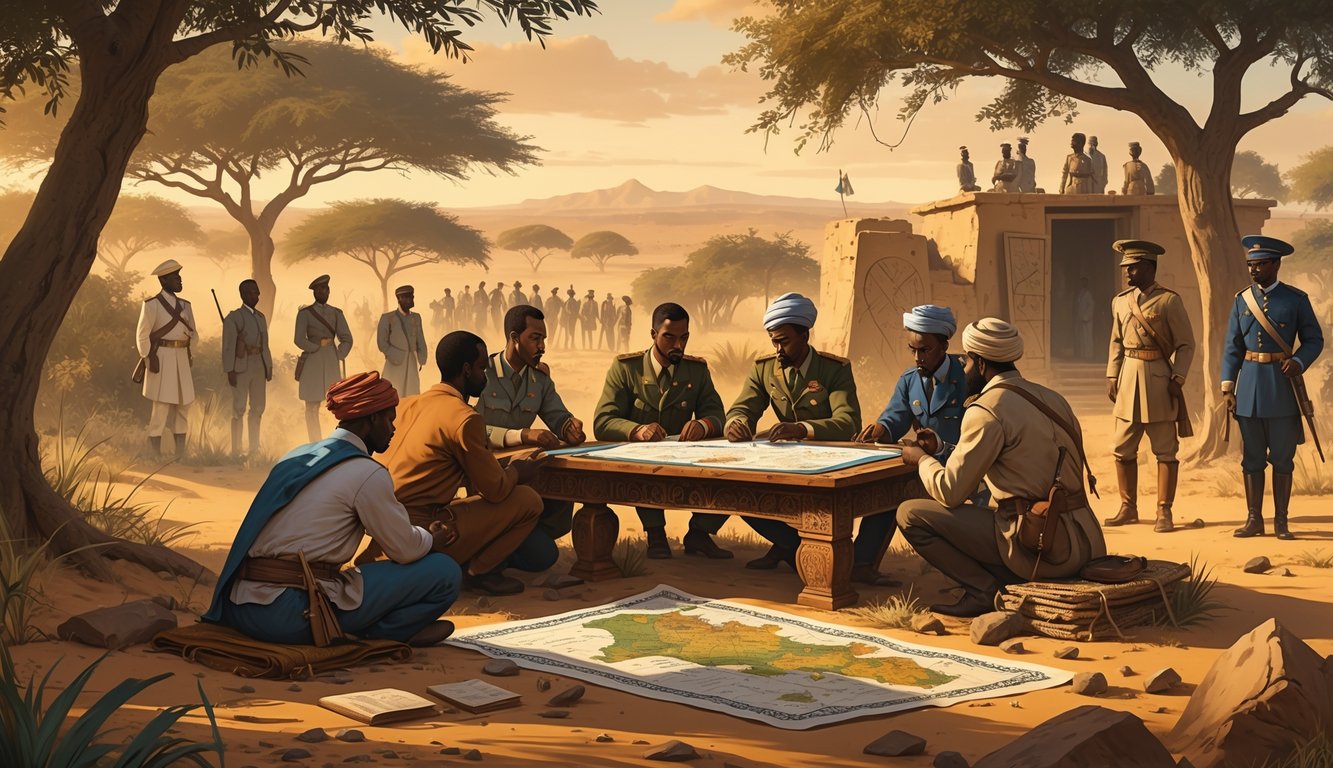
French colonization in Chad brought changes that puzzled many people. It altered local societies and created new challenges.
Unexpected Outcomes of French Colonization
French colonization created both direct rule and indirect control through traditional leaders. The borders drawn by French officials often combined different ethnic groups into a single colony.
Chad became part of the Federation of French Equatorial Africa. Its territory received less attention and fewer resources than other regions.
This lack of focus left some communities with little development during the colonial period. French authorities tried to introduce new administrative systems, but these clashed with existing customs.
Many rules and boundaries from the colonial era remain, causing political puzzles that still affect Chad today.
The Puzzle of Cultural Adaptation
During colonialism, the French promoted their language, education system, and legal codes. Some local communities blended these influences with their own customs, while others resisted changes.
A mix of African traditions and French institutions led to new forms of identity. People chose when to use French or local languages and which legal systems to follow, especially in matters like marriage or business.
Cultural adaptation varied across Chad. In some areas, people adopted French ways to access government jobs or education.
In others, they held tightly to their traditions. This created a cultural puzzle still seen in daily life.
Resistance and Rebellions
Throughout the colonial period, people in Chad organized resistance movements against French rule. These uprisings happened in several regions, especially in the north and east.
Leaders like Toumaï led notable rebellions in the 1920s, challenging colonial authority and fighting for local rights. Resistance ranged from small protests to larger armed revolts.
Groups used both negotiation and conflict to try to regain control over their land and way of life. Some leaders, such as François Tombalbaye, later played key roles in Chad’s push for independence.
Many of these resistance movements forced the French to reconsider their rule. The courage shown during these times helped shape Chad’s national identity.
World War II and Strategic Mysteries
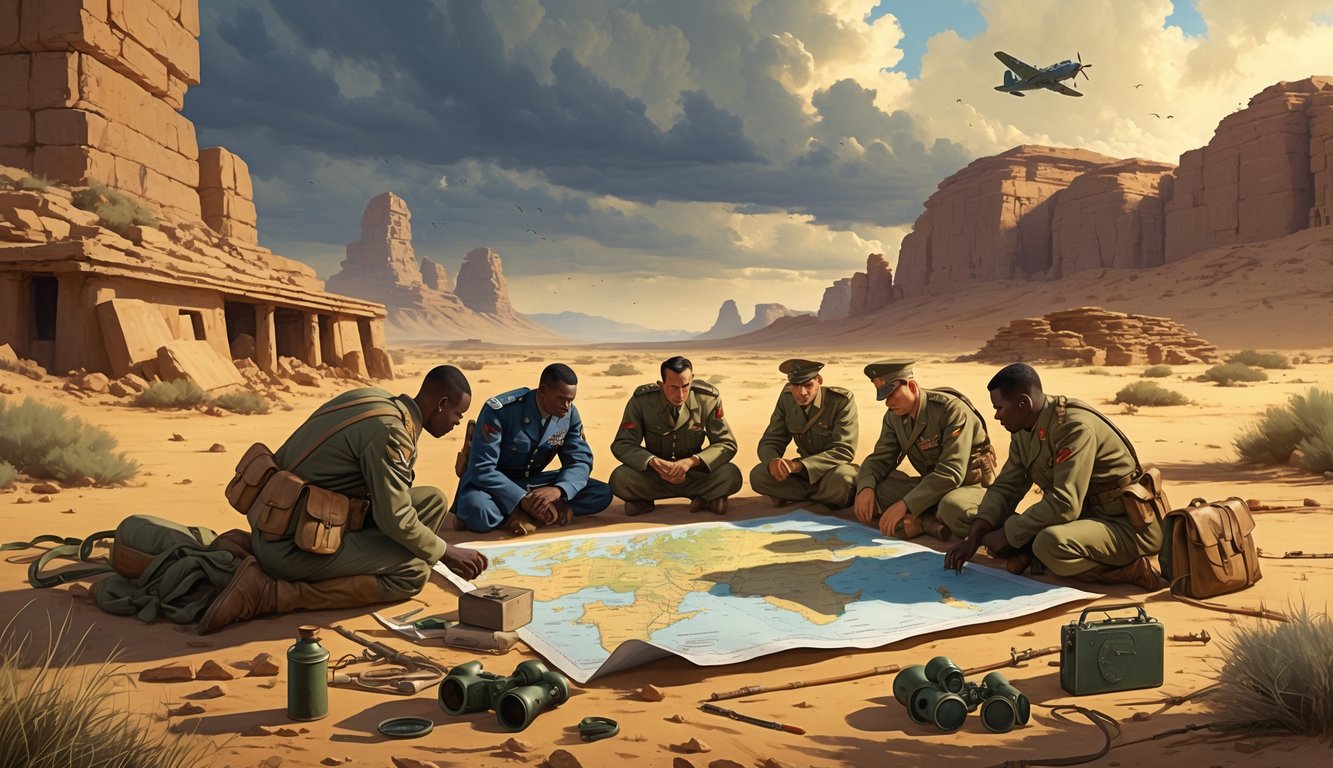
During World War II, Chad became a focus of military and political events. The region’s control affected the Free French movement, ties to Central Africa, and military campaigns against Axis forces.
Battle of Kousséri and Free French Cause
The Battle of Kousséri marked a turning point for Chad in World War II. Forces led by Governor Félix Éboué joined the Free French cause after the fall of France.
Chad became the first territory in Africa to support Charles de Gaulle and the Free French. It became a key base for further actions.
The Armed Forces of the North formed in Chad and launched campaigns into neighboring countries such as Cameroon and Nigeria. These efforts secured vital routes and established communications for Allied forces in the region.
Supplies, soldiers, and news passed through Chad to support resistance against the Axis powers. Chad’s loyalty to the Free French cause kept the fight alive in Africa.
The decisions made in and around Kousséri set the stage for military and political alliances that shaped the region. For more about how Chad participated in World War II, visit the Axis History Forum.
Shifting Allegiances in Central Africa
The political atmosphere of Central Africa during World War II shifted quickly. After Chad aligned with the Free French, other countries in the region, including Cameroon and Niger, faced pressure to choose sides.
The Central African Republic played a significant supporting role as the power struggle unfolded. French West African territories were caught between Vichy and Free French control.
Borders with Nigeria and Cameroon became lines of uncertainty. Both Axis and Allied operations influenced local leaders.
These shifts created tension, especially as wartime decisions directly impacted daily life in towns and the countryside. Key rivers and roads became pathways for troop movements and supply lines.
Control over these areas determined which side could influence trade, military strategy, and government loyalty. Many mysteries—such as exact motives for support or resistance—remain points of debate today.
To read more about World War II’s complex mysteries, see this history collection article.
Paths to Independence: Secrets and Struggles
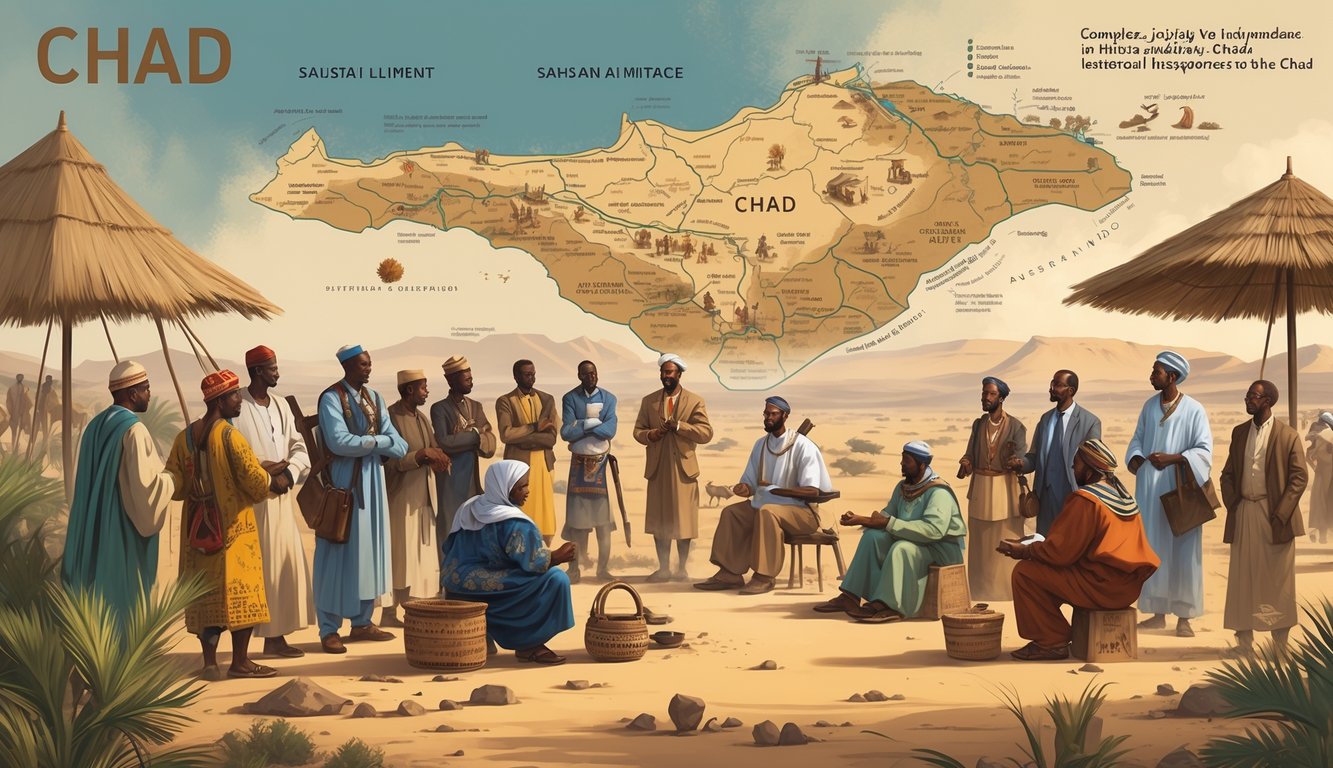
Independence in Chad involved secret deals, political alliances, and challenges that shaped the nation’s future. French influence, the push for self-rule, and debates about how to govern affected every step as Chad became a republic.
Decolonization and Political Maneuvering
Chad’s drive for independence from France came during a wave of decolonization across Africa. Many colonial powers were losing control, but France wanted to keep some influence in the region.
Political leaders in N’Djamena negotiated with French officials, sometimes making private agreements about trade and future military ties. Some politicians called for immediate freedom, while others urged a slower, safer path to independence.
The situation was tense, with groups sometimes disagreeing on who would lead the new government. Activists and community leaders joined together to push for change, often risking arrest.
Chad gained its independence from France in 1960. The transition was marked by secret talks and uncertainty about what would happen next.
The Rise of the National Assembly
The creation of the National Assembly marked a key step in Chad’s push for self-government. As more people demanded a voice, this new body formed to write laws and guide the country’s future.
Debates were lively, and the Assembly had to balance traditional customs with new rules. Some members wanted to copy French political systems, while others wanted decisions to reflect local values and diverse ethnic groups.
The National Assembly aimed to guarantee rights for all citizens. Disagreements often erupted about how to share power between the capital, N’Djamena, and rural regions.
This period set the groundwork for future conflicts and the struggle to build a working democracy.
Unresolved Questions of Governance
After independence, Chad faced ongoing problems about how to run the country and keep different groups united. Key questions were left unanswered, like how to properly distribute national resources, especially in a country with so many ethnic and regional differences.
Leaders from the Organization of African Unity tried to help, but conflict and distrust often got in the way. Tension between those in N’Djamena and leaders from other regions created power struggles.
Some regions felt left out of government decisions. These unresolved issues affected stability, peace, and the future direction of Chad.
Elusive Stability: Civil Wars and Political Turmoil
Chad’s history since independence has seen cycles of violence and sudden shifts in power. Leadership struggles, human rights abuses, and armed groups have shaped daily life for many communities.
Mysteries of Human Rights Violations
Decades of government changes have made it hard to get clear records of past abuses. Under leaders such as Hissène Habré, many people were arrested or disappeared.
Habré’s rule is remembered for mass killings and prison torture. Human rights organizations, including Amnesty International, reported that thousands of Chadians suffered from harsh crackdowns during this period.
Records from that era are incomplete, and some cases remain unexplained. Evidence has disappeared, and witnesses often fear coming forward.
Even after the end of Habré’s leadership, later governments did not always fully investigate these crimes. People still ask how many really died or what happened to the missing.
During times of civil war, groups like FROLINAT and the Armed Forces of the North also faced accusations of abuses. These events led to deep mistrust between the public and several governments that followed.
Key Facts
- Hissène Habré’s regime (1982–1990) linked to thousands of deaths
- Many human rights cases remain unsolved
- Limited access to records and fear stop many from reporting abuses
Civil War and Authoritarianism
Chad has faced repeated civil wars. Starting in the 1960s, groups like FROLINAT rose against President François Tombalbaye, who ruled as an authoritarian leader.
Power often shifted through violence instead of peaceful elections. Control moved from Goukouni Oueddei to Hissène Habré, then to Idriss Déby.
Each leader brought hopes and new fights. Military takeovers weakened trust in institutions and made peacekeeping difficult.
Conflicts in neighboring countries and threats from Boko Haram spilled into Chad. These problems added to the chaos.
During Déby’s rule, Chad became known for its military role in fighting terrorism. At home, the government repressed civil society and political opponents.
Frequent coups, lack of free speech, and armed resistance made stability hard to achieve.
Civil War Timeline
| Year(s) | Major Event |
|---|---|
| 1965–1979 | First Civil War, FROLINAT vs. Tombalbaye government |
| 1980–1982 | Goukouni Oueddei and Habré rivalry |
| 1990 | Idriss Déby’s takeover from Habré |
| 2000s–present | Ongoing unrest, Boko Haram activity |
Modern-Day Mysteries and Unsolved Challenges
Chad, a country in Central Africa, faces several ongoing issues. These challenges include widespread poverty, the uneven impact of oil wealth, and continuing ethnic tensions.
Struggles with Poverty and Healthcare
A large percentage of Chad’s population lives in poverty. Many families struggle to find enough food or access safe water.
Hospitals and clinics are often far away, especially in rural areas. Healthcare lacks funding, and many common medicines are hard to find.
Diseases like malaria and cholera remain major threats. Vaccination rates are low in many regions.
When children are sick, they miss out on school. This limits their future opportunities.
Poor families often have to choose between buying food or paying for medical treatment. Non-government organizations try to help, but their efforts are not enough.
Progress in healthcare is slow. Chad urgently needs better hospitals, doctors, and medicine.
Oil Wealth and Economic Disparities
Chad discovered oil in the early 2000s. People hoped the profits would help with development and reduce poverty.
Many feel left out of the benefits. Money from oil mostly goes to the government or a small group in the cities.
Rural areas see very little improvement. Roads, schools, and clinics lag behind.
A few large companies control much of the oil industry. People often complain about corruption, missing funds, and deals that favor foreign interests.
Table: Example of Economic Disparity
| Area | Oil Revenue Impact | Change in Living Standards |
|---|---|---|
| City | High | Some improvement |
| Village | Low | Little change |
Chad’s citizens often ask where the oil money has gone. Some say it could fix roads, build hospitals, and support schools.
Ethnic Tensions and Social Change
Chad is home to more than 200 ethnic groups. Each group has its own language, culture, and traditions.
Unequal access to resources increases ethnic tensions. Fights over land, political power, and jobs often involve ethnic differences.
People often criticize the government for handling these issues unfairly. Sometimes, government decisions benefit certain groups more than others.
In recent years, young people have protested to demand change. They call for equal treatment and better governance.
Authoritarian rule and weak institutions make it hard to resolve these tensions. Mistrust between ethnic groups also makes it difficult to build a united society.