Chile is home to some of the biggest historical mysteries in South America, blending ancient history with colorful myths and legends.
From the lost secrets of Easter Island’s massive stone statues to the mysterious caves and ancient ruins scattered throughout the country, Chile draws in curious minds and adventurers alike.
People who visit or study Chile find that its past is full of interesting stories and legends.
Many regions and islands have strange tales of unexplained events, such as the legends surrounding Chiloé and the intriguing archaeological discoveries in places like the Atacama Desert.
Travelers can feel a real sense of wonder by exploring these sites and hearing the stories passed down through generations.
If you are fascinated by the unknown, these mysteries offer a unique way to learn more about Chile’s rich history and the myths that come with it.
The mix of real findings and local legends keeps both visitors and locals coming back, always searching for answers that may never be found.
The Mystery of Easter Island
Easter Island sits over 2,000 miles away from the Chilean coast.
This remote island is famous for its giant stone statues and deep cultural history, which puzzle both locals and researchers.
Unsolved Origins of the Moai Statues
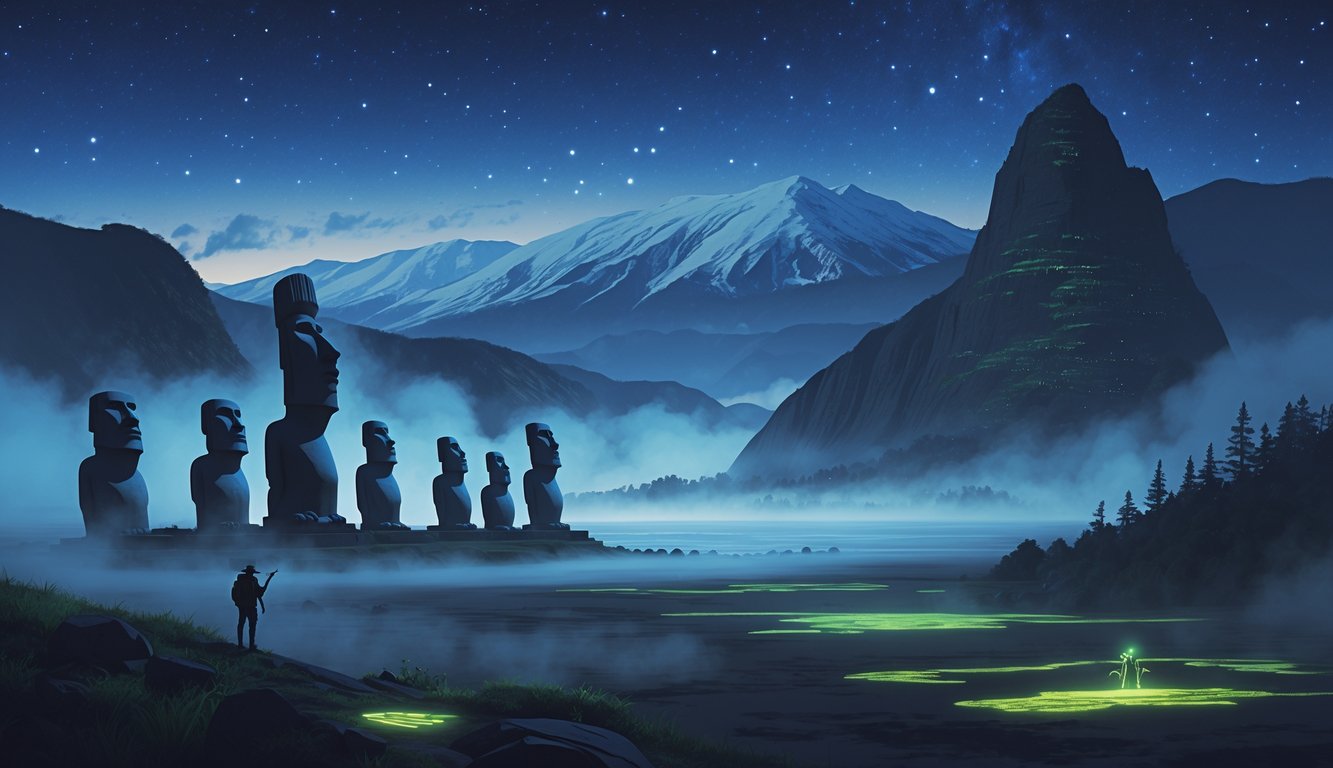
The huge stone heads, called Moai, are the most recognizable symbol of Easter Island.
There are almost 1,000 Moai built from volcanic rock, each standing up to 33 feet tall and weighing several tons.
Their sheer size and uniform faces raise many questions.
No written records exist from the time the Moai were built, so experts guess how people made and moved them.
Some think the people used wooden sledges or rolled the statues on logs.
Others believe that the statues were “walked” into place by rocking them back and forth.
Local myths suggest the Moai walked by themselves, moved by magical powers or the spirits of ancestors.
Scientists continue to test different theories, but nobody knows exactly which methods the Rapa Nui people really used.
For more information, check out details about the land of mysterious giants.
Lost Civilization of the Rapa Nui
The first settlers of Easter Island, known as the Rapa Nui, came from Polynesia over 1,000 years ago.
Their society built the Moai and developed a unique culture on a small and isolated land.
Their numbers dropped sharply in the 18th and 19th centuries.
Many experts believe a mix of deforestation, overuse of resources, and outside contact led to the fall of their civilization.
Farms failed, food became scarce, and social structures broke down.
Legends say the Rapa Nui had two main groups that sometimes fought for power.
This might have caused the toppling of many Moai statues.
Today, descendants of the Rapa Nui still live on the island, but much of their ancient knowledge and history has disappeared over time.
Learn more about the mysteries and culture of Easter Island.
El Caleuche and the Ghost Ships of Chiloé
The waters around Chiloé in southern Chile are famous for tales of ghost ships, the most well-known being El Caleuche.
These stories have shaped local culture and inspired both awe and caution among the Chilotes.
Legend of the Caleuche
El Caleuche is a legendary ghost ship said to sail near Chiloé, often shrouded in thick fog and glowing with bright lights at night.
According to Chilote mythology, this phantom vessel moves quickly, sometimes even going under the water’s surface at high speeds.
Its crew is believed to include warlocks, spirits of drowned sailors, and people who have made secret pacts.
Many stories say that the ship’s crew can appear and disappear at will.
They sometimes come ashore to trade with local merchants, offering goods in return for favors.
The legend also claims that the ship only appears to those it chooses, and anyone who sees it may be marked for mysterious experiences.
The myth of El Caleuche is deeply rooted in the folklore of Chiloé and continues to be a symbol of local mystery and wonder.
For more on this, visit the write-up about the ghost ship Caleuche.
Paranormal Encounters at Sea
Fishermen and sailors from the Chiloé region often tell stories about seeing glowing lights or hearing music coming from the misty ocean.
Some claim to have spotted the outline of El Caleuche at night, surrounded by an eerie fog.
These encounters usually happen on calm, quiet nights when the sea is still.
Locals say the ship can change shape or vanish in an instant.
It is also thought to travel under water, making it difficult to track.
Some witnesses speak about sudden weather changes or odd noises when the ship is near.
These paranormal events have made El Caleuche an important part of the culture in southern Chile.
The ghost ship legend is kept alive by each new sighting and every story shared among the Chilotes.
La Pincoya and the Mystical Sea Creatures
Chiloé Island in Chile is famous for its rich stories about magical beings living in the Pacific Ocean.
Local myths describe beautiful mermaids, helpful spirits, and creatures who decide the fate of fishers and the sea’s bounty.
The Tale of La Pincoya
La Pincoya is a key figure in the legends of Chiloé.
She is described as a beautiful mermaid, known for her long hair and kind spirit.
People believe she appears on the shore to dance, and the direction of her dance decides if the ocean will be generous or not.
If La Pincoya faces the sea while dancing, fishers expect an abundance of fish and seafood.
If she turns towards the land, it is seen as a sign of poor fishing ahead.
According to stories shared by families, she works closely with her brother Pincoy and her father Millalobo, the sea king.
Together, they control many of the ocean’s creatures.
La Pincoya’s presence brings hope, especially when fishing is difficult for the islanders.
Her legend remains an important part of Chiloé’s mythology.
Mermaids and Oceanic Legends
Chiloé’s legends are full of mermaids and mystical sea creatures.
Many locals believe these beings shape the daily lives of fishers and protect the island’s waters.
Mermaids, especially La Pincoya and her family, are believed to guide fish, whales, and other sea life through the Pacific.
The list of sea creatures includes:
- La Pincoya: Brings fertility and abundance to the ocean.
- El Pincoy: Her brother, who helps her spread marine life.
- Sirena Chilota: Another mermaid known for her beauty and for aiding sea animals.
These myths help explain changes in weather, fish populations, and safety at sea.
Through these stories, Chiloé keeps its connection to the mysterious forces of the ocean.
For many, these legends remain a living tradition.
The Mystery of the Red Lagoon
High in the Chilean Altiplano, a strange body of water grabs attention with its bold, blood-red color and the myths that surround it.
This lagoon has sparked stories of danger, curses, and spirits among locals, blending natural beauty with mystery.
The Story of the Laguna Roja
The Red Lagoon (Laguna Roja) sits near the town of Camiña, about 3,700 meters above sea level in northern Chile.
Its waters are strikingly red, looking almost like ink or blood, which sets it apart from other lakes in the region.
For a long time, only the local people knew of the lagoon.
It stayed hidden from outsiders and was not recorded by national authorities until around 2009.
The discovery raised many questions, as the cause of the bright red color is not fully understood.
Some say algae or minerals may be the reason, but no one has proven it yet.
Travelers who make the journey to the Red Lagoon find a remote and quiet landscape, far from busy roads and cities.
The visit is challenging due to high altitude and difficult terrain, making the lagoon even more mysterious and less visited.
Learn more about its setting and features at this Red Lagoon Chile Travel log.
Paranormal Explanations and Local Beliefs
The unusual color and remote location of the lagoon have inspired many beliefs among local communities.
Some say the waters are cursed, and spirits guard them.
Certain myths warn people not to swim or drink from the lagoon, as they believe it could be dangerous or life-threatening.
Stories passed down for generations describe how travelers who ignored warnings suffered strange accidents or disappeared.
Some link the blood-red color to ancient battles or supernatural events in the area.
Locals have long treated the lagoon with respect due to these beliefs.
Rituals or offerings are sometimes performed near its shores to avoid angering supposed spirits or forces.
These tales and customs keep the legend of the Red Lagoon alive in the culture of northern Chile.
More on how myths shape its mysterious image can be found at this article about the mysterious blood lagoon in Northern Chile.
Raja de Manquehua: The Lost Gold Legend
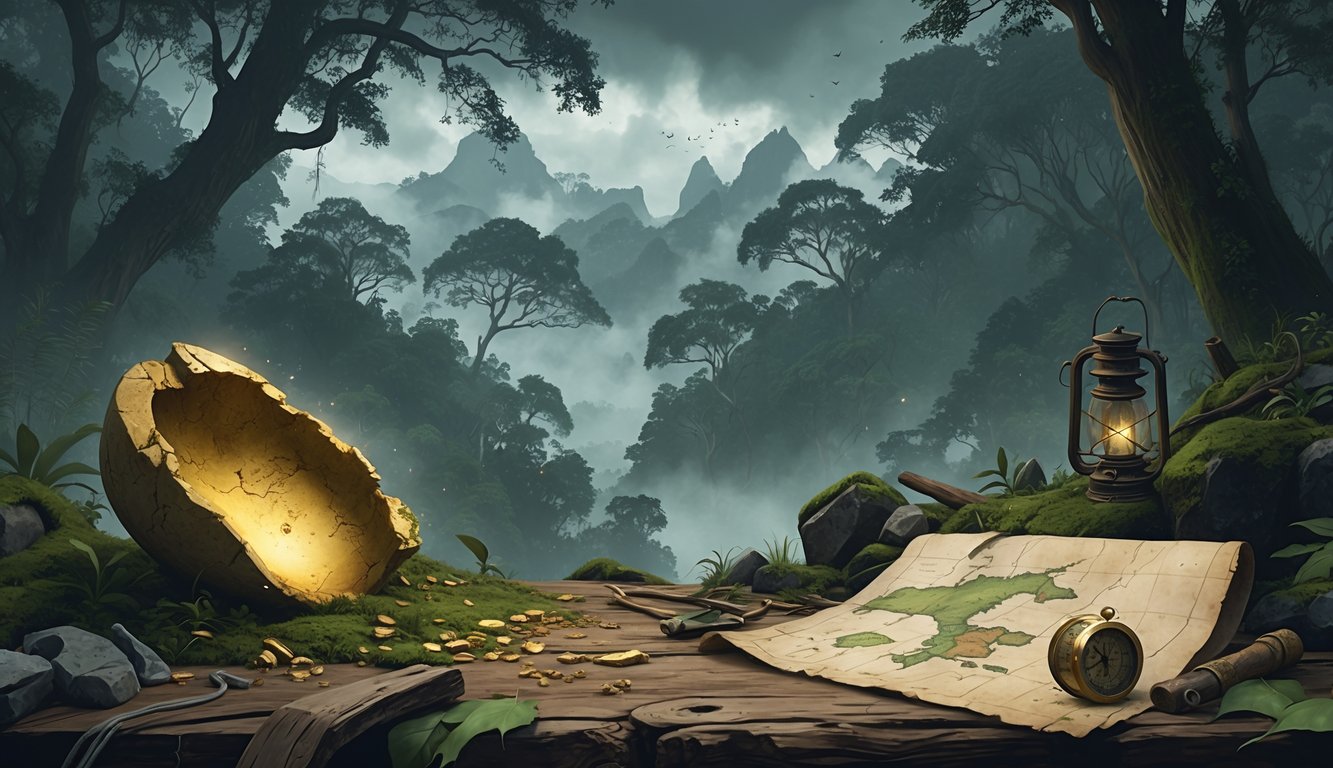
Raja de Manquehua is a striking mountain in the Coquimbo region of Chile, known for its mysterious cave and long history of legends.
Its stories combine tales of missing gold and myths about miners who vanished searching for treasure.
The Disappearance of the Treasure
At the heart of Raja de Manquehua is an enormous crack in the mountain, forming what is sometimes called the “Cave of the Sorcerers.”
For centuries, local stories have described how miners tried to find hidden gold here, hoping for riches buried deep inside the cave’s shadows.
Many say the cave hides lost gold left behind centuries ago.
These tales often mention desperate miners entering the mountain, drawn by rumors of fortune.
But the cave is deep and dangerous, and some miners who entered in search of gold were never seen again.
Other legends tie the cave to witchcraft and strange lights at night.
Locals tell of magical rites taking place in hidden corners, adding to the air of mystery that surrounds Raja de Manquehua.
The area even earned a reputation as a gathering place for sorcerers.
Discover more about the myths and mysteries of Raja de Manquehua at this guide to the region’s legends.
Theories and Search Efforts
Even today, no one knows how deep Raja de Manquehua’s cave goes. Many have tried to explore and find the lost gold, but no one has made a major discovery.
Some believe fallen rocks block the entrances to hidden chambers. Search teams and visitors often report unusual experiences.
People mention strange sounds, sudden drops in temperature, and unexplained lights. These stories keep the legend alive.
Maps and old mining equipment have turned up in the area. These finds suggest that miners once dug deep searching for treasure.
Some think the story of the gold is just a myth to explain the cave’s dangers and reputation. Yet, new explorers arrive each year, hoping to solve what many call one of Chile’s greatest historical mysteries.
Read more about Raja de Manquehua and its cave of legends at this detailed trail guide.
Witchcraft and Sorcery in Southern Chile
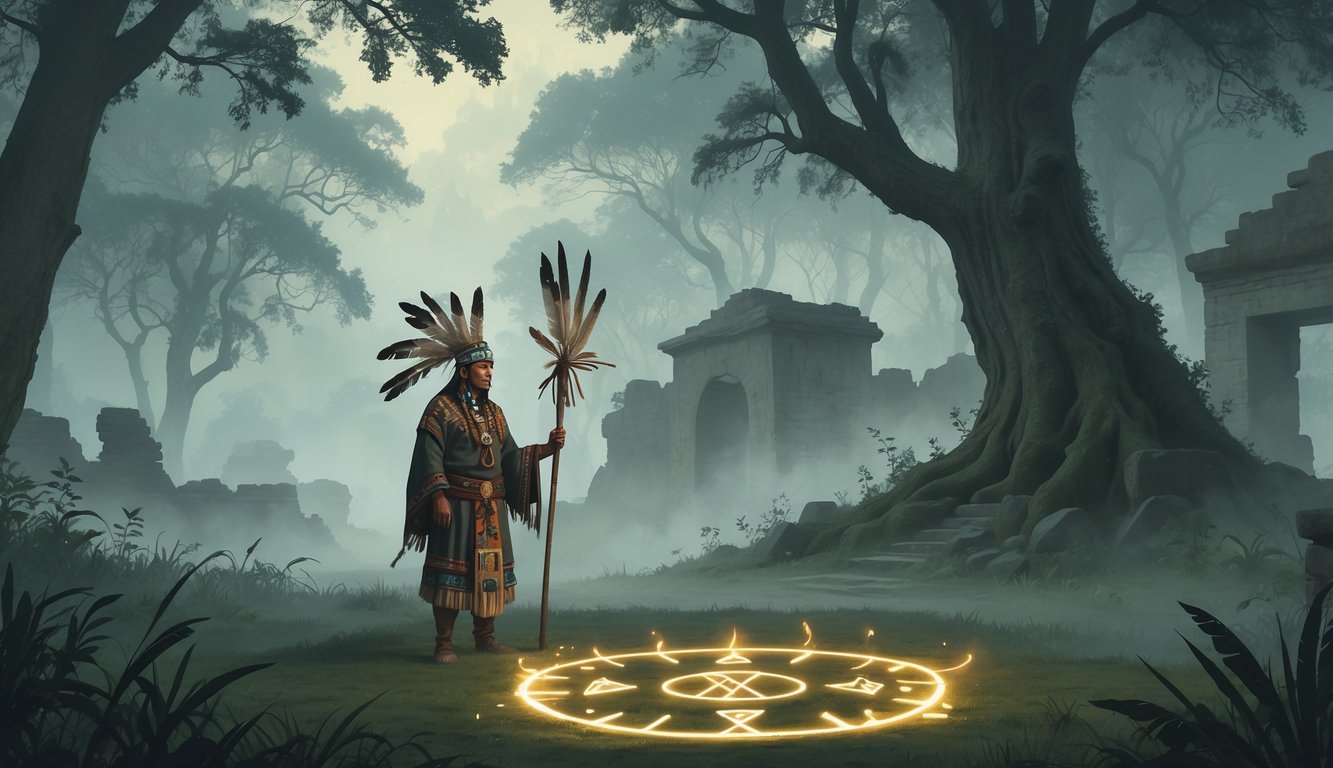
Southern Chile is famous for mysterious stories about secret societies, magic, and hidden caves. These tales include powerful sorcerers who were said to cast spells and control supernatural forces on the Island of Chiloé.
Sorcerers of Chiloé
On Chiloé Island, many locals believe in a secret group of male witches called the Brujos. These sorcerers are at the center of the island’s most famous stories about witchcraft.
In the late 1800s, the island held a major witch trial. Men accused of being sorcerers stood trial for casting spells, kidnapping, and murder.
The community took these trials as proof that magic existed on the island. Chilotes, or people from Chiloé, often talk about a legendary cave, “La Cueva de Quicaví.”
According to legend, the Brujos met in this cave. It was said to be filled with magical items and guarded by supernatural creatures.
Some claimed sorcerers used the cave for secret ceremonies and dark rituals. Outside the cave, the Brujos influenced the island.
People feared and respected them for their mysterious powers. Stories about these Brujos continue today, shaping the island’s unique culture.
For a detailed history, see the story about the cave of Chile’s witches.
Legends of the Brujo
Legends about the Brujos mix local beliefs, European folklore, and real events. The tales often feature magical creatures, mysterious disappearances, and deals with the devil.
One common character is the Trauco, a mythical being blamed for unexplained pregnancies. The Brujos often appear alongside the Trauco and other magical beings in Chiloé’s myths.
Stories tell of secret spells, flying potions, and enchanted cloaks that let sorcerers move unseen. Some legends say the Brujos could transform into animals or control the weather.
There are stories about a book called the “Reptile Book,” believed to hold forbidden spells. Locals whispered that only the most powerful Brujos could use it.
Today, these myths are a key part of Chiloé’s identity. Explore more about Brujo legends and warlocks of Chiloé.
The Mapuche and Ancient Mysticism
The Mapuche have shaped their culture through unique spiritual practices and deep myths. Their beliefs focus on harmony with nature and the spiritual world.
Spiritual Practices and Beliefs
The Mapuche believe that spirits fill the universe and that every part of nature holds life. Rivers, mountains, and forests are sacred, each protected by a spiritual force.
Animism forms the base of Mapuche mysticism. Their daily lives stay closely connected to the land.
They respect ancestors and perform ceremonies to stay in balance with the supernatural world. The most important spiritual leaders are called machi.
Machi serve as healers and guides. They conduct rituals for healing, harvests, and weather, working with both good and harmful spirits.
Mapuche cosmology sees the world as a balance between opposing forces, like day and night or good and evil. Their traditions remind people that everything in nature is linked.
Learn more about Mapuche spiritual traditions at Mapuche Mythology | Mythosphere.
Mysteries of Mapuche Lore
Many Mapuche myths and legends have been passed down for generations. These stories often explain strange events or natural phenomena.
Some tales describe powerful spirits that live in the forests and mountains, such as the Pillán, spirit beings that shape the weather and cause earthquakes.
One major legend tells of a giant serpent, Coi Coi-Vilu, and its battles with the sea serpent, Trentren-Vilu. These battles are said to have created the landscape of southern Chile.
Other stories say that spiritual leaders could control rain, heal sickness, or predict disasters. Some Mapuche communities believe a balance between spirits can lead to events like major earthquakes.
Dive deeper into these stories at The Mythology of the Mapuche People – Mythology WorldWide.
Robinson Crusoe Island and the Juan Fernández Mysteries
Robinson Crusoe Island is the largest island in the Juan Fernández Archipelago. It sits about 670 km off the coast of central Chile.
Its history is tied to survival tales, forgotten castaways, and stories of hidden gold and pirate myths.
The Castaway’s Legacy
In 1704, a Scottish sailor named Alexander Selkirk became stranded on what is now Robinson Crusoe Island. He survived alone for four years before rescue.
Selkirk’s story inspired Daniel Defoe’s novel Robinson Crusoe, which brought the island worldwide attention. The island was once called Mas a Tierra, but in 1966, Chile renamed it Robinson Crusoe Island.
Nearby islands—Santa Clara and Alejandro Selkirk—also belong to the volcanic Juan Fernández group. Today, fewer than 1,000 people live there.
Many visit to see the landscape and learn about Selkirk’s survival. The castaway’s story remains the island’s most enduring legend.
More details about the island’s background can be found online.
Enigmatic Treasure Hunts
Rumors say pirates buried gold and treasure on Robinson Crusoe Island. Stories tell of Spanish pirates hiding loot after raiding ships along the Pacific coast.
Treasure hunters have searched the island for years, hoping to find lost fortune. One popular story claims pirates and privateers hid over 600 barrels of gold, silver, and jewels here in the 18th and 19th centuries.
Although many expeditions have tried, no one has found the treasure. Local myths say the following are hidden:
- Gold bars and coins
- Silver artifacts
- Jewels taken from colonial ships
These legends and ongoing searches keep the island mysterious. Some believe the treasure will never be found, encouraging both visitors and locals to keep searching.
For more about the treasure legends of the Juan Fernández Islands, you can follow additional information online.
Tsunamis, Disasters, and Hidden History
Some of Chile’s oldest mysteries begin with natural disasters on the Pacific coast. Earthquakes and tsunamis have erased parts of the nation’s past and changed how people lived.
Lost Stories of the Pacific Coast
Some of the world’s strongest earthquakes happened along Chile’s coast. About 3,800 years ago, a huge earthquake struck near the Atacama Desert.
The quake caused a giant tsunami that wiped out communities along more than 1,000 kilometers of coastline. Houses, tools, and burial sites were destroyed or buried.
Archaeologists found evidence that people avoided these tsunami-hit areas for almost 1,000 years. Many coastal settlements vanished from history, and daily life details remain hidden beneath sand and stones.
The disaster scattered survivors and forced families to move inland. This changed the population and culture of central Chile, including areas near Santiago.
You can read more about how this ancient tsunami changed life in Chile in this article about a Chilean mega-earthquake and its effects.
Tsunami Myths and Folklore
The memory of disasters like tsunamis lives on in local legends. Some coastal communities tell stories of giant waves that carried away people and animals.
These stories helped explain destruction before science provided answers. Elders often warned children about the ocean’s power, using these myths as survival lessons.
Modern researchers believe real disasters shaped these ocean myths. These tales mixed warning with history and became part of how families prepared for future disasters.
Some myths even describe villages disappearing overnight. Over time, these stories spread into the mountains and cities like Santiago, becoming part of wider Chilean culture.
Ancient Civilizations and Lost Cities
Many groups and cultures have shaped Chile’s history. Their remains are still visible in archaeological sites, ruins, and traditions passed down through generations.
Aconcagua and Indigenous Peoples
The Aconcagua Valley is known for its early societies. Long before the Spanish arrived, locals built villages and irrigation systems.
These early people grew maize and potatoes near riverbanks, using simple tools. Pottery, burial mounds, and cave paintings show how they lived.
The Mapuche are another key indigenous group with deep roots in Chile. They resisted both Inca and Spanish attempts to take their land.
Traditions such as silverwork, storytelling, and music still play a vital role in their communities. Archaeological sites in the region reveal rich details about their beliefs and way of life.
For more, see the fascinating ancient civilizations of Chile.
The Influence of the Incas
When the Incas reached Chile in the 15th century, they brought new ideas and changed local life. They expanded their empire to the Aconcagua region and built roads, fortifications, and storage sites.
Some of these Inca roads still exist today and show their engineering skills. The locals adopted some Inca farming methods and building styles.
Many communities kept their own traditions and blended Inca ideas with their own. Inca influence appears in stone structures, ancient farms, and artifacts found throughout northern and central Chile.
Explore more about these major archaeological discoveries made in Chile.