Cameroon has a rich history full of puzzling events and unanswered questions. From ancient kingdoms and mysterious cultures to baffling events, Cameroon offers many stories still waiting for answers.
Some of the biggest historical mysteries in Cameroon include unexplained disasters, lost cultures, and conflicts that have shaped its people for generations.
Scientists still study the sudden deaths of hundreds of villagers and thousands of animals at Lake Nyos in 1986. This tragedy shocked the world and led researchers to investigate what really happened at the mysterious lake.
Other mysteries go back further in time, such as the origins of ancient cultures like the Sao. The power struggles from colonial and post-independence times continue to raise questions about the country’s past.
Many of these events are hidden in Cameroon’s vast landscapes, from remote highlands to historic cities. Curious readers will find Cameroon’s mysteries both fascinating and puzzling.
Lost Kingdoms and Ancient Civilizations in Cameroon
Early people lived across Cameroon and left behind traces of their lives. Ancient kingdoms rose around rivers and lakes, while others faded into legend.
The Mystery of Early Hunter-Gatherers
Cameroon’s earliest people were hunter-gatherers who lived in forests, savannas, and near rivers. These small groups relied on fishing, hunting, and gathering wild plants.
Archaeologists found ancient stone tools and pottery, showing that these people used simple technology. Their way of life lasted for thousands of years, but little is known about their cultures because only a few artifacts remain.
Discovery Sites in Cameroon:
| Site Name | Region | Key Findings |
|---|---|---|
| Shum Laka | Northwest | Stone tools, bones |
| Nok | Northern area | Pottery, stone items |
Some descendants of these groups still live in Cameroon’s forests. They keep traditions and knowledge passed down for many generations.
Rise and Fall of Kingdoms Around Lake Chad
The area near Lake Chad once held the powerful Sao civilization. The Sao are among the oldest civilizations of Central Africa and are believed to have flourished from as early as the sixth century BC until the 15th century AD.
These early kingdoms built large city walls and crafted bronze and iron objects. They traded with outsiders, raised crops with local tools, and lived in homes made from sun-dried mud bricks.
Archaeologists have uncovered statues and jewelry, hinting at a rich culture. The reasons for their fall are still being studied.
Some believe invasions, climate changes, and migration played a part. To learn more, see the history of the Sao civilization.
Bornu Empire’s Shadows
After the Sao fell, the Bornu Empire rose to power near Lake Chad. This empire was known for its trade networks and strong military.
At its height, the Bornu Empire controlled lands across modern Cameroon, Chad, and Nigeria. The Bornu rulers adopted Islam and blended local and Islamic traditions.
They built cities, roads, and markets, becoming rich through trade in salt, gold, and slaves. Historians still debate how much influence the Bornu Empire had over local kingdoms.
The remains of the empire are scattered, leaving puzzles for archaeologists and historians. For more about ancient kingdoms in the area, visit the history of Cameroon.
Enigmatic Archaeological Sites and Prehistoric Monuments
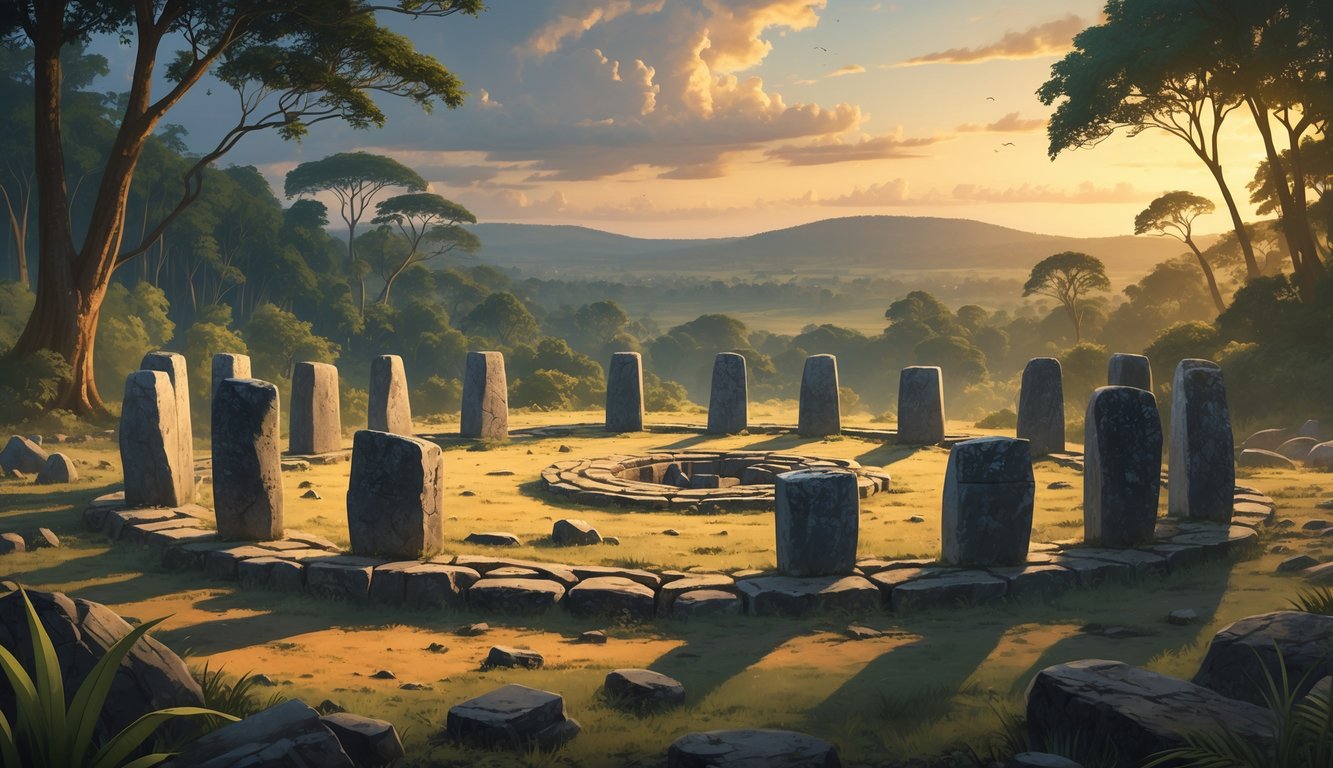
Cameroon has ancient stone circles and mysterious rock formations. These sites raise questions about their origins, purpose, and the skills of the people who built them.
Unexplained Geoglyphs and Stone Structures
Researchers have discovered large stone circles and lines carved into the earth in the grasslands of northwest Cameroon. These geoglyphs are similar in pattern, though much smaller, to the famous Nazca lines of Peru.
No one knows exactly what these shapes represented or how ancient builders moved the heavy stones. Some circles are up to 20 meters across and use local rocks that would have needed careful planning to arrange.
Archaeological evidence suggests that these geoglyphs may have been created for religious ceremonies or as gathering markers.
Key features:
- Multiple stone circles, often found close to mountains
- Patterns sometimes form lines or pathways
- Stones sometimes carved with simple symbols
Local oral traditions provide some clues, but many questions remain.
Influence of Prehistoric Monuments
Cameroon’s prehistoric monuments, such as stone circles and standing stones, may have shaped how communities gathered and interacted. Like Stonehenge in England, these formations could have served as meeting points or places for important events.
Some experts think these monuments marked boundaries or acted as territorial signs. Others propose they were linked to seasonal changes or farming cycles, as patterns sometimes align with mountain views or the rising sun.
Today, these ancient sites attract archaeologists and tourists who hope to learn more about Cameroon’s earliest people. The full meaning behind these prehistoric monuments remains a mystery.
Colonial Expeditions and Unsolved Encounters
European explorers and colonizers shaped Cameroon’s history. Key events include strange first meetings at the coast, confusing claims of land, and the sudden rise of foreign power.
Portuguese Explorers and the Rio dos Camarões
In the 15th century, Portuguese sailors arrived on the coast of Central Africa. They sailed around the region’s rivers and found a waterway full of shrimp, calling it “Rio dos Camarões,” or the River of Prawns.
Historians still wonder how much the Portuguese knew about life inland. Only rough accounts of their trips exist.
They talked with local chiefs but left little detailed record of where they traveled or whom they met. This has led to questions about whether the Portuguese tried to settle or used the area only as a stop for trading.
The name “Cameroon” comes directly from these Portuguese journeys. The exact ports they built, the maps they drew, and why they moved on remain open questions.
Mysterious Arrival of Gustav Nachtigal
Gustav Nachtigal, a German explorer, reached Cameroon in July 1884. He arrived during a time of quick change in African politics.
His mission was to make agreements that would bring Cameroon under German control. Historians debate the details of Nachtigal’s talks with local leaders.
Did chiefs understand the agreements, or did language barriers cause confusion? The swift signing of treaties with Germany has created questions about whether everyone knew what was at stake.
Nachtigal’s rapid move led to the declaration of the German protectorate in Cameroon. These events started a period of German rule that researchers still study today.
British and German Rivalries
In the late 1800s, Cameroon became a point of contest between Britain and Germany. Both countries wanted control over its resources and trade routes.
British traders and missionaries had long been active in the region, but Germany quickly took the upper hand with official treaties. During this rivalry, German agents in Douala and British actors near the coast often held tense talks with local rulers.
Some chiefs tried to play both sides, leading to confusion about who controlled the territory. The division of Cameroon after World War I highlights this confusion.
The former German protectorate was split between Britain and France, creating new boundaries and leaving some questions about past agreements unresolved.
Hidden Histories of the Slave Trade Era
Many stories about the slave trade in Cameroon remain untold. Forgotten sites and lost records have left many unanswered questions about this dark chapter.
Atlantic Slave Trade Riddles
The Atlantic slave trade changed Cameroon’s history, but much remains hidden. Along the country’s coastlines, places like Bimbia near Limbe became major ports for enslaved people.
Thousands passed through the “Gate of No Return” at Bimbia, marking the last time they saw their homeland. Historians and archaeologists continue to find evidence, such as old ruins and artifacts, showing how important these ports were for shipping people across the Atlantic.
Many details about how enslaved people were kept, the exact trade routes on the Wouri River near Douala, and the families separated forever remain mysteries. Some records were lost or never kept, making it hard to know the full story.
Role of Local Chiefs and Trade Networks
Local chiefs played a key part in the slave trade era. They acted as traders, middlemen, and power brokers between African communities and European merchants.
Chiefs controlled access to inland trade routes and coastlines, especially near busy places like Douala and along the Wouri River. Trade networks moved not only slaves but also goods like palm oil and ivory.
Chiefs often decided who could trade and sometimes made deals with Europeans for personal gain. These complex relationships are not fully understood.
Some chiefs worked to protect their people, while others gained wealth and power by joining the Atlantic slave trade. The true nature of their roles is still the subject of much debate and study, making it one of Cameroon’s lasting historical mysteries.
Urban Legends and Unexplained Natural Phenomena
Cameroon is home to some of Central Africa’s most fascinating legends and natural riddles. Local stories about Mount Cameroon and the early days of Victoria attract curiosity and wonder.
Mount Cameroon’s Mysteries
Mount Cameroon is the highest mountain in West Africa and sits on the Gulf of Guinea. It is an active volcano, and eruptions have shaped the land and the traditions of people living nearby.
Many people in Cameroon tell stories of strange lights at night around the volcano. Some talk about spirits or ancient guardians who protect the mountain’s resources.
Hikers sometimes report hearing unexplained noises or feeling sudden chills, even in warm weather. Villagers have their own explanations for these events.
Some believe the mountain hides treasures or ancient secrets beneath its rocks. Others say the strong winds and sudden changes in weather are signs the mountain is alive and watching over the people.
Scientists often try to explain these experiences with facts about local geology, gas vents, or weather patterns. Still, folklore and tales remain a big part of life around Mount Cameroon.
Secret of Victoria’s Founding
The city of Victoria, now called Limbe, sits on the coast of Cameroon. It was founded in the mid-1800s.
Its history holds more than records and dates. Urban legends tell of hidden motives behind the city’s founding.
Some local stories say European settlers chose Victoria for more than just trade. They believed the location had special powers or untapped natural resources.
Tales describe early explorers searching for lost artifacts. Others talk about a “curse” placed on the land to protect its secrets.
People sometimes report seeing unusual sea fogs roll in. Others hear strange songs from the nearby forest.
These unexplained events are often linked to Victoria’s mysterious beginnings.
Political Intrigue and Struggle for Independence
Cameroon’s path from colonial rule to self-government saw intense political activity and conflict. Some moments and the people behind them still raise questions about the nation’s history.
The Rise of Political Parties
After World War II, Cameroonians formed new political parties to fight for independence from France and the United Kingdom. The most famous was the Union of the Peoples of Cameroon (UPC), which called for immediate independence and unification of French and British Cameroons.
Leaders like Reuben Um Nyobé and Félix-Roland Moumié led the UPC. They started with peaceful protests.
When French authorities banned the party and cracked down, many UPC members went underground. They later led armed resistance, sparking years of violence and unrest.
Colonial officials jailed or killed UPC supporters. This period marked both a push for self-government and a time of instability.
Many Cameroonians still debate the UPC’s role. Some want an official record of the party’s true impact on Cameroon’s independence.
Unanswered Questions in the UPC Movement
The conflict between the UPC and colonial forces left behind unsolved mysteries. Top UPC leaders like Reuben Um Nyobé and Félix-Roland Moumié died in violent or suspicious ways.
Many believe authorities never fully investigated their deaths. The French destroyed many records when they left.
This makes it hard for historians to know what happened during the struggle for independence. Some families of victims still seek answers about forced disappearances, torture, and secret killings.
The full story of how the UPC was suppressed and why so many activists were targeted remains unclear.
The 1964 Coup Attempt
After independence in 1960, the Republic of Cameroon faced political tension and violence. One major event was the 1964 coup attempt against President Ahmadou Ahidjo.
Military officers who supported the UPC and other left-leaning groups tried to take power. They opposed the government’s harsh measures against opposition.
The coup failed but led to more arrests and tighter government control. Few official records exist, and many details about the organizers and their plans remain unclear.
Political instability in these years made the early period of independence unpredictable for many Cameroonians.
Influential Leaders and Their Secret Legacies
Cameroon’s past includes powerful leaders whose choices still affect the nation’s politics and culture. Each left behind stories and mysteries that people still discuss.
Ahmadou Ahidjo’s Mysterious Legacy
Ahmadou Ahidjo served as Cameroon’s first president from independence in 1960 until 1982. He helped unite Cameroon, but his life changed after he resigned and went into exile.
Many people ask why Ahidjo stepped down so suddenly. Theories mention political tension and internal conflicts, but details remain unclear.
He was later accused of plotting against the government and sentenced to death in absentia. The full story behind his fall from power remains secret.
Historians and citizens still debate whether Ahidjo left by choice or was pressured. His mysterious legacy continues to shape modern Cameroonian politics.
Paul Biya’s Long Reign
Paul Biya became president after Ahidjo and has stayed in power for decades. He is one of Africa’s longest-serving leaders.
Many describe his leadership as secretive and controlling. People question how he has held onto power for so long in a diverse country.
Biya’s government faces accusations of silencing opponents and limiting free speech. Hidden stories about decision-making inside the highest offices add to the mystery.
Some wonder about the full extent of his control. Cameroon has seen both peace and unrest during his rule.
King Njoya and the Bamileke Influence
King Njoya led the Bamum people in the early 1900s. He created a writing system and encouraged education.
His leadership shaped cultural and social life in his region. He worked closely with the Bamileke, whose traditions and business skills made them influential in Cameroon.
The Bamileke are known for preserving their culture and managing their wealth in secretive ways. King Njoya’s court was famous for diplomacy and keeping certain practices private.
Today, the legacy of King Njoya and the Bamileke continues to influence Cameroon’s mix of cultures and identities.
Religious Movements and Islamic Spread
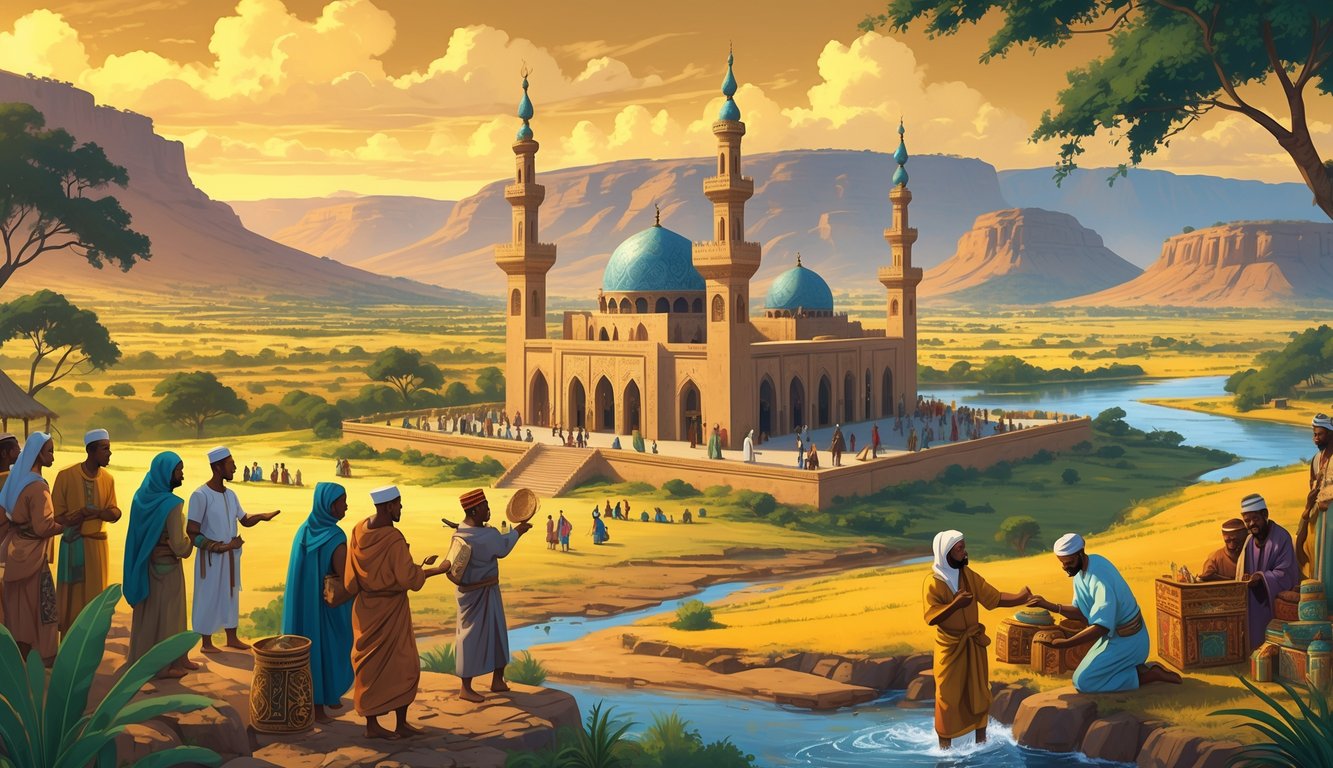
Islam has a deep history in Cameroon. It shapes communities and cultural practices.
Two key forces spread Islam: waves of jihad and the expansion of the Fulani people.
Jihad and Its Impact
In the early 1800s, Islamic leaders led powerful movements for reform and religious spread. Leaders like Usman dan Fodio from nearby regions aimed to establish Islamic rule.
These campaigns changed society by introducing new laws and encouraging conversion to Islam. Jihad led to the creation of empires and kingdoms in northern Cameroon.
Muslim leaders replaced traditional authorities. This shift affected daily life, education, and justice, as Islamic customs became central.
Key outcomes of the jihad:
- Formation of large, Islamic-dominated territories
- Spread of mosque-based education
- New leadership tied to Islamic scholars
Fulani Expansion and Cultural Change
The Fulani, a pastoral group, helped spread Islam throughout Cameroon. They moved with their cattle and settled in fertile lands, especially after the jihads.
Over time, the Fulani established strong emirates and became rulers in several areas. Their power brought cultural change.
Many local customs mixed with Islam, creating new ways of life and belief. The Fulani set up Islamic schools and encouraged Arabic script, which strengthened religious education and unity.
A timeline of Fulani influence in Cameroon includes:
- 19th Century: Fulani migration and settlement
- Establishment of leadership roles called Lamidos
- Promotion of Islamic law and customs
Their legacy remains in the languages, festivals, and social norms of northern Cameroon today.
The Role of Natural Resources in Shaping Mysteries
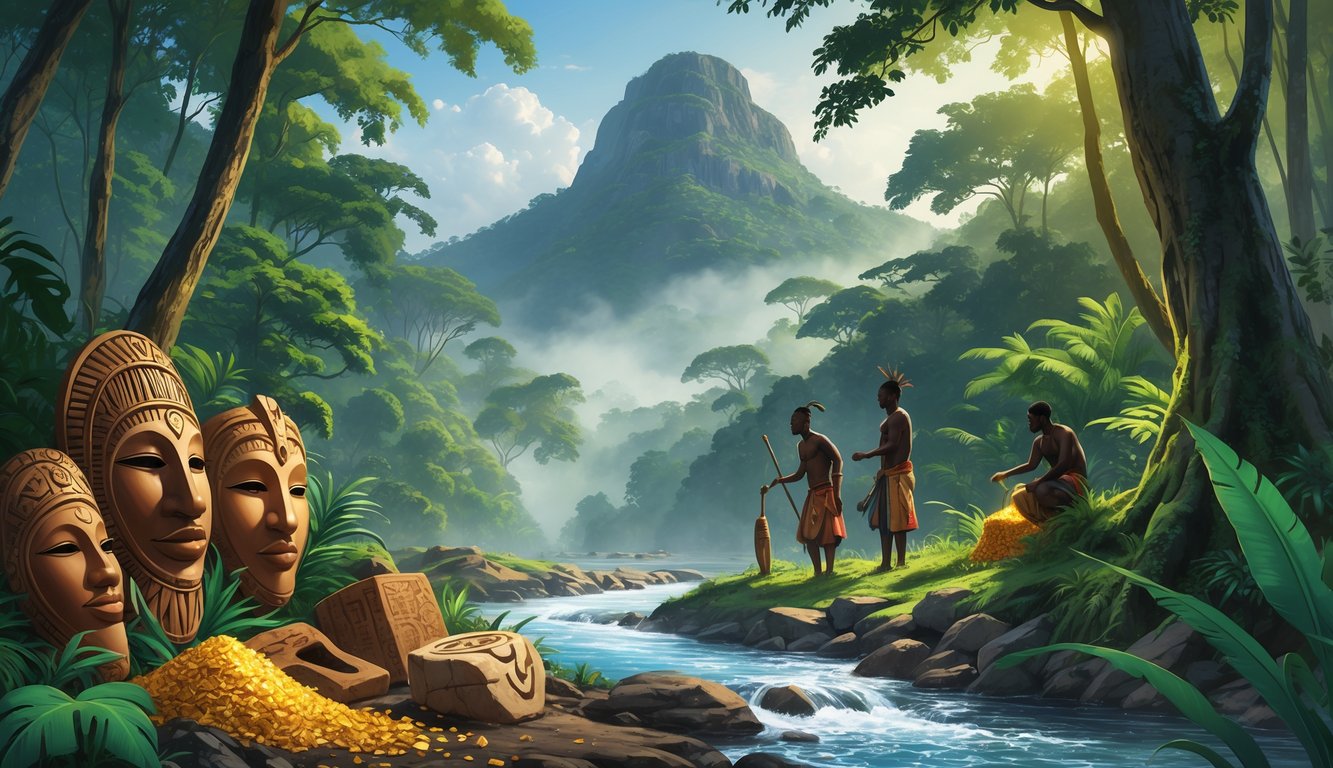
Natural resources like gold, natural gas, coffee, and palm oil have shaped Cameroon’s biggest unsolved stories. Wealth from these resources has caused hidden conflicts, legends, and mysterious disappearances.
Gold and Natural Gas: Myths and Wealth
Cameroon’s forests and rivers are said to hide rich gold deposits. Stories of “lost gold mines” in eastern Cameroon have spread for generations.
Some locals believe ancient societies buried gold to protect it from invaders. The locations remain unknown.
Gold fever led to mysterious migrations and small conflicts between groups. Reports of gold finds brought miners from across West Africa, but many returned empty-handed.
Natural gas reserves in the Kumba and Kribi regions hold their own mysteries. Leaked documents and odd land deals have sparked rumors of undiscovered gas fields.
Sometimes, villagers talk about lights or explosions underground. These stories lead to superstition and speculation.
Plantations, Coffee, and Palm Oil
Plantations have shaped Cameroon’s history. During colonial times, the Germans, British, and French created large coffee and palm oil estates on land taken from local people.
Coffee and palm oil brought wealth but also strange disappearances and hidden stories. Mysterious fires sometimes destroyed entire coffee fields.
Some believe these fires were caused by sabotage during land disputes. Large plantations also changed community life.
Workers sometimes vanished or left without warning, creating stories about secret societies and cursed land. Questions still surround the old plantations.
Some families search for proof that their ancestors owned the land. They hope to solve ownership mysteries that began over a century ago.
Influence of External Powers and Changing Borders
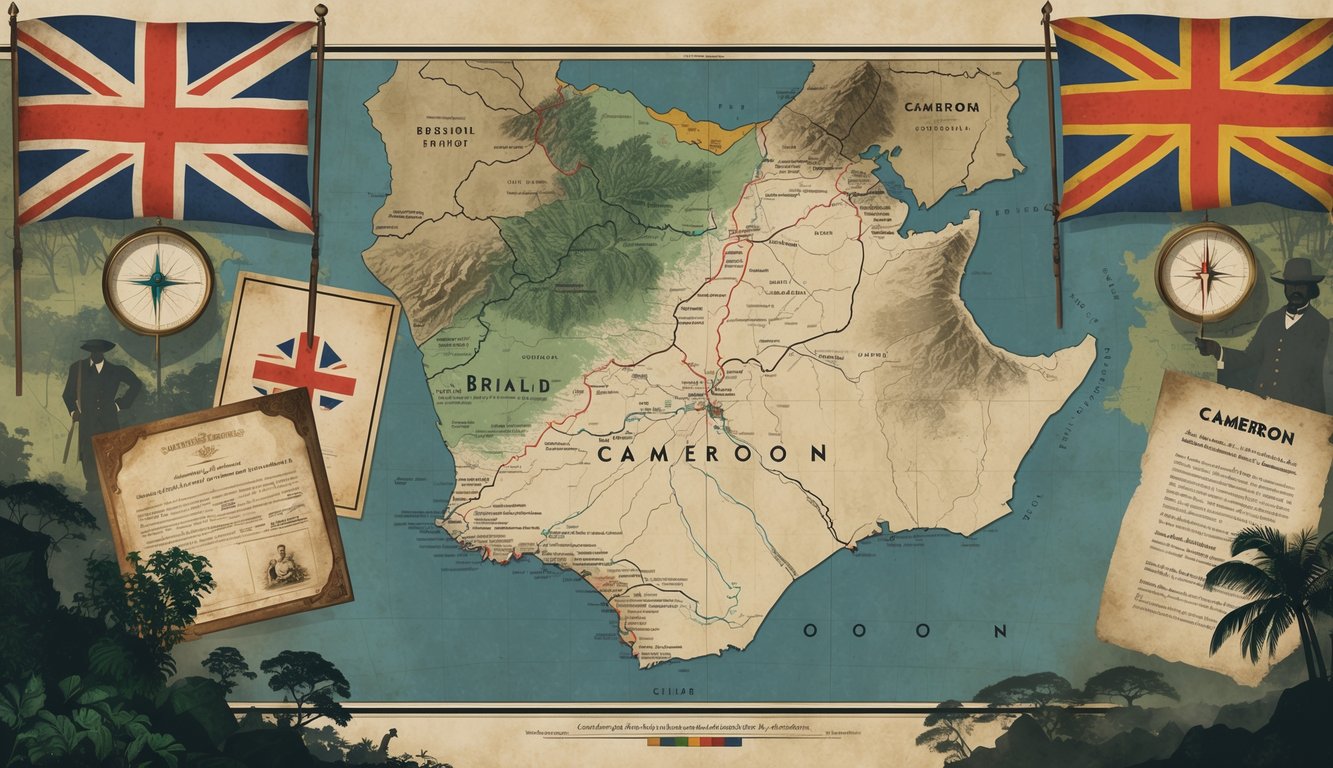
Colonial powers in Europe drew Cameroon’s borders and changed its government many times. These outside influences still affect the nation’s politics, conflicts, and identity.
Transition from German Rule to League of Nations Mandate
In the late 1800s, Germany took control of Cameroon and called it “Kamerun.” German rule brought new administrative systems, cash crops, and railways.
After World War I, Germany lost its colonies. France and Britain divided Cameroon under a League of Nations Mandate.
Each country managed its zone differently. French Cameroon followed French laws and language, while British Cameroon used British systems and kept local traditions.
These changes altered daily life, education, and trade for people living in the country. Today, many of Cameroon’s border conflicts and language divides trace back to how the French and British controlled their territories.
Disputes with neighboring countries often relate to the way colonial powers first drew and managed the borders.
The Formation of the Republic of Cameroon
When colonial control ended after World War II, ideas of self-rule grew stronger. French Cameroon became independent in 1960.
The following year, part of British-administered Cameroon voted to join the new nation. This union created today’s Republic of Cameroon.
Leaders worked to combine different legal systems, languages, and education traditions. They wanted to bring together groups who had once lived under separate colonial rulers.
Sometimes, people felt confused or disagreed over which systems to use. Managing local affairs became a challenge.
Changing colonial boundaries and repeated shifts in control have caused long-term identity questions and tensions in the Republic. Debates about language, law, and culture continue, all linked back to these early changes.
Enduring Unsolved Questions in Cameroon’s History
Many mysteries continue to puzzle historians in Cameroon. These unanswered questions come from events, people, and technology across different eras.
One well-known question centers on the British missionary Alfred Saker. He played a major role in founding Victoria (now Limbe) in the 1800s.
Historians still debate how much influence he had on local leaders and cultural changes. Records from that time are incomplete.
The history of Cameroon itself features unclear moments. Experts still discuss the reasons behind early migrations and the true origins of some ethnic groups.
Written records are limited. Oral traditions do not always match up.
The influence of outside organizations, such as Transparency International, also raises questions. Their reports of corruption and governance issues made headlines.
Details about how deep these problems go are still a topic of debate.
Another curious case is the story of the first camera brought into Cameroon. No one is completely sure who first introduced photography to the region and when.
Some say missionaries brought the first camera. Others believe it may have arrived with explorers or colonial officials.