Bolivia is home to some of the most fascinating historical mysteries in South America. From the lost secrets of ancient civilizations near Lake Titicaca to unresolved legends tied to places like Cerro Rico de Potosí, Bolivian history is full of unanswered questions and intriguing stories.
These mysteries capture the curiosity of both locals and visitors. Many wonder what truths still hide beneath Bolivia’s mountains and lakes.

Some tales, like the legend of the “mountain that eats men” at Cerro Rico, reveal the deep struggles people faced in the quest for silver and fortune. Other mysteries involve strange archaeological finds, such as the puzzling Fuente Magna bowl discovered near Lake Titicaca, which has inscriptions that do not match any known local script.
Each of these mysteries invites readers to explore the lesser-known side of Bolivia’s rich past.
Lost Civilizations of Bolivia
Bolivia is home to some of the oldest cultures in South America. Ancient ruins, mysterious temples, and the stories of peoples like the Tiwanaku, the early pre-Inca societies, and the Incas themselves make the region a fascinating place for exploring the past.
Tiwanaku: Unscrambling Ancient Enigmas
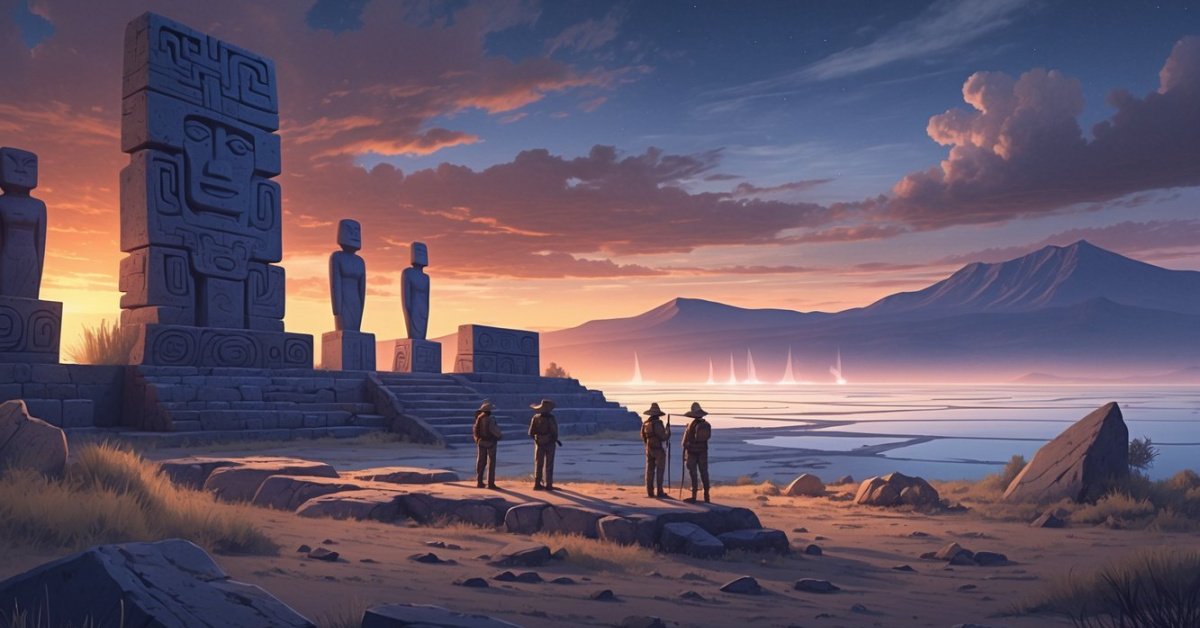
The Tiwanaku civilization flourished near the shores of Lake Titicaca in western Bolivia over a thousand years ago. They built massive stone temples, including a recently rediscovered temple complex that sheds new light on their trade and rituals.
These people developed advanced farming techniques, such as raised fields, which helped feed their large population. The mysterious carved monuments and statues from Tiwanaku puzzle researchers, who wonder about their meanings and uses.
Archaeologists have found evidence of the Tiwanaku’s regional power, showing influence that reached far beyond Bolivia. The reasons behind the civilization’s decline and disappearance remain unclear.
Key facts about Tiwanaku:
| Fact | Details |
|---|---|
| Location | Near Lake Titicaca, Bolivia |
| Known for | Monumental stonework, temples, raised fields |
| Time period | About 300 to 1000 AD |
Pre-Inca Settlements and Their Origins
Before the Inca civilization, different groups lived across Bolivia’s highlands and valleys. Many of these societies, like the Chiripa and the Wankarani, built small settlements and grew crops suited for the tough Andean climate.
Archaeologists have found pottery, burial sites, and farming tools, which reveal a way of life centered on the land and local resources. These early societies interacted with each other through trade and cultural exchanges.
They shaped many traditional practices that the Aymara people still maintain today. While they did not build large empires, these ancient civilizations created the groundwork for later groups through their farming, crafts, and shared beliefs.
Their true origins and relationships to each other are still being studied.
The Disappearance of the Inca in Bolivia
The Inca Empire expanded into Bolivia in the late 1400s. They brought new roads, architecture, and government.
Bolivia’s western regions, especially around Lake Titicaca, became important parts of the Inca civilization. The arrival of Spanish conquistadors in the 1500s led to the rapid fall of Inca control.
Many Inca leaders vanished from historical records after the conquest. Their royal cities and fortresses were left empty.
Some indigenous groups, especially the Aymara, kept their traditions alive despite the chaos. Today, researchers try to trace what happened to the Incas in Bolivia and how much of their culture still survives among Bolivia’s people.
The Mysteries of Lake Titicaca
Lake Titicaca sits high in the Andes, where Bolivia and Peru meet. Its deep blue waters are known for ancient ruins, stories of lost civilizations, and legends that tie closely to the Inca people and earlier cultures.
Sunken Cities and Lost Temples
Beneath the surface of Lake Titicaca, there are remains of carved stones, walls, and even what appears to be an ancient temple. Archaeologists have found evidence of structures under the water, hinting that people built settlements and performed ceremonies at the lake thousands of years ago.
Some call these hidden places “sunken cities.” Theories suggest that water levels rose, covering these sites and leaving behind a mystery for experts to solve.
Divers have found roads, terraces, and objects that belonged to old cultures such as the Tiwanaku and the Inca. Discoveries like carved statues and tools give clues about how these people lived.
For those interested in exploring further, you can learn more about the sunken city in Lake Titicaca and the monuments still being studied today.
Myths, Legends, and the Reed Boats
Lake Titicaca’s stories go back centuries. Local people share legends about gods and heroes who visited, lived, or even created the lake.
One of the most famous tales says the Inca civilization was born on the lake’s Island of the Sun, with their first king, Manco Cápac, rising from the waters. The lake is also known for its reed boats.
The Uros people, who still live on floating islands made from reeds, use these to travel its waters. These reed crafts look almost the same as those pictured on ancient pottery and are a direct link to the lake’s long history.
A belief in sacred spirits and magical creatures is common. Many locals say the lake is a bridge to other worlds.
Stories about underwater cities and magical objects keep the area’s folklore alive today.
The Role of Lake Titicaca in Human History
Lake Titicaca was a center of life long before the Incas. The Tiwanaku culture built impressive ceremonial sites and used the lake for farming, transport, and religious rituals.
By 800 AD, places like Tiwanaku had thousands of people and megalithic stone structures. The Incas saw the lake as holy.
They built temples and shrines, and made pilgrimages to its islands. Many historians agree Lake Titicaca was key for trade, farming, and spiritual life for hundreds of years.
The area still draws researchers and travelers. Its ancient civilizations, sacred islands, and ruins continue to offer new clues about the past.
Tiwanaku’s Akapana Pyramid and Megaliths
High in the Andes, the Akapana Pyramid and megaliths at Tiwanaku continue to puzzle archaeologists. These ancient structures show complex engineering and mysteries about their original purpose.
Construction Secrets of Akapana
The Akapana Pyramid is a large, man-made earthen mound shaped like a cross, covered with stone blocks. It measures about 45 feet high and once had steep steps and elaborate terraces.
Many of the stones are massive, some weighing several tons. Builders at Tiwanaku used skills that seem advanced for their time.
They cut and fitted stones together with tight joints, and some show precise angles and smooth surfaces. The builders likely used simple tools made of stone and bronze, yet the results are complex.
Key construction features include:
- Interlocking stones
- Drainage channels
- Carved geometric patterns
Many of these stones came from quarries several kilometers away. This raises questions about how they transported such large blocks.
Some experts suggest they used rollers, ramps, or reed boats, but no single theory has been confirmed. Recent research shows that earlier buildings at Tiwanaku were taken apart so their stones could be reused in the Akapana (see more at The Megalithic Portal).
Purpose and Astronomical Alignments
The true purpose of the Akapana Pyramid is still debated. Archaeologists believe it may have been both a religious center and a place for political gatherings.
Some think it supported rituals involving water, since there are carefully designed drainage canals running through its structure. There is also evidence that the site was designed in connection with the movement of the sun and stars.
Some stone alignments match solar events like the solstices and equinoxes. These features suggest the builders understood astronomy.
Nearby geoglyphs and patterns could be markers for rituals or timekeeping. The arrangement of these features helps show how Tiwanaku people understood the world and their place in it (see History Skills).
UNESCO World Heritage Recognition
Tiwanaku, including the Akapana Pyramid, is recognized as a UNESCO World Heritage site because of its cultural and historical importance. The ruins hold clues about the rise of organized society in the Andes and contribute to what is known about pre-Columbian civilizations.
The site covers around 4 square kilometers and includes decorated ceramics, megalithic blocks, and monumental buildings. UNESCO highlights the blend of architectural skill and creative design found here.
Tourism, research, and conservation efforts have increased since the site was listed by UNESCO. This has helped raise awareness about its mysteries and ongoing discoveries.
The Sajama Lines and Mysterious Geoglyphs
The Sajama Lines are a group of ancient geoglyphs in Bolivia that cover a huge area and puzzle researchers. These straight paths are even older and more widespread than the Nazca Lines of Peru.
Unraveling the Purpose of the Sajama Lines
The Sajama Lines are a network of thousands of straight paths, etched into the earth near Bolivia’s Sajama volcano. Some are just a few meters long, while others stretch for many kilometers.
Altogether, their total length may reach up to 16,000 kilometers, and they span about 22,000 square kilometers—an area much larger than New Jersey. Despite their size, the lines are thin and hard to see from ground level.
They are most visible from above. Archaeologists believe ancient Indigenous people created them over 3,000 years ago.
The exact reason for making these geoglyphs is unknown. Some ideas include religious paths, ceremonial routes, or ways to connect important sites like shrines and villages.
Researchers have not discovered many artifacts along the lines, so the purpose is still a mystery. Teams from universities continue studying the lines to learn more about the ancient civilizations that made them.
Comparisons to the Nazca Lines
The Sajama Lines are often compared to the famous Nazca Lines in Peru. Both are sets of ancient geoglyphs made by clearing the earth, but they have several important differences.
The Sajama Lines are usually straight. The Nazca Lines form shapes like animals and plants.
The Sajama Lines cover a much larger area than the Nazca Lines, but they are less known worldwide. The Nazca Lines are more visible and easier to study because of their bold designs, while the Sajama Lines can go unnoticed from the ground.
Below is a simple comparison table:
| Feature | Sajama Lines (Bolivia) | Nazca Lines (Peru) |
|---|---|---|
| Age | Over 3,000 years | About 2,000 years |
| Area Covered | 22,000 sq km | 450 sq km |
| Type of Geoglyphs | Straight lines | Shapes and figures |
| Visibility | Hard to see on ground | Easier to see above |
Cerro Rico and the Missing Silver
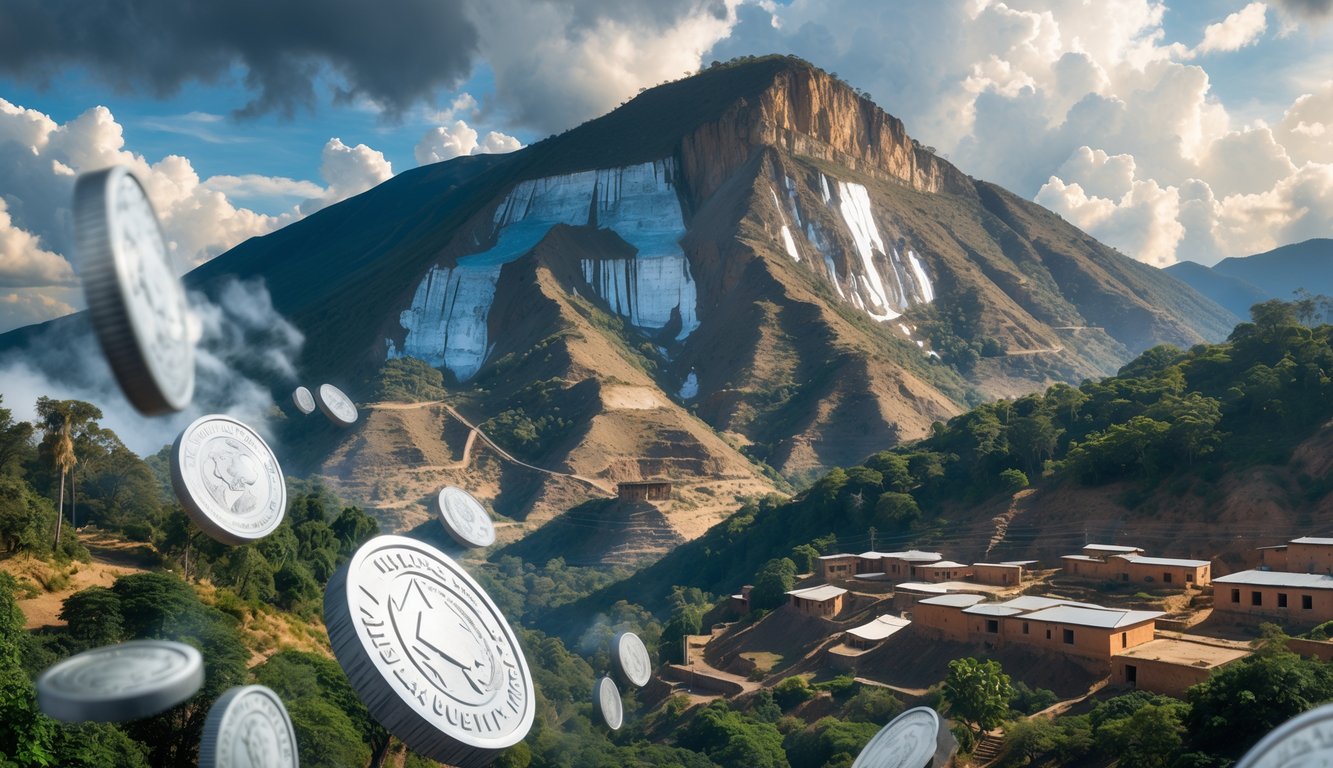
Cerro Rico in Potosí was once the main source of silver in the world. This mountain shaped Bolivian history and left behind unanswered questions about lost wealth and suffering that still interest researchers.
The Legend of Potosí’s Wealth
Cerro Rico, meaning “Rich Mountain,” was discovered in 1545 during the Spanish conquest. By the late 1500s, silver from this site supplied up to 80% of the world’s silver.
The town of Potosí grew rapidly. It became one of the largest cities of its time.
Spanish rulers sent tons of silver to Europe. Legends say that so much treasure left Potosí that entire ships vanished at sea, and chests filled with silver were lost or stolen.
Some stories claim secret tunnels hide silver deep inside the mountain. These tales fuel rumors of ancient ruins and hidden treasure even today.
A quick look at Cerro Rico’s impact:
| Fact | Details |
|---|---|
| Location | Potosí, Bolivia |
| Main mineral extracted | Silver |
| Time period | 16th–18th centuries |
| Historical significance | Economic heart of Spanish Empire |
Read more about Potosí’s silver at Cerro Rico on Wikipedia’s Cerro Rico page.
Mysteries of Forced Labor and Disappearances
Cerro Rico was not only a site of wealth. It was also a place of brutal forced labor, mostly involving indigenous and enslaved people during the Spanish conquest.
Many miners died underground due to toxic air, cave-ins, and dangerous accidents. Researchers believe millions of lives were lost, but no one has confirmed the exact numbers.
Some miners never came out, and families never learned what happened. The mountain’s tunnels are said to be full of unmarked graves and stories of people who vanished while working in the dark, tight shafts.
Some historians call Cerro Rico “the mountain that eats men” because of these disappearances and the suffering inside its mines. Centuries later, explorers and locals still talk about bodies or old tools discovered deep in sealed passages.
For more on the human cost behind the silver, visit NPR’s piece on Bolivia’s Cerro Rico.
Mysteries of Independence and Revolution
Bolivia’s path to independence and its national revolution is full of surprising details and unanswered questions. These events shaped the country’s future and changed the lives of millions of Bolivians.
Simon Bolivar and the Birth of Bolivia
Simon Bolivar is one of the most important names in South American history. His role in Bolivia’s independence is both celebrated and debated.
In 1809, the fight for freedom began in Sucre with the Chuquisaca Revolution. People called for an end to Spanish rule.
Bolivar entered the scene years later and brought together different rebel groups. Some believe Bolivar pushed for Bolivia’s independence only after years of struggle by local fighters.
Others question how much influence he had in the new government after declaring independence in 1825. The country’s name comes from Bolivar, but many wonder if he wanted a completely independent Bolivia or a larger federation.
The secrets around his intentions and talks with other leaders remain a historical puzzle.
Key Facts:
| Year | Event |
|---|---|
| 1809 | Chuquisaca Revolution starts |
| 1825 | Bolivia’s independence |
The Bolivian National Revolution
The 1952 Bolivian National Revolution changed almost every part of life in Bolivia. It brought a new constitution, gave workers and farmers more power, and began a massive land reform.
Leaders promised equality and better living conditions, but not every change worked as planned. Land reform aimed to give Indigenous people more property but led to confusion and new problems about ownership.
The revolution also created debates about who really benefited from the new policies. Some historians wonder if the revolution delivered real freedom or simply replaced one powerful group with another.
The way the government handled the reforms and the long-term effects on rural life remain mysteries that experts study today.
Major Reforms:
- Land reform for Indigenous people
- New constitution
- Greater roles for workers and farmers
War, Conflict, and Shrouded Battles
Bolivia’s history is marked by wars and territorial struggles that changed its borders and its future. Some battles left mysteries about missing soldiers, unclear motives, and the impact these events had on the country’s identity and neighbors.
The Chaco War’s Unsolved Questions
The Chaco War (1932–1935) between Bolivia and Paraguay was one of South America’s bloodiest conflicts. It took place mainly in the harsh Gran Chaco region, where soldiers faced extreme heat, lack of water, and disease.
One mystery is why the conflict turned so deadly over such a dry, isolated area. Many believed oil was hidden beneath the Chaco, but large reserves were never found.
This question has led people to wonder whether the war’s main causes were based on faulty information or deeper political tensions. Another puzzle involves the fate of thousands of missing soldiers.
Many families still do not know what happened to their loved ones. Some believe many lost fighters still lie buried in remote places, their stories untold.
War of the Confederation and the Federation With Peru
In the late 1830s, Bolivia formed a short-lived alliance with Peru called the Peru-Bolivian Confederation. This union led to the War of the Confederation, a conflict with Chile and Argentina.
The idea behind the Confederation was to make both Bolivia and Peru stronger, but it also created distrust across the region.
Key debates include:
- Why did the Confederation fail so quickly?
- Did outside influence from Chile and Argentina play a bigger role than people thought?
Historians still argue about whether this Federation made Bolivia more unstable or if it was simply a victim of its neighbors’ ambitions.
The Atacama Dispute and Landlocked Mystery
Before 1884, Bolivia had a coastline along the Pacific Ocean. The Atacama Dispute, also known as the War of the Pacific, involved Bolivia, Chile, and Peru.
After the war, Bolivia lost its coastline to Chile, leaving it landlocked. Many questions remain about the deals and alliances formed before the war.
Some wonder whether earlier agreements could have helped Bolivia keep its sea access. The economic and social impact of losing the coast still shapes Bolivian society, trade, and politics.
This landlocked status causes ongoing civil unrest and national debate. It affects Bolivia’s identity and its relationships with neighbors, making the Atacama dispute one of the country’s most important historical mysteries.
The Era of Military Coups and Dictatorships
Bolivia experienced a long period marked by military coups, sudden changes in power, and times of harsh military rule. These years also saw general strikes, protests, and many reports of human rights abuses.
Military Rule and Human Rights Abuses
From the early 20th century until the 1980s, military dictators often ruled Bolivia. Various generals took power through force, dissolved congress, and suspended the constitution.
One of the most notorious eras was the dictatorship of Hugo Banzer in the 1970s. Under military rule, basic freedoms such as free speech and assembly disappeared.
Political opponents faced arrest, torture, or exile. Newspapers were censored and shut down.
Families lived in fear as thousands of people went missing during these times. Allegations of torture and secret executions became common.
The military said it was protecting national stability, but the public saw growing unrest and economic hardship. International groups like Amnesty International spoke out against Bolivia’s human rights abuses during this era.
The Cycle of Coups and General Strikes
Bolivia has had more than 190 military coups or coup attempts since 1825—more than any other country in modern history.
After almost every coup, a new leader took power, only to be overthrown again a few years later. This constant upheaval hurt the economy and weakened public trust in the government.
Common people, unions, and student groups often organized general strikes and mass protests. Frequent leadership changes sometimes happened several times in a single year.
Large-scale strikes shut down schools, businesses, and public services. Sometimes, the military and workers clashed directly in the streets.
During the 1930s and 1940s, these strikes sometimes forced the government to resign. Military juntas would then fill the power vacuum, repeating the cycle.
The overall effect made stability and peace difficult to achieve. Bolivia remained in a near constant state of political turbulence.
Contemporary Unsolved Mysteries
Bolivia faces many unanswered questions about its current events. Issues of politics and crime shape everyday life for people across the country.
Evo Morales and Political Upheaval
Evo Morales was Bolivia’s first Indigenous president. He led the country from 2006 until he stepped down in 2019 amid claims of election fraud and strong protests.
His resignation led to widespread civil unrest. Many Bolivians took to the streets, both supporting and opposing Morales.
Violence erupted in different cities, schools closed, and daily life was interrupted for weeks. The details behind Morales’s departure remain debated.
Some say it was a coup, while others believe he broke election rules. Investigations continue, but no one has provided a clear answer about what truly happened during that time.
This period affected the education system and created lasting divisions. Some families still talk about how sudden changes in leadership made them worry about the future.
The Puzzle of Drug Trafficking
Drug trafficking remains a persistent problem in Bolivia. The country grows large amounts of coca, which traffickers use to make cocaine.
Police and military operations try to stop drug routes. Traffickers quickly find new ways to ship drugs through the Amazon and to other countries.
Bolivian leaders often argue over the best approach. Some believe stricter laws will work, while others focus on supporting farmers with alternative crops.
Communities in rural areas feel the effects. Young people sometimes drop out of school when drug-related crime rises, making education difficult in these regions.
Bolivian Legends, Mythology, and Oral Traditions
Bolivia’s myths reflect the country’s deep cultural roots. Indigenous people have shaped these stories for generations.
These stories often blend legendary figures, natural wonders, and lessons about right and wrong. Each tale connects people to their history and environment.
Enduring Indigenous Lore
Bolivia is home to many indigenous groups, each with its own legends. The Aymara people have a rich oral tradition and tell stories of ancient gods and spirits called Achachilas.
Achachilas are said to watch over their ancestors. Many stories focus on natural landmarks.
For example, Lake Titicaca is an important setting in Andean myths. People say it is the birthplace of the sun and the first humans.
The Chiriguana legend tells of two brothers—one good, the other evil—who created and destroyed lands as they fought. These stories often explain natural events and places.
Storytelling happens during community gatherings. Elders pass down customs, language, and beliefs to younger generations.
Modern Interpretations of Ancient Stories
Today, many Bolivian legends are still shared. The ways people tell these stories have changed.
Radio, schools, and social media help keep these tales alive for younger generations. Some myths have become part of festivals, dances, and theater performances across Bolivia.
Catholic influences have mixed with older stories. This blending creates new versions of ancient tales.
Certain legends now include saints or miracles, combining indigenous beliefs with Christian symbolism. Lists of popular legends, such as la Llorona and the Devil’s Tooth, are easy to find in books and online Bolivian myths and legends.
Modern artists and writers revisit old myths. They use these stories in music, poetry, and art.
This keeps Bolivia’s rich folklore active and meaningful in everyday life.