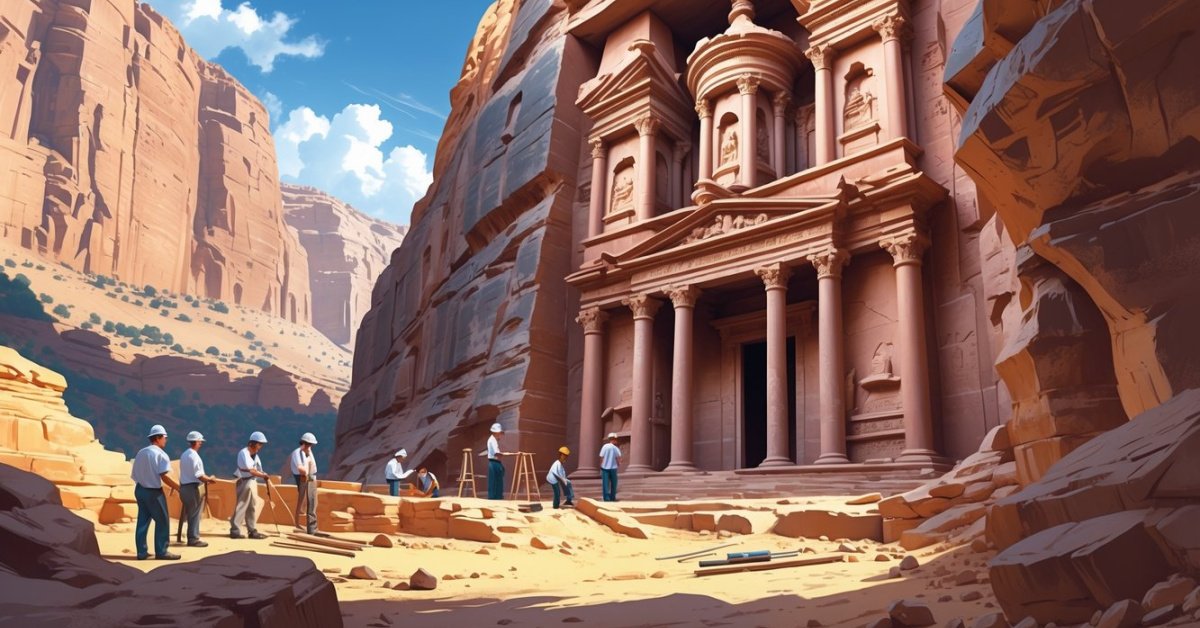
Bosnia and Herzegovina is full of unique stories and secrets that puzzle historians and visitors.
This region holds some of the biggest historical mysteries in Europe, from strange ancient ruins to unanswered questions about lost kingdoms and shifting empires.
These mysteries shape the region’s rich history and attract people who want to know more.
Some wonders, like the so-called Bosnian pyramids, have sparked fierce debates.
Some call them ancient marvels, while others call them a modern hoax.
There are also mysteries surrounding Bosnia’s time under the Ottoman Empire, the legacy of the medieval Bosnian Kingdom, and the shifting borders that changed Herzegovina over the centuries.
The Mystery of the Bosnian Pyramid Complex
The hills near the town of Visoko, Bosnia and Herzegovina, drew world attention after claims of giant, ancient pyramids appeared in 2005.
Debate continues about whether these hills are natural or among the oldest human-made structures known.
Discovery of the Bosnian Pyramids
In 2005, Semir Osmanagić, a businessman and amateur archaeologist, announced the discovery of what he believed were ancient pyramids near Visoko.
He especially pointed to Visočica Hill, suggesting its shape and angles matched a true pyramid.
The area quickly became the center of a media storm.
The claimed complex includes the so-called Bosnian Pyramid of the Sun, Pyramid of the Moon, and several others.
The town of Visoko saw a rise in tourism, with visitors coming to explore these mysterious hills.
Supporters claim the site is an ancient pyramid complex built by a lost civilization.
Many scientists and archaeologists in Bosnia and Herzegovina and across the world have questioned these claims.
Excavations began and revealed tunnels and large stone blocks.
Experts argued that most features appeared natural.
Debate about whether the formations were crafted or simply erosion and geology continues.
Those interested can learn more from the Smithsonian Magazine’s investigation into the complex.
Visočica Hill and Archaeological Claims
Visočica Hill, called the Bosnian Pyramid of the Sun, is the most famous site.
Its near-perfect pyramid shape when viewed from certain angles has fueled the mystery.
Osmanagić and his team suggest that the hill is not only a pyramid, but could be the largest in the world.
Excavations at Visočica revealed mysterious tunnels and stone slabs.
Proponents believe these are ancient construction materials.
Most experienced archaeologists say the hills are a natural formation.
The area is still called the Pyramids of Visoko, but mainstream science in Bosnia and Herzegovina considers it a case of pseudoarchaeology.
The site attracts many who hope to find evidence of a lost culture.
The Archaeological Park near Visoko offers tours, and local businesses benefit from the ongoing curiosity.
The Role of Semir Osmanagić
Semir Osmanagić is the main figure behind the pyramid claims.
Born in Bosnia but based in Texas, he triggered worldwide interest by announcing the site’s importance.
He founded the “Archaeological Park: Bosnian Pyramid of the Sun Foundation” to promote and manage research at Visoko.
Osmanagić leads all major excavations and speaks at conferences.
He publishes books and organizes tours, always highlighting the possibility of an ancient pyramid complex in Bosnia and Herzegovina.
His ideas have not been widely accepted by professional archaeologists.
Critics point out Osmanagić’s lack of formal training in archaeology.
Major archaeological organizations, including some in Bosnia, have published statements rejecting his claims.
Osmanagić remains dedicated to his theory and keeps the project in public view.
People from around the world come to Visoko.
For more about his efforts and contested discoveries, see Discovery UK’s coverage of the Bosnian Pyramids.
Inside the Ravne Tunnels and Underground Networks
Deep beneath the surface near Visoko, Bosnia and Herzegovina, lies a vast maze of tunnels.
The Ravne Tunnels attract researchers and visitors who hope to uncover how these complex underground networks were created and what secrets might remain hidden within them.
Expansive Ravne Tunnel System
The Ravne Tunnel system is a large network stretching over two kilometers underground.
The entrance to the tunnels is about 2.5 kilometers from the well-known Bosnian Pyramid of the Sun.
Many people first saw these tunnels in the early 2000s, when what looked like a simple cave was discovered on a hillside.
Teams worked on clearing the blocked and muddy passages.
As they cleaned, they found a series of side tunnels, chambers, and megalithic stones.
Some believe the passages were once connected directly to the pyramid.
The tunnels are thought by some to be prehistoric, and many still debate their exact age and purpose.
Today, the site draws both tourists and researchers.
Engineers inspect the site every year for visitor access.
For a more detailed look into the tunnel network’s layout and history, see the Underground Labyrinth “Ravne”.
Underground Bases and Ancient Construction
Many questions remain about the Ravne Tunnels, especially about who built them.
The underground network shows signs of careful design, with smooth walls and stable ceilings that hint at skilled construction techniques.
Some scientists and explorers suggest large underground bases or meeting places may have existed here.
Discovery of a second level of tunnels beneath the main Ravne complex added new interest.
Layers of tunnels stacked below ground level are rare, and this has led to theories about their purpose, such as protection, ritual, or transport.
Explorers have found megalithic blocks in the tunnels, adding to the sense of mystery.
While there is debate about their true age and builder, the underground network remains one of Bosnia’s most interesting unsolved historical mysteries.
Debates Among Archaeologists and the Scientific Community
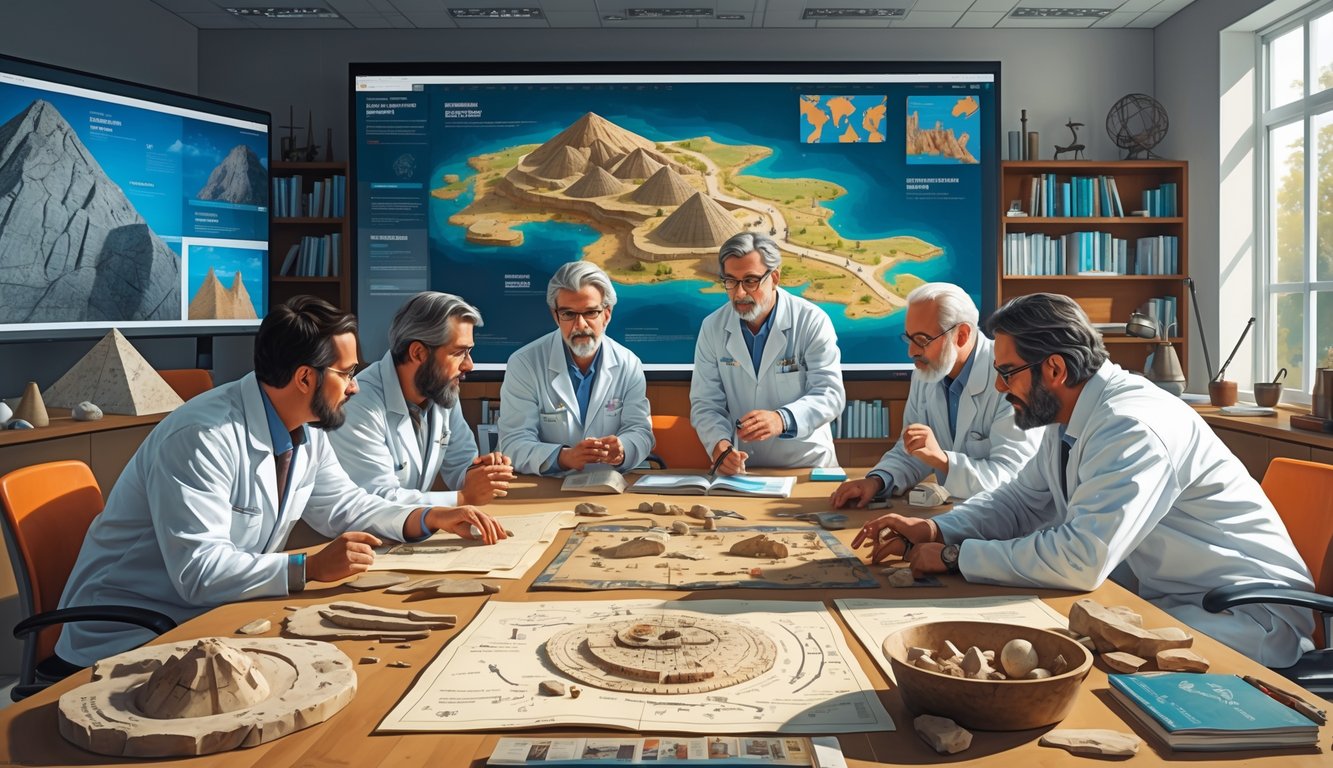
There is strong disagreement about whether some sites in Bosnia and Herzegovina are true ancient structures or just interesting rocks.
Scientists and historians have debated for years, while different groups argue over what should be protected and studied.
Mainstream Science vs. Alternative Theories
Most professional archaeologists say that sites like the so-called “Bosnian Pyramids” are only natural hills, formed by geological processes over millions of years.
They believe that evidence for ancient human construction is either weak or missing.
According to mainstream scientists, calling these places ancient pyramids can distract from real research and confuse the public.
Proponents of alternative theories say these hills are actually man-made pyramids built by a lost civilization.
They argue that strange stone blocks, tunnels, and mysterious alignments show intentional design.
Some use questionable evidence or make bold claims with little proof.
This clash can draw media attention and spark public interest.
Debates like this often put scientific research at odds with local economic goals.
Some local supporters claim that tourist sites and stories bring needed jobs and money to the area.
The Role of the European Association of Archaeologists
The European Association of Archaeologists (EAA) has spoken out against using sites such as the “Bosnian Pyramids” to promote alternative archaeology.
The EAA calls these efforts a waste of resources that could be better used protecting genuine archaeological sites and artifacts.
EAA members worry that supporting sites based on weak evidence may damage Bosnia and Herzegovina’s reputation in the scientific world.
Professional archaeologists working in the country have to deal with lower funding for real research and less attention to genuine historic sites.
The EAA argues that focusing on controversial sites shifts resources away from real scientific work and problems facing the field every day.
Their public statements encourage careful study, strong evidence, and the preservation of Bosnia’s true cultural heritage.
They regularly call out what they view as pseudo-scientific claims.
The Case for Natural Formations
Many geologists and scientists believe the so-called Bosnian pyramids are actually natural formations.
They point out that these hills are made of layers of sedimentary rock, which can break in straight lines and even form flat surfaces that look unusual but are still natural.
In scientific studies, experts have found no clear evidence of tools or structures made by people inside these hills.
While some supporters point to tunnels and stone blocks, many researchers argue that these features can appear in nature.
They say that seeing patterns or shapes is not enough to prove human involvement.
A key argument against the pyramid theory is that similar-looking hills and formations can be found in other parts of the world.
These were formed by erosion, earthquakes, and changes in the earth’s crust.
Scientists warn that mislabeling these formations can harm scientific progress and put Bosnia’s real archaeological sites at risk of being ignored.
Historical Legends and Ancient Civilization Theories
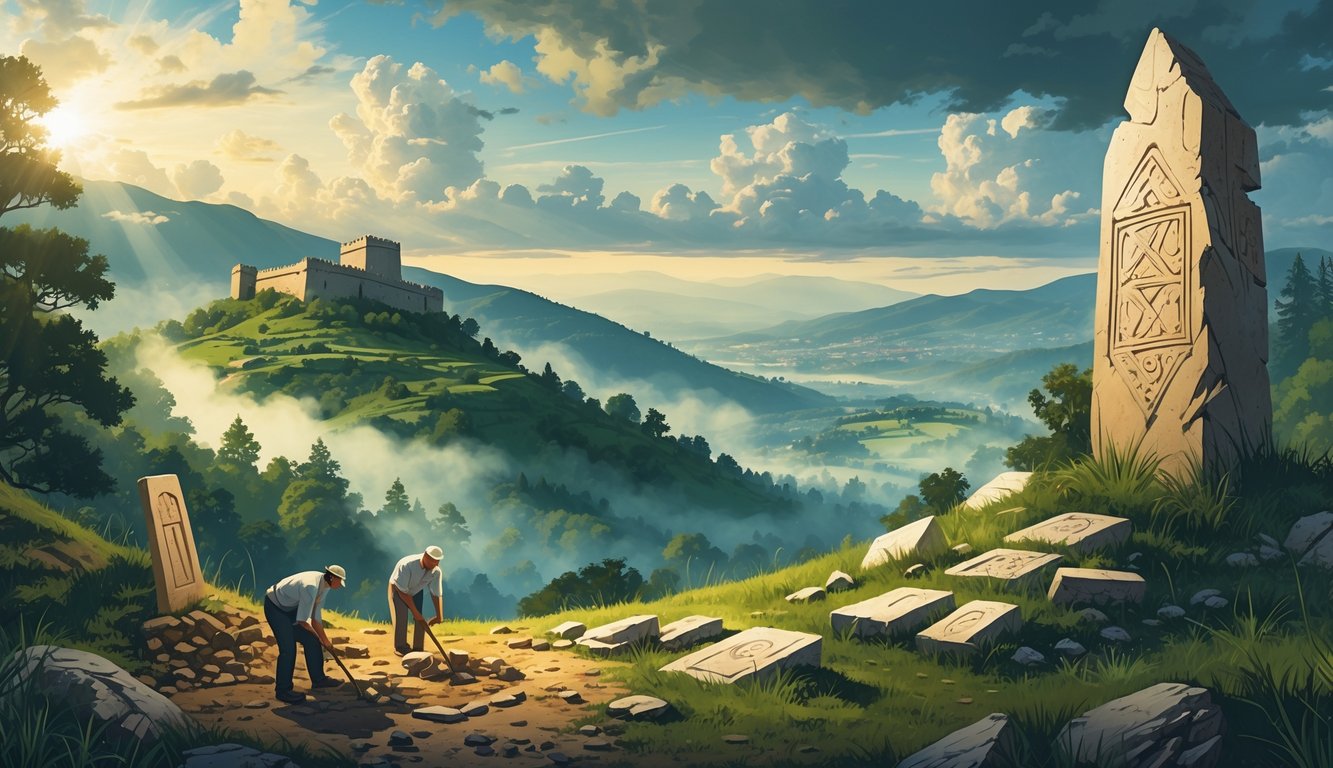
Bosnia and Herzegovina is home to many old legends and mysterious ruins.
Stories about ancient civilization, lost peoples, and powerful forces have fascinated historians and locals for centuries.
Links to the Illyrians and Ancient Peoples
The Illyrians are known as one of the earliest groups to settle in the Balkans.
Many believe they helped shape the early culture and traditions in Bosnia and Herzegovina.
Some artifacts, such as burial mounds and old fortresses, are often linked to the Illyrians.
Historians still debate about how much these ancient peoples influenced the area.
Some think the Illyrians were a mix of tribes, while others suggest they had a more unified society.
Old legends often describe them as great warriors and skilled builders.
Archaeological digs continue to uncover stone tools, jewelry, and pottery bearing unique markings.
These finds raise questions about the Illyrians’ role in early European history and whether they interacted with other mysterious ancient peoples from the region.
Speculation on Advanced Civilizations
There are many theories that suggest an advanced civilization lived in Bosnia long ago.
Some people point to the mysterious stone spheres found near Zavidovići and the so-called “Bosnian Pyramids” in Visoko as signs of remarkable ancient engineering.
Scientists are divided.
A few researchers believe these structures show knowledge of astronomy and mathematics beyond what was thought possible for the time.
Others argue there is not enough evidence to prove they come from a true advanced civilization.
Lists of commonly discussed clues include:
- Giant stone structures with precise angles
- Straight underground tunnels
- Large stone balls weighing several tons
These theories often spark debate.
They keep mystery alive in the area, drawing tourists and experts from around the world.
More on similar mysteries can be found at 15 Ancient Mysteries That Still Baffle Historians.
Connections to Atlantis and Ancient Astronauts
The story of Atlantis, a legendary lost city, has sometimes been linked to ancient sites in Bosnia and Herzegovina. Some researchers believe the pyramids near Visoko might connect to Atlantis because of their size, shape, and uncertain age.
Other theories involve ancient astronauts—beings from other planets that may have visited Earth in the distant past. A few people claim local petroglyphs and ancient carvings show figures that look like space travelers with helmets or suits.
Some suggest that genetic engineering or advanced technology could explain puzzling artifacts. These ideas are not widely accepted by experts, but they remain popular topics in books, TV shows, and documentaries about unsolved historical mysteries.
Architectural Anomalies: Materials and Formations
Unusual materials and surprising landforms draw attention in Bosnia and Herzegovina. Local geology gives buildings and landscapes a unique look not found in most other countries.
Composition: Conglomerate, Clay, and Sandstone
Many of Bosnia and Herzegovina’s strange structures use conglomerate rock, a mixture of different stones held together by natural cement. The conglomerate is often found with clay and pieces of sandstone mixed in.
This combination makes some formations harder and more resistant to weather. When people cut or break these rocks, they reveal layers of various colors and textures.
Researchers have used thermal analysis to study the materials at debated sites like the so-called Bosnian pyramids. They look at how these stones handle heat to help decide if they are natural or shaped by people.
Builders often use these materials for walls and foundations because they are strong and easy to find. In rural areas, houses often have thick conglomerate or sandstone blocks that show fossils or pebbles inside.
Flatirons and Geological Oddities
Bosnia and Herzegovina is home to interesting shapes known as flatirons. These are thin, slanted rocks that stick out from hillsides.
Flatirons form when layers of rock erode, leaving behind pointed shapes that look almost man-made. Some geological oddities in the region appear to be built, but closer study shows they are natural.
The area features steep slopes, folded rocks, and rocky ridges that attract curious visitors and researchers. Many spots, including sites linked to the Bosnian pyramids mystery, feature formations that make people question what is natural and what could have been shaped by ancient hands.
Flatirons and other unusual rock forms remain some of the most photographed features of the Bosnian landscape. People visit from many countries just to see these rare geological sights in person.
The Bosnian Pyramid of the Sun and Other Structures
In central Bosnia, a group of large hills near Visoko has sparked debate. Some believe these natural hills might actually be the remains of ancient, man-made pyramids.
Archaeologist Semir Osmanagić started the theory, suggesting that large structures like the Pyramid of the Sun, the Pyramid of the Moon, and the Pyramid of Love could be some of the oldest pyramids in the world.
The Pyramid of the Moon
The Pyramid of the Moon is the second largest among these hills. It stands about 190 meters tall, making it even taller than the Great Pyramid of Giza.
Supporters claim that the hill has flat, terraced sides and stone blocks that could point to human construction. Many experts are skeptical and consider these features to be part of natural geological processes.
The site remains popular with tourists, and various local tours describe it as a mystical or energy-filled place. Excavations have uncovered blocks, but there has been a lack of peer-reviewed archaeological evidence proving they are man-made.
You can read more about the ongoing debates surrounding the Bosnian Pyramid of the Moon.
The Pyramid of Love
The Pyramid of Love is a smaller hill close to the other pyramids. Some believe its triangular shape suggests ancient construction.
Supporters think the Pyramid of Love could be connected to rituals or have been part of a larger complex. Features like stone veins and plateaus are often shown as signs of design, but scientists largely view these as natural.
Its name comes from the belief that the area gives off positive or healing energy. For those interested in modern tourism and the pyramid’s story, local organizations share more about the Pyramid of Love and related structures and their place in the region’s culture.
Electromagnetic Phenomena and Alternative Energy Claims

Researchers and locals have reported unusual electromagnetic effects at certain sites in Bosnia and Herzegovina. Some theories suggest links to unknown energy sources or unexplained physical processes.
Standing Waves and the ‘Cosmic Internet’
Some researchers and independent explorers claim to observe stationary electromagnetic patterns, called standing waves, in unusual places like the Bosnian pyramids area. They use tools to measure these waves and say the findings suggest a special type of energy movement.
A term that appears often is the “Cosmic Internet.” This nickname refers to the idea that these standing waves might act like a global network, sharing information or energy in ways science cannot yet fully explain.
Supporters often point to claims that special instruments detect radio transmissions or electromagnetic pulses that cannot be traced to normal sources. Others believe that these effects show that the area might be a naturally occurring energy hub.
Many scientists remain cautious and highlight the need for strict testing before reaching strong conclusions.
Electromagnetic Energy Studies
Several studies have tried to measure and record electromagnetic energy levels at famous sites, especially around the so-called Bosnian Pyramids. Researchers use equipment to test for unusual electromagnetic fields, sometimes noting spikes that draw public attention.
Some reports focus on how these energy patterns change at different spots. There are claims of sudden shifts in radio frequencies, magnetic field strength, or even unexplained surges in electrical power.
Supporters think these findings show the presence of new or not yet understood energy sources. Scientists debate these measurements.
Some say the instruments might pick up background noise or interference from local electronics. Others argue that the anomalies could lead to discoveries about how electromagnetic forces work in nature, a field marked by mystery across the globe, as seen with other electromagnetic anomalies.
The Impact on Tourism, Economy, and Modern Society
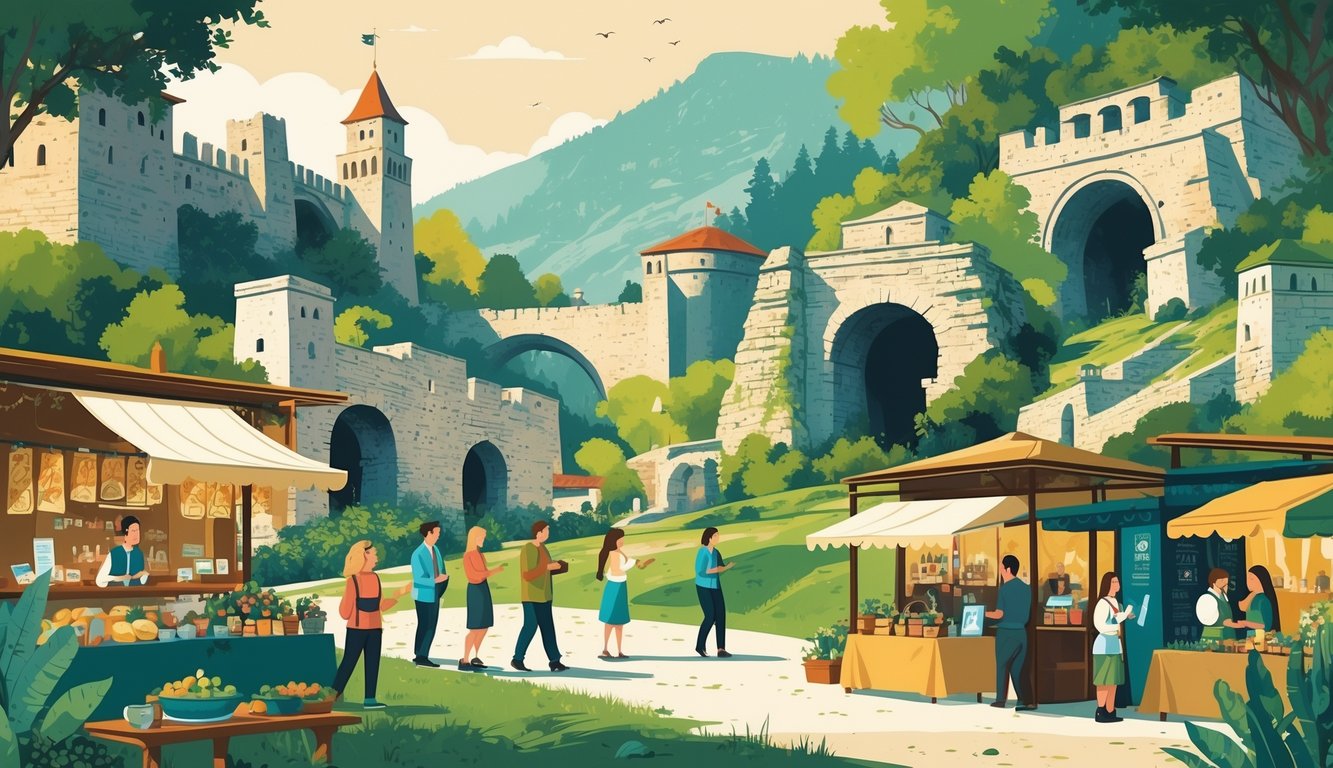
The historical mysteries of Bosnia and Herzegovina have led to increased interest in local tourist attractions. This interest has created new economic opportunities and changed how the local population interacts with these sites.
Locations like Visoko have gained worldwide attention, shaping the region’s modern culture and business.
The Rise of Visoko as a Tourist Destination
Visoko is now one of Bosnia and Herzegovina’s most talked-about tourist destinations. The area drew attention after claims about ancient pyramids near the town.
Every year, thousands of visitors come to explore the so-called Bosnian pyramids and underground tunnels, hoping to solve the mystery themselves. Hotels, restaurants, and souvenir shops have sprung up to meet tourist needs.
Guided tours and workshops are now common in Visoko. Families and travelers from many countries come to see if the stories are true.
This boost in tourism brought new life to the region. Visoko has become a highlight for people visiting Bosnia and Herzegovina.
Economic Influence of the Mystery
The increase in tourism has a clear impact on the local economy. Small businesses, such as guesthouses and cafes, report higher profits during the tourist season.
Local guides and craftspeople have more job opportunities than before. Tourist spending helps other areas too, like transportation and regional food production.
According to industry reports, tourism is a major sector for Bosnia and Herzegovina’s economy. There is still room for the country to reach its full potential.
The buzz around ancient mysteries attracts not just tourists but also investors interested in hotels and tour companies. This brings more money and development to the region.
The ripple effect is seen in new jobs, improved roads, and better infrastructure.
Engagement of the Population
The local population in Visoko and nearby areas is deeply involved. Many residents now work directly in tourism, offering homestays, selling handmade goods, or leading tours through famous tunnels and hills.
This creates a sense of pride for the community. Schools sometimes include local history and stories about the mysteries in their lessons.
Children and teens learn about the area’s special role as a tourist destination. Community groups organize festivals and cultural events that welcome both tourists and locals.
These activities help the society stay connected to its roots while enjoying economic growth. Residents see benefits, but they also discuss how to keep their traditions and environment safe.
Wider Historical Mysteries in Bosnia and Herzegovina
Bosnia and Herzegovina has been shaped by dramatic events and hidden stories. The country’s past holds secrets from its medieval kingdoms, political violence, and more recent conflicts.
Medieval Capital and Sarajevo Legends
The medieval capital, Jajce, was once the center of a powerful kingdom before the Ottoman conquest. Historians still debate the reasons behind the kingdom’s collapse and how its rulers lost control so quickly.
Many believe rivalry among local nobles, shifting alliances, and Turkish advances all played a part. Sarajevo is filled with legends that reach back centuries.
Some say the city’s name comes from the Turkish for “palace,” while others argue for older roots. There are also stories about secret tunnels and lost treasures beneath the city’s old streets.
Even today, researchers find unmarked graves and mysterious ruins in the hills around the capital.
Unsolved Questions from the Bosnian War
The Bosnian War in the 1990s left many questions with no clear answers. One of the biggest mysteries is tied to missing people.
Thousands disappeared during the conflict, and families are still searching for answers about their fates. There are ongoing debates about the causes and early warnings of the war’s outbreak, including the role of politics and nationalism.
Some believe outside influence sped up the breakup of Yugoslavia, while others put more blame on tension within the region. The creation of the Federation of Bosnia and Herzegovina was meant to bring peace, but its roots and structure remain debated among historians.
World War I and Political Intrigue
Sarajevo became globally famous in 1914, when Archduke Franz Ferdinand was assassinated, sparking World War I. Historians still study the events of that day and wonder who was really behind the attack.
Some believe Bosnian nationalists planned the assassination with help from neighboring Serbia. Others see it as the work of small, dedicated groups acting in secret.
The political intrigue of the era touched not only Bosnia but all of Europe, as alliances and rivalries set the stage for war. Many documents from the time are still missing or classified, keeping some questions open even today.
For more details about these historical mysteries, visit articles like The Mystery of Bosnia’s Ancient Pyramids.
Cultural, Religious, and Social Dimensions
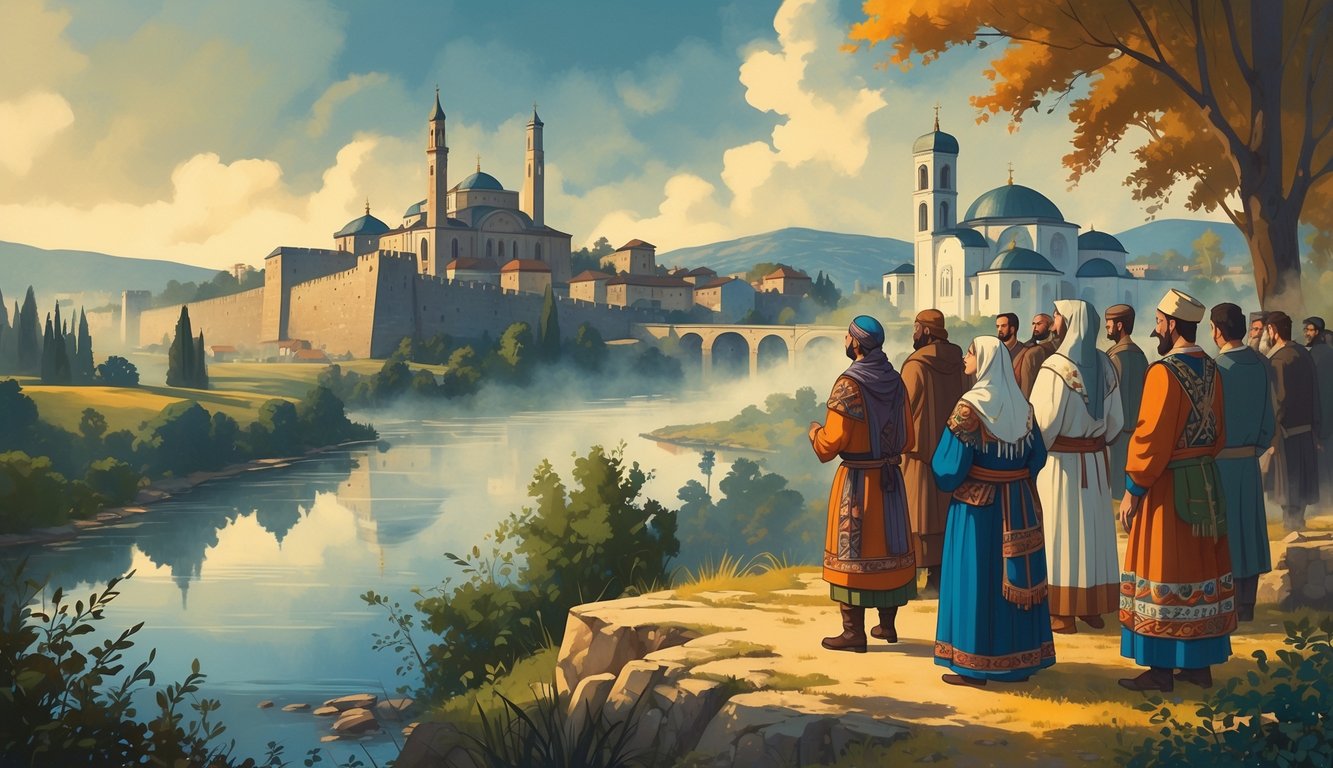
Bosnia and Herzegovina has a diverse religious landscape. People pass down unique social customs through generations.
Stories of spirits and ancient beliefs influence daily life. These traditions connect people to their history.
Religion and Local Traditions
Three main religious groups live in Bosnia and Herzegovina: Islam, Orthodox Christianity, and Catholicism. Each group celebrates its own holidays, rituals, and customs.
Mosques, churches, and synagogues stand as reminders of religious diversity. Residents in places like Sarajevo often join local festivals.
People share food and music during these events. Social gatherings for religious celebrations bring together families and neighbors.
These shared moments build a sense of community. Fasting during Ramadan and Slava (patron saint days) among Orthodox Christians add meaning to daily life.
These practices shape cultural identity. For more on this unique mix, visit this page on Bosnia’s ethnic and religious diversity.
Influence of Myths and Folklore
Bosnia and Herzegovina is full of myths and legends that help explain unexplained events and natural phenomena. People in rural areas still tell stories about mysterious creatures and demons, like the drekavac.
These tales teach lessons and warn children to behave. Elders often share folk stories about enchanted forests or haunted rivers.
Some believe in “zmaj” (dragons) or “vile” (fairies) that influence weather, fortune, or health. These beliefs can shape how people view illness or disasters, mixing myth with medical advice.
Local traditions use amulets or rituals to protect against evil spirits. Myths and folklore remain a living part of daily life, showing how the past still guides choices.
You can learn more about Bosnia’s cultural legacy by exploring its cultural and historical sites.