Tuvalu is a small island nation in the Pacific Ocean with a history reaching back about 3,000 years. Its origins are mysterious, especially how early Polynesian settlers navigated vast stretches of ocean to reach these remote islands.
Many details about Tuvalu’s ancient history remain unknown. The island’s past stands as one of the Pacific’s greatest puzzles.
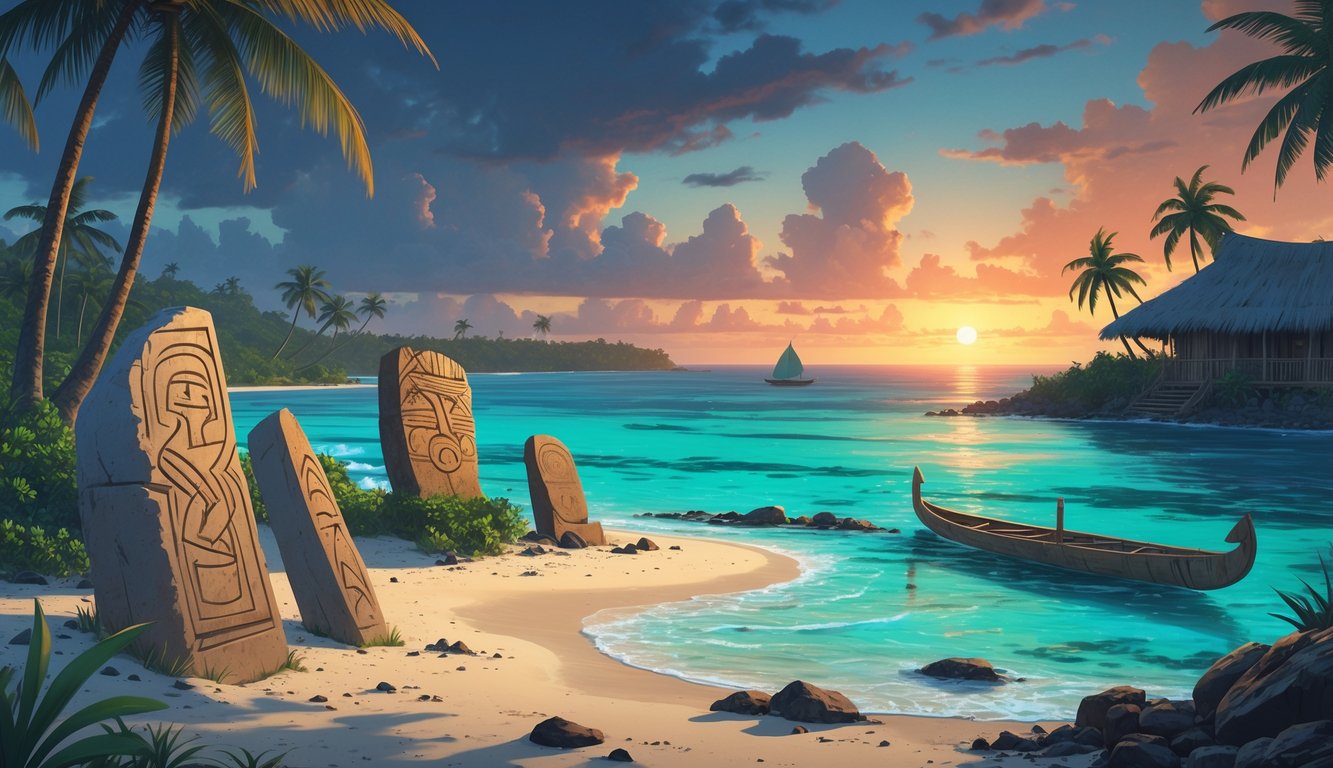
Questions surround the early migrations and the development of local cultures. Unique traditions that survive today also add to the intrigue.
During more recent times, such as World War II, the islands played surprising roles that researchers are still uncovering. Hidden wartime sites and artifacts attract interest from historians and travelers.
The Origins of Tuvalu’s First Inhabitants
Tuvalu’s past links closely to the story of Polynesian migration across the Pacific. The islands show evidence of early settlement and voyaging skills.
Early settlers created unique traditions. Their journey and survival in isolation shaped Tuvaluan culture.
Polynesian Arrival and Ancestral Migration
The first people to live on Tuvalu were Polynesians. Their ancestors likely started in Southeast Asia before moving through Melanesia and reaching the Pacific islands.
Linguistic and cultural similarities across Polynesia support this journey. Archaeologists believe Polynesians arrived in Tuvalu over a thousand years ago.
They brought customs, language, and beliefs that still influence Tuvaluans today. The islands’ isolation helped people develop unique aspects of their culture.
These migrations are part of the wider Polynesian expansion, which covered thousands of miles across the Pacific. For more details, see the history of Tuvalu.
Role of Canoe Voyaging in Settlement
Canoe voyaging was essential for the first Tuvaluans to reach the islands. Polynesians built strong wooden canoes that traveled long distances.
They used sails made from pandanus leaves and navigated using the stars, currents, and winds. Navigating the open ocean allowed families to settle on distant islands.
Canoe voyages brought new people, plants, and animals to Tuvalu. This knowledge of the sea shaped daily life and survival.
Today, people remember these voyaging traditions as a symbol of Tuvaluan identity. More about ancestral travel methods can be found by exploring ancient Tuvaluan history.
Early Social Structure and Traditions
When the Polynesians settled in Tuvalu, they set up small communities with their own social rules and leadership. Chiefs, known as aliki, guided decision-making and helped settle disputes.
Kinship ties shaped much of everyday life, with families living and working together. Storytelling, dance, and song played a big role in keeping traditions alive.
These activities taught the community about their origins and important events. Social divisions in early Tuvalu were not as strict as in some other parts of Polynesia.
Cooperation and sharing helped small groups survive in an environment with limited land and resources. Traditions from this time are still part of the culture today, as seen in community gatherings and events described in the history of Tuvalu.
Mysterious Disappearances and Lost Villages
Tuvalu’s history includes strange disappearances and changes in its small village populations. Early settlements on remote atolls and sudden evacuations remain unsolved mysteries.
The Vanishing of Niulakita’s Early Settlements
Niulakita is the southernmost atoll of Tuvalu. It is known for early settlements that seemed to vanish with little trace.
Old records mention empty huts, tools, and food supplies left behind. There were few signs of struggle or disaster.
Archaeologists think that harsh weather, such as droughts, might have forced people to leave quickly. Sometimes the lagoon and coconut palms failed to provide enough food and water.
Some people say disease caused families to disappear. Others believe the small population had to move to other islands to survive.
Historians still debate if outside threats or natural disasters caused the disappearances. No detailed records explain why the first inhabitants abandoned Niulakita.
Evacuation Events in Nukulaelae
Nukulaelae is another atoll in Tuvalu that faced sudden evacuation events. In the late 1800s, parts of its population left, and entire villages were emptied.
Eyewitnesses described seeing abandoned homes and unused canoes. A severe storm or changes in the atoll’s freshwater supply may have made life difficult.
There are also records of disease outbreaks at the time, which could have pushed people to seek safety elsewhere. While some families returned later, some villages never regained their former size.
These unexplained disappearances continue to puzzle historians and researchers. The story of Nukulaelae shows how fragile life on small atolls can be.
Unsolved Questions from Pre-European Contact
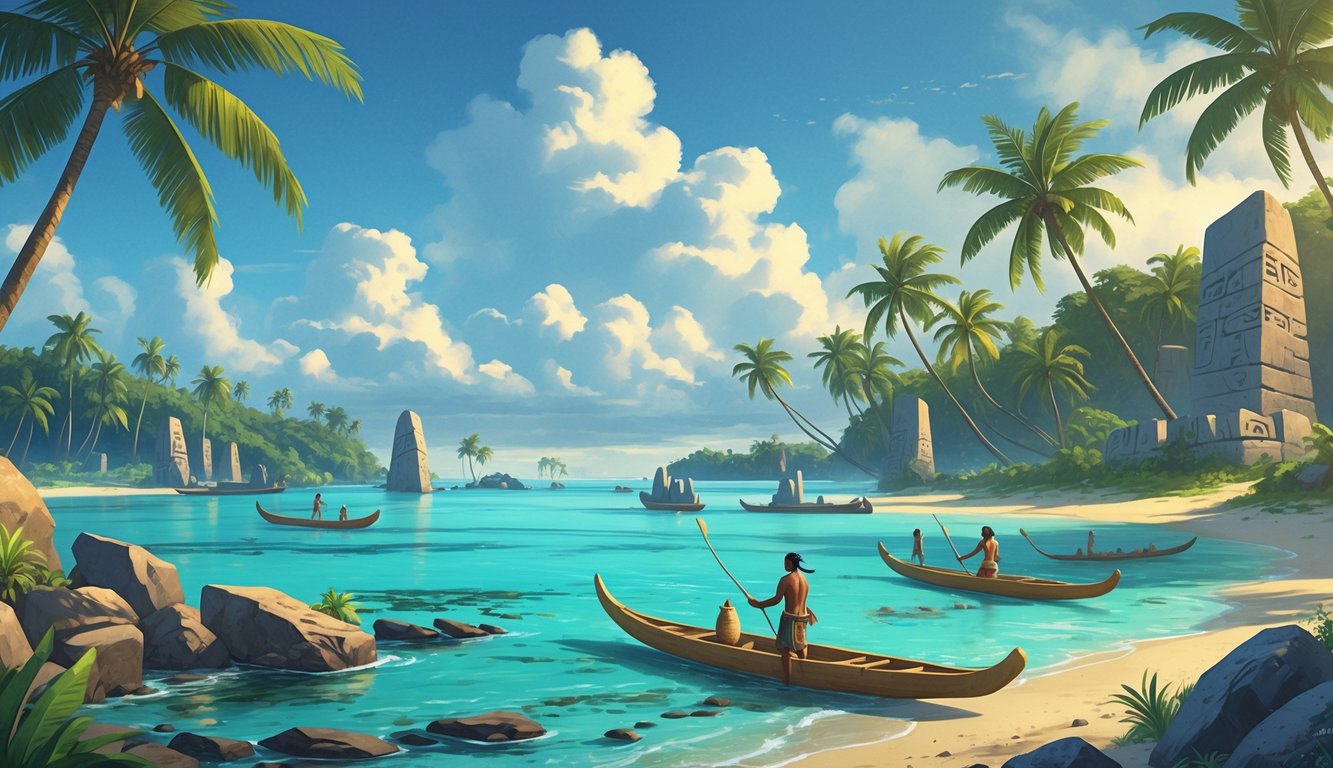
Tuvalu’s distant past is full of mysteries that puzzle historians and locals. Stories, leaders, and traditions from before European arrival still leave many questions open.
Origins of Local Legends and Oral Histories
Many traditional stories from Tuvalu have been passed down by word of mouth for centuries. These legends often explain how the atolls formed or how different families settled on the islands.
Some stories describe epic voyages across the sea and interactions with mysterious visitors. There are very few written records from this time.
This makes it hard to tell which details in the stories are based on real people and which are myths. For example, legends might talk about great storms or battles, but physical evidence or outside accounts are scarce.
Historians listen closely to elders who retell these oral histories. Lists of chiefs’ names, stories about island spirits, or memories of ancient migrations help piece together Tuvalu’s past.
Some tales may be linked to broader Pacific traditions, showing how Tuvaluan culture fits into the region’s larger history.
The Enigma of Forgotten Atoll Chiefs
Chiefs played a key role in Tuvaluan society long before Europeans arrived. They made decisions about land, fishing rights, and community conflicts.
Each atoll had its own respected leaders, but their full names, actions, and influence are not always remembered. Most information about these chiefs comes from oral tradition.
Chiefly lineages and their stories can be easily lost or changed over generations. Some chiefs are remembered for their wisdom or bravery, yet many names have faded, leaving only brief mentions in people’s memories.
Key Questions:
- How did chiefs maintain power and pass it down?
- What rules and customs did they follow?
- Which chiefs were most important for shaping Tuvalu’s culture?
Learning more about these leaders would give a clearer picture of how pre-European Tuvaluan society worked. For more about enduring historical mysteries, see this list of ancient mysteries that still puzzle historians.
The Ellice Islands and Colonial Confusion
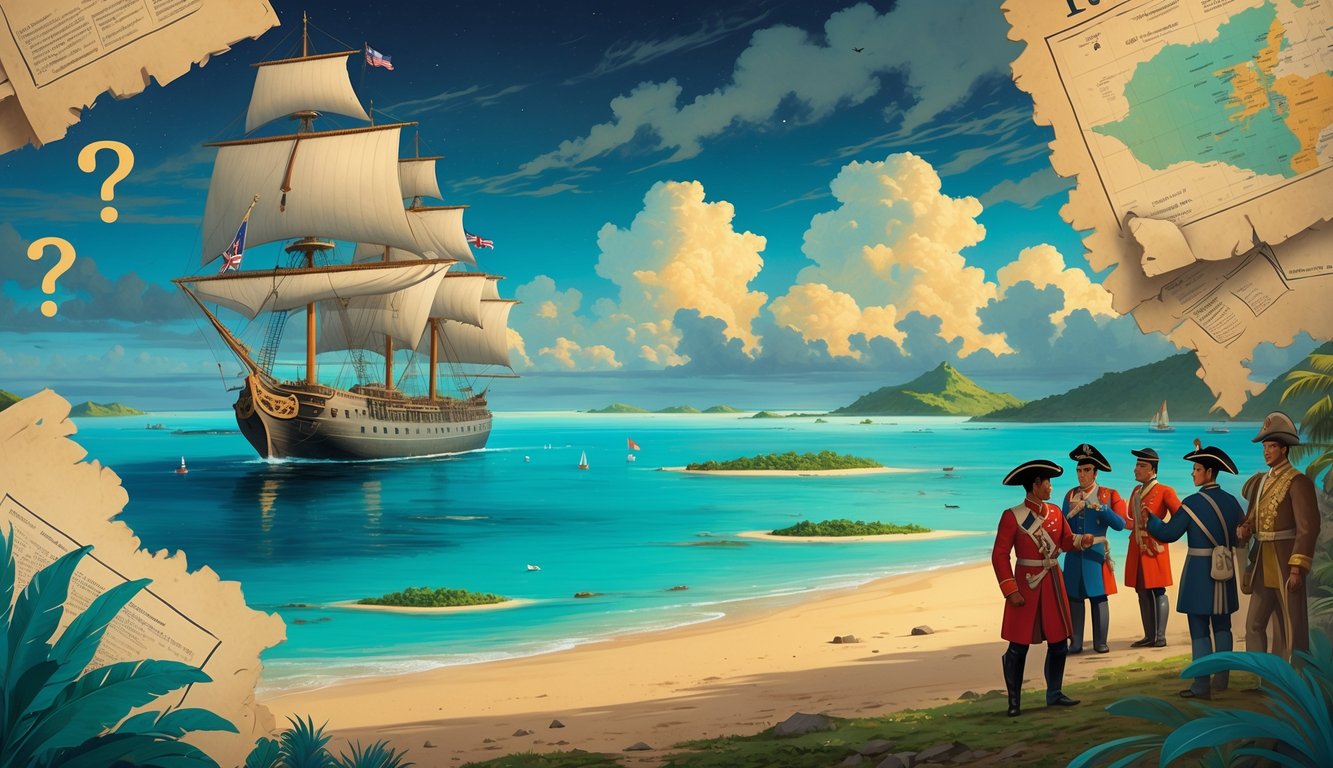
Tuvalu, originally known as the Ellice Islands, has an identity deeply linked to its colonial history. Its merger with the Gilbert Islands and the impact of British rule shaped its path to nationhood.
Merging of the Gilbert and Ellice Islands
The British created the Gilbert and Ellice Islands Protectorate in 1892 to manage colonial interests in the central Pacific. This group blended two different island chains: the Micronesian Gilbert Islands (now Kiribati) and the Polynesian Ellice Islands (now Tuvalu).
The islands had few things in common—language, traditions, and even physical appearance set them apart. Colonial governors grouped them for administrative ease, not for cultural reasons.
This merger caused years of confusion and tension between the islands. Ellice Islanders sometimes felt overshadowed by the larger Gilbert population, which affected local leadership and political power.
In 1974, these differences led to a vote. The people of the Ellice Islands decided to split and become their own dependency, later becoming independent as Tuvalu.
The Gilbert Islands would go on to become Kiribati. Learn more about the history of the split.
The Role of British Protectorate Status
When the British declared the islands a protectorate, they introduced a new colonial system. Local chiefs lost authority as British officials controlled most government activities.
Decisions about land and law passed to the colonial office, often ignoring local customs. In 1916, the British formalized their rule by establishing the Gilbert and Ellice Islands Colony.
This brought new schools, churches, and a cash economy, but also imposed foreign laws. The British presence left a lasting mark on the islands’ political and social systems.
Even after the Ellice Islands became Tuvalu, colonialism continued to shape its government and national identity. For more context, check the history of British rule in Tuvalu.
European Encounters and the Mystery of el gran cocal
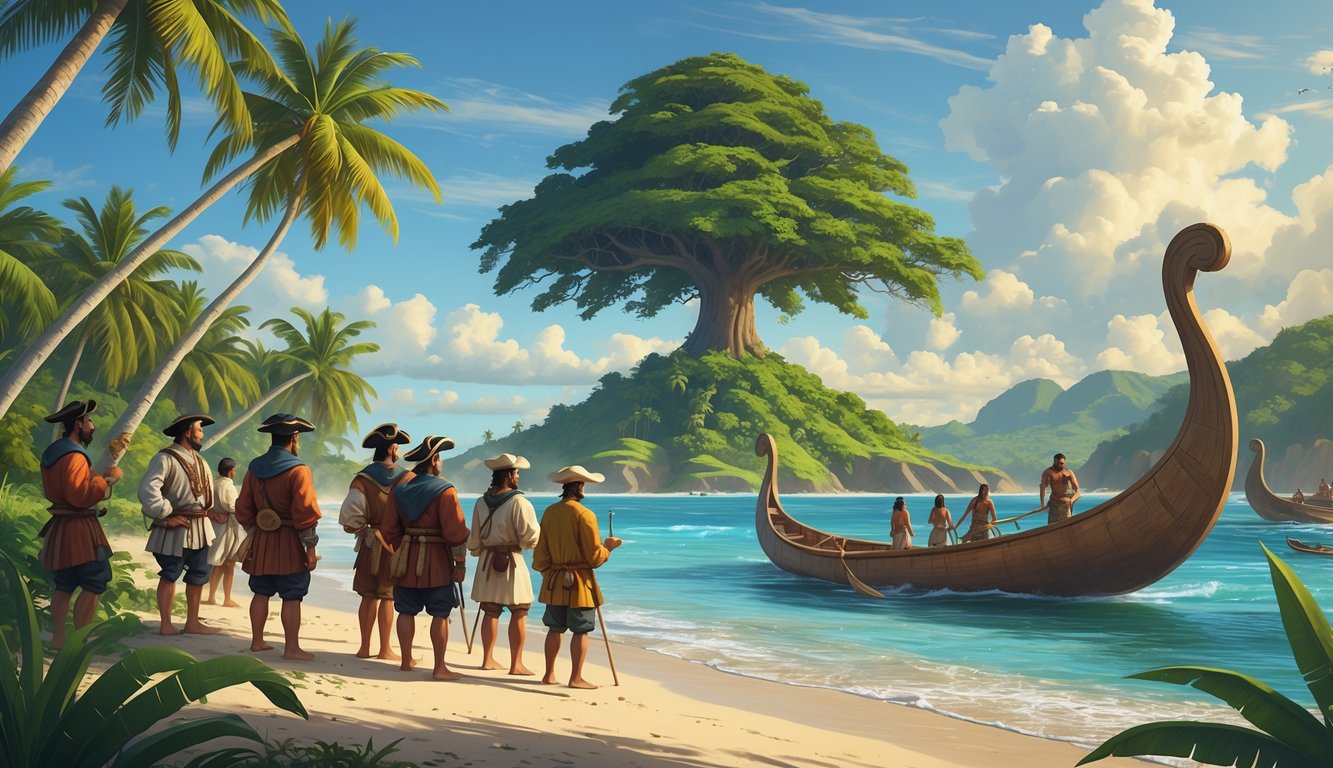
Spanish explorers reached the Pacific in search of new lands, resources, and trade routes. Their first meetings with Pacific islands like Tuvalu sometimes led to mistakes and confusion about the islands’ real names and locations.
This section explains how this happened through stories of two major explorers.
Álvaro de Mendaña de Neira’s Pacific Expeditions
Álvaro de Mendaña de Neira led one of the first large Spanish expeditions across the Pacific in the late 1500s. He looked for islands rich in gold and other resources for Spain.
On his voyages, he recorded many islands, but it is unclear if he reached Tuvalu. Some think he passed nearby, but maps from his era either mislabel or ignore Tuvalu’s islands.
Explorers like Mendaña often named places with Spanish names. Some names stuck, while others faded.
These early expeditions laid the groundwork for later European exploration and contact in the area, even though the information was not always reliable. Mistakes in charting locations meant later explorers sometimes struggled to identify islands accurately.
This led to debates and confusion in European maps for years.
Uncharted Atolls and Misidentified Islands
In the centuries after Mendaña, European explorers kept searching the Pacific. They often found atolls but sometimes mistook them for shoals or different islands.
A big example is “el gran cocal,” which means “the great coconut plantation.” Spanish explorer Francisco Antonio Mourelle named an island this in 1781, but he was unsure of its true position.
Mourelle’s records made later Europeans look for this “mystery island.” It actually referred to Niutao, but inaccurate charts caused confusion for many years.
Scholars finally matched el gran cocal to Niutao much later, settling a long-standing debate. European contact and naming mistakes like this are found throughout Tuvalu’s early history.
These errors affected maps, journals, and even local stories. You can read more about Mourelle, the naming of el gran cocal, and how scholars identified Niutao in this article.
World War II and Hidden Histories
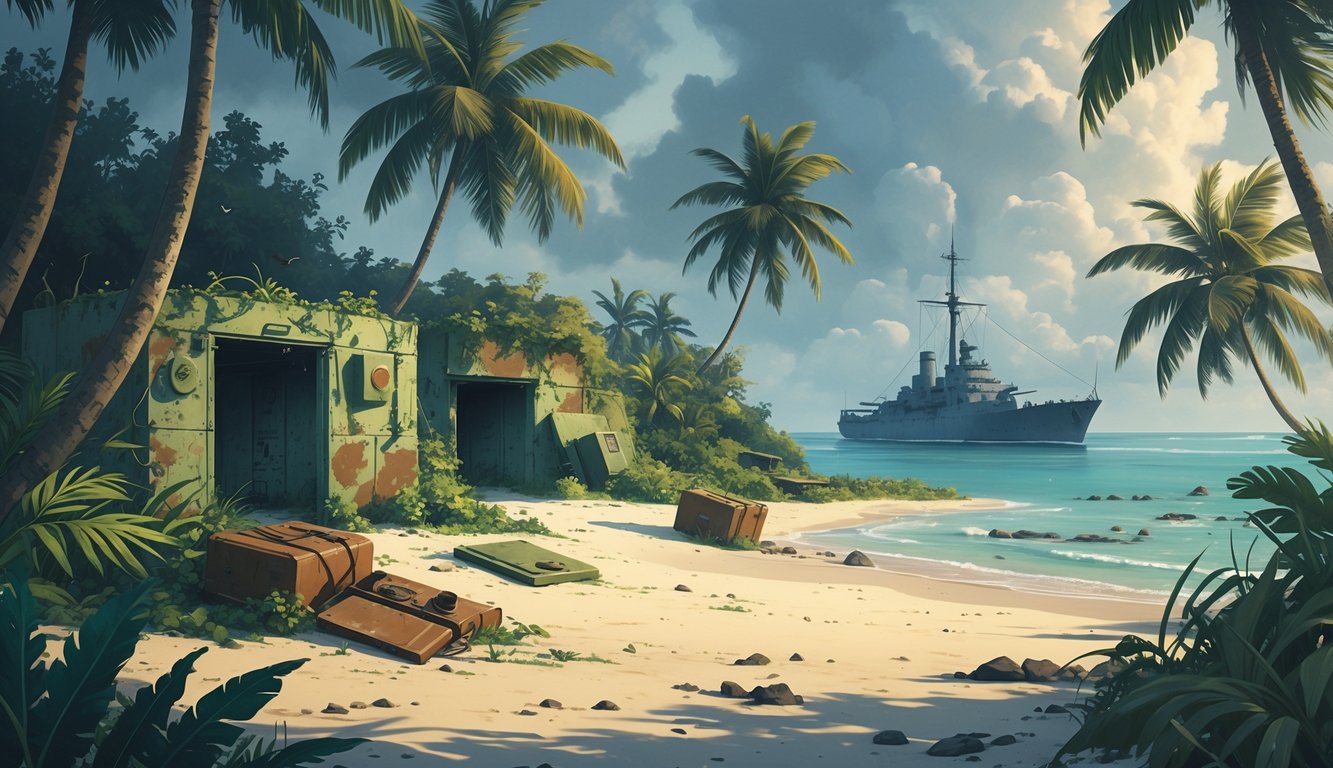
During World War II, Tuvalu saw unexpected military activity. Today, reminders of that time remain in certain areas and spark curiosity about the islands’ untold stories.
Funafuti Atoll’s Secret Military Buildup
Funafuti Atoll played an important role for Allied forces during World War II. American troops arrived and built airfields and military sites on Fongafale, the largest islet of Funafuti.
The atoll’s strategic location helped control routes across the central Pacific. Old runways and rusty fuel tanks are still visible on the island.
Locals sometimes find pieces of equipment or aircraft parts in the bush. These discoveries raise questions about the full extent of the military buildup and what secrets might still lie underground.
Many wartime tunnels, bunkers, and storage areas are now overgrown or buried. Visitors can view some remains, but many areas have never been fully mapped.
Unexplored history continues to interest both residents and tourists. Learn more about these wartime traces on Timeless Tuvalu.
Lost Artifacts from the War Years
When the Allied forces left Tuvalu after the war, they abandoned a large amount of equipment, vehicles, and supplies. Over the years, people salvaged some items, but many remain hidden.
Along the reefs and beaches, you can find wrecks of landing crafts and pieces of airplanes. Some sites are only visible during low tide.
Locals sometimes discover old tools, bottles, or strange metal objects from the 1940s. These finds spark interest in what else might be buried on the islands.
Because Tuvalu is small and the islands change over time, much could remain just beneath the surface. For more details about these lost items, see World of History and Timeless Tuvalu.
The Enigma of Independence and Referendum
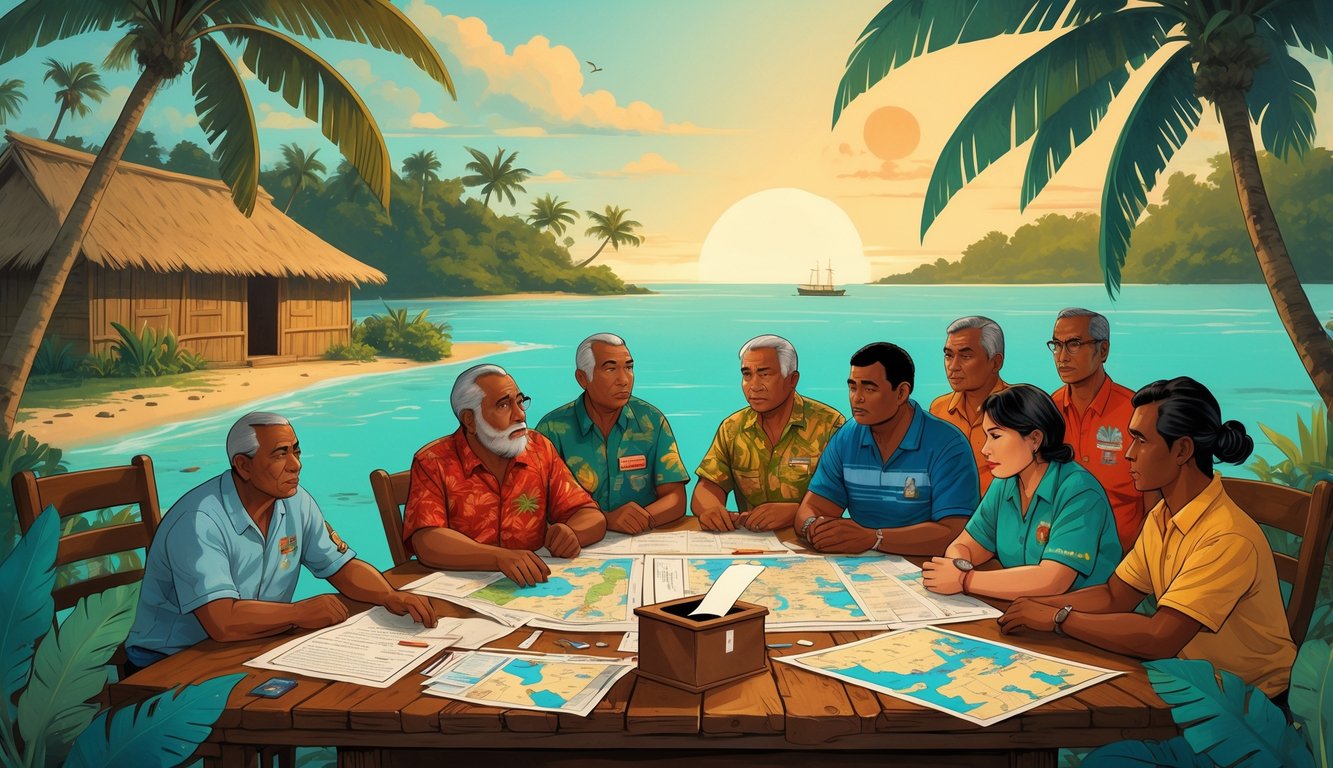
Tuvalu’s journey to becoming a sovereign state was full of challenges and important decisions. Its path included a national referendum and the influence of global decolonization.
The Puzzling Path to Self-Determination
Tuvalu was once a British colony made up of nine Pacific islands. For many years, people there lived under foreign rule.
In the 1970s, the desire for self-determination grew stronger. A major turning point came with a referendum, where islanders chose whether to separate from the Gilbert Islands (now Kiribati) and form an independent nation.
In 1974, most Tuvaluans voted “yes,” showing clear support for their own country. This decision stands out as a key event in Tuvalu’s history.
After the referendum, leaders worked to set up a local government. On October 1, 1978, Tuvalu officially became a sovereign state and joined the British Commonwealth.
Impact of Decolonization Movements
Tuvalu’s independence happened during a wave of decolonization in the Pacific and other regions. Many colonies pushed to become independent nations, which influenced Tuvaluan leaders.
Many Tuvaluans watched as nearby islands gained independence. This trend encouraged discussions about their own status.
The decolonization push helped Tuvalu get international attention and support. Important events include the growing global focus on self-determination, support from international groups, and the peaceful transfer of power from Britain.
Today, Tuvalu’s independence is part of a broader movement for decolonization. It remains one of the significant historical moments for Pacific people.
Ancient Practices, Rituals, and Language Mysteries
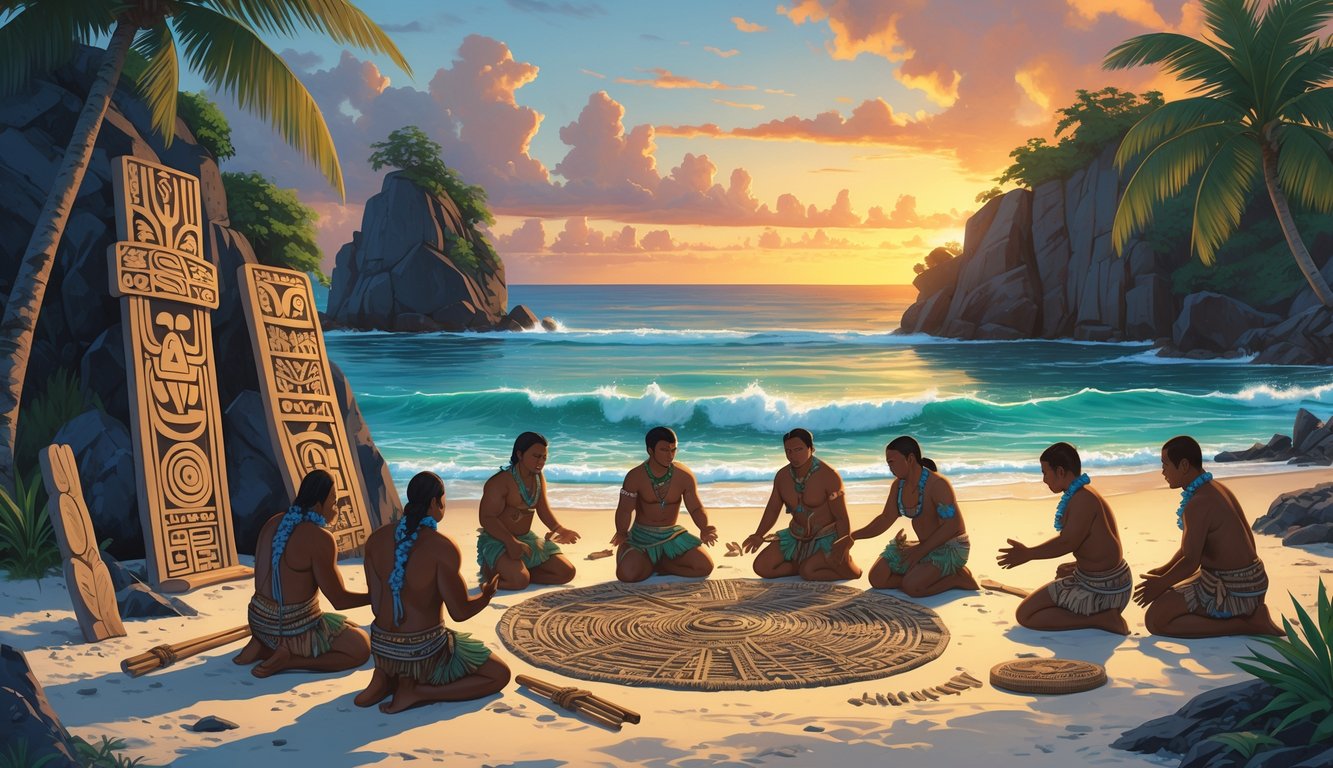
Tuvalu’s early history holds many secrets, especially about its language and spiritual life. Archaeologists and historians study old customs, ancient words, and rituals to understand how Tuvaluan culture developed.
Roots of the Tuvaluan Language
The Tuvaluan language comes from the Austronesian language family. It connects with other Polynesian languages, but experts still debate where it first developed.
Some words are unique to Tuvalu and don’t have clear links to other islands. Linguists found that some old Tuvaluan phrases suggest contact with distant cultures, though they aren’t sure how or when this happened.
Ancient chants and songs, passed down for generations, contain words scholars can’t easily translate. Most Tuvaluans speak both Tuvaluan and English.
Some traditional words risk being forgotten as younger generations use more English. Oral storytelling remains important for sharing these unique words.
Unanswered Questions Around Religious Traditions
Before Christianity, Tuvaluans practiced traditional religions based on nature, spirits, and ancestors. Many details of these rituals have been lost because people didn’t write them down.
Some ancient ceremonies involved special dances, offerings, and sacred sites. Archaeologists found old stone structures on some islands, but their original uses remain unclear.
People don’t know which gods or spirits were honored in these places or what specific meanings different rites held. With Christianity’s strong influence, many old practices blended with or were replaced by Christian beliefs.
Festivals and customs linked to earlier times still appear in Tuvaluan culture, especially during celebrations. Researchers hope oral histories and archaeological finds will reveal more about these early religious traditions.
Vanishing Islands and Environmental Paradoxes
Tuvalu, a remote island nation in the Pacific Ocean, faces serious challenges from climate change. Its unique geography and low elevation make it especially vulnerable to rising sea levels and other environmental changes.
Disappearing Atolls: Myth or Reality?
The idea that Tuvalu is vanishing has sparked debate. Some believe the islands are sinking quickly, while others say the land is stable in some areas.
Scientists have measured Tuvalu’s elevation and observed that certain atolls shrank due to erosion and high tides. New research shows some islands are actually growing or changing shape, not just disappearing.
Waves and shifting sand often cause these changes. People in Tuvalu see parts of their land washed away, especially during powerful storms.
Coastal erosion is visible, but the situation is complex. The disappearing islands continue to raise questions about how atolls respond to extreme weather and climate change.
The Ongoing Sinking of Tuvalu
Rising sea levels from global warming directly threaten Tuvalu. The country has nine low-lying coral atolls, all just a few feet above sea level.
Yearly flooding and saltwater intrusion make farmland and water sources unusable. Many families move to higher ground or leave the country.
Scientists link these problems to melting glaciers and polar ice, which add more water to the oceans. For many residents, the sinking of Tuvalu is a daily reality.
Floods often damage buildings, and people sometimes need emergency supplies. The future of this Pacific island nation remains uncertain as global warming continues.
Water Shortage and King Tide Mysteries
Freshwater is hard to find in Tuvalu. Most people depend on rainwater collected in tanks.
King tides—unusually high tides that happen a few times a year—often flood homes and pollute drinking water. Saltwater seeps into wells, making them unsafe.
This creates a strange situation: surrounded by the ocean, but with no safe water to drink. Scientists study how king tides and weather patterns affect Tuvalu.
Heavy rain can refill tanks, but droughts make life tough. The mystery of changing rainfall and rising tides keeps people guessing how to prepare for the next emergency.
For Tuvaluans, the fight for clean water is as hard as fighting the sea.
Unexplained Cultural Connections and Influences
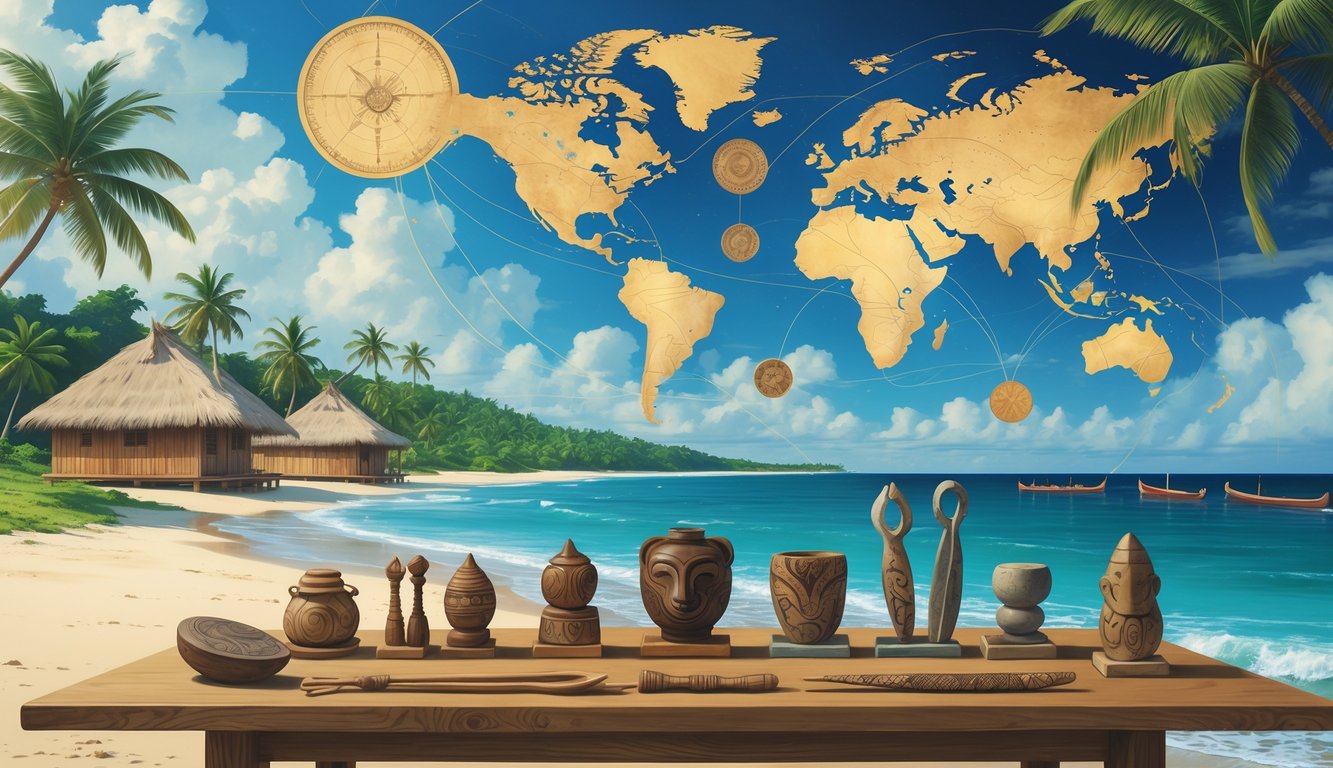
Tuvalu’s culture holds clues to its past connections with other Pacific islands. Many traditions, words, and songs in Tuvalu show links with places like Samoa and Tonga, as well as influences from whalers and traders.
Links Between Tuvalu, Samoa, and Tonga
Researchers noticed that Tuvaluan legends often mention canoe journeys to Samoa and Tonga. Some family names found on Tuvalu’s islands are also common in Samoa and Tonga.
There are similarities in canoe design and house-building methods. The shape of ceremonial canoes in Tuvalu matches those used in Tonga.
Language comparisons show many Tuvaluan words are identical or very close to Samoan and Tongan words. These connections make it hard for historians to tell where some traditions started or how they traveled between islands.
Influence of Whalers and Traders
In the 1800s, whalers from Europe and America visited Tuvalu as they traveled across the Pacific. Traders looking for coconut oil and sea cucumbers also stopped on the islands.
They traded items like cloth, iron tools, and tobacco for food or supplies. Old records and local stories tell of Tuvaluans using imported metal nails in building, even before European ships were common in other parts of the Pacific.
These visitors introduced new foods, music styles, and tools. Some local dances began to use instruments likely brought by Western sailors.
The arrival of whalers also changed the kinds of decorations used in ceremonies.
Music, Dance, and Shared Pacific Heritage
Tuvalu’s music and dance show a mixture of local and foreign influences. People sing songs in a circle, called fatele, using rhythms and movements similar to those in Fiji and Tonga.
Some Tuvaluan dance movements are almost identical to styles in Samoa and Tonga. Dancers wear clothing such as garlands and mats, which match patterns seen in other Pacific islands.
Tuvalu keeps its own unique features. Certain chants and hand gestures appear only in Tuvalu, showing that the islands have preserved original cultural traits while sharing much with their neighbors.