Throughout Syria’s long history, some mysteries have never been fully explained. Lost ancient cities and the disappearance of key figures have shaped not only Syria but the wider region.
Damascus is one of the oldest continuously inhabited cities in the world. Ancient ruins and archaeological sites across Syria offer hints of great empires and lost cultures, but many details remain missing or hidden.
Curious minds can explore more about these wonders by looking into Syria’s most amazing archaeological sites.
Even recent events in Syria’s history add new puzzles. Investigators continue to ask questions about modern political history, such as the mysterious disappearance of activists and unresolved political secrets, as highlighted by ongoing research into mysteries in Syrian political history.
The Mysteries of Ancient Syrian Civilizations
Syria’s ancient past is full of unanswered questions. Massive cities once stood in the region, leaving behind puzzling ruins, undeciphered writings, and hints of lost rulers.
Unresolved Questions Around Ebla
Ebla, found in northern Syria, was once a powerful city with thousands of clay tablets that reveal part of its story. These tablets, written in cuneiform script, hold information about trade, law, and daily life that historians are still trying to fully understand.
Many tablets mention leaders, neighboring cities, and goods moving across the Jazira region and beyond. Some tablets remain unclear because of undeciphered words and damaged pieces.
The Eblaite language, a branch of early Semitic languages, is still tricky for scholars. The city’s sudden fall remains unexplained, and experts debate whether it was due to invaders, disaster, or politics.
Secrets of Mari’s Lost Kingdom
Mari was a bustling city on the Euphrates River. Archaeologists have found beautiful palaces, artwork, and over 20,000 cuneiform tablets there.
These reveal much about government, trade, and foreign policy in the region. The city burned around 1759 BCE, likely after being attacked by Babylonian King Hammurabi.
Debates continue about the influence neighboring powers like the Assyrians and Babylonians had on Mari before its destruction. Many palace rooms and texts are yet to be fully understood.
New finds often lead to more questions.
Hittite and Assyrian Influence
Northern Syria was caught between the Hittite and Assyrian empires. Both fought for control of trade routes, cities, and farmland.
Evidence shows both groups left strong marks on government systems, religion, and art. Artifacts and writings from places like Hamoukar and Alalakh reveal how these rival empires shaped early Syrian history.
Some of the oldest known written languages and scripts, including those on clay cylinders in Umm el-Marra, date back to this period. Answers about daily life, borders, and cultural changes during these empires’ rule are still being pieced together.
The Enigmatic City of Palmyra
Palmyra once thrived as a powerful city in the Syrian desert. Its grand ruins, legendary ruler, and role in ancient trade continue to raise questions for historians and archaeologists.
Disappearance of Queen Zenobia’s Legacy
Queen Zenobia led Palmyra during its most celebrated era. She became famous after she challenged Roman rule and conquered large parts of the Eastern Roman provinces.
Her ambition shocked the empire and led to open conflict with Rome. After her defeat and capture by Emperor Aurelian, Zenobia’s fate remains unclear.
Some records claim she lived in Italy, while others suggest a harsher end. The rapid decline of Palmyra after her downfall erased much of her legacy.
There is still debate about Zenobia’s accomplishments and how much of her story is fact or legend. Limited records from Palmyra itself have led to many myths about her rule and her family’s final days in the city.
Trade Routes and Wealth
Palmyra’s location gave it control over vital trade routes between the Roman Empire, Persia, and regions as far as India and China. The city served as a stop for caravans carrying silk, spices, precious stones, and other valuable goods.
Wealth and prosperity followed, making Palmyra an important trading hub in the ancient world. These trade connections brought together different cultures and religions, turning the city into a melting pot of ideas and peoples.
Its temples and monuments show the riches generated from trade. Researchers continue to study Palmyra’s role as a commercial crossroads to better understand how trade routes shaped Palmyra’s unique culture and enduring significance.
Damascus: Layered History and Hidden Truths
Damascus stands out as one of the world’s oldest cities. Its continuous settlement and remarkable structures invite many questions about the ancient world and how people shaped it.
Origins of the World’s Oldest Inhabited City
Archaeologists believe people have lived in Damascus for at least three thousand years. Evidence below the city shows that one era’s buildings were often built directly on top of older ones.
This creates a deep “layer cake” of history that researchers still uncover today. The question of who first settled there remains unclear.
Ancient empires like the Arameans, Romans, and Umayyad Caliphate all left their marks. Historical records do not reveal what came before these eras.
Historians continue to look for clues in the ruins, hoping to solve the city’s puzzle. More about the ancient layers can be found in this look at Damascus’s archaeological record.
Construction Mysteries of the Umayyad Mosque
The Umayyad Mosque in Damascus is one of the oldest and grandest in the world. Builders constructed it during the Umayyad Caliphate in the early 8th century.
They used pillars from old Roman temples and churches in the mosque’s construction. This raises questions about how people moved and reused these huge stones.
Some stories say skilled craftsmen from around the region worked together. No one has found complete records of how the mosque was finished so quickly for its time.
The blend of Roman, Byzantine, and Islamic features is easy to spot in the mosque’s art and layout. Today, the Umayyad Mosque is not just an important place of worship but also a crucial part of the history of Syria.
The Lost Cities and Forgotten Empires
Syria was home to many ancient cities and powerful empires. From the Neo-Babylonian period to the days of Roman and Byzantine rule, rich cultures thrived and faded, leaving ruins and stories that continue to puzzle historians.
Eber Nari and Neo-Babylonian Rule
Eber Nari was an important region that included parts of modern-day Syria. The Neo-Babylonian Empire controlled it after conquering the Assyrians in the late 7th century BCE.
This area included big cities and trade centers that linked the empire to the Mediterranean. During Neo-Babylonian rule, the area saw new building projects and changes to its government.
The Babylonians brought their own traditions but also mixed with local cultures. Not everything from this period is well understood because many records have been lost or destroyed.
Later, Persian and Hellenistic rulers took control. Each left their mark on the settlements, but mysteries remain about the daily lives of people living under the Neo-Babylonians and the empire’s influence on Syria’s future.
Antioch and Its Vanished Magnificence
Antioch was once one of the largest cities in the ancient world. The Seleucids founded it around 300 BCE, and it became a major center of the Roman and Byzantine empires.
Known for its grand buildings, busy markets, and cultural diversity, Antioch attracted people from across the region. The city stood out because of its large population and key location connecting Asia and Europe.
Roman emperors invested in Antioch’s infrastructure, building temples, aqueducts, theaters, and wide streets. The city was also important for early Christianity.
Despite its power, Antioch suffered major earthquakes and invasions. Today, little of its ancient glory remains, and archaeologists are still uncovering its full layout and splendor.
Ruins of Apamea
Apamea is a significant archaeological site in Syria, known for its column-lined streets and well-planned layout. Founded during the Hellenistic period, it grew into a strong Roman city and later became part of the Byzantine realm.
The city was home to soldiers, merchants, and craftspeople. The ruins of Apamea are especially famous for their Great Colonnade, one of the longest in the Roman world.
Shops, baths, and public areas still show how busy and advanced daily life was. After wars and natural disasters, Apamea was finally abandoned.
Today, Apamea is one of the best places to see the mix of Greek, Roman, and Byzantine culture in Syria. The site continues to reveal secrets about the region’s past.
More information about these ancient Dead Cities and their fate can be found online.
Crusades, Fortresses, and Medieval Puzzles
Syria played a major role during the medieval period, especially during the era of the Crusades. Large castles, powerful armies, and clever leaders shaped the land and left many questions that historians still try to answer.
Mamluks and Crusader Castles
Many medieval fortresses, like Krak des Chevaliers and Margat, mark the landscape of Syria. Crusaders built these strongholds to control trade routes and defend against invasion.
Their thick walls, secret tunnels, and hidden chambers have kept many secrets over the centuries. After the Crusaders, the Mamluks—a powerful Muslim dynasty—took control of much of Syria.
They often improved and reused these castles, adding their own designs and defenses. Archaeologists continue to study how the Mamluks and earlier Crusaders built such complex structures with limited technology.
Some puzzles remain, such as how people stored supplies for long sieges or constructed certain parts of castles so perfectly. The architecture of these crusader fortresses continues to surprise experts.
Saladin’s Tactics and Legacy
Saladin, also known as Salah ad-Din, played a key role in Syrian history. He led Muslim forces against the Crusaders and became famous after recapturing Jerusalem in 1187.
Historians still study his clever military tactics. Saladin managed to unite different groups and keep his armies loyal during hard times.
His sieges and battles showed patience, intelligence, and strong leadership. He used fake retreats and psychological tactics that were advanced for his era.
Saladin’s legacy appears in surviving fortresses and in stories passed down through generations. The details of his campaigns and decisions remain the subject of ongoing research.
Empires and Invaders: Layers of Conquest
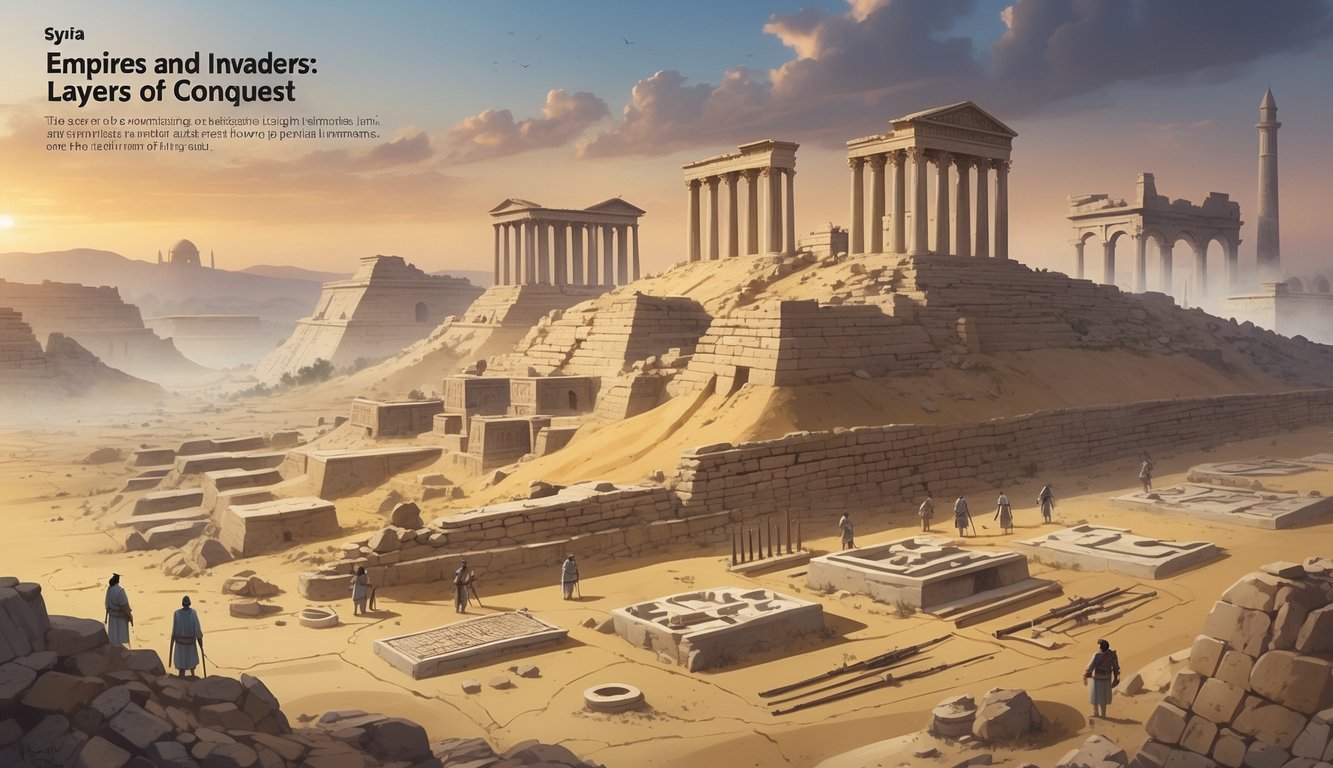
Syria’s history includes many powerful empires and waves of conquest. Each left behind questions about lost cities, shifting borders, and forgotten rulers.
Hellenistic and Roman Uncertainties
Alexander the Great conquered Syria and introduced Greek customs and architecture. Archaeologists still debate the locations of some major Hellenistic cities.
Old city maps often do not match archaeological findings. After Alexander’s empire split, the Seleucid rulers took control and blended Greek and local cultures.
Many Seleucid temples and statues are missing, and records are sometimes unclear about their fate. The Romans later made Syria a province and built roads, theaters, and public baths.
Not all Roman cities’ declines are understood, and some local tribes that resisted remain unidentified. Many burial sites remain unmarked, leaving experts to wonder about these communities.
Key Points
- Unlocated Hellenistic cities
- Gaps in Seleucid records
- Unmarked Roman tombs and city ruins
Persian and Ottoman Shadows
The Persian Empire controlled the region several times. The Achaemenids included Syria as an important province, but scholars debate the power and influence of early Persian governors.
Royal records from this period are limited. Centuries later, the Ottoman Empire took over and ruled for four hundred years.
Ottoman records exist, but some remain untranslated. Ottoman defense forts and caravan stops were built across Syria, but not all have been found.
Looting, wars, and trade have moved many Persian and Ottoman artifacts out of Syria. This makes it hard to trace their history and importance.
Highlights
- Disputed Persian governor roles
- Untranslated Ottoman documents
- Missing artifacts
Byzantine Period Intrigue
The Byzantine Empire ruled Syria after the Romans. They built churches, monasteries, and city walls.
Some walls and mosaics still stand, but records of battles and daily life are often missing. Historians remain unsure about the fate of many Byzantine towns.
Some towns were abandoned with little explanation. The period saw religious changes, but evidence about how local people responded is still being uncovered.
Intriguing Details
- Hidden or abandoned Byzantine churches
- Gaps in written records of local life
- Unresolved stories of city decline
Twentieth Century Turmoil and Political Mysteries
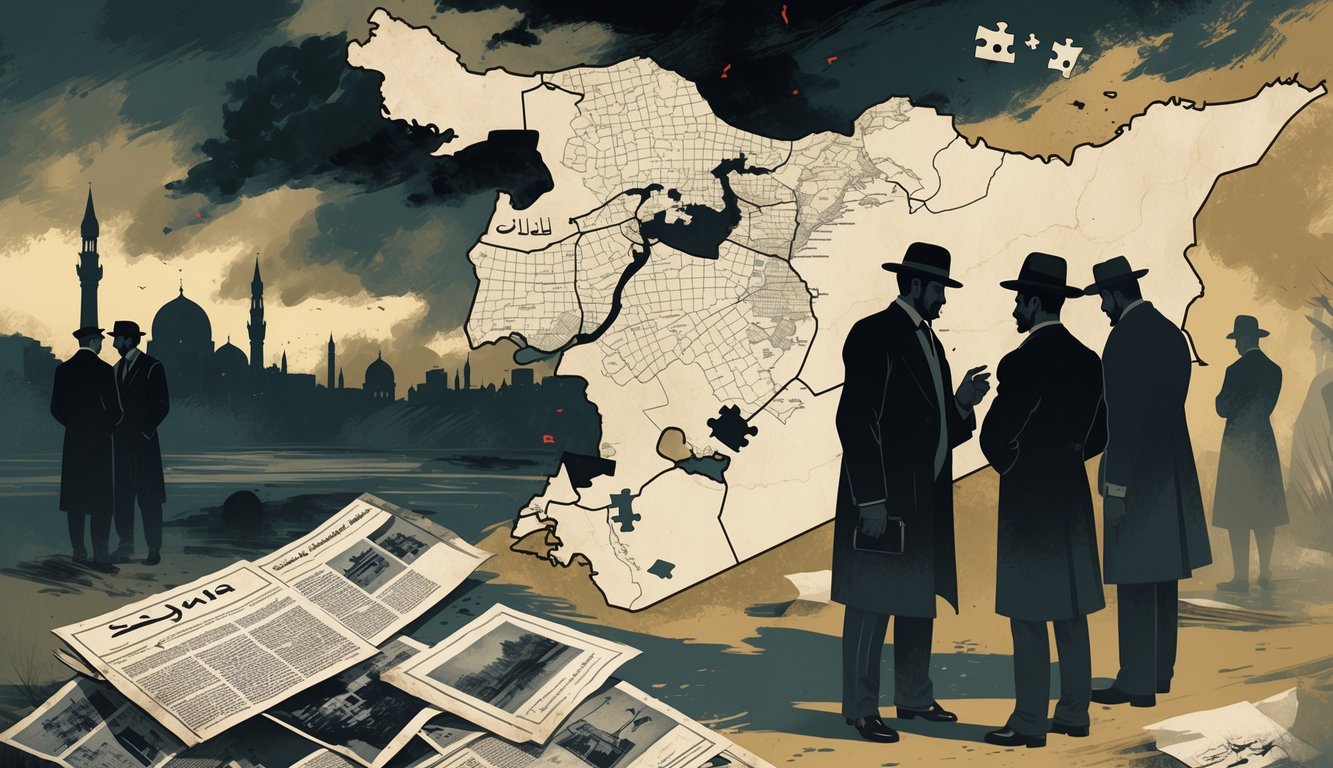
In the twentieth century, Syria experienced major changes due to outside powers, secret deals, and new political movements. Shifting control and power struggles left many questions about decisions that shaped the country.
French Mandate and the Sykes-Picot Agreement
After World War I, Syria moved from Ottoman to French rule. The secret Sykes-Picot Agreement divided the Middle East between Britain and France.
The agreement’s borders ignored local communities and ethnic groups. These new borders led to conflict and confusion about identity.
Under the French Mandate, Syrians struggled for independence. French authorities suppressed revolts with force, leaving behind memories of violence and secret political deals.
Some still wonder about the real reasons behind the sudden shifting of borders during this time.
Key points:
- Agreement ignored local identities
- Forced changes created new political problems
- Resistance against French rule shaped Syrian history
Rise of the Ba’ath Party and Assad Family
The Ba’ath Party, founded in the 1940s, promised Arab unity and socialism. The party grew more powerful in the 1960s and took over the government after several coups.
In 1970, Hafez al-Assad took control and ruled Syria for 30 years. After his death in 2000, his son Bashar al-Assad became president.
The speed and secrecy of this transfer raised questions about who held real power—the people, the party, or the Assad family. Power stayed tightly controlled, and opponents were removed or silenced.
People still debate whether the Ba’ath Party’s rule aimed to improve Syria or just to keep the Assad family in control. Many government actions from these years remain unclear to outsiders.
Notable names:
- Hafez al-Assad
- Bashar al-Assad
- Key Ba’ath Party leaders
Adib Shishakli and the Syrian Social Nationalist Party
Adib Shishakli, an army officer, led Syria from 1951 to 1954. He banned political parties he saw as threats, including the Syrian Social Nationalist Party (SSNP).
Shishakli’s rule raised questions about the military’s real role and the SSNP’s secret activities. He claimed to act in Syria’s best interests, but many believed he had hidden motives.
The SSNP was linked to several plots and mysterious political events. Details remain unknown, as files and eyewitness stories differ.
This period left lasting effects on Syria’s politics and how military leaders view their power.
Modern Enigmas: Wars and Instability
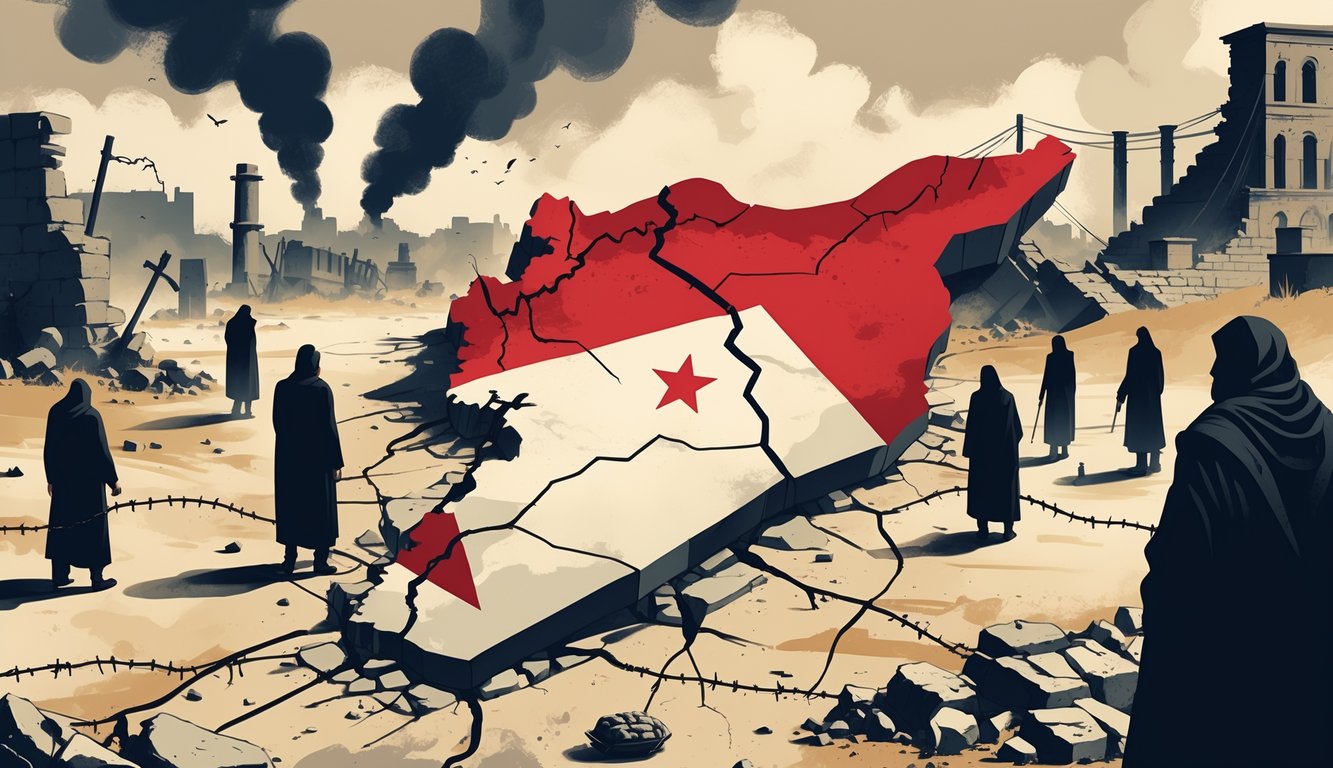
Syria’s recent history is shaped by mysteries tied to unrest, conflict, and changing borders. Many questions remain about how the past relates to today’s violence and how certain groups gained power.
The Unsolved Origins of Political Instability
Syria has faced political instability for much of the last century. Modern borders, drawn after World War I, put many ethnic and religious groups together, causing tension.
Military coups became common in the twentieth century, often connected to debates about leadership and religion’s role. Groups like the Muslim Brotherhood sometimes challenged governments by force.
Political groups could not agree on power-sharing, and outside forces influenced events. Syria’s geography made it vulnerable to invasions and fragmentation, which made stability difficult.
Some experts believe these divisions are at the root of Syria’s unsolved problems.
Syrian Civil War’s Ongoing Mysteries
The Syrian Civil War began in 2011 and became one of the region’s biggest conflicts. The fighting involved the government, opposition groups, the Muslim Brotherhood, and foreign armies.
No one fully understands how peaceful protests turned into such a long and brutal war. Many people want to know who was most responsible for the escalation.
The role of outside countries and powerful individuals in Syria remains debated. The fate of missing people, hidden money, and secret deals are still mysteries.
The Assad family has led Syria for decades, but weaknesses in their rule were revealed during the war. Some decisions by leaders during the war are still not fully understood.
Syria and Lebanon: The Overlapping Histories
Syria and Lebanon share a long, tangled history. Both were part of the Ottoman Empire and later came under French rule.
Outsiders drew their borders, causing issues between the two nations. During the Lebanese Civil War (1975-1990), Syria’s army entered Lebanon, saying it wanted to restore peace.
This led to years of Syrian involvement in Lebanese politics and conflicts. The true motives behind Syria’s actions and its lasting influence are still debated.
Some Lebanese groups have close ties with Damascus, while others resent Syrian policies. The history of shifting ambitions and struggles in the Levant makes it hard to know where political loyalty ends and outside influence begins.
The relationship between Syria and Lebanon remains complex, with many questions left unanswered.
Golan Heights and the Aftermath of Wars
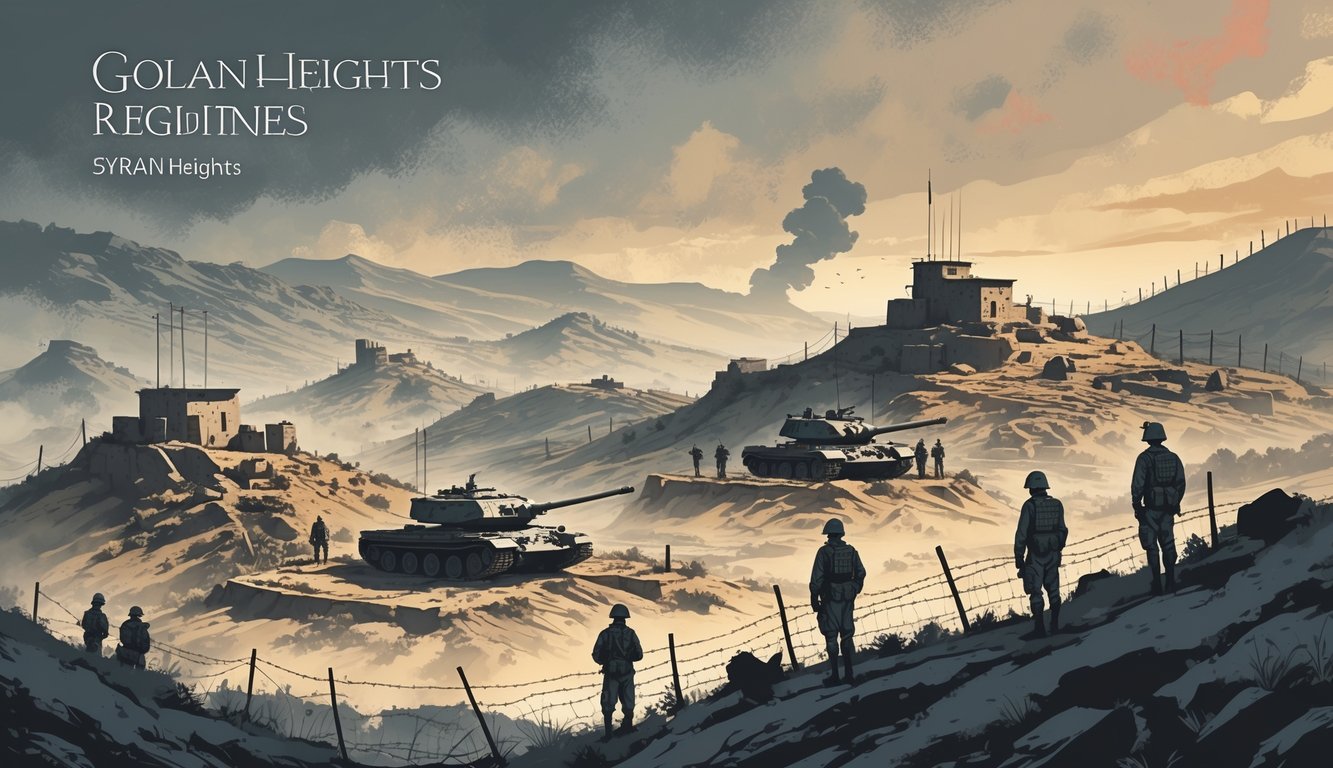
The Golan Heights has played a key role in Syria’s history. Its story involves battles, international debates, and decisions that still affect the region.
Strategic Mysteries of the Yom Kippur War
The Golan Heights became a major battleground during the 1973 Yom Kippur War. Syrian forces launched a surprise attack on Israeli positions, trying to reclaim territory lost in 1967.
Intense fighting took place across the rocky plateau, with tanks and artillery playing a huge role. One mystery is how Israel held its lines despite being outnumbered at first.
Military experts have studied Israel’s quick mobilization, tactics, and use of terrain. Questions remain about missed signals and the intelligence before the war.
Internationally, the Golan Heights is still considered by most as Syrian territory occupied by Israel. Disputes over its status have roots in these wars and their unclear outcomes.
Syria’s Role in World Wars
Syria’s modern history connects to both World War I and World War II. During World War I, the Ottoman Empire controlled the region.
After the war, the empire collapsed, and the League of Nations put Syria under French control. World War II brought more changes.
Syria became a battleground between British and Free French forces against Vichy French troops. This brief but important campaign moved Syria closer to full independence.
These experiences shaped Syria’s borders and politics. They also laid the groundwork for later disputes over areas like the Golan Heights.
Cultural Legacies and Unanswered Questions
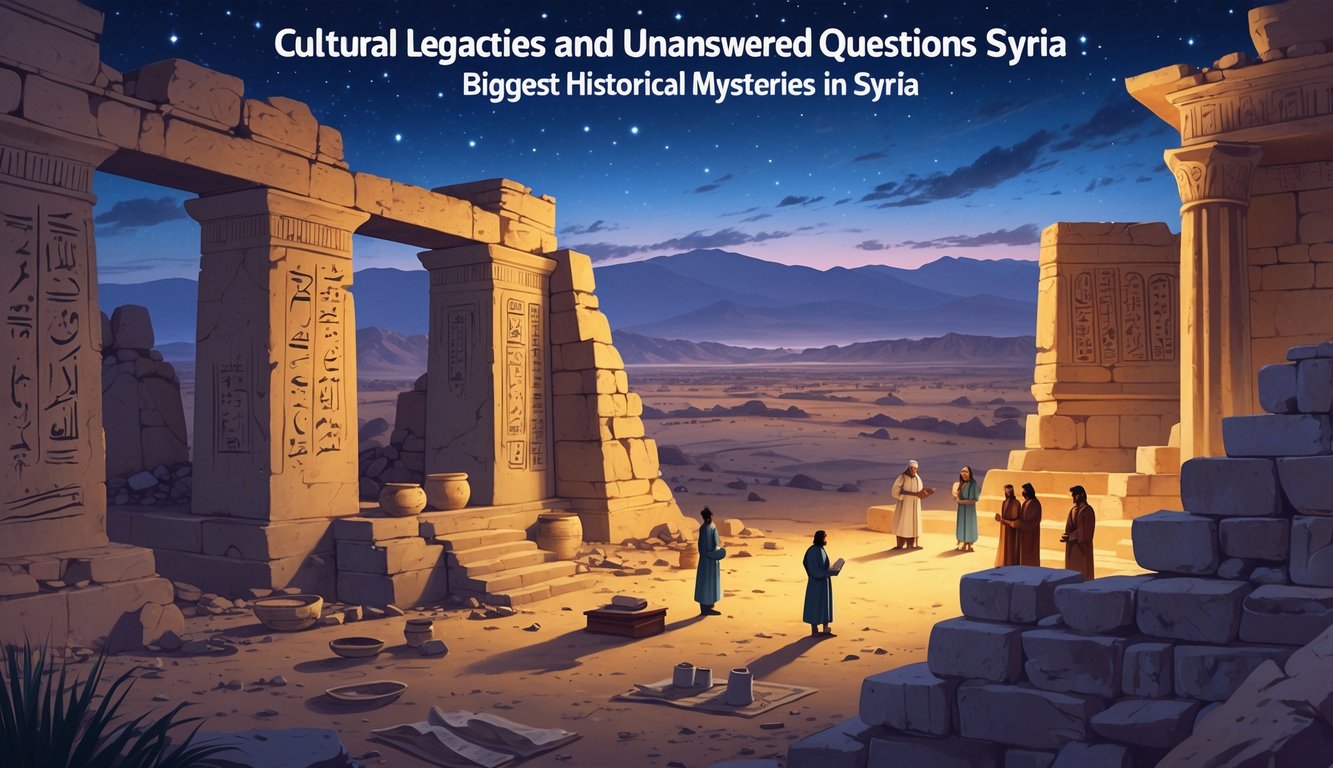
Syria’s history features extraordinary cultural growth and intellectual milestones. Key moments in science, language, and faith still leave historians with puzzles today.
Islamic Golden Age in Syria
Syria played a central role in the early Islamic Golden Age, especially under the Umayyad Caliphate. Damascus became the capital and a center for knowledge, arts, and trade.
Scientists, doctors, and engineers from across the region traveled to Syria to study and share ideas. Even after the Abbasid Caliphate moved the capital to Baghdad, Syria continued to influence learning and culture.
Early advances in medicine, astronomy, and math flourished in major cities. The Seljuks also brought their customs and helped schools and libraries grow.
Despite these developments, many details about lost manuscripts and daily life remain unknown. Experts still question how ideas moved between groups and how scholars preserved their work.
Influence of Written Languages
Syria’s long history made it a crossroads for languages.
Ancient Syrians used many scripts, including Aramaic, Greek, and later Arabic.
When the Umayyad Caliphate ruled, Arabic became the official language for government and culture.
This change helped unite vast regions and many peoples.
The translation movement in the Abbasid Caliphate led scholars to write Greek, Persian, and earlier works in Arabic.
This spread both new and old knowledge.
The Seljuks arrived and added Persian elements to the linguistic mix.
Arabic still remained influential during this period.
Questions remain about how quickly Arabic replaced earlier scripts.
Researchers also wonder how many local languages survived.
Archaeologists and linguists keep searching for inscriptions and texts that might explain these changes.
Some lost texts, like missing poems or scientific treatises, are still being sought by researchers today, as detailed in summaries of historical mysteries.