
South Africa is a country full of breathtaking beauty. It is also home to secrets that have left people wondering for years.
Some of the biggest historical mysteries in South Africa include lost treasures, unexplained crimes, and strange disappearances that have never been solved. These mysteries range from famous cases like the missing Kruger millions to unsolved murders that still haunt communities.

People from all over Africa and the world find these stories fascinating. Mysteries such as plane crashes with unknown causes, old legends about hidden gold, and shocking crimes fill the country’s past with questions.
Anyone interested in history or true crime will find these South African mysteries surprising and thought-provoking.
Readers can explore strange murders that confused police, storied escapes, and famous puzzles that still make headlines in South Africa today. Some of these mysteries are discussed in more detail in this article about historical mysteries and this list of unsolved South African crimes.
The Enigma of the Lost Treasure of the Kruger Millions
The Kruger Millions is a famous lost treasure story. It continues to draw adventurers and historians across South Africa.
This tale reaches back to the days of war and political change. Unanswered questions have fascinated people for more than a century.
Historical Background
During the Second Boer War (1899–1902), South Africa was in turmoil as the British Empire fought the Boer Republics. President Paul Kruger led the South African Republic through these difficult years.
As British forces advanced, Kruger and his followers feared their gold reserves would be captured. Legend says Kruger ordered a secret transport of government gold—worth millions of British pounds at the time—out of Pretoria.
The plan was to keep these riches from falling into enemy hands. Reports suggest the treasure was placed on trains heading towards Mozambique, but the gold vanished along the route.
Stories of missing loot quickly spread after the war. Despite many search efforts, the exact fate of the gold remains an unsolved mystery.
Theories of the Treasure’s Whereabouts
Many believe the lost Kruger Millions was buried somewhere in South Africa, especially near Blyde River in Mpumalanga. Others think that parts of the treasure may have been secretly shipped overseas or hidden in remote wilderness areas.
Some historians argue that the treasure might not have existed at all. They say the story grew larger over time through rumors.
Reported clues keep appearing, such as unusual coins found buried in fields. Some suggest that locals picked up parts of the treasure without realizing its true value.
Below is a table of popular theories:
| Theory | Details |
|---|---|
| Buried near Blyde River | Treasure hidden in remote province |
| Sent to Mozambique or Overseas | Gold transported across the border and lost or hidden abroad |
| Loot taken by locals | Scattered and picked up unknowingly by villagers |
| Entirely mythical | Story exaggerated or made up over the years |
Modern Searches and Claims
Today, the mystery of the Kruger Millions still attracts treasure hunters, explorers, and historians. People have used technology like ground-penetrating radar and metal detectors, but no confirmed discovery has been made.
Many adventurers focus their searches around Blyde River. Local legends and reported clues draw them in.
Tour companies in South Africa sometimes offer “Kruger Millions” tours. These tours aim to capture the excitement of the search for tourists and history fans.
Claims of found coins, gold bars, or hidden maps turn up regularly. None have ever been proven to be part of the real Kruger Millions.
The search continues, with the legend inspiring new stories of hope and adventure.
The Disappearance of the Ninth Legion

The Roman Ninth Legion, known as Legio IX Hispana, is one of history’s classic enigmas. Its story has long fascinated people worldwide due to the sudden loss and silence that followed its last known activities.
Origins of the Mystery
The Ninth Legion was a famous unit of the Roman army. It fought in key parts of the Roman Empire, including Spain and Britain.
Historians note that the unit vanished from Roman records sometime in the early second century AD. Based on surviving texts, the legion may have met its end fighting Celtic tribes in Britain.
Some believe the whole legion was wiped out in battle. Others argue they were reassigned or disbanded quietly.
There is no clear record of what truly happened to the legion. This makes its disappearance a topic of debate in ancient military history.
Authors and filmmakers have made the lost legion popular. They draw comparisons to other unsolved events both in Europe and Africa.
Archaeological Investigations
Archaeologists have searched for traces of the Ninth Legion in Britain and across the old Roman Empire. Dig sites at York and northern England have produced Roman equipment and coins, but nothing that clearly marks the end of the legion.
Recent findings suggest the Ninth may have left Britain and moved east, though evidence is thin. Modern technology like ground-penetrating radar and DNA testing of graves have been used, but results remain inconclusive.
A table of findings:
| Year | Location | Discovery |
|---|---|---|
| 1950s | York | Legion camp remains |
| 1980s | Scotland | Roman armor and weapon fragments |
| 2000s | Germany | Roman inscriptions |
The exact fate of the Ninth Legion is still unknown. This keeps the legend alive for history lovers and fans of great military mysteries.
For more background, visit this page about the enigmatic disappearance of the 9th Roman Legion.
Unsolved Mysteries of the South African Gold Mines
Many gold mines in South Africa hold secrets that have never been fully explained. Strange events, missing people, and lost artifacts still puzzle both locals and experts.
Myths and Legends Surrounding the Mines
Stories about the South African gold mines go back over a hundred years. Some legends claim that ancient people hid valuable treasures in deep shafts before Europeans arrived.
Others talk about curses placed on those who try to steal the gold. Villagers sometimes tell tales of strange lights and unexplained sounds coming from abandoned tunnels at night.
Workers have reported seeing ghostly figures and hearing voices below ground. Some believe these spirits are lost miners or ancient guardians of the gold.
These legends have grown over time. They create an air of mystery around places like the Witwatersrand Basin.
Even though many stories cannot be proven, they continue to fascinate people who live near the mines.
Disappearance of Miners
Unexplained disappearances are an unsettling part of the gold mine history. There have been cases where miners went to work and never returned.
In some situations, only tools or clothing were found. The people were never located.
One major incident involved a group of illegal miners, commonly called “zama zamas,” who were trapped in a tunnel. Even after rescue efforts, some bodies were never recovered.
Families were left with no answers. In recent years, grim events like the standoff that ended with nearly 80 miners dead highlight ongoing risks.
More details are available in this NPR report about the deadly standoff.
Disappearances are often blamed on falling rocks, flooding, or tunnel collapses. In some cases, the reasons remain unknown.
Hidden Tunnels and Artifacts
South African gold mines are famous for their massive underground networks. Over time, some tunnels have been lost or sealed off.
There are stories that secret chambers still exist, filled with old tools, mining carts, or hidden treasures. Sometimes, explorers find old artifacts that give clues about the people who once worked there.
Items like helmets, lanterns, or coins are discovered in places where people don’t expect. These hidden finds raise questions about what else might still be underground.
Maps of the oldest mines often show tunnels that don’t match what is found today. This adds to the belief that much has yet to be discovered.
Local treasure hunters and historians remain interested in these unsolved mysteries.
The Vanishing of Cecil Rhodes’ Diamond Hoard

Cecil Rhodes built an enormous fortune from diamonds in South Africa. Over time, rumors have grown about missing diamonds and the fate of his private stores.
Historical Context
Cecil Rhodes became one of the most powerful and wealthy men in southern Africa during the late 1800s. He founded De Beers, a company that quickly dominated the diamond industry.
Rhodes’s influence stretched beyond business. His efforts to control land and resources caused lasting impacts across the region.
His personal diamond hoard was said to be vast. Some believed that Rhodes kept large amounts of diamonds hidden away for private use or secret dealings.
During his time, businessmen often stored wealth in precious stones due to the instability of banks and currencies. By the early 20th century, after his death, questions started to surface about what happened to the diamond reserves Rhodes once possessed.
No public record clearly explained where the diamonds went or who controlled them.
Speculations of Theft or Secrecy
Many theories surround the disappearance of Rhodes’ diamond stash. Some suggest that trusted associates quietly took the stones for themselves after his death.
Others think Rhodes hid them very well, with only a select few ever knowing the true location. Rumors also point to the possibility that diamonds were used to fund secret political plans or to gain favor with British officials.
No treasure or stash has ever been officially found. Treasure hunters and historians continue searching for signs of Rhodes’ missing gems in South Africa and other parts of Africa.
The story has become popular in books and documentaries. New claims and leads still emerge from time to time.
The truth behind the vanished hoard remains one of South Africa’s most enduring historical puzzles.
The Silent Origins of the Cape Town Ghost Ship
The Cape Town ghost ship is one of Africa’s most puzzling maritime legends. Stories of the ship’s appearances at sea and strange disappearances have given it a special place in local history and folklore.
Famous Sightings
Many sailors and fishermen around Cape Town have claimed to see a ghostly ship drifting silently off the coast. The most reported sightings describe an old vessel with torn sails and no crew in sight.
Some say it appears during foggy weather or just before a storm. This ghost ship is closely linked to the area known as the “Cape of Storms,” a place infamous for shipwrecks and bad weather.
Local guides often tell stories of the ship mysteriously vanishing when approached. A few tourists and locals have tried to take photos, but none are clear.
This keeps the legend alive and continues to draw interest from curious travelers. It is one of several famous ghost stories in Cape Town that still spark debate.
Theories and Explanations
There are different theories about what causes these ghost ship sightings. Some historians believe the stories started from real shipwrecks along the rocky Cape coast.
The area is known for harsh weather that has sunk many vessels. Another idea is that fog, darkness, and waves play tricks on people’s eyes, making wrecked ships or even clouds look like haunted ships.
Experts from places like the History Channel have explored the possibility that natural illusions explain the sightings. Others think these stories grew over time to scare sailors or warn them about the dangers of the Cape.
The legend may also be linked to notable shipwrecks in Cape Town’s history, some of which have never been solved.
Connection to Great Escapes
Cape Town’s location at the tip of Africa made it a crossroads for explorers and prisoners alike. Local legends say that the ghost ship might have been part of attempted escapes from prisons or forced labor camps.
Some stories suggest the ship was used by those trying to flee harsh conditions. They hoped to reach freedom by slipping past the heavily guarded shores.
In these tales, the ghost ship represents hope for escape, but also the dangers of the relentless sea.
The Riddle of Pre-Colonial Stone Ruins
Stone ruins in southern Africa remain a fascinating puzzle. These ancient sites show the engineering skill and organization of early African communities.
They spark debate about their origins and purposes.
Great Zimbabwe and South African Sites
Great Zimbabwe is the most famous stone ruin in Africa. Built between the 11th and 15th centuries, its massive stone walls housed thousands and showed that a powerful kingdom ruled the land.
In South Africa, ruins like Bokoni consist of maze-like stone homesteads, wall-lined roads, and well-planned terraces in Mpumalanga. These structures cover an area of about 10,000 square kilometers and point to a large, organized society with unique traditions.
The ruins are sometimes confused with Adam’s Calendar, a stone circle near Mpumalanga that attracts curiosity due to its age and mysterious layout. The nearby Thulamela stone city, found in the Kruger National Park, adds more evidence that pre-colonial builders created complex settlements across the region.
Possible Purposes and Builders
Researchers debate the daily life and goals of those who built the stone ruins. The stone-walled Bokoni sites likely supported advanced farming communities, with walled roads linking homes and terraced fields on steep slopes.
This arrangement helped with soil and water control. Archaeologists believe early African societies, such as the ancestors of the local Sotho and Nguni-speaking people, built these ruins.
They lived in large groups, often with cooperative and sometimes “egalitarian” systems to share land and resources. Items like gold jewelry, pottery, and iron tools found at places like Thulamela suggest that these communities traded and used varied technology.
To learn more about these sites, see the stone ruins of Bokoni and recent discoveries at Thulamela.
Ambiguities Surrounding the National Party and Apartheid
The National Party shaped modern South Africa through policies that enforced racial segregation. Many facts about its beginnings and secret decisions during apartheid still confuse historians and fuel debate.
Origins of the National Party
The National Party started in 1914 with the aim of protecting the interests of Afrikaners in South Africa. Over time, it grew into a powerful force, especially after winning the 1948 election.
The party became known for creating and implementing apartheid, a system that enforced strict segregation between different racial groups. Some questions remain about how the party gathered early support and the reasons behind certain political deals.
Records show that Indians, Black South Africans, and those labeled “Coloured” faced exclusion from political power and justice under the party’s rule. For example, the National Party quickly removed Coloured voters from the regular voting rolls in 1956, which gave more control to white South Africans.
The real motivations behind these changes are still discussed by researchers, with some suggesting the party made private promises and secret plans to win votes and support. More details are available about how these policies affected racial segregation and justice at Britannica’s overview.
Secret Documents and Unexplained Events
Despite many public laws, the National Party often worked behind closed doors. Some secret government documents, still hidden or only found in parts, leave gaps in understanding how key decisions were made during apartheid.
Examples include government meetings about security forces, censorship, and the treatment of people who challenged apartheid. Rumors of lost or destroyed files add to the mystery, as does the question of how much leaders outside of parliament really knew.
Historians point out that some events, like sudden policy changes or detentions without trial, were never fully explained to the public. Many still call for these records to be released, hoping to answer lingering questions about repression and secrecy during the National Party’s rule.
The Mystery of the Missing Sultan of Mauritius
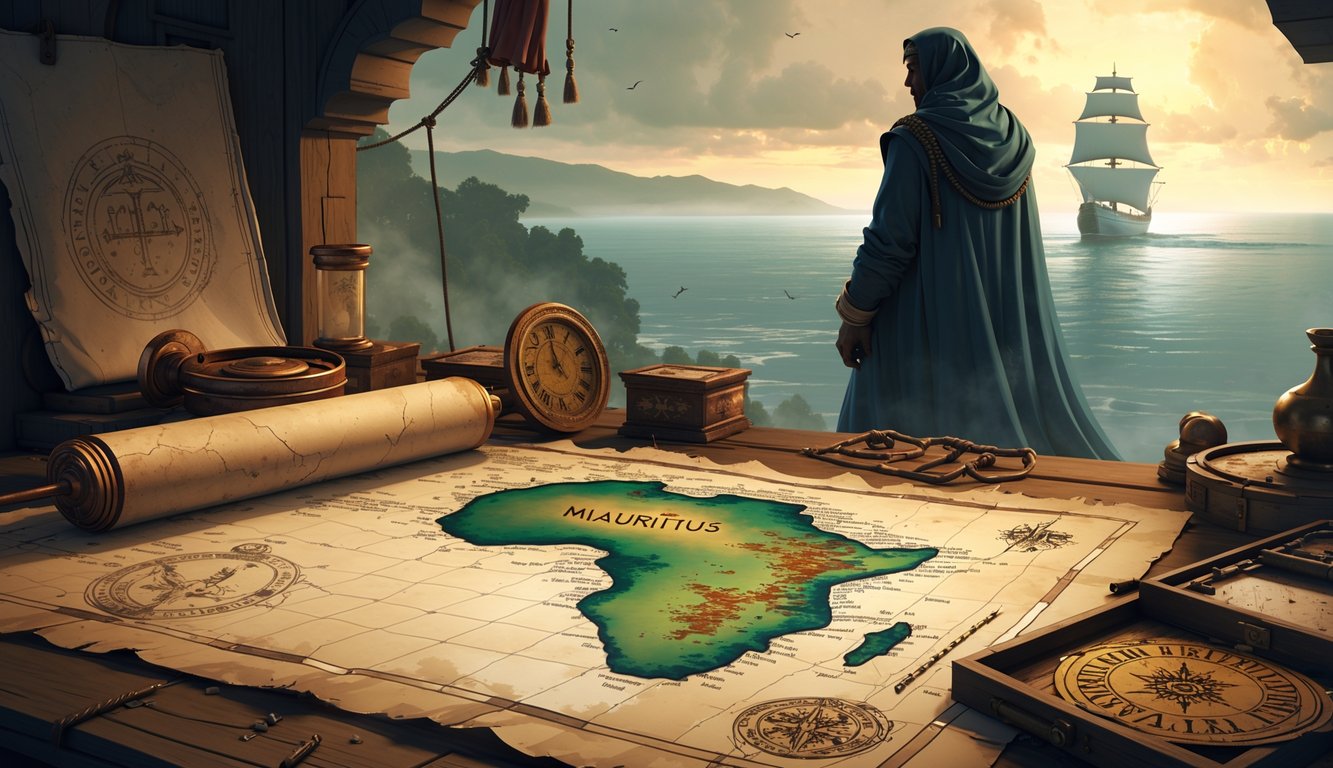
Mauritius, while not part of South Africa, shares the region’s love for legends and unsolved cases. One of the most intriguing stories is that of the missing Sultan, a tale filled with mystery, conflicting details, and enduring questions.
Historical Accounts
According to island tradition, a ruler known as the Sultan once arrived in Mauritius from mainland Africa in the early colonial era. Some say he escaped political unrest or conflict at home.
A few written records from European travelers mention a “royal stranger” seen near the old ports, described as “richly dressed with an Eastern bearing.” Evidence of the Sultan’s time on the island is mostly based on oral stories.
Local elders often speak of lost treasures and secret pacts tied to his name. Ruins near coastal villages have been connected to his brief rule, but no official documentation survives today.
Many believe his presence contributed to local blends of African and Asian culture that still define Mauritius’s identity. People still tell stories about ghostly figures at night, claiming these are linked to the Sultan’s mysterious fate.
Although there is no physical proof, the legend continues to shape the collective memory of the island, adding to its hidden stories and mystique.
Unresolved Theories
Several theories try to explain what happened to the Sultan. Some believe he was betrayed by rivals who wanted his wealth and status.
Others suggest he left Mauritius secretly by boat, trying to return to Africa but never made it. Another idea is that the Sultan hid a large treasure before vanishing.
Treasure hunters over the years have searched caves and old estate grounds across the island, hoping to find clues. A few have even claimed to see old coins and jewelry, but nothing has been officially confirmed.
Modern researchers debate if the Sultan was a real person or a figure from myth. With little physical evidence, the story remains open to interpretation.
The tale still raises questions about the sacred mysteries and forgotten histories that lie beneath the surface of Mauritius’s past.
Unexplained Phenomena in South African Culture

South Africa has many stories of people vanishing without a trace, as well as tales of strange creatures and supernatural events. These stories are a unique part of the country’s culture and have been discussed for generations.
Legendary Disappearances
South Africa is home to several mysterious disappearances that have never been solved. One of the most famous stories is the case of the Kruger Millions, where gold worth a fortune supposedly vanished during the Second Anglo-Boer War.
Despite searches over the years, the gold has never been found. Another well-known case is the disappearance of Jacoba “Bubbles” Schroeder in 1949.
Bubbles was a young woman last seen in Johannesburg, and her murder remains a mystery. These and other cases, like vanishing planes and missing people, continue to puzzle investigators and attract curious minds.
More examples of these unsolved cases are discussed in publications on South Africa’s unsolved mysteries.
Folklore and Urban Legends
Beyond physical disappearances, South Africa has a rich tradition of myths, legends, and urban tales. Stories about the Tokoloshe, a mischievous spirit said to cause harm or mischief, are still told in many communities.
Some people still use bricks under their beds at night, believing it will keep the Tokoloshe away. Mysterious lights in the sky, like those seen in the Karoo, are also famous.
People often report strange moving lights that cannot be explained. Tales about ghosts and haunted places such as Castle of Good Hope in Cape Town are popular too.
You can read more about these strange events and how they shape local culture at fascinating mysteries of South Africa.
Fascinating Great African Escapes
Some of the most dramatic events in South African history involve bold escapes. These moments highlight personal bravery and have left a lasting mark on how society thinks about justice and freedom.
Escape Stories in South African History
South Africa’s past is filled with daring escapes that have captured public attention. The documentary series Great African Escapes on the History Channel tells the stories of people who took extraordinary risks to break free from captivity or dangerous situations.
One well-known example features escape attempts during apartheid, when political prisoners found clever ways to gain their freedom. These escapes were not just acts of survival, but also statements against an unfair system.
In other cases, prisoners used tunnels, disguises, and inside help to escape from high-security jails. Many of these escapees faced long odds, but their determination and creativity helped them succeed.
Their stories have become important pieces of South African history and continue to interest new generations.
Impact on Culture and Justice
Great African escapes have shaped how people view justice in South Africa. These stories sparked conversations about whether the legal system was fair during strict government rule.
They influence books, movies, and documentaries. The media, such as the History Channel, often revisits these events to show their importance.