Qatar has a history that stretches back over 50,000 years. Many secrets from its past remain unexplained.
From ancient carvings in the desert to mysterious sites that puzzle researchers, some of Qatar’s biggest historical mysteries continue to spark curiosity today. Areas like Al Jassasiya have strange symbols carved into rocks. These carvings make people wonder about the lives and beliefs of those who lived in the region long ago.
Some mysteries hide beneath the sand, while others stand out in plain sight. These sites raise questions about Qatar’s earliest inhabitants and forgotten cultures.
Explorers and historians want to learn more about the country’s fascinating past. If you are interested in what remains to be discovered, get ready to explore some of the most intriguing and puzzling sites and stories in Qatar’s history.
Ancient Civilizations and Early Settlements
Ancient people left behind sites and artifacts across the Qatari peninsula. These remains reveal a long and complex past.
Traces from the Bronze Age and Iron Age help us understand how early societies lived, traded, and settled in what is now Qatar.
Bronze Age and Iron Age Discoveries
Archaeologists found tools, pottery, and campsites in Qatar from both the Bronze Age and Iron Age. At Al Da’asa, researchers uncovered stone tools and fragments of Ubaid pottery.
These discoveries show that settlers lived on the peninsula about 7,000 years ago. Distinctive potsherds discovered in Qatar came from areas in southern Iraq, showing there was trade across the Gulf.
Many sites reveal small settlements where people fished, herded animals, and traded valuable goods like pearls and shells. These discoveries shed light on daily life, technology, and social systems of ancient Qatar.
Mysterious Origins of the Qatari Peninsula
The earliest origins of the Qatari peninsula are still unclear. Human occupation may stretch back as far as 50,000 years, based on stone tools and campsites found in the region.
Most permanent settlements appeared much later. A key mystery is what first drew ancient people to this land.
Some experts believe that trade routes linking Mesopotamia and other areas made Qatar a natural meeting point. Archaeological sites such as Al Bida show that early towns became important centers for trade.
The coastal location gave people access to fishing and pearl diving. The exact path that early settlers took to reach the peninsula remains unknown.
New finds are still being uncovered. The puzzle of the peninsula’s ancient beginnings keeps historians and archaeologists searching for more answers.
The Enigma of Al Zubarah
Al Zubarah was once a busy merchant town on Qatar’s northwest coast. Its empty streets and strong walls now spark questions about its sudden fall and the mysteries hidden within Fort Al Zubarah.
Al Zubarah’s Rise and Abrupt Decline
Al Zubarah grew rapidly during the 18th century and became a major center for trade and pearl diving. Merchants from many lands visited the town, drawn by its lively markets and coastal spot.
The community’s wealth made it one of the most important towns in the Persian Gulf at the time. Despite its success, Al Zubarah faced conflict and ruin.
Attacks and political struggles led to swift changes in power. By the early 19th century, the town was abandoned.
Today, the sands have covered most of the old merchant town. Modern studies, including its naming as a UNESCO World Heritage Site, help us learn more, but many questions remain.
Al Zubarah Fort and Its Secrets
Al Zubarah Fort stands at the edge of the old town and offers a direct window into the past. Sheikh Abdullah bin Jassim Al Thani built the fort in 1938.
The fort was first meant to defend the coast but later served as a police station and watchtower. Today, it protects archaeological finds from the site, such as pottery and tools.
The thick walls and watchful towers still stand, making the fort a key symbol of the region’s defensive needs. Each room and hallway holds secrets about how people lived and worked during Al Zubarah’s peak.
Excavations reveal links to the Abbasid period and offer evidence of daily life in the merchant town. For more on the site’s story, the National Museum of Qatar’s Life on the Coast Gallery has a detailed highlight on Al Zubarah.
Unexplained Rock Carvings of Al Jassasiya
Al Jassasiya is famous for its mysterious and ancient carvings. The site is found in northeastern Qatar, where many unique images are etched into limestone rocks.
Symbolism and Unknown Origins
At Al Jassasiya, over 900 carvings, known as petroglyphs, cover the flat, low-lying rocks. Many of these carvings show rows of round holes shaped like cups, patterns, and detailed depictions of boats with oars and sails.
No one knows for sure why these symbols were made or what they mean. Historians have found similar carvings in other places, but none are as extensive as these in Qatar.
Some researchers think the cup shapes could be ancient board games. Others believe the boat images reflect daily life or travel by sea.
The creators of these carvings are still a mystery. Experts do not agree about when or why people made them, but some suggest they could date back to Neolithic times.
The Al Jassasiya site continues to draw interest due to its strange symbols and unproven theories about their origin. Today, visitors come to see the largest collection of rock carvings in Qatar and imagine what stories they tell.
Mysterious Islamic and Medieval Sites
Qatar’s past saw the rise of impressive towers and large early Muslim settlements. Both played important roles in defense, religion, and the spread of new cultures.
The Legacy of Barzan Towers
Barzan Towers stand in the Umm Salal Mohammed area. Builders constructed these towers in the late 19th or early 20th century.
People used the towers to watch over pearl divers and protect water supplies. Their tall, solid walls and unique architectural details show how people adapted to the harsh desert environment.
Historians still discuss the towers’ purpose. Some say they were military watchpoints, while others believe people used them for astronomy and religion, such as observing the moon.
These features, together with their sturdy stone construction, make Barzan Towers one of Qatar’s most recognizable historical landmarks. Local stories and archaeological research reveal that the towers were part of a wider defensive system.
Today, visitors can see their restored interiors and learn about early Qatari engineering and daily life.
The Abbasid Period Puzzles
During the Abbasid period, which began in the mid-8th century, new Islamic settlements appeared in Qatar. One important site from this era is Murwab.
Archaeologists uncovered ruins that include a mosque and residential buildings at Murwab. The settlement shows how Islam influenced everyday life and introduced new architectural forms.
Archaeologists found potteries, coins, and stone tools at the site, pointing to trade connections with far-off lands. Murwab’s layout, with its simple streets and religious buildings, highlights social and spiritual life under early Islamic rule.
The exact reasons for Murwab’s decline are still unknown. Shifting trade patterns or changing climates might have played a role.
Murwab and similar sites remain some of the most studied archaeological mysteries in Qatar.
Qatari Architecture Shrouded in Mystery
Some of the most unique features of Qatari architecture remain unexplained. Secret meanings in geometric patterns and the impact of past regional connections still puzzle researchers.
Hidden Meanings of Traditional Designs
Traditional Qatari buildings, especially old homes and mosques, use simple shapes on the outside. Inside, they are filled with detailed decorations.
Geometric patterns, arches, and carved plaster work are everywhere. Their exact meanings are still debated.
Key features include:
- Gypsum screens (kamariat): These delicate windows let in light and air while keeping houses cool.
- Carved motifs: Many repeat shapes are inspired by Islamic art, but some designs seem unique to Qatar.
- Minimalist exteriors: Unadorned walls may have protected from harsh weather and also from intruders.
Experts cannot always agree if these designs were just for beauty or if they hid messages about beliefs, power, or social status. Some believe special symbols in mosques show early connections to Sufism or other Islamic traditions.
You can read about these features in more detail on Wikipedia’s page on the architecture of Qatar.
Influence of Regional Cultures
Qatar’s location in the Persian Gulf made it a crossroads for traders, craftsmen, and travelers. Buildings in Doha and other towns blend local craft with ideas from Iran, East Africa, India, and the Arabian Peninsula.
Examples of outside influence:
- Mashrabiya screens: These wooden lattice windows, popular in other Gulf regions, appear in old Qatari houses.
- Courtyard homes: This design, common across the region, helps families stay cool.
- Imported materials: Some ancient homes used stone and wood brought from Iran and India.
Despite these influences, Qatar developed its own style over time, mixing imported shapes with local tastes. The reason why some elements appear only in certain neighborhoods or buildings is still unknown.
Visit this article about Qatari architectural wonders to see how these mysteries are reflected in famous sites today.
The Merchant Towns: Economic Mysteries
Merchant towns in Qatar, along the Persian Gulf, played a unique role in the country’s early growth. Trade, the sea, and changing markets helped shape their mysterious rise and fall.
Trade Routes and Unsolved Wealth
Many merchant towns, like early Doha, stood at key points on the Persian Gulf. They sat near rich fish and pearl oyster beds, making them important for trade.
Before oil, merchants focused on fishing, pearling, and simple trading. Doha was small and often overlooked compared to bigger ports in Bahrain or Kuwait.
Oddly, these towns had very little foreign presence. Other gulf ports had many Indian traders, but Qatar had almost none until the 1950s.
The reason for this remains uncertain and is an economic mystery. Few records exist, so historians still wonder how wealth shifted or faded in these Persian Gulf communities.
Sheikh Abdullah bin Jassim Al Thani and Lost Legacies
Sheikh Abdullah bin Jassim Al Thani led Qatar through many changes in the early 1900s. His rule is known for achievements and unanswered questions, especially about Qatari architecture and the past that shaped modern Qatar.
Uncharted Aspects of His Reign
Sheikh Abdullah bin Jassim Al Thani ruled from 1913 to 1949, a critical time as Qatar began to modernize. He became ruler after his father chose him as Governor of Doha in 1906, preparing him for leadership.
During his long rule, Sheikh Abdullah made decisions that shaped Qatar’s future, such as signing the 1916 Treaty with the British. Some records from his era are missing or unclear, leaving many events open to questions today.
Historians still debate his role in local politics, his choices about oil exploration, and the changes he made to Qatar’s laws. The lack of detailed sources means much about his leadership remains a mystery.
Mysteries of His Architectural Projects
Sheikh Abdullah built many important structures, but some details about his projects remain unexplained. Early Qatari architecture changed a lot during his reign, with new forts and palaces appearing across the country.
The old palace at what is now the Msheireb Museums is an example. Some believe it was designed to reflect both tradition and Sheikh Abdullah’s vision for Qatar’s future.
Little is recorded about the exact architects, materials, and influences behind these buildings. Researchers studying the Msheireb Museums and Qatari architecture search for hidden plans or historic photos that could answer questions about lost designs and construction methods.
These gaps add intrigue to Sheikh Abdullah’s architectural legacy.
Museum Mysteries: Lost Artifacts and Stories
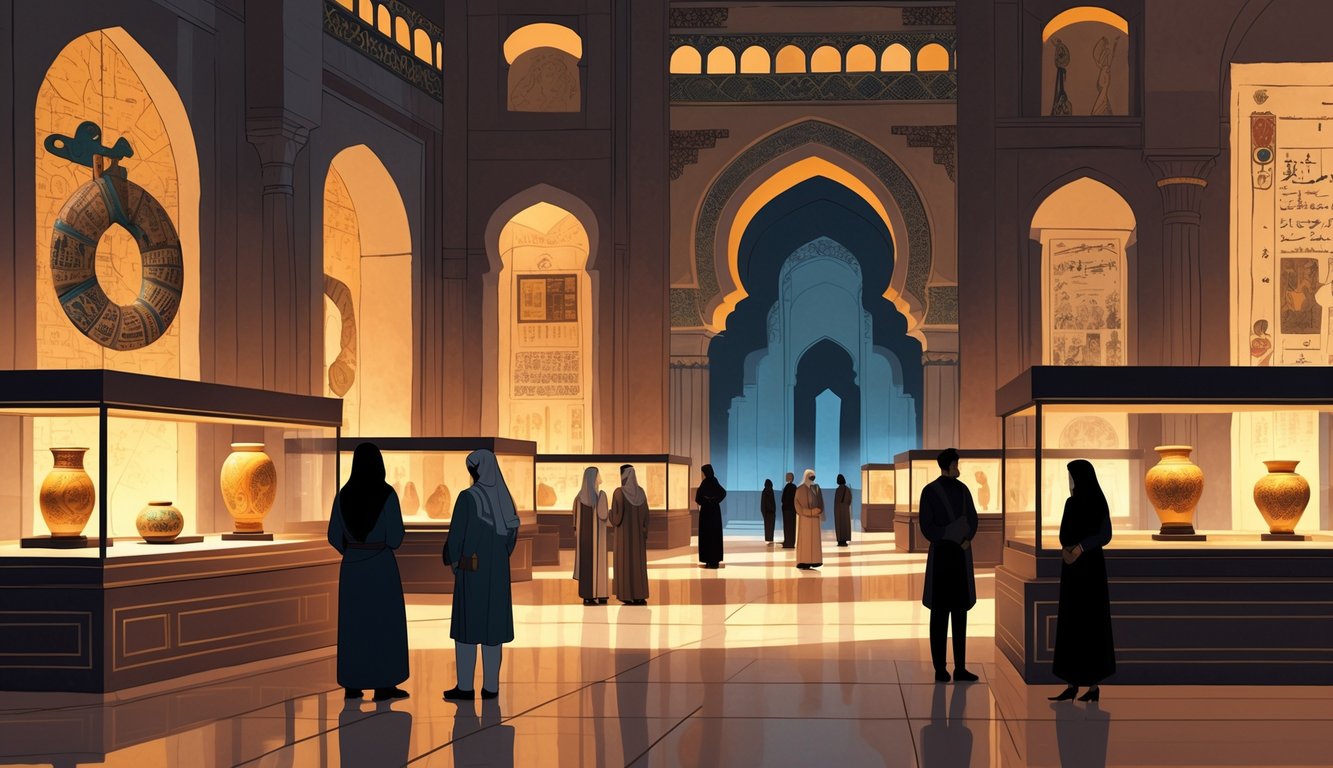
Qatar’s museums hold rare treasures and stories from across centuries. Many objects remain mysterious, with lost artifacts and unexplained histories drawing curiosity from visitors and researchers.
Museum of Islamic Art Enigmas
The Museum of Islamic Art in Doha has a massive collection, including manuscripts, ceramics, textiles, and jewelry from across the Islamic world. Some items have uncertain origins, as their journeys through history are only partly known.
Historians have tried to trace the path of ancient glasswork and rare coins, but records do not always show how they arrived in Qatar. Some prized manuscripts have unknown authors.
This lack of origin story makes these artifacts both valuable and mysterious.
Key unresolved mysteries in the museum include:
| Artifact Type | Mystery |
|---|---|
| Ancient Manuscripts | Missing author details and journey to Qatar |
| Rare Coins | Unknown locations of minting and original owners |
| Ceramics & Glasswork | Gaps in trade routes and previous collections |
Visitors often notice displays marked as “donor anonymous” or “origin unknown.” These cases spark interest and remind viewers that much about these objects may never be fully understood.
Msheireb Museums: Unveiling the Past
The Msheireb Museums focus on Qatar’s social history, showing the lives of people in Doha’s earliest neighborhoods. Some exhibits use real family heirlooms and oral stories to recreate forgotten moments, but many personal artifacts have vanished or lack clear records.
Researchers use photos, documents, and old letters to piece together who owned these items or how they were once used. Several rooms highlight the struggle to trace the legacy of pearl divers and traders, whose belongings went missing during Doha’s rapid modernization.
Important displays often feature:
- Objects with limited background information
- Displays of tools or clothing whose makers are unknown
- Stories of families still searching for missing heirlooms
Some items, such as an old dhow model or a set of pearl diving tools, still puzzle historians today. These mysterious objects give a personal touch to Qatar’s story, leaving visitors with questions about daily life in the past.
For more about the secrets in Qatar’s museum collections, see this article about hidden treasures in Qatar museums.
The Impact of the Persian Gulf and Maritime Secrets
Qatar’s history grew from its position along the Persian Gulf, where ancient trade and seafaring left behind mysteries. The region’s sunken sites and old trade routes tell stories of lost cities, foreign influences, and changing ways of life.
Sunken Settlements and Ancient Trade
The warm waters of the Persian Gulf hide underwater traces of early settlements. Archaeologists believe these sunken remains may be linked to rising sea levels and changing shorelines over thousands of years.
Some of these ruins could be old fishing villages or trading posts, washed away by natural events. Artifacts found beneath the waves, such as pottery and old tools, show evidence of active trade between Qatar and faraway places.
Merchants moved goods like pearls, dates, and horses across important sea routes. These routes connected the Gulf with the wider Indian Ocean and shaped Qatar’s history for centuries.
Fishermen’s stories and new underwater technologies continue to uncover clues about how frequent trading shaped Qatar’s growth. The Persian Gulf’s mysteries encourage researchers to search the seabed for more secrets, hoping to understand what daily life and business looked like long ago.
You can read more about these discoveries and their importance to the Persian Gulf’s historical significance.
The Influence on Qatari Society
The Persian Gulf became the heartbeat of Qatari society. Over time, the Gulf shaped how people lived, what they ate, and the traditions they passed down.
Trade brought a mix of cultures and languages to Qatar’s shores. Merchants and sailors from Persia, India, and East Africa influenced the way local communities dressed, built their homes, and celebrated holidays.
The booming pearl industry helped families build wealth, but it also brought risks and hardships. Fishermen and divers depended on the Gulf’s waters for food and income, relying on their deep knowledge of tides and weather.
When oil changed the region, these old ways faded, but people still remember the skills and stories from the maritime past. This blend of local traditions and outside influences made Qatari society unique among Gulf nations.
For more on the region’s complex history and cultural ties, see this look at the Persian Gulf’s historical significance and cultural influence.
Continuing Research and Unsolved Questions
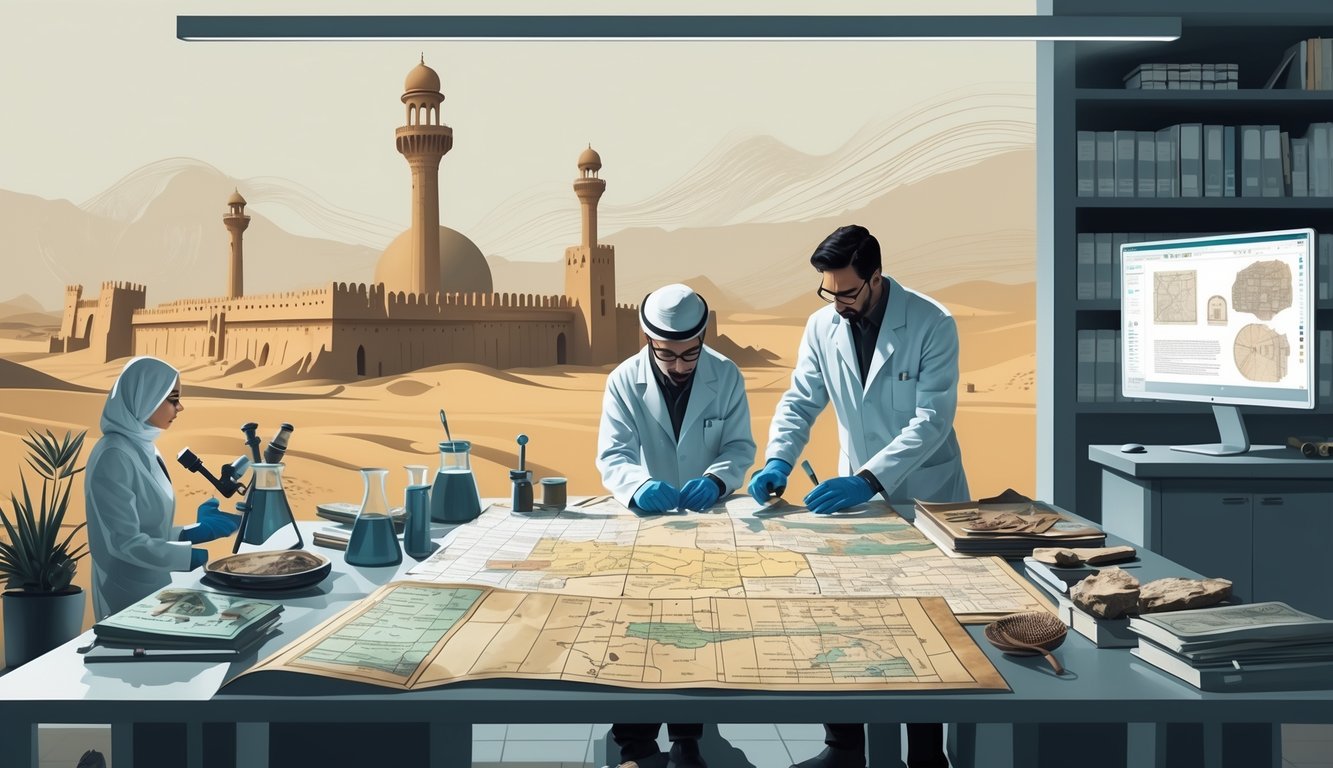
Qatar’s past is full of secrets waiting to be discovered by experts and visitors. The search for answers continues, as technology and science keep revealing new clues about ancient cultures and settlements.
Modern Archaeology in Qatar
Archaeology in Qatar has advanced quickly, especially around the UNESCO World Heritage Site of Al Zubarah. This walled coastal town, once a center of trade and pearling, still holds parts of its history underground.
Recent digs in the ruins of Al Zubarah have uncovered pottery, pearl divers’ equipment, and the remains of old houses. Researchers use drones, ground-penetrating radar, and 3D mapping tools to study areas that have not been explored.
These methods help reveal how old settlements were built and how ancient Qatar linked to nearby regions. Each new find raises more questions about how the people lived and traded so long ago.
Lists like the top historical mysteries show that some questions remain open, as not all ancient tools or ruins have been explained.
Qatar’s Place in Regional Mysteries
Qatar sits near the heart of the Arabian Gulf. Its history connects closely to major regional events.
Much about ancient trade routes through Doha and other coastal areas remains uncertain. Did early settlers in Qatar work with distant cultures, or did they develop their own unique traditions?
Historians puzzle over old tombs and ships found along the coast. Did local people build them, or did visitors from modern-day Iran or the wider Arabian Peninsula leave them behind?
This situation is similar to mysteries in other parts of the world, like unsolved historical mysteries, which researchers still study.
Archaeologists compare Qatar’s discoveries with clues from UNESCO World Heritage Sites in nearby countries. They hope to fill in the missing pieces of Qatar’s story.