Oman is a country filled with ancient secrets and discoveries that still puzzle historians and archaeologists today. From mysterious Bronze Age towers to ancient oasis towns filled with legends, the past here is as fascinating as it is unknown.
Some of the biggest historical mysteries in Oman include the purpose of its stone towers, the old myths of places like Bahla, and the secrets hidden in its UNESCO World Heritage Sites.
Oman’s landscapes are dotted with ancient wonders that have sparked curiosity for generations. Researchers continue to explore sites that reveal new information about trade, culture, and everyday life in ancient times.
Despite many archaeological digs and historical studies, some questions about Oman’s history remain unanswered and keep people guessing.
The Mystery of the Ancient Frankincense Trade
Frankincense shaped Oman’s culture and economy for thousands of years. This aromatic resin from Boswellia trees attracted traders, explorers, and empires, sparking myths and leaving traces along ancient caravan routes.
Origins and Historical Significance
Frankincense comes from the sap of the Boswellia sacra tree. The tree grows mainly in southern Oman, especially in dry valleys.
People have harvested frankincense here for over 5,000 years. In ancient times, it was so valuable that people called it “the gold of the ancient world.”
Cultures used frankincense for religious ceremonies, medicine, and perfumes. Priests burned it in temples, and rulers traded it for gold, spices, and silk.
Oman’s trade in frankincense helped build its cultural heritage. The resin became a symbol of wealth, faith, and knowledge.
Its story touches the histories of Egypt, Greece, India, and Rome.
Trade Routes Connecting Oman
Oman’s location made it a key player in ancient trade routes. Caravans loaded with frankincense left southern Oman and crossed harsh deserts to reach Arabia, Egypt, and the Mediterranean.
These routes are now called the Frankincense Trail. They also linked the Arabian Peninsula with Africa and India.
Ships sailed from Oman’s coast, carrying frankincense to far-off markets. Trade boosted Oman’s influence and allowed new ideas and goods to flow in and out.
Merchants built towns along these busy routes. Trade brought people together and helped shape the culture and identity of Oman for centuries.
Role of Dhofar Region
The Dhofar region is the heart of Oman’s frankincense story. This green and misty area in southern Oman is one of the only places in the world where the Boswellia sacra tree grows well.
For centuries, local people have harvested frankincense using simple tools and time-tested methods. Each summer, they cut slits in the tree’s bark.
Thick sap drips out and dries into pearls of resin. Dhofar’s mountains and valleys created the perfect climate for these trees.
The trade turned Dhofar into a hub of history and culture. Its cultural heritage still shapes local traditions, festivals, and crafts today.
Archaeological Evidence of Frankincense
Archaeologists have found remains of ancient ports, caravan stops, and ruins showing how frankincense shaped Oman’s early history. Sites like Al-Baleed and Khor Rori provide clues about busy markets where caravans came and went.
Old incense burners, stone buildings, and trade records point to a thriving industry. Ruins show where frankincense was weighed, stored, and shipped across continents.
Ongoing digs and new studies still reveal more about how Oman’s frankincense trade operated. Many discoveries have put Oman on the map as a key center for ancient trade, faith, and culture.
Enigma of Al-Baleed Ancient City
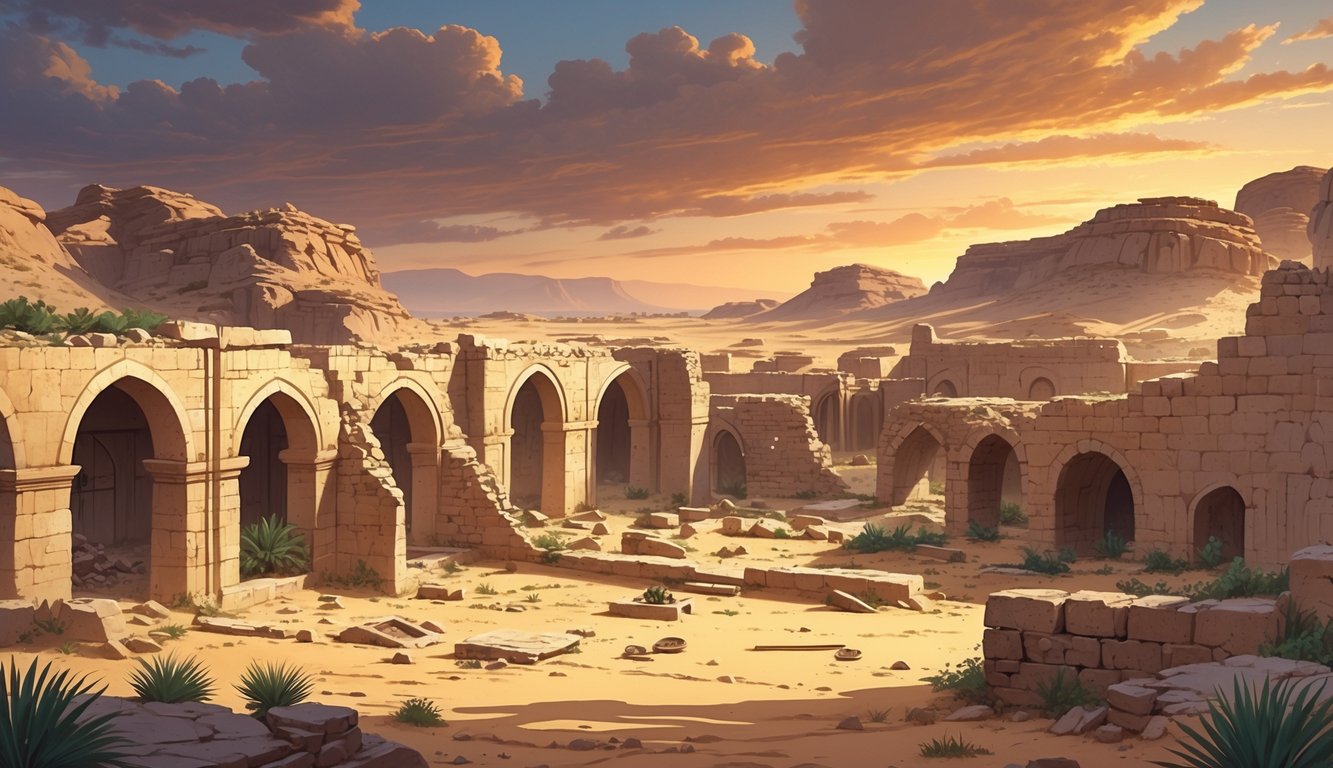
Al-Baleed, a UNESCO World Heritage site near Salalah, stands out as an important piece of Oman’s past. Its ancient ruins hold secrets about trade, society, and culture that shape how people understand the story of this region.
Mysteries Behind Urban Design
Al-Baleed’s city layout puzzles many historians and visitors. Its walls formed a rectangle along the coast, unlike most coastal settlements of its era that favored rounded defenses.
The main entrance stood at the north wall, away from the ocean, raising many questions about defense and planning. Inside the city, researchers have found broad streets laid out in a grid pattern, which was rare for early Islamic cities on the Arabian Peninsula.
This reveals a high level of organization and planning. Scholars still debate if these features were designed for trade, protection, or religious rituals.
No one knows exactly why Al-Baleed was built this way. Some guess that the unusual plan helped the city become a major port for the frankincense trade, making it different from neighboring settlements.
Excavations Revealing Lost Society
Archaeological digs at Al-Baleed have uncovered layers of history from as early as the 8th century. Ruins of grand mosques, city walls, and homes show that it was once a thriving port city.
Detailed mapping and exploration have shown how the people lived, worked, and worshipped. Items such as pottery, coins, and tools were found throughout the ruins.
These discoveries hint at connections with faraway regions, not just within Oman but across the ancient trade routes to Africa, India, and beyond. Archaeologists continue to look for clues that could explain how Al-Baleed society organized itself and what caused it to fade into history.
For more details about the excavations and the site’s rich story, visit this Salalah archeological park guide.
Impacts on Omani Culture
Al-Baleed’s influence on Omani culture is clear even today. As part of the Land of Frankincense UNESCO World Heritage Site, its story is taught in schools and shared in museums.
Families and students visit the open-air park to learn about Oman’s past, especially its role in the frankincense trade. Old traditions and legends tied to Al-Baleed help keep local stories alive.
The Museum of the Frankincense Land, built right on the site, uses these tales and real objects from the ruins to teach about Oman’s long history of trade and exploration. Al-Baleed connects people today to a time when Omani society led the world in trading rare goods.
Puzzles of the Bronze Age in Oman
Oman’s Bronze Age leaves many historical questions. The land is full of towers, tombs, and trade goods that hint at a busy and advanced ancient civilization.
Ancient Structures and Monuments
Across Oman, hundreds of ancient towers rise from the desert. These structures are almost 5,000 years old and built from stone, often in circular shapes.
The best-known examples are the towers of Bat, Al-Khutm, and Al-Ayn. Scholars once believed these towers were just watchtowers or simple defensive forts.
New research shows they had more complex uses, including roles in community life and ceremonies. Some even contained wells inside or were built near burial sites.
Tombs shaped like beehives are also found around these towers. The use and meaning of these towers and tombs are still debated by archaeologists.
Many mysteries remain about why people invested so many resources into these monuments. The towers are now considered a symbol of ancient Oman’s innovation and identity.
Learn more about these mysterious towers at The Archaeologist’s feature on Oman’s Bronze Age towers.
Questions About Civilization Origins
Oman’s Bronze Age sites challenge what experts thought about civilization in Arabia. Ruins found at Al-Arid and other locations suggest that people in ancient Oman organized complex communities much earlier than once believed.
Archaeologists discovered remains of houses, stone walls, pottery, and metal working areas. Some settlements were planned with streets and public gathering spaces—signs of an established social structure.
The origins of these people are still unclear. Some artifacts show connections to Mesopotamia and the Indus Valley, but it’s not certain whether Omani communities were started by locals or migrants.
Exploring sites like Al-Arid has sparked new debate on how ancient Oman’s civilization began and how advanced it became so quickly. For more detail, visit the Oman Observer article on archaeological discoveries in Al Arid.
Bronze Age Commerce and Trade
Oman’s location gave it a key role in early trade networks during the Bronze Age. Archaeologists found copper tools, pottery, jewelry, and even seeds from plants grown far away.
These goods reveal active trade with Mesopotamia, the Indus Valley, and other regions. Items found in Oman, like pottery with foreign designs, suggest ancient Oman was not isolated.
Copper from Omani mines was sent to distant lands, making Oman a hub for resource exchange. Historians still puzzle over the scale and organization of this early commerce.
How did these ancient people manage such long routes across deserts and seas? New excavations hint at organized trade centers and storage spaces.
To read more, see this article on Oman’s role in Bronze Age commerce and trade.
Secrets of Bahla Fort
Bahla Fort is one of Oman’s oldest and most striking monumental structures. Stories of magic, unique building techniques, and careful preservation make this UNESCO World Heritage site a fascinating destination.
Legends and Local Folklore
Bahla Fort is wrapped in tales of black magic and jinns. Locals have long believed the area is haunted by spirits, giving the fort an atmosphere of mystery.
Many call Bahla “the City of Magic” because of old legends claiming that sorcerers once lived inside its walls. These stories have made the fort famous among those interested in the supernatural.
Some say that odd events happen there, especially at night. Visitors have reported hearing strange noises and seeing unexplained shadows.
This sense of mystery adds to Bahla Fort’s appeal for travelers and history fans alike. More about these intriguing legends can be found by exploring the mysterious stories of Bahla Fort.
Construction Methods
Builders made Bahla Fort mainly from mud bricks. Its massive walls rise up to 12 meters high and stretch hundreds of meters around the site.
The Banu Nabhan tribe used ancient Omani techniques, layering sun-dried mud bricks with palm trunks and stone for support. The fort has towers, hidden passageways, and wells set deep inside its walls.
Even the layout is impressive, with thick outer walls protecting the inner buildings. Despite its age, the fort’s structure has survived for centuries, making it a rare example among other historical sites in Oman.
| Material | Use |
|---|---|
| Mud Bricks | Main walls and towers |
| Palm Trunks | Roof and beams |
| Stone | Foundation |
Preservation and Restoration
Bahla Fort suffered from neglect and weather damage over the years. By the late 20th century, parts of the fort had decayed badly.
In 1987, UNESCO named Bahla Fort a World Heritage site. This led to careful efforts to save it.
Restoration teams used traditional materials and techniques to keep the fort’s original look. They repaired crumbling mud brick walls and replaced broken palm beams.
Workers also controlled ground water near the base. These efforts brought the fort back to life while respecting its history.
Bahla Fort’s ongoing preservation lets visitors see how Oman protects and celebrates its monumental structures today.
Unsolved Mysteries of Nizwa Fort
Nizwa Fort stands out as one of Oman’s best-preserved ancient structures. Its unique design and important place in Omani culture draw the curiosity of visitors and researchers.
Historical Role and Defense
Builders constructed Nizwa Fort in the 17th century. It quickly became a symbol of power and protection in the interior of Oman.
The massive circular tower shows how important defense was for the city and its people. Historians still question some of the fort’s military secrets.
Records do not fully explain how the fort held out against long sieges with limited supplies. Many believe clever storage rooms and hidden passageways played a role, but not all have been found or explained.
Nizwa Fort was also a center for decision-making and justice. It controlled the surrounding trade and protected nearby villages.
The full story of its leaders and the battles fought within its walls remains partly lost to time. Some stories hint at secret meetings and treasures hidden within the thick stone walls, adding to the ongoing mystery surrounding Nizwa’s historical role.
Architectural Innovations
The fort’s architecture surprises many visitors. The walls are over 30 meters wide at the base, making it hard for enemies to attack.
The interior includes secret tunnels, fake doors, and doors built at odd angles. These details make it difficult to tell which parts were original and which came from later restorations.
Archaeologists and architects debate how the builders managed such advanced construction for their time. Complicated trap systems, like false staircases and drop holes, suggest the fort’s planners stayed ahead of their enemies.
Even today, some parts remain off-limits or unmeasured. The design remains an ongoing puzzle for experts.
Each new discovery, whether a hidden room or ancient artifact, gives a new clue but also raises new questions about its builders and their knowledge of defense.
The Lost Societies of Oman’s Mountains
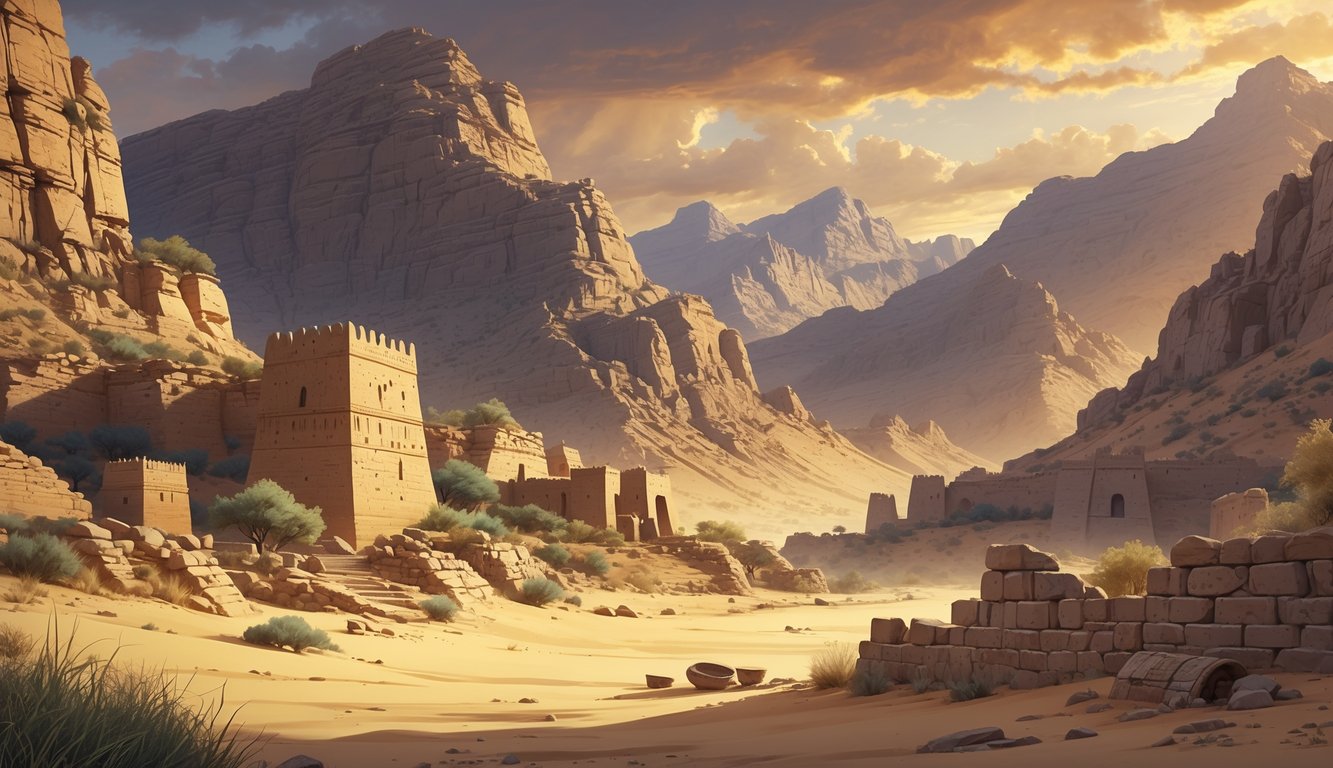
High up in Oman’s rugged mountains, ancient villages and burial sites reveal secrets about how people used to live. Archaeologists study these remote places to better understand daily life, traditions, and challenges in these beautiful but harsh settings.
Mountain Settlements
Oman’s Hajar Mountains are full of abandoned villages hidden among steep cliffs and deep valleys. These small mountain communities were built with local stone and mud.
People engineered man-made water channels called aflaj to carry water to their gardens and homes. The aflaj systems are still admired for their clever design.
Many settlements were left empty over time as families moved to cities for work or better living conditions. The buildings remain almost untouched, showing how people once farmed the mountain terraces and lived closely together.
Visitors can see storage rooms, old mosques, and narrow pathways that connect stone houses. Today, these lost villages give a close-up view of Oman’s history and the ways people survived in tough landscapes.
Some travelers hike these trails to see the abandoned villages and enjoy the mountain’s natural beauty.
Unknown Burial Sites
Scattered among the mountains, mysterious burial sites can be found. Some graves are simple, while others are ringed with stones or placed in small cave shelters.
Many have remained untouched for centuries. Archaeologists are still learning who built these graves and why certain locations were chosen.
Some burial sites may point to lost cultures or societies that lived in the region before recorded history. Uncovering the secrets of these sites is slow work because the locations are hard to reach and often hidden by rocks and wild plants.
Objects like pottery shards, beads, and tools sometimes appear near the graves. These finds help researchers form new ideas about the ancient societies that lived in Oman’s mountains.
Each discovery brings a clearer picture of how people connected with their mountain home long ago.
Mysterious Ruins and Monuments Across Oman
Oman is filled with ancient structures that puzzle visitors and researchers. Some sites are UNESCO-listed, while others are still being studied by archaeologists.
Spread of Ruins
The country has a surprising number of ruins scattered throughout its landscape. The most famous cluster is the Bat, Al-Khutm, and Al-Ayn archaeological complex, which features monumental towers and ancient tombs.
Near Salalah, the ruins at Sumhuram overlook Khor Rori, where visitors can see both a museum and active archaeological digs. Other ruins include old forts, stone tombs, and towers that dot the countryside, sometimes hidden on hilltops and in valleys.
Archaeological sites in Oman are marked by their variety. Some are large and have been partly restored, while others remain as mysterious piles of stone.
Many of these places were key to the ancient trade routes that crossed through Oman. They provide important clues about how past communities lived.
Theories from Historians
Historians have different ideas about the origins and uses of Oman’s monumental structures. Some believe the round tombs at Bat were built for important leaders, while others think they served as family burial places.
There is debate about the true age of some ruins. Radiocarbon dating shows many structures go back over 4,000 years.
Historians have also suggested that these sites reflect early knowledge of engineering and organization, pointing to an advanced society. Researchers often work at sites like Sumhuram, trying to connect written records with ruins they find.
Some historians argue that ancient structures near trade routes were built as both resting points and defensive outposts. These sites show how Oman’s communities adapted to harsh environments and changing times.
Preservation Efforts for Oman’s Historical Sites
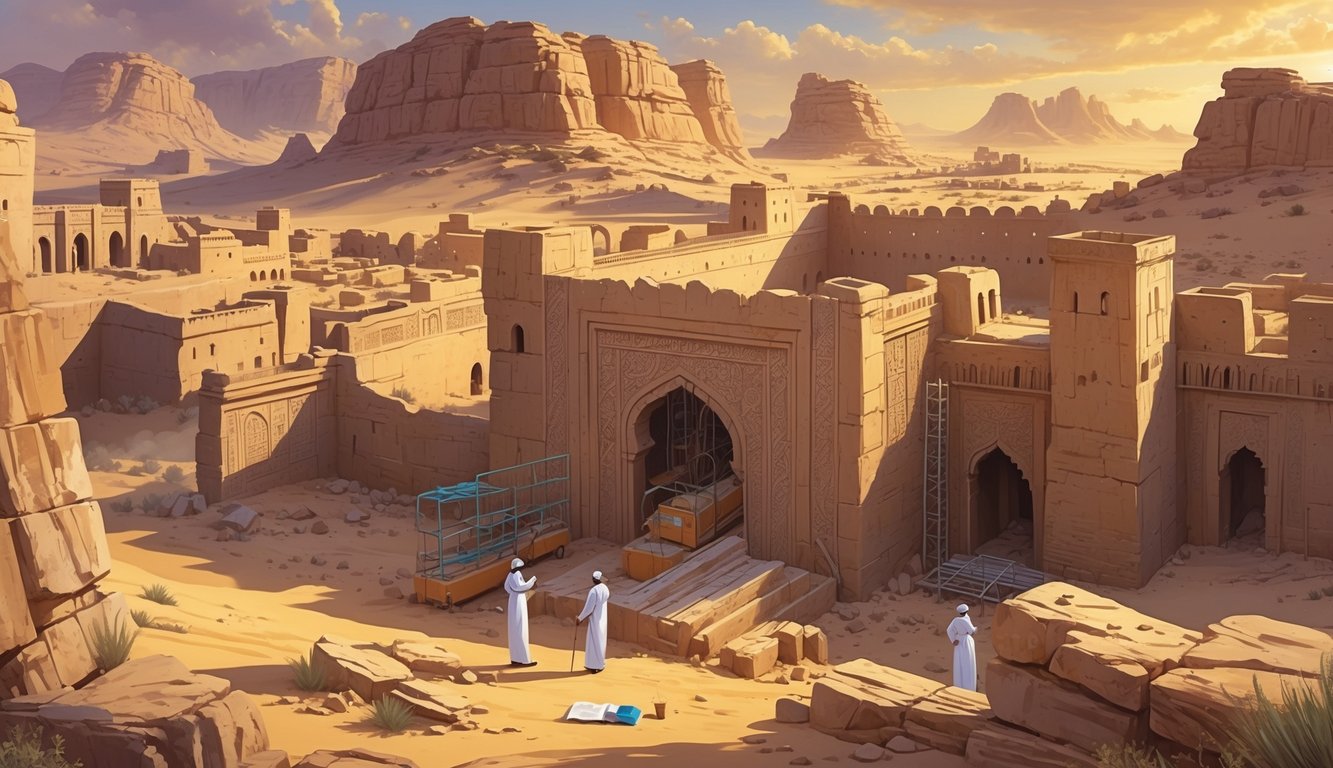
Oman places high importance on protecting its historical sites and cultural heritage. Many forts, castles, and ancient buildings are being restored so they can be appreciated for generations.
Ministry of Heritage and Tourism Initiatives
The Ministry of Heritage and Tourism leads many projects to safeguard Oman’s history. It has identified over 3,400 archaeological sites for restoration.
Restoration work is happening at hundreds of these sites right now. A major focus is on preserving forts, traditional houses, and ancient cities.
Teams of skilled builders and historians use traditional materials and techniques so the repaired buildings stay true to the original designs. In many cases, the ministry also documents new details about each site, which helps tell Oman’s story to locals and visitors.
People can see these restoration efforts at places like Nizwa and Bahla forts. The ministry also maintains clear records and lists of all protected monuments.
This careful work helps save Oman’s unique history from being lost.
Community Involvement
Oman’s citizens and local communities play an active role in protecting historical sites. Many people help care for these places by joining clean-up events or raising donations for repairs.
Local experts often share stories and pass down traditional skills to younger generations. Schools and community groups sometimes organize trips to historical locations.
These visits teach students about the value of cultural heritage. In some areas, special workshops train young people in old craft methods used during restoration projects.
With both government guidance and community passion, Oman’s landmarks stay preserved. This teamwork ensures historical sites remain a key part of local identity and pride.
UNESCO World Heritage Mysteries
Oman has several sites on the UNESCO World Heritage list. These locations have deep roots in the country’s history and raise important questions for historians and visitors.
Designation Process
To become a UNESCO World Heritage Site, places in Oman must show outstanding universal value. Each site needs proof of its cultural or natural significance.
For example, the famous Bahla Fort was listed in 1987 for its unique mud-brick architecture and ancient defensive walls. Other Omani sites, like the ancient city of Qalhat and the beehive tombs of Bat, Al-Khutm, and Al-Ayn, join Bahla Fort on this prestigious list.
Archaeologists look for traces of early civilizations, lost irrigation systems, and ancient tombs before recommending a site for UNESCO status. Historians are sometimes left with more questions than answers.
The exact purpose of some structures and how people lived thousands of years ago in these locations still puzzles researchers. The selection process brings new attention but also highlights these lasting mysteries for the world to see.
Impact on Modern Society
UNESCO World Heritage status affects local communities and the whole nation. These sites attract history lovers and researchers from all over the world, boosting tourism and creating jobs.
Many schools now include lessons about sites like Qalhat and Bahla Fort so children learn about their own local history. The protection rules linked to UNESCO designation help Omani people preserve their heritage for the future.
Ongoing archaeological research at these sites helps answer some questions, but new findings sometimes create fresh mysteries for experts to study. Local families take pride in living near these historical landmarks.
Traditions are sometimes revived and celebrated around these sites, connecting past and present. More information about such sites can be found in articles on ancient wonders in Oman and overviews of historical places in Oman.
Resilience and Legacy of Ancient Oman
Ancient Oman was shaped by the strength and adaptability of its people. Its culture and traditions survived challenges and helped create customs that continue today.
Cultural Continuity
The people of ancient Oman adapted to harsh desert climates. They used smart techniques for water management like aflaj irrigation systems.
These systems allowed communities to thrive even in dry seasons. Oman’s Bronze Age towers show that people built strong structures for more than defense.
These towers may have served as symbols of power or places for trade and meetings. Their continued presence shows the skills and determination of Omani ancestors.
The preservation of these towers and other historic sites highlights the ongoing effort to honor and study ancient innovations. Omani handicrafts, such as pottery and weaving, reflect skills passed down through generations.
These traditions show a direct link between the past and the present. The mysteries of sites like the Bronze Age towers continue to spark interest and research, as shown by projects featured in archaeological studies.
Influence on Present-Day Oman
Ancient Oman’s resilience helped shape its modern identity. The values of community, hospitality, and cooperation are still important in Omani culture.
Architectural styles from the past, such as mud-brick houses and aflaj water systems, remain part of modern Omani towns. Festivals, music, and food also carry ancient influences.
Schools and museums teach young Omanis about their history through hands-on activities and exhibits. Archaeologists have discovered Bronze Age towers, which are now major sites for tourism and research.
These sites help Oman connect with its long history. Visitors interested in heritage can explore these unique places, as described in recent findings.