New Zealand is a country full of natural beauty. Its past is also filled with unsolved mysteries that continue to puzzle locals and historians.
From puzzling disappearances to strange crimes, these stories have become part of the nation’s history and culture. Some of New Zealand’s biggest historical mysteries remain unanswered.
People are still searching for answers to events like the disappearance of Kirsa Jensen and the famous jewel theft in Dannevirke. Other cases have baffled investigators for decades.
Some cases have even become legends, keeping people curious year after year. For anyone interested in true crime or history, New Zealand’s mysteries offer plenty to think about.
There are also cold cases and unsolved killings that date back many years. These stories show that even in a small island nation, some secrets might never be revealed.
To learn more about these unsolved cases, check out detailed lists of New Zealand’s biggest mysteries and cold case killings.
The Crewe Murders: A Lasting Enigma
The Crewe murders are a landmark case in New Zealand history. The deaths of Harvey and Jeannette Crewe have sparked decades of questions about the crime and the police investigation.
The Disappearance and Discovery
Harvey and Jeannette Crewe were a young farming couple living in Pukekawa, Waikato. In June 1970, they vanished without warning.
Their two-year-old daughter, Rochelle, was found alone and hungry several days later by her grandfather. Harvey and Jeannette were discovered to have been shot to death.
Their bodies were found months later in the Waikato River, weighted down. This crime shocked local families and drew nationwide concern.
The missing couple and the discovery of their daughter were widely reported. The situation quickly became a national crime mystery.
Many wondered who could have targeted the Crewes and why.
Investigation Challenges
The police investigation faced many problems. Several early mistakes were made, and police lost or mishandled evidence.
Suspicion quickly fell on Arthur Allan Thomas, a nearby farmer. Police arrested and convicted him, but doubts about the investigation grew.
Over time, questions about police behavior emerged. Evidence came to light that police may have planted items to suggest Thomas’s guilt.
The case saw two criminal trials and two appeals. Later, a Royal Commission investigated the case.
The Royal Commission found police had acted improperly and that Thomas’s conviction was unsafe. This case became known for its controversial police handling.
The question of who killed the Crewes remains a mystery. For many, the case became one of New Zealand’s best-known cold cases.
The Baffling Case of Mona Blades
The disappearance of Mona Blades in 1975 has puzzled many in New Zealand for decades. Her case involves a young woman lost while hitchhiking, mysterious sightings, and ongoing theories.
The Hitchhiking Mystery
Mona Blades was only 18 years old when she vanished on May 31, 1975. She was hitchhiking from Hamilton to Hastings to visit her family.
Her journey should have ended in Hastings, but she never arrived. Mona was last seen near Tokoroa, accepting a ride in an orange Datsun station wagon.
The car became a key focus because it stood out, and several people reported seeing one matching that description on the route she took. Despite massive search efforts from police and worried families, neither Mona nor her belongings have ever been found.
The absence of evidence has made the case especially difficult for investigators. The story remains one of New Zealand’s best-known cold cases.
Key Sightings and Leads
After Mona disappeared, police received multiple reports of sightings along State Highway 1. Witnesses claimed to have seen a woman, believed to be her, riding in an orange Datsun and possibly getting out of the car.
Investigators explored these sightings by interviewing drivers and talking with locals. They checked vehicles in the area.
There was even a report that the car made a stop along the highway, raising suspicion that something happened there. Unfortunately, police never found physical evidence at those locations.
Over the years, new clues or witness statements sometimes surfaced. Police have re-examined the evidence with modern technology but have not solved the mystery.
The lack of clear answers has kept the case in the public’s mind. Each sighting report brings a mix of hope and frustration.
For more details, see the Wikipedia entry on Mona Blades.
Ongoing Theories
Several main theories have been discussed for decades. One idea is that Mona was the victim of a random act of violence by a stranger who picked her up.
Another theory suggests someone who knew the route or the area was involved, taking advantage of her being alone. Some people believe the orange Datsun was crucial, possibly linking it to someone already known to police, but there has never been enough evidence to charge anyone.
The investigation has also looked into the possibility of mistaken identity or that Mona may have chosen to disappear, although most consider this unlikely. Despite renewed interest, including cold case reviews, and public tips years after the crime, Mona’s fate is still unknown.
Kirsty Bentley: A Tragic Unsolved Story
Kirsty Bentley’s murder is one of the most puzzling crime mysteries in New Zealand. Despite a large investigation and continued public interest, no one has been brought to justice for her death.
Events Leading to Her Disappearance
On December 31, 1998, 15-year-old Kirsty Bentley left her family home in Ashburton to take her dog, Abbey, for a walk. It was a normal summer afternoon.
When Kirsty did not return, her worried mother called the police. Soon, search teams and volunteers began looking throughout the town and nearby places.
The next day, Abbey was found tied to a tree near the Ashburton River. About two weeks later, Kirsty’s body was discovered in a secluded area, several kilometers away from where the dog was found.
The scene and condition made it clear that a crime had taken place. Despite many efforts, the murder investigation hit barriers almost right away.
Major Suspects and Theories
Over the years, police questioned many people, including family members and friends. Nobody was charged.
Kirsty’s father and brother were considered suspects in the early stages, but they maintained their innocence. The investigation later turned towards possible unknown attackers.
Some theories suggested connections to drug-related activity or random violence. Despite multiple theories, police never found enough evidence for an arrest.
This case stood out in New Zealand crime history because of its complexity and lack of clear leads. The mystery remains unsolved, making it a lasting tragedy for the families involved.
Colonial Crimes That Shook the Nation
New Zealand has faced many shocking crimes since the colonial era. Some cases have left deep marks on communities due to their violence and mystery.
The Maungatapu Murders
The Maungatapu Murders took place in 1866 near Nelson. Four travelers were killed by a gang of bushrangers led by Richard Burgess.
These murders caused panic throughout the South Island. People feared for their safety on the roads.
Police investigations led to a swift capture of the suspects. The evidence included stolen goods, confessions, and witness statements.
The trial caught the attention of newspapers across the country. Richard Burgess and three of his gang were executed by hanging.
The case remains well known for its violence and the large police effort it required. Details about the crime can be found in the New Zealand crime timeline.
Quick facts:
| Year | Location | Outcome |
|---|---|---|
| 1866 | Nelson | 4 men hanged |
The Jarvey Poisoning
Thomas Hall poisoned his father-in-law, Captain Henry Cain, and tried to kill his wife in 1886. This case, known as the Jarvey Poisoning, shocked the public with its use of arsenic and family betrayal.
The investigation was complicated. At first, doctors were unsure why Mrs. Hall and Captain Cain became ill.
Police later found evidence of arsenic. Hall’s behavior raised more suspicion.
The court sentenced Thomas Hall to life imprisonment. The case is famous for its medical puzzles and remains a key example of notable crimes in New Zealand.
Key points:
- Use of arsenic as a poison
- Police followed links between illnesses and Hall’s actions
- Hall was not executed but imprisoned
Mary Dobie and Colour-Sergeant James Collins
In 1880, English artist Mary Dobie was murdered near Opunake while sketching local scenery. Colour-Sergeant James Collins, a member of the Armed Constabulary, helped investigate and search for the killer.
The murderer, Tuhiata, was quickly caught and brought to trial. The community was shocked, especially because Dobie was a visitor and the crime seemed senseless.
Authorities executed Tuhiata by hanging. This crime draws attention to the dangers faced by settlers and visitors and highlights the efforts of police and local authorities to solve violent crimes during the colonial era.
For more information about this and other notable homicides, historical records are publicly available.
Important details:
- Victim: Mary Dobie, English artist
- Investigator: Colour-Sergeant James Collins
- Justice: Offender executed for murder
Mystery Figures of 19th Century New Zealand
Striking characters appeared in New Zealand’s early days. They stood out for their actions related to crime, justice, and public debate.
Notable individuals like James Mackenzie, Minnie Dean, and Amy Bock captured the attention of newspapers and townspeople.
James Mackenzie: Outlaw or Folk Hero?
James Mackenzie was a Scottish-born shepherd who became famous for livestock theft in the 1850s. He was accused of stealing over a thousand sheep from a Canterbury station.
Authorities arrested Mackenzie, but he escaped custody multiple times. This raised questions about law enforcement at the time.
He was eventually caught and sent to prison. After claims of unfair treatment and lack of evidence, officials reduced his sentence and later pardoned him.
Many people saw Mackenzie as a symbol of resistance against wealthy landowners. The Mackenzie Country in the South Island is named after him.
Minnie Dean: Child Murder Controversy
Minnie Dean was at the center of one of New Zealand’s most disturbing crime cases in the late 1800s. She cared for unwanted or orphaned babies, a practice called baby farming.
In 1895, police found buried children’s bodies on her property. Dean was quickly arrested.
Her trial received heavy media coverage. Dean was found guilty of child murder and became the only woman ever executed by hanging in New Zealand.
Arguments about her guilt and public attitudes toward poor mothers have lingered for decades.
The Case of Amy Bock
Amy Bock was known for deception and identity theft in the late 19th and early 20th centuries. Her most famous act was dressing as a man, “Percy Redwood,” and marrying a woman in 1909.
When the truth came out, it shocked the public and courts. Bock’s many scams led to her arrest several times for fraud and impersonation.
She often changed her name and story, making it hard for police to track her. Bock’s life raised questions about mental health, gender roles, and justice in colonial New Zealand.
Her actions remain a subject of curiosity for researchers and writers.
Rural Mysteries and Homicides
New Zealand’s quiet rural areas have seen some of the country’s most disturbing and unsolved homicide cases. Many families have waited decades for answers.
The Ruahine Axe Murders
The Ruahine Axe Murders happened in the Ruahine Ranges, a remote area known for its rugged terrain. A group of hikers found a campsite with signs of violence.
Several people were found dead, with injuries caused by an axe. The victims’ families were devastated.
Investigators struggled to gather evidence. The area’s isolation and rough weather ruined possible clues.
They collected footprints, some personal items, and partial fingerprints, but made no arrests. Police believed the killer knew the forest and maybe lived nearby.
People have come up with theories about the murderer, but none have been confirmed. The true identity and motive remain a mystery.
Whanganui River Murder
The Whanganui River Murder shocked local people and police. The case centers on a body found on the banks of the Whanganui River.
Authorities started an investigation, but the victim’s identity was unknown for weeks. The victim wore unique jewelry and clothing not made in New Zealand.
Several witnesses said they saw someone struggling near the river, but no one could clearly describe what happened. Families along the river became worried about their safety.
Police spent months interviewing suspects, but the investigation stalled. Today, the Whanganui River Murder is still part of New Zealand’s list of unsolved homicide cases.
Edwin Packer and Frances Marshall
Edwin Packer and Frances Marshall both vanished in rural New Zealand. Edwin was described as kind and hardworking, while Frances was well-liked in her small community.
Their families reported them missing when they failed to reach their destinations. Police launched a large search and looked into their backgrounds and travel routes.
Edwin’s belongings turned up near a creek. Frances’s purse was found in a field miles away.
Investigators found signs of struggle, but no clear motive. No suspects were ever charged.
Today, the cases of Edwin Packer and Frances Marshall are often mentioned in discussions of mysterious murders in New Zealand’s countryside.
Notorious Individuals and Infamous Crimes
A few criminals in New Zealand’s history have stood out for their impact on society. These cases challenged public views about justice and crime.
Alice Parkinson Case
Alice Parkinson’s story became famous after a dramatic crime in 1915. Alice, a young woman from Hawke’s Bay, shot her lover after he refused to marry her.
She confessed and never denied what she had done. Her trial raised big questions about how the justice system treated women at that time.
Some believed Alice was punished harshly because of strict views on morality and gender roles. Alice was sentenced to life in prison but was released after nearly eight years.
Lionel Terry: Hate Crime Legacy
Lionel Terry is remembered for one of New Zealand’s most notorious hate crimes. In 1905, Terry murdered Chinese worker Joe Kum Yung on a Wellington street.
He claimed he wanted to draw attention to his belief that New Zealand should stay “white only.” Terry’s actions caused outrage and exposed tensions about racism and immigration.
During his trial, Terry admitted to killing Joe Kum Yung based on his racist views. Officials declared him insane and sent him to psychiatric care instead of prison.
Terry’s crime is now seen as a clear example of racial violence. For more information, see the New Zealand crime timeline.
Dennis Gunn and Whanganui Mayor
Dennis Gunn was involved in a headline-grabbing crime in the 1920s that shook Whanganui. Gunn, a career criminal, plotted a violent attack on the local mayor, Charles Mackay.
The conflict ended when Gunn shot and wounded Mackay, exposing secrets and rivalries in the community. After being shot, the mayor was found to have been blackmailed by Gunn over his private life.
This led to Mackay’s resignation and later conviction for attempted murder. The incident sparked debate about blackmail, justice, and privacy in New Zealand.
The crime showed how personal secrets could be used for power. More details can be found in New Zealand’s crime history.
Indigenous Mysteries and Cultural Controversies
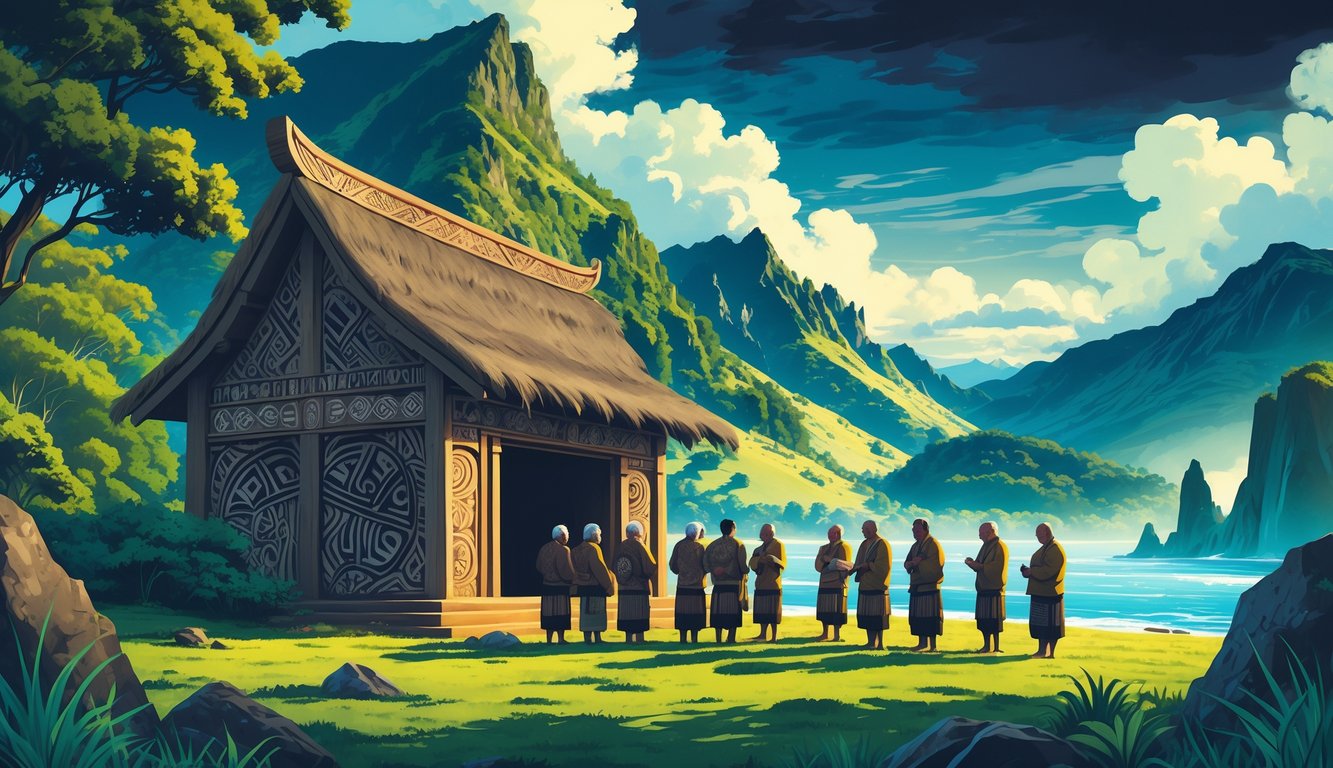
Stories about Indigenous people in New Zealand often involve complicated events and lasting debates. Some cases deal with questions of justice and the way society treats those accused of crimes.
Maketu Wharetōtara: The First Execution
Maketu Wharetōtara, a young Māori man, became the first person executed by hanging under British rule in New Zealand. In 1842, at only 16, he was accused of killing several people, including a European family.
The case raised questions about justice for Māori people. Maketu did not speak much English, and many doubted the fairness of the legal process.
Māori and Europeans saw the case very differently. Some Māori felt the British justice system did not respect their traditions or rights.
The execution of Maketu became a powerful symbol of how colonial laws changed life for Indigenous people. More details are discussed in Forgotten Ancient Peoples of New Zealand.
Rua Kēnana’s Struggle
Rua Kēnana was a respected Māori leader and prophet in the early 1900s. He and his followers built a community at Maungapōhatu, aiming to live peacefully with their own laws.
The New Zealand police investigated him, suspecting he encouraged resistance against the government. In 1916, a large group of police officers entered Maungapōhatu to arrest Rua.
Violence broke out, and two people died. Police arrested Rua and charged him with several crimes, but later cleared him of most charges.
Rua’s trial is seen as an example of how the justice system sometimes failed Māori leaders. His story is now part of a larger conversation about Indigenous rights.
This event remains a key example of historical conflict and controversy in New Zealand.
Unexplained Creatures and Folklore Legends
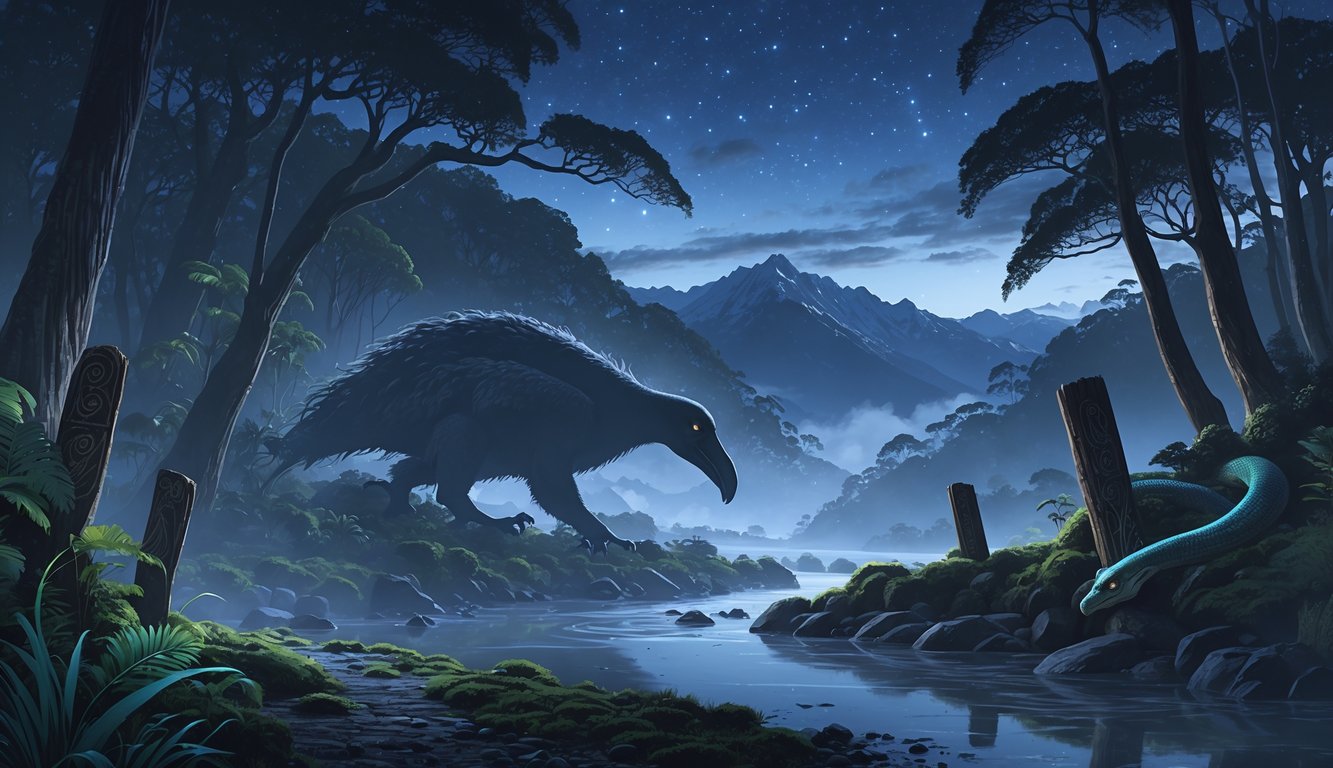
New Zealand is known for its unique landscape and mysterious creatures. Local legends and unexplained sightings have sparked stories that still fascinate people.
Moehau and Sasquatch Sightings
The Moehau is a creature said to live in the Coromandel Range. People describe it as large, hairy, and similar to the North American Sasquatch.
Some believe it is a guardian of sacred Māori land, while others think it may be an undiscovered animal. Over the years, people have reported sightings of the Moehau, especially near Mount Moehau.
Fishermen, hikers, and locals have told stories of seeing huge footprints or hearing eerie calls at night. These tales mix with Māori legends, making it hard to tell what is myth and what could be real.
No solid evidence, such as bones or clear photos, has been found. Some suggest that the Moehau could be connected to early Māori stories of forest spirits or ancient beings.
Others stay open-minded, as New Zealand’s thick forests are perfect for hiding secrets.
Comparisons with Yeti and Yowie
People often compare the Moehau to the Yeti in the Himalayas and the Yowie in Australia. All three are described as large, ape-like beings covered in hair.
These creatures are mostly seen in remote places. Sightings are rare but memorable.
People have tried to link these mysterious beings together because of their similarities. Like the Yeti and Yowie myths, the Moehau may be part of a shared human fascination with the unknown.
Reports of footprints, strange noises, and sudden disappearances feed into the mystery. Some possible reasons for these shared stories include mistaken identity of animals, folklore traditions, and the power of imagination.
The fact that such legends appear in several cultures suggests that people everywhere look for explanations when facing the unexplained in the wild.
Forgotten Mysteries and Suspected Cover-Ups
Some cases in New Zealand’s past remain unsolved even after official investigations. These stories involve missed clues, lost records, and rumors about cover-ups that still puzzle many people.
Amy Bock’s Disappearance
Amy Bock was once a well-known con artist in New Zealand. She worked as a teacher before being convicted of multiple frauds.
In 1909, she made headlines when she disguised herself as a man and married a woman in Otago. After serving time in prison, Amy Bock simply faded from public view.
Police tried to track her but they failed. Rumors spread that she changed her identity again and started fresh somewhere else.
Lack of official records left investigators and locals with many questions. Her sudden disappearance and skill with aliases make this a long-standing mystery with few clues.
Christianville’s Vanishing
Christianville was a small, religious settlement near Auckland in the early 1900s. One day, people discovered the village completely empty.
Residents—including women and children—had left suddenly, leaving food on tables and personal belongings behind. Police found no signs of struggle or mass departure.
Rumors of a cult, government pressure, and even paranormal causes took hold. No firm evidence explained their vanishing, and the truth never came out.
The story of Christianville remains one of New Zealand’s most puzzling cases.
Rutland Stockade Secrets
The Rutland Stockade was a military fort in Whanganui during the 1800s. Local stories claim that strange events and missing items were common at the site.
There were unexplained fires and missing weapons. Rumors spread about secret tunnels beneath the fort.
Some say the military hid thefts and disappearances to prevent public panic. Reports suggest police and army investigations ended quietly or remained incomplete.
Official records about what really happened at Rutland Stockade are still missing or sealed. Historians continue to ask questions about military activities and possible crimes.
The secrets of the Rutland Stockade remain unsolved and debated today.