Oklahoma is home to stories that have puzzled people for decades. From powerful ranch families to mysterious disappearances, some cases remain unsolved and questions still hang in the air.
Some of the biggest historical mysteries in Oklahoma include high-profile murders, unexplained vanishings, and secrets buried in time.
The unsolved murder of E.C. Mullendore III is one of the most well-known cases. Investigators still search for answers even after many years.
Stories of families who went missing without a trace, like the Jamison family, still spark curiosity and concern. People continue to wonder what really happened in these puzzling cases.
Anyone interested in uncovering the unknown will find Oklahoma’s mysteries both fascinating and haunting. These stories have become a lasting part of the state’s history.
Unsolved Crimes and Mysterious Deaths
Oklahoma has a long history of mysterious deaths and unsolved crimes. Some questions remain unanswered even after decades.
Karen Silkwood Case
Karen Silkwood worked at the Kerr-McGee plutonium plant near Crescent, Oklahoma in the early 1970s. She became a whistleblower, claiming unsafe practices at the plant endangered worker health.
In November 1974, Karen died in a car crash under suspicious circumstances while reportedly carrying evidence for a meeting with a reporter and union official. Authorities ruled her death an accident, but many people believe there was foul play.
Her car contained documents that vanished after the wreck. The Karen Silkwood case inspired movies, books, and ongoing debates about corporate and government responsibility in workplace health scandals.
OSBI Cold Case Unit Investigations
The Oklahoma State Bureau of Investigation (OSBI) Cold Case Unit investigates murders and disappearances that have not been solved, some going back many years. Using new technology and fresh interviews, the OSBI has reopened several files related to suspicious deaths across the state.
A few important cases include the 1984 murder of Lisa Ann Ledbetter and the 1974 murder of Tina Duffell. OSBI’s work often involves talking to families and collecting DNA evidence.
Sometimes this leads to breakthroughs, but many mysteries are still unsolved. For more details, see this list of unsolved murders and missing persons in Oklahoma.
Notable Activities of OSBI Cold Case Unit:
| Year | Victim Name | Type of Case |
|---|---|---|
| 1974 | Tina Duffell | Murder |
| 1984 | Lisa Ann Ledbetter | Murder |
| 2019 | Aubrey Dameron | Disappearance |
Suspicious Death Incidents
Oklahoma has also seen deaths that remain suspicious because of missing evidence or conflicting reports. Some cases are decades old, with questions that have never been answered.
The OSBI continues to investigate whenever new evidence comes to light. Many incidents involve people disappearing without a trace, or deaths that at first looked like accidents but later appeared unusual.
Families of victims often continue pushing for justice. Unsolved crimes in Oklahoma include murders, missing persons cases, and unexplained deaths that haunt communities and law enforcement alike.
Historic Disappearances
People in Oklahoma have vanished under strange circumstances. These disappearances continue to puzzle families and investigators.
Some communities themselves have even disappeared, shaping the state’s unusual history.
Notable Missing Persons Cases
Oklahoma has many unsolved missing persons cases. One of the most well-known is the disappearance of the Jamison family in 2009.
Bobby, Sherilynn, and their daughter Madyson went missing while looking at land in southeastern Oklahoma. Their truck was found abandoned with their money, IDs, and even their dog inside.
Years later, the family’s remains were discovered nearby, but nobody knows what truly happened. Learn more about their story at this Jamison family disappearance.
Another case is Johnnie H. Ball, who was last seen leaving his Kansas, Oklahoma home in 1988. Despite searches and efforts, clues have been few and the mystery remains open.
More details about other cold cases can be found at the Oklahoma Cold Cases database.
Vanished Communities
Some places in Oklahoma have faded away entirely, leaving little behind except legends and a few ruins. One example is the town of Ingalls.
In its prime, Ingalls was known for the 1893 shootout between U.S. marshals and the Doolin-Dalton gang. Over time, as railroads bypassed the town and farms failed, people drifted away.
Another example is the historic community of Jefferson. Once, it was a busy railroad stop.
Today, a few abandoned structures are all that mark the area. These vanished communities remind us how quickly fortunes can change on the frontier.
Natural disasters, changing rail lines, or dust storms could suddenly leave entire towns empty. Their stories are now woven into the broader fabric of Oklahoma history.
The Mysteries of Indian Territory
Indian Territory once covered much of what is now eastern Oklahoma. This area, home to several Native American nations, holds many puzzling stories and mysteries.
Tahlequah’s Lost Artifacts
Tahlequah became the capital for the Cherokee Nation after their forced relocation. Over the years, stories have spread about valuable tribal artifacts that vanished during the 1800s.
Some believe hidden caches of jewelry, tools, and documents were lost in the chaos of removal and resettlement. Local legends say secret chambers and buried containers exist under old buildings or in forests around Tahlequah.
People have searched for these missing items for over a century. The lack of clear records from this time makes the true contents and locations of the treasures a mystery.
Historians and tribe members still hope to find these artifacts. The quest for answers continues to attract researchers and bring together the community around Tahlequah.
Muskogee County Legends
Muskogee County is famous for stories of mysterious towns and unexplained events. The area was part of Indian Territory and was shaped by the movement of different tribes and settlers.
Many towns once existed here but vanished over time, leaving few traces behind. Ghost towns have caught the attention of historians and explorers, as described in accounts of Indian Territory ghost towns.
Forgotten cemeteries, foundations, and ruins spark questions about who lived there and why they left. Some people claim to hear strange sounds or see unexplained lights at night in these areas.
Local tales include secret tunnels, hidden loot from outlaws, and even moments of conflict between unseen forces, such as the “battle in the air” legend near Tishomingo, described in stories of Indian Territory legends. These mysteries give Muskogee County a sense of adventure and wonder.
Strange Tragedies of the Past
Oklahoma has seen several dark and puzzling moments in its history. The stories behind major disasters and mysterious events have left lasting marks on the state.
Catastrophic Events in Oklahoma
One of the deadliest events in Oklahoma history was the 1995 Oklahoma City bombing. This attack destroyed the Alfred P. Murrah Federal Building, taking 168 lives and injuring hundreds more.
It shocked the nation and changed safety regulations across the country. Another major tragedy happened in 1921 with the Tulsa Race Massacre.
Over two days, a thriving Black neighborhood called Greenwood was destroyed. Hundreds of people were killed, and thousands lost their homes and businesses.
Deadly tornadoes also haunt Oklahoma’s past. For example, the 2013 Moore tornado killed 24 people and destroyed entire neighborhoods.
Tornadoes like this have shaped how buildings are made and how people prepare for storms in the region.
Unexplained Disasters
Some tragedies in Oklahoma are surrounded by mystery. The Jamison family disappeared in 2009 while searching for land in the Red Oak area.
Their remains were found years later, but no one knows what really happened. The case still troubles many Oklahoma residents.
Between 1910 and 1930, the Osage Indian Murders happened in Osage County. Many members of the Osage Nation were killed after striking oil on their land.
The case led to the first major FBI homicide investigation and is remembered as a time of great fear and injustice.
Other cases, like the unsolved Girl Scout murders at Camp Scott in 1977, remain mysterious today. For more details about such cold cases, visit this list of haunting unsolved crimes.
Timeline of Unanswered Mysteries
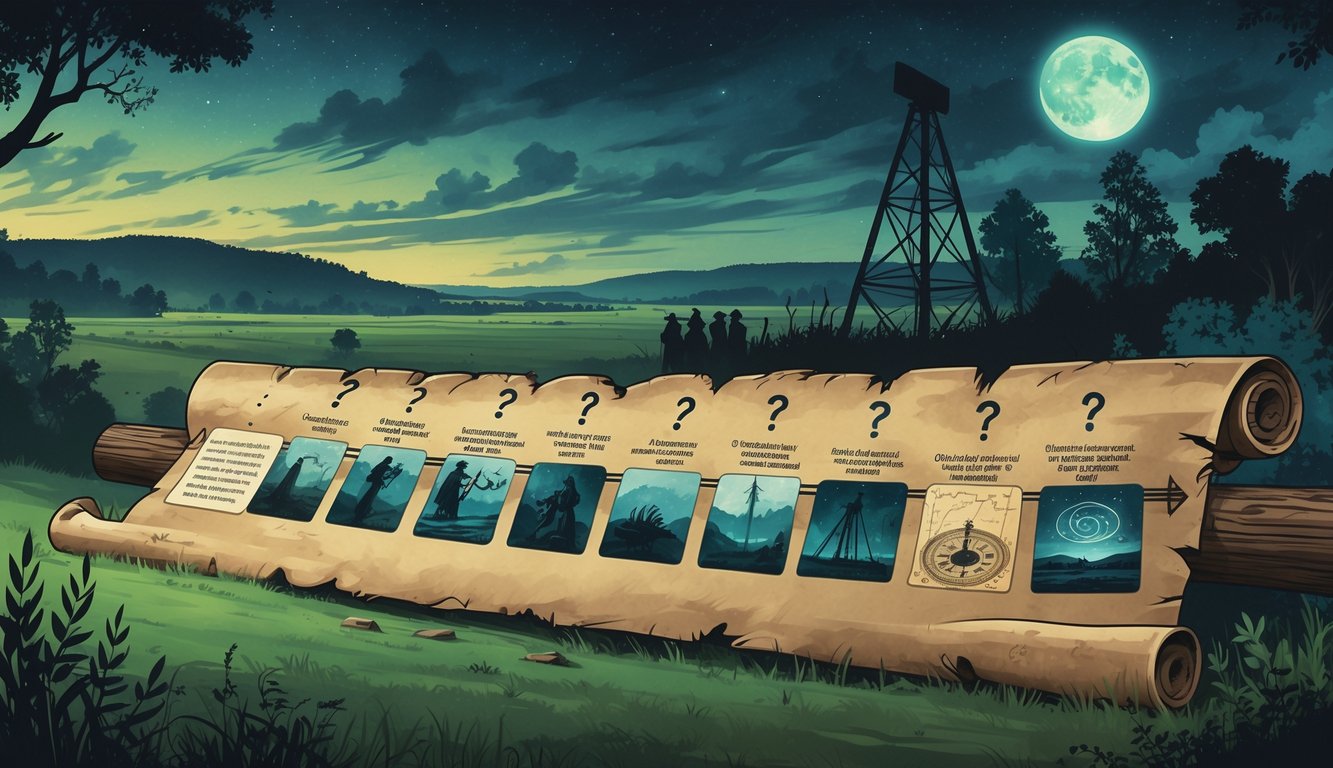
Many mysteries in Oklahoma remain unexplained, and their details stretch across decades. These cases left an impact on communities and families.
Chronology of Major Events
A variety of events have puzzled Oklahomans over the years. The disappearance of the Jamison family in 2009 in Latimer County is one of the most well-known recent unsolved cases.
Their truck was found with belongings inside, but the family was missing for years before their remains were discovered. No clear answers have emerged about what happened.
Another well-known mystery is the 1974 case involving three women—known as “The Oklahoma Girl Scout Murders”—at Camp Scott near Locust Grove. The crime shocked the state, and despite investigations, the events leading up to and after the crime are still debated.
Cases like these, along with many cold and unsolved crimes, are documented and discussed on lists like those found at Oklahoma cold case sites and community forums. Sometimes new leads come to light from the public.
Key Developments by Decade
1970s
The decade saw the Girl Scout Murders in 1974, which remain one of the most disturbing incidents in Oklahoma history. Law enforcement worked for years, but no one was ever convicted for the tragedy at Camp Scott.
1990s
Disappearances and violent crimes continued. Notable examples include the cold cases documented from this period, such as the 1996 murder of Edward Trotter in Oklahoma County, which has seen efforts to solve it resurface with modern investigative technology.
2000s and 2010s
The disappearance of the Jamison family in 2009 gained national attention. In 2018, the unsolved murder of Eric Trammell also highlighted ongoing struggles for answers in recent decades.
To read more about specific cold cases and a detailed list of famous mysteries, visit this list of unsolved cases in Oklahoma.
The University of Oklahoma’s Secret Histories
The University of Oklahoma has a history filled with curious events and whispers of hidden tunnels. Stories of students and faculty who left an unusual mark continue to interest many.
This section looks at campus legends and individuals whose backgrounds still spark curiosity.
Enigmatic Campus Stories
Rumors about underground tunnels connecting buildings circulate on the University of Oklahoma campus. Some say workers built these tunnels for maintenance, while others believe they served secret purposes during times of crisis.
Old maps hint at their existence, but few students have seen them. Campus buildings like Evans Hall and Holmberg Hall have their own legends.
Staff and students have shared tales of strange sounds and sudden cold spots in the halls at night. Some believe drafts cause these chills, but others insist they saw unexplained shadows.
The university’s Bizzell Memorial Library also has stories of mystery. During renovations, workers found hidden rooms and unusual markings.
These discoveries add to the library’s sense of mystery.
Mysterious Alumni
The university has many famous graduates, but some alumni have connections to mysteries or debated histories. For example, astronaut Owen Garriott joined early space missions that sparked rumors about government secrets and technological experiments.
David Boren, a former governor and university president, had a career in politics that led to speculation about classified discussions and secret negotiations, especially during the Cold War era. Several OU alumni went on to work in intelligence, including the CIA and other agencies.
Their exact roles and activities often remain confidential. This group of alumni adds an extra layer of intrigue to the school’s legacy.
National Guard’s Untold Stories
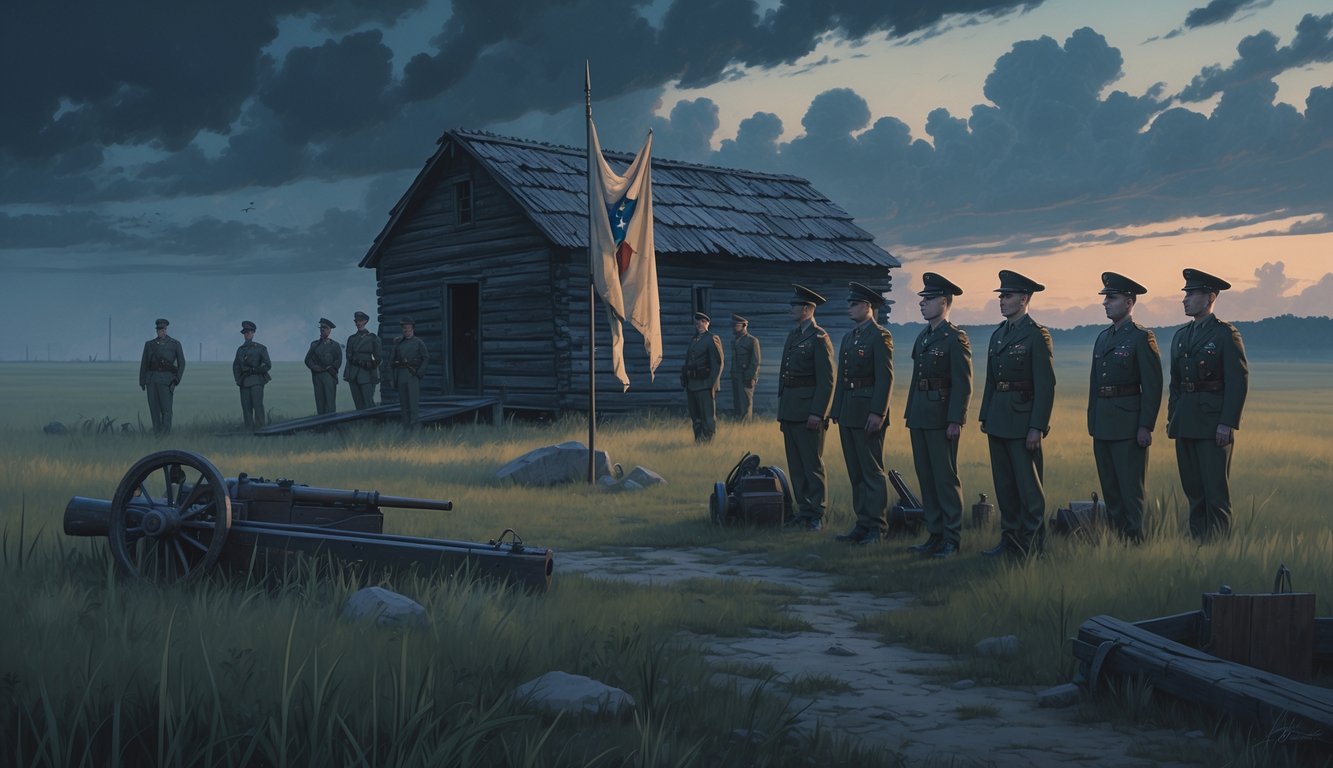
The Oklahoma National Guard has played a key role in many important moments throughout the state’s past. Its history includes both recognized achievements and lesser-known events that remain mysterious or debated today.
Military Enigmas
Oklahoma’s National Guard got involved during the 1921 Tulsa Race Massacre to control the violence. Reports say the Guard fought small skirmishes as it moved from Standpipe Hill, near today’s Oklahoma State University-Tulsa campus, and faced resistance from armed Black community members, including a final holdout at Mount Zion Baptist Church.
The exact details—such as who gave orders and how some key decisions were made—remain unclear. A timeline of their actions can be found in the untold stories of Greenwood.
Some believe not all actions taken during this event were properly recorded. This leaves historians with puzzling gaps.
Unanswered questions include:
- What was the Guard’s full role during the event?
- How did their presence affect casualties and property loss?
- Why did some reports seem to vanish after the event?
Secret Operations
Since 1890, the Oklahoma National Guard has taken part in many major conflicts, including the Spanish-American War, World Wars I and II, Korea, and Vietnam. Not every operation became public knowledge.
Some of the Guard’s activities remain secret, especially those involving training for disaster or riot response. The Guard often prepared for emergencies that never made headlines.
The Oklahoma National Guard Museum collects stories, but many internal communications, tactics, and decisions have never been shared in detail. Sometimes, actions taken during tense periods—such as covert patrols or emergency mobilizations—do not appear in public records.
Key points about these secret operations:
- Some missions lacked official documentation.
- The Guard did not always make communication public.
- Many veterans still do not speak openly about these hidden activities.
Oklahoma’s Ill-Fated Industries

Oklahoma’s past is filled with bursts of fortune and sudden downfall. Early businesses, from the fur trade to mines, promised much but often hid trouble and loss.
Fur Trade Secrets
The fur trade helped shape Oklahoma’s early history. European explorers and local tribes traded animal pelts, especially beaver and buffalo, along the state’s rivers and prairies.
Traders set up posts in places like the Arkansas and Red River valleys. While the trade seemed profitable, few knew about the harsh competition and rivalries between French, Spanish, and American fur companies.
Some trappers vanished in the wild, and entire trading posts disappeared without much record. Disagreements with tribes and changing demand for fur left many out of work.
These secrets still raise questions about lost fortunes and the true fate of some who braved the early trade.
Industry Disasters
Not all industries in Oklahoma brought lasting success. Some left behind only ruins and mystery.
Hidden mine sites dot areas across the state. Over the years, miners searched for gold, silver, and lead.
Many mines never delivered riches. In some places, miners died in cave-ins or strange accidents—stories that local legend still remembers.
Today, people explore stories about Oklahoma’s hidden mines and wonder about vanished wealth and abandoned tunnels. Some believe lost treasures remain underground, sealed away by history’s mistakes.
Rural and Country Legends
Many parts of Oklahoma have a long tradition of strange events and eerie tales passed down by people living in the countryside. Quiet roads, thick forests, and wide-open spaces often set the scene for stories that mix history with hints of the supernatural.
Unexplained Phenomena in the Country
People living in rural Oklahoma often report lights in the sky and odd noises. Some claim to see unusual creatures at night while driving down back roads, especially in eastern Oklahoma where the forests are thick and shadowy.
Bridges and abandoned houses in the country have stories about ghosts. The tale of Dead Woman’s Crossing near Weatherford tells of a murder mystery from over a century ago and a woman’s ghost seen at a lonely bridge.
This story stands out because it is based on a real event and has had sightings for generations. You can learn more about this legend at Spooky Oklahoma.
Unmarked graves, strange rock formations, and sudden changes in weather are also part of country stories. Farmers and ranchers sometimes hear footsteps late at night or see things vanish in the distance.
The atmosphere of the country seems to invite these unexplained mysteries.
Rural Folklore and Myths
Oklahoma’s rural areas are rich in legends passed down over the years. Residents tell tales of cryptic creatures like Bigfoot, especially in eastern Oklahoma where sightings are reported every year.
Hunters and hikers describe feeling watched or hearing loud yells from the woods. Old-time folk stories from families blend Native American legends with frontier myths.
Some people believe in creatures that live near rivers or in deep canyons. The countryside is also known for stories about witches, hidden treasures, and ghostly figures that wander lonely farms on foggy nights.
Storytellers in small towns keep these myths alive, adding new twists as new things happen. To read more about Oklahoma monsters and rural legends, check Oklahoma’s Monsters and Other Unexplainable Legends.
These tales connect neighbors and keep old country mysteries alive.
Enduring Myths and Their Impact
Legends from Oklahoma’s past continue to influence how people see the state’s culture. These stories blend real events, folklore, and the unknown.
They shape local traditions and beliefs.
Famous Oklahoma Myths
Oklahoma is home to mysteries that have fascinated generations. Stories about the alleged Oklahoma Octopus, a giant creature rumored to live in local lakes, persist even without proof.
Some believe the octopus causes strange drownings at Lake Thunderbird and Lake Tenkiller. Ghost tales fill historic towns such as Guthrie and Fort Reno.
Residents and visitors talk about haunted hotels, spectral soldiers, and unexplained noises. These accounts make places like the Stone Lion Inn popular with ghost hunters and tourists.
There are also unsolved crimes and treasure legends. The tale of Jesse James’s hidden gold brings treasure seekers to the hills each year.
Myths tied to Native American traditions, like the legend of Thunderbird or shapeshifters, add even more depth to the state’s storytelling.
How Mysteries Shaped State Identity
These enduring legends shape how Oklahoma sees itself. Stories about outlaws, lost treasure, and mysterious beasts give people excitement and pride in their history.
Teachers and museums use these tales to explain the state’s Wild West roots. They also highlight Oklahoma’s Native American heritage.
Festivals and tourist spots use ghost stories and unsolved mysteries to attract visitors. Haunted tours in towns like Guthrie show off the local past and keep legends alive.
Residents share these traditions through books and family gatherings. Community events also help create a shared identity around the state’s unique mysteries.