New Hampshire has a long and rich history that stretches back centuries. Yet, parts of it remain surrounded by mystery.
From unsolved crimes to strange sightings, the Granite State holds many secrets that continue to puzzle people today. Some of the biggest historical mysteries in New Hampshire involve baffling cold cases, legendary ghosts, and even tales of unexplained events in the region’s quiet towns.
People living in or visiting New Hampshire often get drawn in by stories of unsolved disappearances, secret legends, and odd happenings that have never been fully explained. Whether it’s the famous UFO sighting in Exeter or the mysterious murders that remain open cases, New Hampshire’s past is full of intrigue and unresolved questions.
Those curious about strange events and hidden stories will find plenty to discover in the history of the Granite State.
Overview of Historical Mysteries in New Hampshire
Unsolved mysteries have shaped New Hampshire’s history and identity. The Granite State is known for cold cases, eerie legends, and events that spark curiosity.
Defining Unsolved Mysteries
An unsolved mystery is any case or event that remains unexplained despite efforts to find clear answers. These can include disappearances, murders, strange sightings, or puzzles with no clear solution.
In New Hampshire, many such mysteries are not just folklore—they are real cases detailed in public records. Unsolved cases often involve missing persons, unsolved crimes, or unexplained discoveries.
The New Hampshire Cold Case Unit keeps an active list of around 130 unsolved homicides and suspicious deaths statewide. Some of these mysteries go back decades and have left law enforcement and families searching for justice.
Lists of unsolved incidents help keep these mysteries in the public’s attention. They include both old and new cases, such as the Bear Brook murders, the disappearance of Charles Vosseler, and unidentified bodies found in rural areas.
New Hampshire cold cases are reminders of lasting questions in the state’s history.
New Hampshire’s Legacy of Puzzling Cases
New Hampshire’s history is filled with intriguing events. Famous mysteries range from suspected serial killers to tales of buried pirate treasure and reports of strange creatures like Sasquatch.
These stories are found in both historical records and local legend. One notable example is the Bear Brook mystery, where four people were found dead in barrels over several years in Allenstown.
This case went unsolved for decades and puzzled investigators. Other New Hampshire mysteries include UFO sightings, the Connecticut River Valley Killer, and missing children whose cases remain open.
Infamous Cold Cases and Unsolved Murders
New Hampshire has struggled with multiple cold cases over the years. Some mysteries stand out due to chilling details, long investigations, and continued impact on local communities.
The Bear Brook Murders
The Bear Brook Murders were discovered in Allenstown, New Hampshire, in 1985 and 2000. Four unidentified bodies—two women and two young girls—were found in barrels in Bear Brook State Park.
DNA tests revealed that three of the victims were related. For many years, neither the victims nor the killer could be identified.
Advances in forensic science in the late 2010s helped solve part of the mystery. In 2019, police confirmed that Terry Peder Rasmussen, known as the “Chameleon Killer,” was responsible.
Still, some victims’ real names were unknown for decades. Questions remain about Rasmussen’s other crimes.
The Bear Brook Murders became a notable cold case and were the focus of a popular true crime podcast.
High-Profile Homicides
New Hampshire has had other high-profile unsolved murder cases that still trouble investigators. A few examples include the deaths of Kathy Lynn Gloddy (1971), Everett Delano (1966), Jerry Riley (1993), and Carl LeChel (1981).
In many of these cases, evidence was limited. Advances in technology are only now bringing new leads.
The list of unsolved homicides includes cases spread across decades and counties. These cold cases continue to draw community interest.
Details and updates about specific New Hampshire cold cases can be found on platforms like Uncovered.
Long-Term Unsolved Murders
There are around 130 cold cases and missing persons reported in New Hampshire. These range from disappearances to unsolved homicides stretching back more than half a century.
Geographic challenges and limited resources often slow progress on solving these cases. Community groups and digital platforms play a key role in raising awareness.
Some older cold cases have seen renewed attention thanks to DNA technology and genetic genealogy. For an overview of many of these long-standing mysteries, readers can look into New Hampshire’s cold or unsolved cases.
Disappearances That Shocked the Granite State
New Hampshire has seen several high-profile disappearances over the years. Some of these unsolved mysteries still leave families searching for answers and have drawn national attention.
Missing Persons Cases
The state of New Hampshire has more than 300 active cold cases, with many involving missing persons. Many of these cases date back years or even decades.
Law enforcement agencies continue to investigate disappearances, such as children who never made it home or adults who vanished without a trace. Families often face uncertainty and heartbreak for years, holding onto hope that new information may one day be found.
Investigators use new technology, like advances in DNA science, to try and solve these cases. Recent efforts have led to identifying a few individuals, but most missing people remain lost to their loved ones.
Notable Disappearance of Maura Murray
Maura Murray’s disappearance on February 9, 2004, is one of New Hampshire’s most famous unsolved cases. The 21-year-old nursing student left her university and crashed her car in Haverhill, New Hampshire.
She vanished before police arrived, and searches turned up few clues. Maura’s case has sparked interest across the country, drawing attention to the challenges of missing persons investigations.
Details surrounding her actions before her disappearance have led to many theories, from voluntary disappearance to abduction. Her family has organized numerous search efforts and continues to push for answers.
There are still many questions, and Maura’s case remains one of the state’s most talked-about unsolved mysteries.
Other Unexplained Vanishings
Besides Maura Murray, New Hampshire has seen many other baffling disappearances. Unexplained vanishings, such as those of missing hikers, children, and adults, continue to perplex both law enforcement and residents.
Some cases, like those of unidentified individuals found in remote areas, remain cold for years. Even with modern investigative methods, resolution is rare.
Lists of unsolved mysteries in New Hampshire, including disappearances and other cold cases, are regularly updated as new information appears. Families keep pushing for answers, hoping that advances in technology will one day solve these puzzling and tragic unsolved mysteries.
The Role of Serial Killers in New Hampshire’s History
New Hampshire is home to several cases that have puzzled investigators for decades. Some crimes remain unsolved, and others have revealed surprising ties to other parts of the United States.
Serial Killer Investigations
Police and detectives in New Hampshire have spent years looking into cases linked to possible serial killers. One of the most well-known cases is the Bear Brook murders.
In this case, four victims were found in barrels in Bear Brook State Park in Allenstown. The victims were discovered between 1985 and 2000, but experts believe they died much earlier, sometime between 1977 and 1981.
Another case that captured attention is the Connecticut River Valley Killer. This person is believed to have killed at least seven women around the border between New Hampshire and Vermont.
The fact that the killer was never caught still haunts local communities. Here is a brief list of notable cases:
- Bear Brook murders (Allenstown Four)
- Connecticut River Valley Killer
- H.H. Holmes (born in New Hampshire)
Links to National Cases
Some of New Hampshire’s most mysterious killers have connections that reach far beyond the state. The Bear Brook case drew interest from law enforcement across the United States because of its complexity and the use of new DNA technology to identify victims and suspects.
H. H. Holmes is often called America’s first serial killer. He was born in Gilmanton, New Hampshire, but committed many of his crimes elsewhere.
Holmes links New Hampshire’s past to major criminal cases in the country’s history. The search for serial killers in this region has helped improve investigation methods.
Many local cases have led to partnerships with national police agencies and set an example for using modern forensic tools. This work shows how New Hampshire’s mysteries have shaped criminal investigations across the U.S.
The Mystery of the Bear Brook Murders
The Bear Brook murders are one of New Hampshire’s most puzzling cold cases. For decades, the identities of the victims and their killer remained a mystery, until science and persistence led to long-awaited answers.
Discovery and Investigation
In November 1985, a hunter found a large, metal drum in Bear Brook State Park in Allenstown, New Hampshire. Inside, police found the bodies of a woman and a young girl, both dismembered and wrapped in plastic.
The lack of identification made it hard to solve the case. Fifteen years later, in 2000, a similar drum was discovered near the same spot in the park.
This time, investigators found the remains of two more young girls. With four unidentified victims, the case became known as the Bear Brook murders or “Allenstown Four.”
Police worked for years, following leads and using missing persons reports, but made little progress for decades.
Genetic Genealogy Breakthroughs
In 2017, genetic genealogy brought a breakthrough. Scientists used DNA from the victims and compared it with public family tree databases.
This new approach helped identify three of the four victims as Marlyse Honeychurch and her two daughters. Police also linked the crimes to Terry Rasmussen, a serial killer, through these same DNA techniques.
The use of genetic genealogy not only helped put names to the victims but also gave investigators new tools for solving other cold cases. This case demonstrated how advances in DNA technology could change the outcome of true crime investigations.
Learn more about the key developments from Bear Brook murder case updates.
How Cold Cases Are Investigated in New Hampshire
Law enforcement in New Hampshire investigates cold cases using advanced forensic tools and teamwork. The state’s ongoing efforts help solve difficult cases and continue the search for justice in missing person and homicide investigations.
Modern Forensic Advances
Investigators rely on DNA testing, fingerprint analysis, and ballistics to solve cold cases. New tools like genetic genealogy help identify suspects or victims when traditional methods fail.
Specialists can now extract and compare genetic data from small or damaged samples. By searching large DNA databases, experts find distant relatives of possible suspects or victims.
These advances have helped close some long-standing New Hampshire cold cases. Even decades-old evidence can get a fresh look.
Key forensic methods include:
- DNA profiling
- Genetic genealogy
- Advanced fingerprint databases
- High-resolution imaging
These methods give investigators more ways to solve crimes. Families gain new hope for answers.
Role of Law Enforcement
The New Hampshire Cold Case Unit focuses on missing persons, unsolved homicides, and unidentified remains. Detectives work with forensic scientists, family members, and sometimes the public to gather new information.
The team reviews old files, interviews witnesses again, and checks evidence using updated tests. Law enforcement also uses public tips and works with national organizations to share case information.
Regular reviews of past investigations help spot important details. The Cold Case Unit looks at every unsolved case, no matter how much time has passed.
Officers combine expertise, technology, and community support. They work hard to find justice for victims and their families across the state.
Legends and Historical Myths That Endure
Many old stories from New Hampshire are still told today. Myths and legends in the Granite State connect people to their history and to each other.
Folklore and Local Legends
New Hampshire is known for its cold winters and rugged wilderness. Stories began as ways to explain the unknown.
One well-known legend is the “Wood Devil.” People say tall, thin creatures with pale fur hide among the trees in northern forests, making eerie whistles at night. Hikers in the White Mountains still talk about hearing strange noises from these mysterious beasts.
Another tale is the story of the “Devil’s Footprint.” This legend claims that the devil jumped onto a boulder, leaving a strange mark that can still be seen today.
Many local legends take inspiration from the landscape and history of the Granite State. These stories fuel conversations on dark, snowy nights.
For more about these tales, visit 10 Best Myths and Urban Legends in New Hampshire.
Popular Myths Table
| Legend | Key Features |
|---|---|
| Wood Devil | Tall, thin, white-furred creature |
| Devil’s Footprint | Mark on a boulder blamed on the devil |
Stories Passed Down Generations
Legends in New Hampshire stay popular because families keep sharing them. Older relatives tell these stories to new generations, giving old myths new life.
Some stories combine real history with imagination. For example, tales of mysterious disappearances in the forests are told alongside historic events like early settlers traveling through deep snow.
These legends often change a little over the years but keep the main ideas that make them unique to New Hampshire. In many towns, people gather during winter to swap stories, keeping the Granite State’s history and legends alive.
Myths told around fireplaces or at local gatherings help the state’s history feel personal. They create shared memories for everyone who hears them.
Unsolved Mysteries Linked to Concord and Surrounding Areas
This region of New Hampshire holds several old mysteries that remain unexplained. Some are well-known local cases, while others have faded from public memory but still matter to many families and investigators.
Historic Mysteries of Concord
Concord, the capital of New Hampshire, has many unsolved mysteries and cold cases. Several missing persons and unsolved murders are linked to this city.
The Cold Case Unit, formed in 2009, continues to investigate these crimes. One notable case involves disappearances near busy downtown areas or quiet neighborhoods.
Community members and law enforcement gather each year to remember these victims. Their cases are not forgotten.
Police have re-examined evidence using better forensic technology. Some clues remain out of reach.
Families are still waiting for answers about what happened in Concord’s most troubling cases.
Regional Puzzles
The areas around Concord, including small towns and rural communities, have a long history of mysterious events. Reports include unexplained sightings, vanishings, and strange activities in quiet villages.
State investigators keep lists showing that more than 130 unsolved homicides and suspicious deaths come from every corner of the region. Some investigations date back decades, and new tips still come in.
Locals also talk about eerie legends and stories that have never been solved. Even with help from new teams and the wider community, the region’s cold cases remain some of the most complex mysteries in New Hampshire.
The Impact of Unsolved Mysteries on New Hampshire’s Legacy
New Hampshire has many unsolved mysteries that people still talk about today. These cases shape how people see the state’s past and inspire new ways of thinking about history and crime.
Cultural Significance
Unsolved cases have left a mark on New Hampshire’s culture. Stories like the Bear Brook murders and other cold or unsolved cases become local legends, passed down through generations.
Residents share theories and memories, keeping the events alive in community discussions. These mysteries often inspire local art, including books, plays, or murals.
Schools and historians use these stories to teach about local history, crime, and the limits of past investigative tools. The search for answers brings communities together for events and remembrance ceremonies.
People in New Hampshire reflect on what unsolved crimes mean for safety and justice. This encourages watchfulness and a desire for stronger law enforcement.
Influence on True Crime Media
Unsolved mysteries from New Hampshire play a big role in true crime media. Cases like the Bear Brook murders have inspired documentaries and podcasts.
Podcasts, news shows, and online articles discuss these events, sharing new facts or connecting cases to similar crimes in other places. Interest in New Hampshire’s cold cases often leads to new investigations or requests for public help.
The state’s mysteries help shape the true crime genre, showing how local stories can become nationwide conversations. Many true crime fans get involved, looking for clues or sharing findings in hopes of solving a piece of New Hampshire’s history.
Resources and Ongoing Efforts to Solve Historical Mysteries
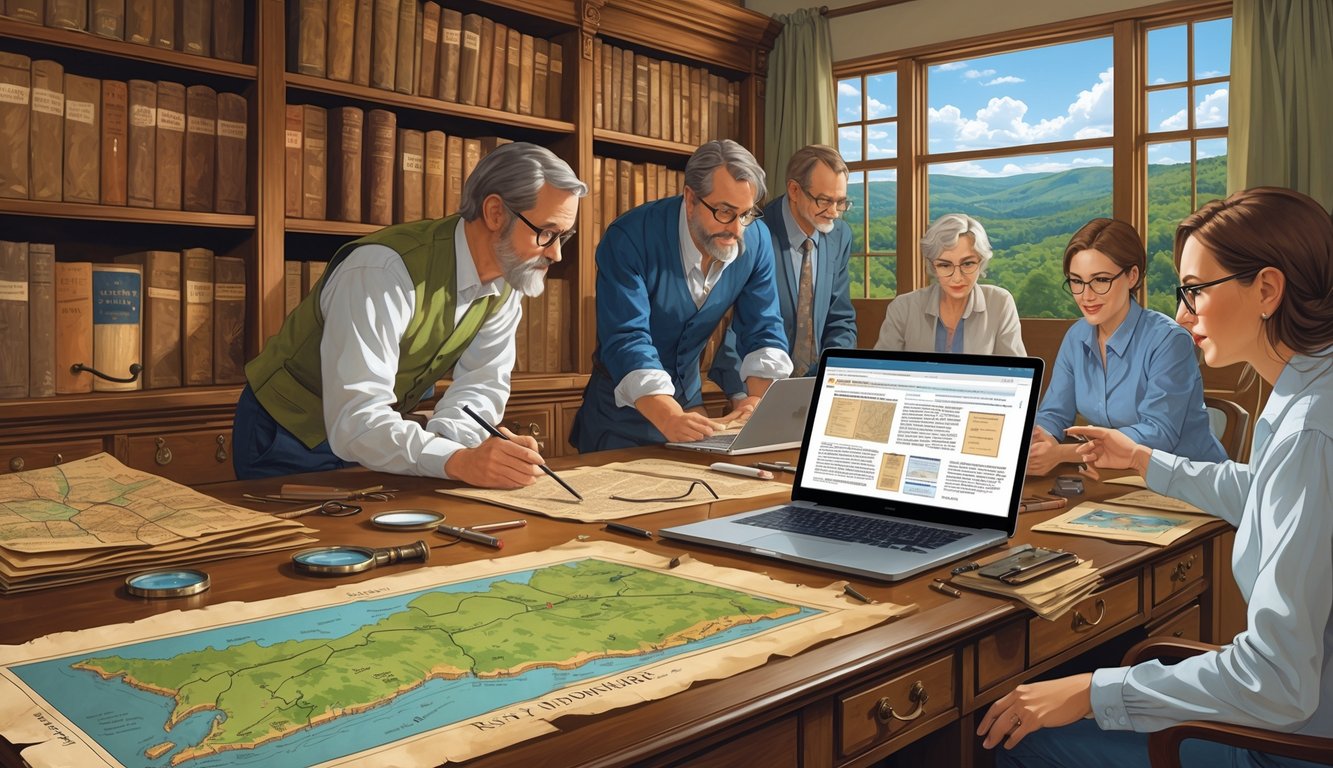
Many groups and tools help investigate New Hampshire’s biggest historical mysteries. New technology, community action, and trusted organizations all play a large part in finding answers.
Organizations and Initiatives
Several law enforcement agencies work to solve cold cases in New Hampshire. The New Hampshire State Police and local police departments keep old cases active and use new methods such as genetic genealogy to find suspects or identify victims.
Non-profit organizations also help. They support families and encourage the public to get involved, sometimes using online databases or social media.
Some groups maintain public case lists and updates for those interested in New Hampshire’s cold or unsolved cases.
Wiki platforms and forums let people share case facts, theories, and timelines. These resources keep the community informed and give everyone a chance to help solve true crime cases.
Getting Involved in Case Solving
Anyone interested can find ways to help. Some people join online forums or contribute to wiki pages that collect details about unsolved crimes.
These efforts make data easier to search and share for investigators. Others attend events, such as awareness walks or lectures, to support victims’ families.
Some people participate in citizen science projects. They review old case files or help with digital mapping.
People also share tips or personal research through digital platforms. Sometimes, they provide new leads that police had not considered.