South Africa is a country filled with rich history, unique cultures, and stories that puzzle even the brightest minds. Some of the biggest historical mysteries in South Africa include unsolved crimes, missing treasures, and strange events that continue to confuse and fascinate people today. These mysteries are part of what makes South Africa one of the most intriguing places in Africa.

From the legendary hidden gold of Paul Kruger to the unexplained fate of certain missing people, the country’s unsolved mysteries often raise more questions than answers. Even famous cases, like the murder of Jacoba “Bubbles” Schroeder or the mysterious Helderberg plane crash, remain hot topics that many still discuss and investigate. South Africa’s historical enigmas invite everyone to explore, wonder, and imagine what really happened behind these secrets.
For those who are curious about history and love a good puzzle, exploring these mysteries gives a new way to look at South Africa’s past. Each story combines suspense, adventure, and a hint of the unknown, making them hard to forget. Learn more about these fascinating tales of unsolved South African mysteries and what makes them so memorable.
The Mystery of the Lost Treasure of Paul Kruger
The lost treasure of Paul Kruger is one of South Africa’s greatest unsolved mysteries. This gold hoard, hidden during a time of war, has fascinated treasure hunters and historians for over a hundred years.
Theories on the Missing Gold
Paul Kruger was the President of the South African Republic from 1883 to 1900. As the Second Boer War ended, stories began to spread about a large shipment of gold and coins being hidden or sent overseas to keep it away from British forces.
Some believe Kruger’s followers moved roughly two million pounds worth of gold and diamonds out of the country. Others say it was buried in different places across South Africa. The area around the Blyde River in Mpumalanga is often named as a likely hiding spot. The current value of the treasure has been estimated to be over $500 million, though the exact amount is still debated. For many, the Kruger Millions remains South Africa’s most famous hidden treasure, and questions about its fate continue to spark interest around the world. Learn more about the legend of the Kruger Millions.
Searching for Clues
Over the years, people have tried to track down the lost Kruger gold. Searchers have followed rumored maps, hidden messages, and old records. Many expeditions have focused on the historic paths taken by Kruger’s friends and his government officials as they tried to escape the advancing British army.
Treasure hunters have searched caves, rivers, and remote farms. Some believe clues to the mystery might be hidden in documents from the late 1800s or passed down through local stories. Historians continue to look for new evidence, but the gold has never been found. The mystery is kept alive by hope and curiosity, inspiring many to keep searching for South Africa’s lost gold.
The Disappearance of the HMS Birkenhead
The sinking of the HMS Birkenhead near Cape Town in 1852 stunned both South Africa and the world. This event was not only a maritime disaster, but it also gave rise to legends and ongoing questions that still fascinate historians.
Chronicle of the Tragic Shipwreck
HMS Birkenhead was a British troopship, one of the first iron-hulled ships in the Royal Navy. In early 1852, it was carrying around 400 soldiers and about 200 civilians, including women and children, along the coast of Africa towards Algoa Bay. On February 26, the ship struck hidden rocks near Danger Point, close to Cape Town.
The collision ripped open the hull, and the ship quickly started to sink. There weren’t enough lifeboats for everyone. In these final moments, the soldiers famously stood firm while women and children were loaded into the few available boats—a moment remembered as the origin of the “women and children first” protocol in maritime history. Over 400 people lost their lives, while fewer than 200 survived the freezing seas. The exact number of casualties and survivors remains debated due to incomplete records. For more on these events, visit the Wikipedia page on HMS Birkenhead.
Quick Facts Table
| Date | Location near Cape Town | Lives Lost | Survivors |
|---|---|---|---|
| Feb 26, 1852 | Danger Point | ~400 | <200 |
Legends and Investigations
The wreck of the Birkenhead inspired many stories. Some rumors claimed gold or military secrets were onboard, leading to years of fruitless searches for lost treasure. Divers and historians have examined the wreck site, but no treasure has been found.
Locals reported strange lights and ghostly sightings in the area after the shipwreck. These tales added to the ship’s mystery, drawing adventurers and curious visitors to Danger Point off the coast of Africa. Some believe the bravery shown by the soldiers was exaggerated, while others say reports from survivors confirm the story. Every so often, new explorations at the wreck fuel speculation about what really happened during those desperate moments. To read about how these legends and traditions began, check out this page on the “women and children first” protocol.
Unsolved Murder of Robert Smit
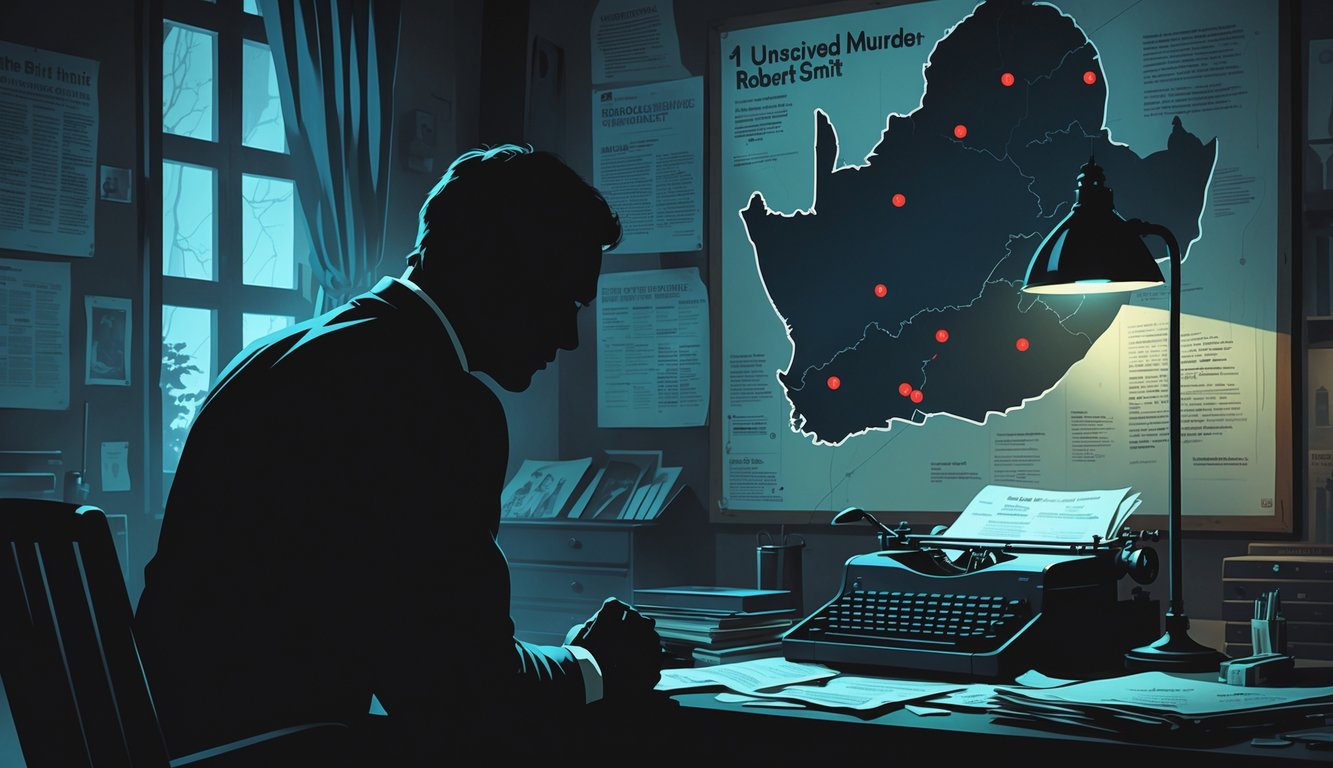
Robert Smit, a National Party politician, and his wife, Jeanne-Cora, were found murdered in 1977. Their deaths remain one of South Africa’s most puzzling unsolved mysteries and have long been linked to deeper political secrets.
Circumstances Surrounding the Crime
On November 22, 1977, Robert Smit and his wife were discovered dead in their home in Springs. Both had been shot and stabbed, suggesting a violent struggle. The crime shocked the community, as Smit was a respected economist and politician.
What made the case especially strange was that the killers left behind no clear evidence tying anyone to the murder. The word “RAU TEM” was spray-painted on the walls and refrigerator. To this day, investigators do not know what this meant.
The case became even more mysterious because money, jewelry, and other valuables were left untouched. Police could not determine if the motive was robbery, revenge, or something even deeper. Their murder is still featured on many lists of South Africa’s greatest unsolved mysteries.
Political Intrigue and Motives
Robert Smit was an up-and-coming figure in the National Party. He was seen by many as a possible future Minister of Finance. Some believed he had knowledge of secret financial deals or corruption that he planned to reveal.
The involvement of BOSS, South Africa’s intelligence agency at the time, was suspected by some, but there was no direct proof. Political motivation became a leading theory, given how rare it was for National Party members themselves to be targeted.
A list of main theories includes:
- Internal National Party conflict
- Secret government operations
- Attempts to keep sensitive information hidden
Despite years of speculation, there have been no arrests, and the killers remain unknown. The case continues to spark debate about politics and secrecy during South Africa’s apartheid era. More details on this case are explored at Robert Smit – Wikipedia.
Apartheid-Era Enigmas
South Africa’s apartheid era is filled with events and mysteries that still puzzle many today. Stories of missing people and secret government plans from this period continue to cause debate and raise questions about what really happened behind the scenes.
Missing Political Figures
During apartheid, some political figures vanished in ways that have never been fully explained. For example, there were disappearances of anti-apartheid activists and members of opposition groups that remain unsolved.
Many believe the National Party’s security forces may have played a role in these cases, but the details often remain hidden. Investigations into these unsolved mysteries sometimes led to dead ends, leaving families without answers for decades.
Cases like the disappearance of Robert Smit, a member of the National Party, still draw attention. He and his wife were found murdered under mysterious circumstances in 1977, and their deaths have sparked much speculation about political motives and hidden truths. These events continue to be discussed as one of South Africa’s greatest unsolved mysteries.
Classified Operations and Leaks
Apartheid South Africa was marked by secretive security agencies like BOSS (Bureau of State Security), which carried out classified operations to control dissent. The details of many missions remain classified, with only hints leaking out over time.
These secret operations often included surveillance, infiltration of political groups, and spreading misinformation. Leaks of classified documents later revealed the lengths to which the National Party went to keep power and suppress opposition.
Some of the most debated secrets involved covert violence, hidden prisons, and the use of informants within communities. Although some files have been released, other records are believed to be lost or destroyed, keeping the full story out of reach. The shadowy world of apartheid-era security operations still leaves many questions unanswered.
Great Escapes from South African Prisons
South Africa has seen several daring prison escapes that have captured public interest and made headlines. These escapes often involve detailed planning, creativity, and sometimes inside help.
Famous Prison Break Stories
There have been several famous prison break incidents in South Africa. One of the most well-known cases is that of Ananias Mathe. He escaped from Pretoria’s C-Max prison in 2006 by squeezing through a small window and supposedly using petroleum jelly to slide out. His escape shocked officials and the public.
Thabo Bester is another name that often comes up with great escape stories. In his case, details involved faked deaths, sophisticated planning, and outside support. These stories are included in lists of daring prison escapes because of their complexity and the security questions they raised at the time.
Other escapes from South African prisons have included breaking through walls, digging tunnels, or using smuggled tools. The Great African Escapes documentary series has highlighted these infamous incidents and explains how these individuals managed such feats, often under very high security.
The Impact of Great Escapes
Prison escapes in South Africa have had a big impact on prison policies and public trust in the justice system. Each major escape has often led to government investigations, improved surveillance, and stricter security protocols.
Officials worked to boost prison security by adding more guards and installing better technology. The focus has also shifted toward finding and closing any loopholes that escapees might use. These changes are meant to stop future incidents and reassure people that such great African escapes will be harder to pull off.
The stories of these escapes are regularly explored in the media and documentaries. They show the risk of underestimating inmates’ resourcefulness and highlight the ongoing need for strong security in South Africa’s prison system.
The Secrets of Table Mountain
Cape Town’s Table Mountain has puzzled people for centuries. It is not only famous for its flat top, but also for its deep connection to the culture and history of South Africa.
Ancient Legends and Myths
Locals and visitors often tell stories about Table Mountain’s past. In one well-known legend, the mountain is called the Watcher of the South, or Umlindi Wemingizimu. According to myth, this giant figure stands guard over Cape Town and the southern tip of Africa, protecting the people who live there.
There are also stories about the mountain’s unusual cloud cover, known as the “tablecloth.” Some believe it comes from a smoking contest between a wise man called Van Hunks and the devil. The legend says their smoke formed the thick clouds that sometimes rest on the mountaintop. These types of myths reflect how people throughout history have connected with Table Mountain and tried to explain its mysteries.
Some even think certain valleys had special powers or were homes to ancient gods. For example, the “Valley of the Red Gods” got its name after a mountain club member quoted a famous poem, fueling a sense of magic around these places. If you want to learn more about these stories, you can explore collections of Table Mountain myths and legends.
Unexplained Occurrences
Besides legends, there have been odd events reported on Table Mountain over the years. Some hikers talk about sudden changes in weather that can turn a sunny day into thick fog with almost no warning. These quick weather shifts add to the area’s mysterious feeling.
Others claim to have felt strange chills, heard voices echoing among the rocks, or even seen shadows where there should be none. A few even say they have become disoriented or lost despite clear trails, as if the mountain was hiding its paths. These unexplained happenings have made people wonder if there is more to Table Mountain than what meets the eye.
Its unique shape, hidden caves, and ancient presence make Table Mountain one of the great African mysteries. Whether these tales are true or not, they are an important part of Cape Town’s history and culture.
The Mysterious Sinking of the SS Waratah
The SS Waratah was a modern steamship built in 1908, yet it vanished during its second voyage without any clear explanation. This disaster left families in South Africa and across the world with unanswered questions that remain today.
Journey and Final Voyage
The SS Waratah was designed for both passengers and cargo, operating between England and Australia, with stops in South Africa.
During July 1909, the Waratah left Durban for Cape Town carrying 211 people. The ship was considered state-of-the-art, featuring a steel hull, watertight compartments, and modern safety features, making its disappearance even more shocking at the time.
Eyewitnesses from other ships reported seeing the Waratah sailing smoothly along the east coast of Africa. Then, suddenly, the ship vanished somewhere along the route between Durban and Cape Town. No distress call was ever received, and the ship simply failed to reach its destination.
Many theories have come up about what happened, such as a powerful storm, a structural problem, or even a sudden shift in cargo. Despite these ideas, no solid proof has ever been found to explain what caused the loss of the “Titanic of the South”.
Search Expeditions
After the Waratah disappeared, rescue and search efforts were massive. The South African government, families of the missing, and even other shipping companies paid for ships to look for survivors, wreckage, or clues.
Search vessels covered over 14,000 miles in the Indian Ocean and spent nearly three months at sea. Some searchers thought they glimpsed debris, including what might have been a child’s body, but nothing could be recovered to confirm the ship’s fate.
No floating wreckage, lifeboats, or personal belongings linked to the Waratah were ever found. The only clues came from other ships’ reports of rough seas and high winds off South Africa’s coast, but these didn’t solve the mystery.
To this day, the wreck of the SS Waratah has never been located, and its disappearance stands as one of the biggest shipwreck mysteries in South African history.
Vanished Civilizations and Ancient Peoples
Some of the greatest African mysteries come from the people and places that vanished long ago. These secrets are hidden in stone tools, old rock shelters, and forgotten archaeological sites across South Africa.
The Ancient San Mysteries
The San people, sometimes called “Bushmen,” are one of Africa’s oldest cultures. They left behind rock paintings, stone tools, and campsites spread across South Africa. Many of these sites date back thousands of years.
Their art shows detailed scenes of animals, hunters, and dances. One mystery is the meaning behind certain symbols and shapes in their paintings. The San painted in deep caves and on remote cliff faces. It is unclear exactly why these locations were chosen or what some patterns represent.
Many sites also hint at past ways of life, now lost. For example, experts wonder about the role of trance dances shown in the art and what happened to large groups of San people who once lived in areas that are now empty. The reasons for their decline in some parts of Africa still puzzle historians and archaeologists.
Lost Settlements
Across southern Africa, many old settlements have disappeared. Some were communities built of stone, while others were built from clay or wood. Their ruins can be found in valleys, hillsides, and along rivers.
A strong example is the ruined city of Great Zimbabwe, but South Africa has its own lost towns and trading centers. Ancient stone circles and walls near towns like Waterval Boven remain unexplained. Signs of early farming, iron work, and trade point to busy societies now gone.
Historians debate what led these places to be abandoned. It could have been changes in climate, drought, conflict, or the movement of bigger groups across the land. To this day, searching for more clues about these lost civilizations remains one of the great African mysteries.
The Ghost Ship of Mauritius
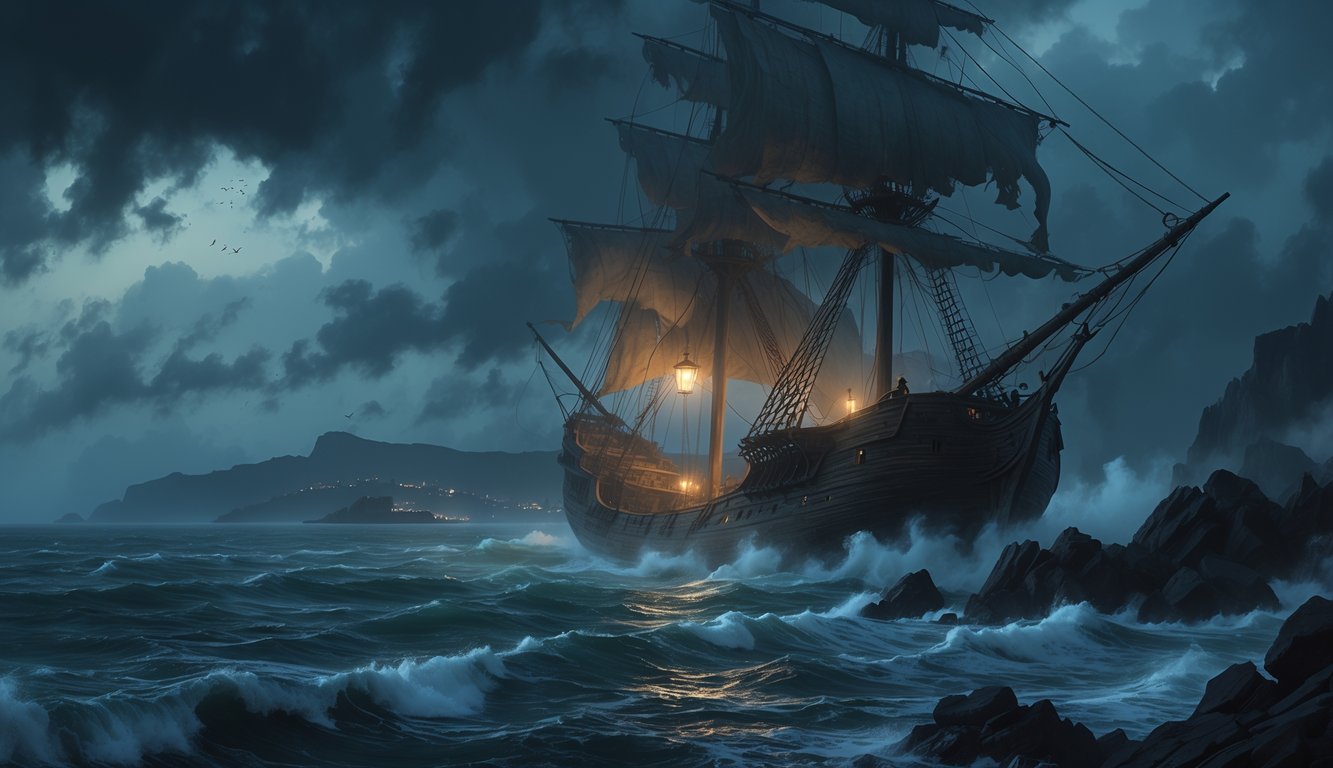
The story of a mysterious ghost ship linked to the waters near Mauritius has intrigued sailors for generations. Blending local legend with eerie historical reports, this tale remains one of the most talked-about maritime mysteries of Africa.
Origins of the Ghost Ship Legend
Stories of ghost ships around Mauritius often begin with sailors braving the treacherous waters off Africa’s southern coast. The most famous of these tales features the Flying Dutchman, said to be doomed to sail the ocean forever, unable to make port.
Legends claim that the ship’s captain defied the elements and cursed his crew by challenging nature itself. Many believe this curse brought bad luck and even storms to anyone who spotted the ship. Over time, these tales formed a part of Mauritius’s rich folklore, blending both European marine myths and African island beliefs.
Some sources link the story to real shipwrecks in the Indian Ocean, where rough seas and sudden storms were common. The legend has lasted because it taps into a universal fear of getting lost or trapped at sea in a world surrounded by mystery.
Sightings and Folklore
Reports of the ghost ship have come from both local fishermen and international sailors. Many describe seeing a glowing or misty vessel on the horizon near Mauritius, only for it to vanish suddenly. These encounters fueled stories that were passed down through generations.
It is said that the ghost ship appears most often during thick fog or just before storms, warning sailors to turn back. Some even claim that seeing the ship means disaster is near. Tales of the ghost ship are not just for children; they remain part of cultural stories told at the docks and in villages today.
Similar legends can be found in nearby regions off Africa, but Mauritius has its own unique spin on the story, often tying it to local landmarks or historic shipwrecks. For more on this maritime legend, visit a site dedicated to the hidden history of Mauritius.
The Influence of Mysteries in Media and Culture

Unsolved stories and historical mysteries often find their way into popular culture. They shape how people think about the past and spark curiosity about real events that remain unexplained.
Documentaries and TV Features
Documentaries and TV shows have played a big part in making South Africa’s mysteries more widely known. For example, the History Channel in Africa produced special programs like “Great African Mysteries.” These documentaries look into famous cases such as the Kruger millions, a legend about gold supposedly hidden by Paul Kruger during the Boer War.
Such programs break down complex mysteries so everyone can understand them. Shows highlight not only lost treasures but also unsolved murders and strange disappearances.
The stories covered often become talking points for viewers. They spark debates and encourage people to look deeper into South African history. Some documentaries aim to uncover new evidence, while others keep old legends alive for the next generation.
Impact on South African Identity
Unsolved mysteries have an effect on how South Africans see themselves. Stories about events like the Helderberg plane crash or the Kruger millions show the country’s complex history, filled with both triumphs and tragedies. These mysteries sometimes make people question what they thought they knew about the past.
Many South Africans see these stories as part of their national heritage. They are often discussed in schools, books, and even radio programs. Mysteries are not just entertainment—they can help form a shared sense of curiosity and encourage critical thinking.
Historic secrets sometimes unite communities in searching for the truth. When people share theories and information, it creates a sense of connection and identity. This helps keep South Africa’s rich and mysterious past alive in the present.